 tradivior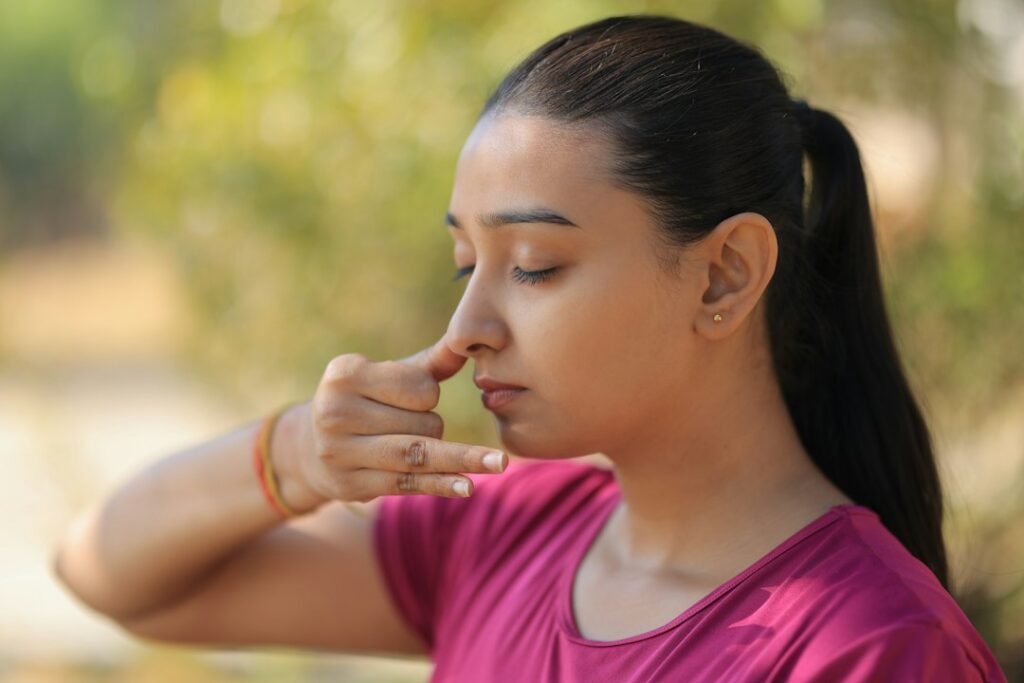
In this investigation
Breathing is automatic—until a human being decides to interfere with it. That simple fact gives the breath an unusual place in human life. Heartbeat, digestion and hormone secretion are mostly involuntary. Breathing is different: it runs by itself, yet can also be slowed, deepened, paused, forced, counted, alternated between nostrils, coordinated with sound or deliberately made almost imperceptible.
Indian traditions developed an exceptionally elaborate family of methods for working with that border between automatic physiology and voluntary control. Today those practices are usually grouped under the Sanskrit term prāṇāyāma. Modern yoga classes often translate the word loosely as “breath control,” but the historical tradition is more complicated. Classical and medieval authors were not merely trying to lower stress or improve lung capacity. They worked within philosophical systems in which breath, vital force, attention, bodily transformation and liberation were tightly connected.
This creates a perfect Tradivior problem. Modern physiology can show that changing breathing rate, depth, route and retention alters carbon dioxide, heart rhythm, baroreflexes, autonomic activity and subjective state. But that does not prove that early yogins developed pranayama because they secretly understood heart-rate variability, vagal tone or respiratory chemistry. The historical and scientific questions have to be investigated separately.
The question behind pranayama is bigger than “does deep breathing work?”
There are at least five distinct questions hidden inside the modern fascination with pranayama. How early did Indian traditions begin deliberately regulating the breath? What did practitioners think the practice was doing? Why did later yoga systems multiply breathing methods and retentions? What effects do those methods actually produce in modern experiments? And how safely can ancient techniques be adapted for people who are not living as trained ascetics?
These questions cannot be answered by one clinical trial. A study showing reduced blood pressure after slow breathing does not tell us why a medieval yogi practised breath retention. A Sanskrit text describing prāṇa moving through subtle channels does not prove a specific autonomic mechanism. The strongest account has to allow both records to remain themselves.
THE CENTRAL DISTINCTION
Pranayama is historically authentic, and some breath-regulation methods have measurable physiological effects. The existence of those effects does not establish that ancient practitioners selected the techniques because they understood the modern mechanisms.
Prāṇa was never simply an ancient word for oxygen
Modern wellness writing often translates prāṇa as “oxygen,” “bioenergy” or “life force” as though these were interchangeable. They are not. In Indian philosophical and medical traditions, prāṇa belongs to a broader conceptual system of vital processes, movement, life and subtle physiology. It can be associated with breathing, but it is not reducible to the oxygen molecule identified by modern chemistry.
This distinction matters because retrospective translation can create false scientific triumphs. If prāṇa is simply relabelled “oxygen,” then any ancient discussion of prāṇa appears to become an early discovery of respiratory gas exchange. But historical texts do not describe haemoglobin saturation, alveolar diffusion, partial pressures or cellular respiration. Their conceptual world is different.
That does not make the older framework meaningless. Traditional practitioners observed that breath changes with effort, fear, illness, concentration and emotional state. They also discovered that deliberate control of breathing can change experience. Those are genuine empirical observations. The error comes when observation is converted into a claim of hidden modern biochemistry.
Breath discipline appeared before medieval haṭhayoga
There was no single moment when “pranayama was invented.” Early Indian religious and ascetic traditions contain multiple practices involving breath restraint, breath observation and the relation between breath and inner discipline. The Bhagavad Gītā uses imagery of prāṇa and apāna being offered into one another and refers to restraining the movement of breath. Upaniṣadic and ascetic sources likewise place breath within systems of self-control and contemplative transformation.
These passages show that breath had become a deliberate field of practice long before the classical manuals of haṭhayoga. But they do not yet give us the standardized modern catalogue of alternate-nostril breathing, humming, bellows breathing and timed ratios. That later technical richness developed over centuries.
Patañjali made pranayama a formal limb of yoga
The Yoga Sūtras, compiled in the first millennium CE, place prāṇāyāma after posture in the famous eight-limbed system. Sūtra 2.49 describes pranayama in terms of interruption or regulation of inhalation and exhalation once posture has been established. The following verses distinguish aspects of breath according to external, internal and suspended phases, along with place, time and number.
This is already far more than generic advice to “take a deep breath.” Breathing is being measured, structured and cultivated as part of a sequence designed to prepare the practitioner for deeper concentration. Patañjali’s framework therefore supports strong historical evidence that breath regulation was understood as a disciplined yogic method.
Yet the text’s stated purpose is not blood-pressure management. Pranayama is situated within an ethical, contemplative and liberative path. Later interpreters connect it to purification, concentration and the attenuation of obstacles to knowledge. Translating these aims into “parasympathetic activation” would be a modern reinterpretation, not a literal historical account.
Medieval haṭhayoga transformed breath control into a far more physical technology
Research from the Hatha Yoga Project has significantly revised older stories about yoga history. Haṭhayoga, in the technical sense used by scholars, emerged from diverse ascetic traditions around the turn of the second millennium CE. Its methods were strongly physical and gradually entered multiple Indian religious traditions.
The Amṛtasiddhi, probably composed no later than the second half of the eleventh century, is especially important because it is the earliest known text to teach a system containing practices and principles that later became central to haṭhayoga. Subsequent manuals elaborated techniques involving bodily seals, locks, posture and the manipulation or retention of breath.
By around the thirteenth century, works such as the Dattātreyayogaśāstra were integrating older eight-limbed frameworks with newer physical methods. In the fifteenth-century Haṭhapradīpikā, breath practice becomes one of the central components of classical haṭhayoga, alongside posture, mudrā and meditative absorption through sound.
Kumbhaka became as important as inhalation and exhalation
Modern beginners often think pranayama means breathing slowly and deeply. Medieval yoga gives a different emphasis: kumbhaka, retention or suspension of breath, becomes central. The practitioner may inhale, retain, exhale and sometimes suspend after exhalation in carefully structured patterns. Some later texts classify distinctive kumbhakas with different routes, sounds and bodily actions.
Why did retention matter so much? Traditional explanations are embedded in subtle-body physiology. Breath, mind and vital force are treated as interdependent. Controlling one is said to influence the others. The movement of prāṇa through channels, the awakening or stabilization of internal energies, purification and the arrest of ordinary mental activity all appear in different textual systems.
These claims should be represented accurately before modernizing them. Medieval yogins did not describe breath-holding as “intermittent hypoxia training” or “CO₂ tolerance work.” Those are contemporary physiological categories. The historical language belongs to a different model of body and liberation.
The category “pranayama” hides techniques that push physiology in opposite directions
This is the single most important scientific complication. Slow breathing, forceful bellows-like breathing, humming exhalation, alternate-nostril breathing and long retentions are not one intervention. Some slow practices reduce ventilation rate and can increase cardiorespiratory coupling. Forceful practices can increase ventilation sharply. Long retentions alter oxygen and carbon-dioxide dynamics. Humming adds acoustic vibration and changes airflow through the nasal passages.
Pooling all of these under one label can produce misleading research. If a trial reports that “pranayama” reduced anxiety but does not specify technique, pace, depth, retention, supervision and duration, the result is difficult to interpret or reproduce. Tradivior therefore treats technique identity as essential evidence, not decorative detail.
Slow breathing changes the cardiovascular system in measurable ways
The strongest modern physiological evidence relates to slow breathing. A 2018 systematic review of slow-breathing studies found consistent changes in autonomic and cardiorespiratory measures, including increased respiratory sinus arrhythmia and heart-rate variability under many experimental conditions. Participants also commonly reported increased relaxation and reduced arousal.
Slow breathing around six breaths per minute has been studied especially closely. At this pace, respiratory oscillations can interact strongly with blood-pressure rhythms and the baroreflex—the feedback system that helps stabilize blood pressure from beat to beat. Experimental studies have found increased baroreflex sensitivity during slow breathing in healthy people, hypertension and some clinical populations.
This provides a plausible mechanism for why certain slow pranayama methods feel calming and can alter cardiovascular measurements. It is not necessary to invoke a mysterious energy transfer. Mechanical changes in the chest, respiratory timing, vagal modulation, blood-pressure oscillations and chemoreflex activity are enough to create significant physiological effects.
THE EVIDENCE
Slow controlled breathing has one of the clearest evidence bases within breathwork. It can acutely alter heart-rate variability, respiratory sinus arrhythmia, baroreflex sensitivity and subjective arousal. Long-term clinical effects are more variable and depend on population, protocol and adherence.
Heart-rate variability is useful—but easy to oversell
HRV has become a favourite biomarker in breathwork discussions because it reflects variation between heartbeats and is influenced by autonomic regulation. Slow breathing often increases particular HRV measures. That is real. But the interpretation needs care.
Respiration itself mechanically and neurally modulates heart rhythm. When breathing is deliberately slowed, changes in HRV are partly an expected consequence of changing the respiratory input. A higher HRV value during slow breathing therefore does not automatically mean a person has permanently “healed the vagus nerve” or reversed chronic disease.
Acute state changes and long-term trait changes are different questions. A 2022 review of slow-breathing research found plausible acute improvements in baroreflex, sympathetic activity and vascular measures, but long-term effects were less consistent. Breath practice may be useful without every immediate biomarker change becoming a durable clinical transformation.
What does the blood-pressure evidence show?
A 2026 systematic review and meta-analysis focused specifically on pranayama as a standalone intervention in adults with elevated blood pressure or hypertension. Seven randomized trials involving 683 participants were included. The clearest pooled result was a reduction in heart rate. Systolic blood pressure also fell in pooled analyses, while diastolic pressure and HRV results were less consistent.
The encouraging result comes with an important warning: heterogeneity for several blood-pressure outcomes was high. Different pranayama styles, intervention durations and study designs were being combined. That means the average effect does not tell us that every breathing technique lowers pressure by the same amount.
The responsible modern conclusion is that slow or controlled pranayama may be a useful adjunct for some people with hypertension, not that it replaces medication, exercise, weight management, sleep, dietary change or clinical monitoring. Breath practice belongs beside evidence-based care, not in competition with it.
Alternate-nostril breathing has its own evidence—and its own uncertainty
Nāḍī śodhana and related alternate-nostril practices are among the most recognizable forms of modern pranayama. Traditional explanations emphasize purification or balancing of channels and flows. Modern explanations often claim that the left and right nostrils directly switch the brain between parasympathetic and sympathetic states.
The evidence is more modest. A 2024 systematic review and meta-analysis of randomized trials found reductions in blood pressure associated with alternate-nostril breathing across included studies, but the research base varied in quality and protocol. It supports potential cardiovascular effects, not a simplistic “left nostril equals one nervous system, right nostril equals the other” rule.
Humans naturally have a nasal cycle in which congestion and airflow vary between sides over time. Changing the route of airflow can alter breathing mechanics and sensory input. But strong claims that unilateral nostril breathing reliably controls a specific cerebral hemisphere or produces a predictable personality state remain far ahead of the evidence.
Bhramari is a good example of a real mechanism being overextended
Bhramari pranayama uses a humming exhalation. The vibration is obvious to the practitioner, which has encouraged modern claims about the vagus nerve, nitric oxide, sinus function and brain resonance. Some of those claims begin with real physiology.
A classic 2002 experiment found that humming dramatically increased nasal nitric oxide during the humming manoeuvre, probably because oscillating airflow improved gas exchange between the paranasal sinuses and nasal cavity. The effect was large in the measurement context. That is scientifically interesting.
But it does not prove that Bhramari treats hypertension, infection, depression or every condition attributed to nitric oxide online. A mechanism can be genuine while the therapeutic claim built on top of it remains untested. Humming changes nasal gas dynamics; what clinical outcomes follow requires separate evidence.
Slow breathing can reduce arousal without being inherently sedating
Many people experience slow pranayama as calming, yet the physiology is not simply “parasympathetic on, sympathetic off.” Breathing interacts with attention, posture, expectation, emotional context and previous training. A slow practice can calm an anxious beginner, sharpen concentration in an experienced practitioner or feel uncomfortable to someone who becomes hyper-aware of bodily sensations.
The 2018 slow-breathing review found psychological changes that included increased comfort, relaxation, vigour and alertness as well as reduced negative arousal. That mix is useful: calm does not necessarily mean drowsiness. Traditional descriptions of breath practice often aim at steadiness and clarity, which may fit the subjective profile better than the modern label “relaxation technique.”
Pranayama and anxiety: promising evidence, not a universal prescription
Breath regulation is increasingly used in mental-health settings because respiration and emotional arousal are tightly linked. A 2025 systematic review and meta-analysis of pranayama for diagnosed mental disorders included six randomized trials with 517 participants. Against passive controls, symptom severity showed a small average improvement. Comparisons with standard care did not establish pranayama as superior.
Importantly, risk of bias was judged high in most included studies. That means the positive signal deserves attention but not hype. Breath practices can be inexpensive and accessible, yet small studies, variable instructions and expectation effects make certainty difficult.
A separate 2025 review focused on adolescents found a larger pooled reduction in stress and anxiety, but graded the certainty of evidence as very low because of bias, inconsistency and imprecision. This is a textbook example of why effect size and evidence certainty must not be confused. A large-looking pooled result can still be uncertain.
The lungs can adapt to breathing practice, but “more lung capacity” is not the whole story
Pranayama studies often measure spirometry: forced vital capacity, forced expiratory volume and peak expiratory flow. A 2026 systematic review and meta-analysis in healthy adults found medium pooled improvements across several pulmonary-function measures after weeks or months of yogic breathing practice.
The result is plausible. Repeated slow or forceful breathing can train respiratory muscles, alter breathing pattern and improve familiarity with maximal inhalation and exhalation manoeuvres used in spirometry. But very high heterogeneity for some outcomes means that technique and study design matter greatly.
Improved spirometry in healthy adults should not be translated into “pranayama cures lung disease.” Clinical respiratory conditions have different mechanisms, and some patients may need supervised pulmonary rehabilitation rather than unsupervised breath retention or forceful breathing.
Fast pranayama is physiologically different from slow pranayama
Practices such as bhastrika and modern versions of kapalabhati involve faster or forceful ventilation. Their immediate effects can differ sharply from slow breathing. Ventilation rises, carbon dioxide may fall, sympathetic activation can increase and sensations such as tingling, light-headedness or altered perception may appear.
This is not evidence of “toxins leaving the body.” Hyperventilation changes blood chemistry. When carbon dioxide falls, blood becomes more alkaline and cerebral blood vessels constrict. Reduced cerebral blood flow can contribute to dizziness, visual changes, tingling and feelings of unreality.
High-ventilation breathwork is now being studied for possible psychological applications, but a 2023 review emphasized that its intense effects involve major shifts in autonomic and neurometabolic state and require careful clinical investigation. It should not be treated as simply a stronger version of relaxation breathing.
Kapalabhati also illustrates how modern yoga can rewrite historical categories
Modern yoga studios often teach kapalabhati as a pranayama. In important haṭha texts, however, kapalabhati is classified among cleansing practices rather than the principal kumbhakas. The movement of a technique between categories is a reminder that living traditions evolve.
This does not make modern teaching “fake,” but it complicates historical claims. When researchers study “pranayama” today, they may include techniques that historical texts classified differently. Scientific categories and historical categories must therefore be mapped carefully rather than assumed to match.
Breath retention changes the problem from rhythm to gas exchange
When the breath is held, oxygen is gradually consumed and carbon dioxide accumulates. Rising carbon dioxide is one of the main drivers of the urge to breathe. The point at which a person must resume breathing is influenced by lung volume, metabolic rate, training, expectation, blood gases and chemoreceptor responses.
Breath retention can therefore produce powerful bodily sensations without requiring an esoteric explanation. Pressure changes, cardiovascular reflexes, rising CO₂ and falling O₂ all contribute. Trained practitioners may become more tolerant of the sensations associated with retention, but tolerance does not eliminate physiological limits.
Traditional yogic kumbhaka should not be reduced to competitive breath-holding, however. In many systems retention is embedded in posture, locks, attention and a theory of vital movement. The modern physiological description explains what the respiratory system is doing; it does not replace the historical ritual or contemplative meaning.
Hyperventilating before a long breath hold is a real safety hazard
Hyperventilation can lower carbon dioxide before a breath hold. Because rising CO₂ normally creates much of the urge to breathe, starting with unusually low CO₂ can delay the warning sensation even while oxygen continues falling. This is one reason pre-hyperventilation can increase the risk of hypoxic blackout.
A 2024 physiological study examining repeated breath holds after hyperventilation highlighted this risk directly. The danger is especially important in water, where loss of consciousness can be fatal. No traditional or modern breathwork goal justifies underwater hyperventilation-and-retention experiments without specialized safety systems.
THE SAFETY LINE
Gentle slow breathing is low risk for most healthy adults. Forceful hyperventilation and prolonged retention are different interventions. They can produce significant changes in blood gases and should not be treated as harmless simply because they come from a traditional practice.
Carbon dioxide is not a waste gas to be “flushed out”
Breathwork marketing sometimes describes carbon dioxide as a toxin that deep breathing removes. Physiologically, carbon dioxide is essential to acid–base regulation and respiratory control. Too much CO₂ can be dangerous, but too little can also produce symptoms by causing respiratory alkalosis and constricting cerebral blood vessels.
This makes the language of “more breathing equals more oxygen” misleading. In a healthy person at rest, blood oxygen saturation is usually already high. Hyperventilating may not meaningfully increase oxygen content, while it can substantially decrease carbon dioxide. The subjective intensity of the experience can therefore come from lowered CO₂ rather than from an extraordinary oxygen surge.
Why six breaths per minute appears so often in modern research
Many experiments use a breathing rate near six breaths per minute because this pace often produces strong interaction between respiratory and cardiovascular rhythms. It can enhance respiratory sinus arrhythmia and baroreflex-related oscillations in many adults.
This does not make six a sacred universal number. Individual resonance frequencies differ. Traditional pranayama systems also use many tempos and ratios that were not designed around a modern six-breaths-per-minute protocol. Scientific standardization is useful for experiments, but it should not be projected backward as the hidden rule behind ancient practice.
Breathing is a rare voluntary doorway into an automatic control system
Part of pranayama’s enduring power may lie in basic neurophysiology. Respiration is generated automatically by brainstem networks, yet humans can voluntarily override rhythm for speech, singing, swimming, prayer and deliberate breathwork. That gives breathing a special psychological quality: a person can consciously influence a process that is also essential and automatic.
This makes the breath an unusually immediate training object. Attention changes the breath; the breath changes bodily sensations; those sensations feed back into attention and emotion. A practitioner does not need equipment to observe the loop. Generations of ascetics could therefore develop sophisticated practical knowledge simply through repeated experimentation.
Interoception may help explain why pranayama feels mentally powerful
Interoception is the perception of internal bodily states. Breath practice amplifies signals from the chest, diaphragm, throat, nostrils and cardiovascular system. Slowing the breath can make these sensations more predictable; retention can intensify them; forceful breathing can make them impossible to ignore.
Training attention on those signals may change how a person interprets arousal. For someone with good instruction, the rising sensation during a mild retention can become an object of observation rather than an immediate threat. For someone prone to panic, the same internal focus may become destabilizing. Context, expectations and prior vulnerability matter.
Breath and attention reinforce each other
A wandering mind changes breathing without conscious intent. Fear shortens it. Concentration may quiet it. Speech fragments it. Sleep changes its rhythm. Traditional yogic systems repeatedly noticed the coupling between breath and mind and turned that observation into practice.
Modern neuroscience can describe part of the loop through respiratory networks, autonomic state and cortical attention systems. That provides a plausible mechanism for why breath regulation can support concentration. But again, the mechanism does not prove that the classical doctrine of prāṇa was a disguised description of neural circuitry.
The claim that pranayama directly “activates the vagus nerve” is too simple
The vagus nerve is involved in parasympathetic control of the heart and other organs, so it frequently appears in modern breathwork explanations. Slow breathing can increase vagally mediated features of heart-rate variability under some conditions. But the phrase “activates the vagus nerve” often collapses a complex cardiorespiratory network into a marketing slogan.
Respiration changes mechanical pressure in the chest, venous return, heart rhythm, baroreceptor firing, chemoreflex signals and central respiratory activity. Vagal pathways are part of that network, not a single switch. Different pranayama techniques can even move physiology in different directions.
Pranayama was not historically designed as a generic wellness hack
In many older systems, breath practice is demanding, progressive and embedded in a larger discipline. Ethical restraints, diet, posture, teacher guidance, purification and meditation may surround it. Some texts warn that breathing practices done incorrectly can cause harm.
Modern wellness culture often extracts the most accessible pieces—five minutes of alternate-nostril breathing before a meeting, for example. That can still be useful. But it is historically different from an ascetic system in which kumbhaka is part of a project of liberation or radical bodily transformation.
Traditional warnings are evidence of practical observation, not proof of every doctrine
Historical yoga manuals frequently insist on gradual practice, appropriate conditions and skilled instruction. These warnings are significant. They suggest practitioners recognized that aggressive breath manipulation can produce adverse experiences.
But a traditional warning does not validate every explanation attached to it. A medieval teacher could correctly observe that excessive practice causes dizziness while explaining the event through a subtle-body model. Practical accuracy and theoretical accuracy can coexist imperfectly.
Can pranayama improve emotional regulation?
The evidence is plausible and increasingly positive, but technique-specific. Slow paced breathing can reduce physiological arousal and provide a predictable attentional task. Repeated practice may help some people recognize and alter the bodily component of stress before it escalates.
However, emotional regulation is not identical to symptom treatment. A person can feel calmer immediately without experiencing a durable change in an anxiety disorder. Clinical claims require controlled studies over meaningful periods, not just before-and-after ratings from a single breathing session.
The 2025 mental-health meta-analysis is therefore encouraging precisely because it used randomized evidence, but its authors also found substantial risk-of-bias concerns. Tradivior rates this as moderate experimental evidence rather than a settled therapeutic result.
Modern breath science partly confirms the old intuition that breath and mind are linked
Here the historical and scientific stories genuinely meet—carefully. Indian contemplative traditions repeatedly linked the stability of breath with the stability of mind. Modern research shows that changing respiratory rhythm can change autonomic state, cardiorespiratory coupling and subjective arousal.
That is a meaningful convergence. It does not prove every subtle-body claim, but neither is it trivial. Long before laboratory sensors, practitioners discovered that breath was not merely a passive background process. It could be used deliberately to alter experience.
The safest formulation is therefore: traditional practitioners developed effective phenomenological technologies of breathing. Modern science is beginning to explain some of their physiological effects in different language.
Cross-cultural parallels suggest breath control solves recurring human problems
Pranayama is specifically South Asian, but deliberate breath regulation is not unique to India. Buddhist traditions cultivate breath awareness and, in some lineages, specialized respiratory practices. Chinese traditions developed breath cultivation within qigong and Daoist systems. Martial disciplines coordinate breath with movement. Singers, chanters, divers and religious practitioners across cultures manipulate breathing for performance, prayer, endurance or altered states.
These parallels do not prove a single ancient source. Breath is universally available. Any culture can notice that breathing changes emotion and performance. Independent discovery is therefore plausible alongside historical transmission.
What modern research still cannot answer well
Research still struggles with basic standardization. “Pranayama” studies often use different techniques, session lengths, teachers, retention ratios and participant populations. Some combine breathwork with posture, meditation or lifestyle changes. Small samples remain common. Blinding is difficult because participants know whether they are doing a breathing practice.
There is also publication bias risk. Positive studies are more likely to attract attention, and culturally enthusiastic research environments can unconsciously shape expectations. Better trials need precise technique descriptions, active control groups, preregistered outcomes, adverse-event reporting and enough participants to distinguish real effects from noise.
The word “pranayama” should not be used as if it names one dose
A medication trial specifies milligrams. Breathwork research should strive for equivalent precision: breaths per minute, tidal volume if measured, inhale-to-exhale ratio, nostril pattern, retention duration, number of cycles, posture, supervision and total training time.
Without that detail, “ten minutes of pranayama” is scientifically weak. Ten minutes of gentle 5–6-breaths-per-minute breathing is physiologically different from ten minutes of forceful hyperventilation or repeated long retentions.
The same practice can have different meanings in different bodies
Age, cardiovascular disease, pulmonary disease, pregnancy, panic sensitivity, medication and previous training can all change how breathwork is experienced. A technique tolerated by a young healthy practitioner may be inappropriate for another person.
A 2026 clinical review of breathing-based practices recommends particular caution with high-ventilation and breath-hold protocols in pregnancy and certain medical conditions, and with hyperventilation practices in people vulnerable to epilepsy, panic or significant cardiopulmonary compromise. Gentle slow-paced breathing is generally lower risk.
Why intense breathwork can produce extraordinary experiences
Rapid breathing can change CO₂, pH, cerebral blood flow and sensory processing quickly. Retention can create strong interoceptive pressure. Repetition can narrow attention. Group settings, music and expectation can amplify meaning. Together these mechanisms can produce tingling, trembling, emotional release, visual phenomena, time distortion or feelings of transcendence.
The experience can be subjectively profound without proving one interpretation of it. A practitioner may understand it as prāṇa moving, spiritual purification or contact with a deeper self. A physiologist may describe hypocapnia, autonomic shifts and interoceptive amplification. Those explanations operate at different levels and need not be forced into a false either/or.
Scientific description cannot decide the spiritual meaning of pranayama
Science can measure respiratory gases, neural activity, blood pressure, symptoms and performance. It cannot experimentally determine whether prāṇa exists in the metaphysical sense intended by a tradition, whether liberation has occurred or whether a subtle channel has been purified as a spiritual reality.
That boundary is not a failure of science. It is a boundary of question type. Tradivior can evaluate measurable health claims while still describing religious and philosophical meanings accurately rather than translating every sacred concept into a biomarker.
The strongest case for ancient sophistication is practical, not secret-modern
There is no need to claim that yogic texts encoded knowledge of the vagus nerve, nitric oxide or blood-gas chemistry to recognize their sophistication. Developing stable methods for slowing, retaining, alternating and rhythmically structuring breath required observation, experimentation and transmission.
Practitioners learned that certain patterns steadied attention, others heated or stimulated, others produced unusual internal sensations, and aggressive practice could be destabilizing. That is practical knowledge. It can be historically impressive without being retroactively rewritten as twenty-first-century respiratory medicine.
Pranayama may work partly because it is trainable anywhere
Unlike many health interventions, breathing requires no external object. This matters for cultural survival. A practice can be transmitted orally, performed in a hut, monastery, household or pilgrimage route, and adjusted to different environments.
Breath also provides immediate feedback. If a rhythm is unsustainable, the body signals it. If practice becomes smoother over weeks, the practitioner notices. This tight feedback loop makes respiratory training especially suitable for experiential traditions in which direct practice is valued alongside textual knowledge.
Modern clinical use should preserve technique specificity
If pranayama enters medicine or psychology, the safest path is not to import the entire traditional cosmology as medical fact. Nor is it to strip every technique of history and rename it “paced breathing.” Both approaches lose something important.
Clinical use can identify a specific method—slow diaphragmatic breathing, alternate-nostril breathing, humming exhalation—and test it for a defined outcome. Historical description can then explain where the practice comes from and what it traditionally meant. Science and history can stand next to each other without pretending to be the same evidence.
When should people be cautious?
Gentle, comfortable slow breathing is usually low risk for healthy adults. Stop if a practice causes marked dizziness, chest pain, faintness, severe breathlessness or panic. Forceful hyperventilation, repeated long retentions and advanced locks deserve a different level of caution.
People who are pregnant, have significant cardiovascular or respiratory disease, have a history of fainting or seizures, or experience panic triggered by respiratory sensations should seek appropriate guidance before intense breathwork. Breath-hold training should never be combined casually with water immersion, driving, heights or any situation in which loss of consciousness could be catastrophic.
And pranayama should not be used to delay urgent medical care or replace prescribed treatment for hypertension, asthma, depression or other conditions. A traditional practice can be valuable and still have limits.
What survives scrutiny?
- Deliberate breath regulation is deeply rooted in Indian contemplative traditions.
- Patañjali formalized pranayama within an eight-limbed yoga system, while medieval haṭhayoga later developed much more elaborate respiratory and retention techniques.
- Historical aims included concentration, purification, manipulation of prāṇa, subtle-body transformation and liberation—not modern cardiovascular prevention.
- Slow breathing can measurably alter heart rhythm, respiratory sinus arrhythmia, baroreflex sensitivity and autonomic state.
- Pranayama may modestly reduce heart rate and blood pressure in some hypertensive populations, though protocols and study quality vary.
- Mental-health evidence is promising but remains limited by small trials and risk of bias.
- Alternate-nostril breathing has some supportive blood-pressure evidence, but simplistic left/right nervous-system claims are not established.
- Humming can sharply increase nasal nitric oxide during the manoeuvre, but broad therapeutic claims require separate testing.
- Forceful hyperventilation and prolonged retention are physiologically different from slow breathing and carry additional risks.
- Modern physiology explains several effects of breath control without proving that ancient practitioners understood those mechanisms in modern scientific terms.
The Tradivior Evidence Profile
Historical Authenticity — Strong. Breath regulation is securely documented in classical yoga and becomes increasingly elaborate in medieval haṭhayoga sources. The historical record supports a long, evolving practice rather than a modern invention.
Original-Purpose Evidence — Strong. Traditional texts explicitly connect pranayama with concentration, purification, prāṇa, subtle-body processes and liberative goals. Modern stress reduction and cardiovascular prevention are later framings.
Scientific Mechanism — Strong for slow breathing; technique-dependent overall. Respiratory rhythm, blood gases, baroreflexes, respiratory sinus arrhythmia, autonomic regulation and interoception provide well-established mechanisms. Forceful breathing and retention operate through different physiology.
Experimental Evidence — Moderate. Systematic reviews support real effects on heart rate, blood pressure, some mental-health outcomes and pulmonary measures, but study quality, heterogeneity and protocol variation limit stronger conclusions.
Cross-Cultural Evidence — Moderate to Strong. Deliberate breath cultivation appears in multiple cultures and disciplines, though pranayama itself is historically South Asian and should not be universalized into a generic global tradition.
Modern Relevance — Strong. Breath regulation is inexpensive, portable and widely used in yoga, sport, stress management and clinical research. Its accessibility increases both its potential usefulness and the need for technique-specific safety guidance.
The Tradivior Conclusion
Partially Supported—with substantial evidence for specific mechanisms. Indian traditions developed pranayama because breath was understood as a powerful bridge between body, mind, vital force and contemplative discipline. Modern science independently confirms that changing breathing rhythm, route and retention can produce meaningful physiological effects, especially through cardiorespiratory and autonomic mechanisms. Evidence is strongest for slow controlled breathing and more limited or technique-specific for broader therapeutic claims. What does not survive scrutiny is the retrospective claim that ancient yogins were secretly describing oxygen chemistry, the vagus nerve, nitric oxide or heart-rate variability in coded language. The tradition is historically sophisticated and scientifically interesting without needing that myth.
Continue investigating
Sources and further reading
- Patañjali. Yoga Sūtras, especially 2.49–2.53, in standard scholarly translations and commentarial traditions.
- Mallinson J, Singleton M. Roots of Yoga. Penguin Classics; 2017.
- Mallinson J, Szántó P-D. The Amṛtasiddhi and Amṛtasiddhimūla: The Earliest Texts of the Haṭhayoga Tradition. Critical edition and translation; 2021.
- Mallinson J. The Dattātreyayogaśāstra. Critical edition and translation; 2024.
- SOAS Hatha Yoga Project. Research on the history and development of haṭhayoga and its physical practices.
- Mallinson J. “Siddhi and Mahāsiddhi in Early Haṭhayoga.” Historical study of the Haṭhapradīpikā and earlier sources.
- Zaccaro A, Piarulli A, Laurino M, et al. “How Breath-Control Can Change Your Life: A Systematic Review on Psycho-Physiological Correlates of Slow Breathing.” Frontiers in Human Neuroscience. 2018;12:353. doi:10.3389/fnhum.2018.00353.
- Russo MA, Santarelli DM, O’Rourke D. “The physiological effects of slow breathing in the healthy human.” 2017. PMID: 29209423.
- Bernardi L, et al. “Slow breathing reduces chemoreflex response to hypoxia and hypercapnia, and increases baroreflex sensitivity.” Journal of Hypertension. 2001. PMID: 11725167.
- Joseph CN, Porta C, Casucci G, et al. “Slow breathing improves arterial baroreflex sensitivity and decreases blood pressure in essential hypertension.” Hypertension. 2005. PMID: 16129818.
- “The effect of yogic breathing (Pranayama) on heart rate and blood pressure in patients with hypertension: A systematic review and meta-analysis.” 2026. PMID: 41580026.
- Nam TG, Jeong H, Kim KH, Jang I. “Effectiveness of Alternate Nostril Breathing on Blood Pressure: A Systematic Review and Meta-Analysis of Randomized Controlled Trials.” Complementary Medicine Research. 2024;31(5):449–460. doi:10.1159/000539707.
- “Effectiveness of pranayama for mental disorders: a systematic review and meta-analysis of randomized controlled trials.” 2025. PMID: 40896223.
- “A systematic review and meta-analysis to determine the effect of pranayama in reducing anxiety and stress in adolescents.” 2025. PMID: 40980898.
- “Yogic Breathing Practices: A Systematic Review and Meta-analysis of Pulmonary Function in Healthy Adults.” 2026.
- Weitzberg E, Lundberg JON. “Humming greatly increases nasal nitric oxide.” American Journal of Respiratory and Critical Care Medicine. 2002;166(2):144–145. doi:10.1164/rccm.200202-138BC.
- Parkes MJ. “Breath-holding and its breakpoint.” Experimental Physiology. 2006;91(1):1–15. doi:10.1113/expphysiol.2005.031625.
- “High ventilation breathwork practices: An overview of their effects, mechanisms, and considerations for clinical applications.” 2023. PMID: 37923236.
- Elia A, Keramidas ME. Research on repeated breath-holding after hyperventilation and hypoxic-blackout risk. 2024. PMID: 38314699.
- “Neurophysiological mechanisms of breathing-based well-being practices: a narrative review for clinical application.” 2026.
Continue exploring

Partially Supported
Why Is the Ganga Sacred?
The Ganga is river, goddess, pilgrimage route, purifier and national symbol. Tradivior will trace how these layers developed and evaluate modern claims about unusual self-purifying properties without confusing microbial findings…
Evidence Supported
Why Were Vedic Chants Preserved With Such Precise Pitch?
Vedic recitation developed unusually elaborate methods for preserving sequence, accent and sound across generations. Tradivior will investigate how oral error-correction worked and why claims about special frequencies require separate evidence.
Evidence Supported
Why Do Drums Drive Trance and Procession?
Drumming can organize marching, dance, ritual possession and communal excitement with extraordinary efficiency. Tradivior will examine how rhythm entrains movement and attention without assuming that every drum tradition aims at…
Evidence Supported
Why Do Humans Dance in Ritual?
Ritual dance can celebrate, mourn, heal, initiate, possess, court and remember. Tradivior will compare dance traditions and ask how coordinated movement changes identity, emotion and group cohesion.
Picked for your curiosity
Enable JavaScript to build a reading profile and see recommendations.