 tradivior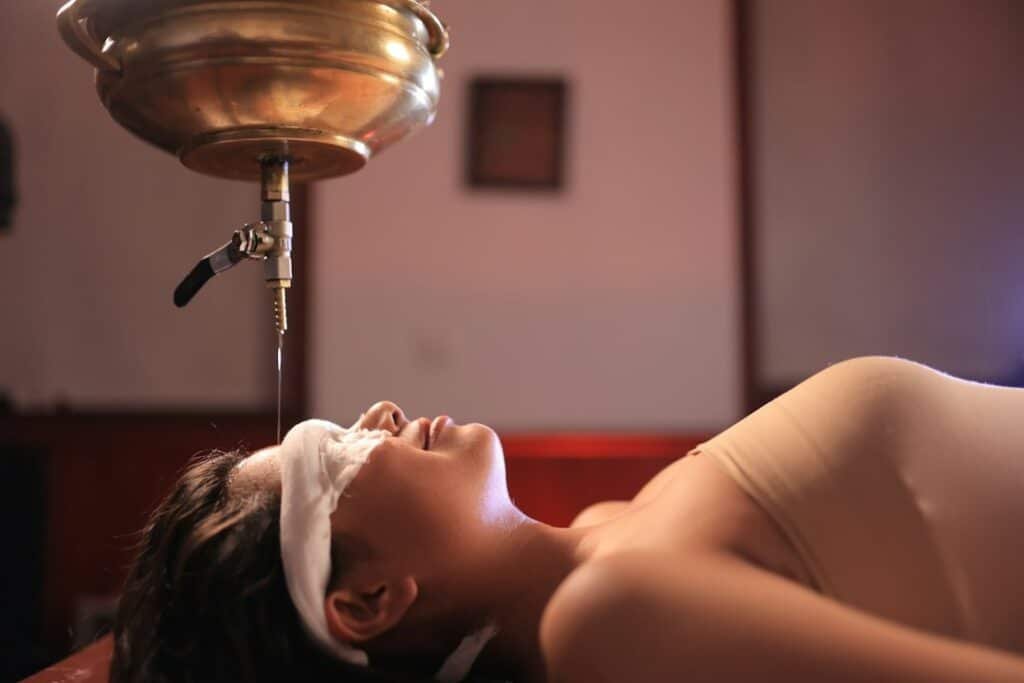
In this investigation
In Ayurveda, oil massage was not reserved for a spa day. Abhyanga could belong to the ordinary architecture of daily life: oil applied to the body, massage, bathing and other routines intended to maintain health. Modern wellness culture often gives this practice sweeping explanations. The historical tradition is clear; the biomedical case is more modest.
When massage was routine, not indulgence
Ayurvedic descriptions place abhyanga within dinacharya, the daily regimen. Classical recommendations attach particular importance to oiling and massaging the body, including areas such as the head and feet. The practice belongs to a larger system concerned with preserving bodily function and managing qualities Ayurveda describes through its own theoretical vocabulary.
That historical framework matters. Abhyanga should not be rewritten as an ancient version of a modern randomized intervention. Traditional explanations involving doshas, nourishment and oleation belong to Ayurvedic medicine’s conceptual system. Whether individual effects can also be demonstrated biomedically is a separate question.
There is more than one intervention inside abhyanga
Oil massage combines several things at once: tactile pressure, repetitive movement over skin, time spent resting, often warmth, and a topical oil that changes friction and acts as an emollient. Professional treatment also adds therapist attention and a structured relaxation period.
This creates an evidence problem. If someone feels calmer after an hour of abhyanga, was the active ingredient the specific oil, massage itself, warmth, expectation, human touch, quiet rest, or a combination? A study must include suitable comparison groups before it can answer that question.
What does the direct research show?
A 2011 pilot study tested a single one-hour abhyanga treatment in 20 healthy adults. Participants reported a substantial reduction in subjective stress after treatment, and heart rate fell. Blood pressure did not fall across the full sample, although a prehypertensive subgroup showed a reduction. The investigators themselves described the work as preliminary and called for more rigorous research.
The study is useful because it tests abhyanga itself rather than borrowing evidence from unrelated massage techniques. But it was small, lacked the kind of controls needed to isolate an oil-specific or Ayurvedic-specific effect, and measured immediate outcomes. It cannot establish that daily abhyanga prevents chronic disease or produces the long list of systemic benefits sometimes advertised.
THE EVIDENCE
Direct human research provides preliminary evidence for short-term relaxation and stress-related effects. It does not yet demonstrate that daily Ayurvedic oil massage has broad preventive or disease-modifying effects.
What about sleep and the nervous system?
Recent reviews of Ayurvedic approaches to sleep describe favourable signals from external oil-based therapies, including abhyanga, but emphasize that studies are small, short, difficult to blind and vulnerable to nonspecific effects. Proposed autonomic or neuroendocrine mechanisms remain hypotheses rather than settled explanations for the whole traditional practice.
This does not mean relaxation is imaginary. Touch and massage can produce real subjective and physiological responses. It means researchers have not yet shown that the complete Ayurvedic explanation—or a particular herbal oil—is necessary to produce them.
Oil matters to the skin, but which oil matters?
Applying an oil to skin can reduce friction during massage and provide an occlusive or emollient effect. But different oils have different chemical properties, and herbalized Ayurvedic oils introduce additional ingredients. Evidence for one topical oil, one population or one skin outcome should not be generalized to every abhyanga formulation.
There is also an important distinction between healthy adult self-massage and therapeutic oil use in infants, older adults or people with skin disease. Those populations have different safety considerations. Traditional does not automatically mean irritation-free or universally appropriate.
Why would the routine have survived?
Abhyanga does not require a hidden molecular secret to be understandable. Oil makes prolonged rubbing of skin comfortable. Massage can feel soothing. A repeated morning or evening routine creates a deliberate pause in the day. In climates and lifestyles where oiling the skin and hair was already culturally familiar, the practice could be both practical and medicinal within the prevailing system of health.
Ayurveda then supplied a coherent explanatory framework and recommendations that helped transmit the practice. Modern research can test individual consequences of that routine, but it should not pretend that today’s terminology was the historical reason for yesterday’s behaviour.
Where modern claims outrun the evidence
Claims that abhyanga “detoxifies” the body, moves lymph in a clinically important way, corrects hormones, prevents ageing or treats major disease require evidence proportionate to their specificity. The current direct literature does not justify presenting such outcomes as established.
Likewise, a fall in perceived stress immediately after massage is not proof of long-term mental-health treatment. It is an interesting outcome that deserves larger controlled trials.
Massage, oil and ritual should be separated analytically
Abhyanga bundles several exposures at once: pressure on the skin, repetitive stroking, warmth, time away from other activity, expectation, self-attention and a layer of oil. If a person feels calmer afterward, no single component can automatically claim the effect.
This matters because modern studies often test massage without oil, topical oil without massage, or professionally delivered massage rather than self-abhyanga. Evidence from one component can illuminate the practice without proving the whole traditional package.
Touch can change autonomic state, but “vagus activation” is often oversold
Gentle massage can alter heart rate, perceived stress and relaxation in some studies. Touch-sensitive nerve pathways and the autonomic nervous system plausibly contribute. Popular explanations frequently leap from these observations to claims that abhyanga reliably “activates the vagus nerve,” lowers cortisol and resets the nervous system.
Those outcomes depend on technique, duration, population and measurement. A calm subjective response is real and valuable; it is not identical to a demonstrated long-term change in vagal tone or endocrine function.
Massage evidence is strongest for symptom relief, not disease cure
Systematic reviews across clinical populations suggest massage can reduce pain or anxiety in some contexts, including cancer supportive care, musculoskeletal pain and short-term stress. Effects vary, and blinding participants to massage is almost impossible, which increases expectancy effects.
This evidence makes relaxation and temporary symptom relief plausible outcomes of abhyanga. It does not establish massage oil as a treatment for hypertension, endocrine disease, “toxins” or all forms of chronic pain.
Self-massage differs from receiving massage
A therapist can reach the back, vary pressure and work while the recipient remains passive. Self-abhyanga requires movement, attention and active participation. It may function partly like a body-awareness practice rather than purely as passive massage.
That difference limits direct transfer from clinical massage trials. It may also explain why the ritual can feel psychologically distinct: the person is intentionally caring for their own body rather than receiving a service.
Topical oils genuinely alter the skin surface
Plant oils can reduce friction, fill spaces between superficial skin cells and slow water loss to varying degrees. Reviews of topical oils show that fatty-acid composition matters for barrier effects. Some oils support barrier function better than others, and some can irritate susceptible skin.
Therefore the statement “oil moisturizes the skin” is broadly plausible, while “any traditional oil is ideal for every skin type” is not.
Sesame oil has tradition behind it, but limited direct clinical evidence
Sesame oil is common in Ayurvedic massage and contains lignans and unsaturated fatty acids with interesting antioxidant chemistry. Laboratory and small clinical studies suggest topical effects worth investigating.
But the evidence base is far smaller than its traditional reputation. Most dermatological conclusions about topical plant oils come from broader oil research rather than large trials of daily sesame-oil abhyanga in healthy adults.
Coconut oil shows why the specific oil matters
Randomized trials have found virgin coconut oil can improve hydration and barrier measures in some dry-skin and atopic-dermatitis settings. This provides proof of principle that a traditional plant oil can have measurable dermatological effects.
It does not prove that coconut oil and sesame oil are interchangeable or that oil massage prevents skin disease in people with normal skin.
Olive oil is a warning against assuming “natural” means barrier-friendly
Topical-oil reviews note that oils high in oleic acid can disrupt barrier structure under some conditions, while linoleic-acid-rich oils may be more supportive. This helps explain why skin response differs between oils.
A traditional practice therefore still requires material specificity. The carrier oil, fragrance, herbs and extraction method can all affect tolerance.
Massage before bathing has a practical mechanical logic
Applying oil before washing reduces friction during massage and leaves an emollient film until excess oil is removed. In climates or seasons where skin becomes dry, this sequence can feel protective and comfortable.
That practical explanation can coexist with Ayurvedic ideas about dosha and daily regimen without pretending they are the same theory.
Warmth changes both sensory experience and oil handling
Warming oil lowers viscosity, making it easier to spread, while warmth itself can relax muscles and feel soothing. Traditional recommendations often use warmed oil, especially in cooler conditions.
Extreme heat offers no added benefit and can burn skin. The scientifically useful part is comfort and spreadability, not a claim that heat forces medicinal oil deep into organs.
Claims of “transdermal nourishment” need pharmacology, not metaphor
The skin is an effective barrier. Some small molecules and drugs can cross it, but ordinary edible oils do not simply travel through the skin to nourish joints, nerves or internal organs. Most topical oil remains within or on the outer skin layers.
This is why approved transdermal medicines require carefully designed molecules and formulations. A softer skin surface after oiling should not be reinterpreted as evidence of systemic nutrient delivery.
Sleep improvements are plausible but difficult to isolate
A slow self-care ritual before bathing or bedtime may reduce arousal and create a predictable transition into rest. Massage studies in various populations sometimes report better sleep or reduced anxiety.
However, small abhyanga trials cannot establish a universal sleep treatment. The benefit may come from touch, routine, warmth, expectation or simply allocating uninterrupted time to wind down.
A daily ritual can work through adherence even when each session has a small effect
Abhyanga is embedded in dinacharya, a daily routine. Repetition can turn self-care into habit, and habits require less decision-making than occasional wellness interventions. A small calming or moisturizing effect repeated consistently may matter more experientially than a dramatic but rare treatment.
This is a behavioural explanation, not proof of every classical mechanism, but it helps explain cultural persistence.
Not everyone should use every oil
Fragrances, herbs, nuts and plant extracts can trigger contact dermatitis or allergy. Oily products can aggravate folliculitis or acne-prone areas in some people, and slippery floors create a very practical fall hazard.
People with active skin disease, wounds or known allergies should choose products carefully. Traditional identity does not make an ingredient hypoallergenic.
The best modern interpretation is modular
Someone may value the massage without oil, the moisturizer without full-body massage, or the calming routine without accepting Ayurvedic constitutional theory. Others may practice abhyanga within its full traditional framework.
Science can evaluate the measurable modules while respecting that the tradition combines them into a larger philosophy of daily care.
Evidence for healthy adults is thinner than evidence in clinical massage settings
Many massage trials enroll people with pain, cancer, anxiety or other defined conditions. Their results cannot be assumed to describe healthy people performing self-abhyanga every morning. A ceiling effect is possible: someone without significant pain or distress has less room to improve.
This is why the practice is better framed as self-care with plausible comfort and skin benefits than as a universal preventive treatment.
Oil quality and storage are practical safety variables
Plant oils oxidize over time, especially with heat, light and repeated contamination from wet hands. Rancid oil can smell unpleasant and may irritate sensitive skin. Containers should be kept clean and oils discarded when their odour or appearance changes markedly.
Herbalized oils add another layer because plant extracts can trigger allergy or vary in composition between manufacturers.
The strongest evidence-based benefit may be ordinary: a moisturized, attended-to body
Abhyanga asks a person to inspect and touch the whole body regularly. That can increase awareness of dryness, tenderness, swelling or skin changes that might otherwise be ignored.
Observation is not diagnosis, but routine body attention is a plausible practical advantage that does not require claims about detoxification or dosha biochemistry.
Massage pressure should be comfortable, not proof of effectiveness
There is no general rule that deeper pressure produces greater benefit. Vigorous self-massage over inflamed joints, varicose veins, acute injuries or fragile skin can worsen discomfort or bruising.
A daily routine intended for wellbeing should remain gentle enough to repeat safely. Pain is not evidence that oil is “breaking toxins” or that treatment is working.
Clinical claims should be matched to the component actually studied
If a study tests coconut oil for xerosis, it supports a claim about that oil and skin dryness. If a trial tests massage for anxiety, it supports a claim about massage in that population. Combining the two findings into “abhyanga treats anxiety through skin absorption” would add a mechanism the studies never tested.
This component-by-component discipline is the most reliable way to evaluate a complex traditional routine.
What survives scrutiny?
- Abhyanga is an authentic and well-established Ayurvedic daily-care practice.
- The intervention combines massage, touch, oil, time, warmth and expectation, making its active components difficult to isolate.
- Small human studies support short-term stress-relaxation signals.
- Evidence for sleep and autonomic effects is promising but low-certainty.
- Topical oil can have ordinary emollient and friction-reducing functions, but evidence cannot be generalized across all oils and herbal formulations.
- Broad claims about detoxification, disease prevention, hormones or anti-ageing substantially exceed direct evidence.
- Modern biomedical mechanisms should not be retroactively assigned to classical Ayurvedic authors without historical evidence.
The Tradivior Evidence Profile
Historical Authenticity — Strong. Abhyanga is clearly embedded in Ayurvedic daily-regimen traditions.
Original-Purpose Evidence — Strong. Classical Ayurveda explicitly recommends oil massage within its preventive and health-maintenance framework.
Scientific Mechanism — Moderate. Massage, touch and topical emollience have plausible mechanisms; many specific Ayurvedic or systemic explanations remain unverified.
Experimental Evidence — Limited. Direct trials are small and methodologically limited, with preliminary stress and relaxation signals.
Cross-Cultural Evidence — Strong. Massage and application of oils or fats to the body occur in many cultures, though abhyanga has a specifically Ayurvedic framework.
Modern Relevance — Moderate. Gentle oil self-massage can remain a reasonable wellbeing or skin-care ritual for suitable individuals, without being treated as a substitute for evidence-based medical care.
The Tradivior Conclusion
Partially Supported. Ayurveda genuinely made oil massage part of daily health maintenance, and modern research gives plausible support to some modest consequences—especially relaxation, tactile comfort and skin emollience. What has not survived scrutiny is the leap from those effects to sweeping claims about detoxification, systemic disease prevention or uniquely proven properties of Ayurvedic oils. Abhyanga can be a meaningful traditional wellbeing practice without needing to be a universal medical treatment.
Continue investigating
Sources & further reading
- Basler AJ. “Pilot study investigating the effects of Ayurvedic Abhyanga massage on subjective stress experience.” Journal of Alternative and Complementary Medicine, 2011.
- Recent reviews of Ayurvedic external therapies for sleep and wellbeing, noting small samples, short follow-up and difficulty isolating specific treatment effects.
- Classical Ayurvedic discussions of abhyanga within dinacharya, interpreted separately from modern biomedical claims.
Continue exploring

Partially Supported
Why Do Religious Processions Take Sacred Things Into the Street?
Religious processions move sacred presence, symbols and communities through public space. They can expand shared identity through coordinated movement and visibility, but the same public occupation can mark boundaries and…

Primarily Symbolic/Cultural
Why Is Diwali Built Around Light?
Diwali’s lamps are historically and religiously meaningful symbols whose interpretations vary across Hindu, Jain, Sikh and regional traditions. Light makes sacred time visible and transforms homes and streets; modern science…

Primarily Symbolic/Cultural
Why Did Indians Circle Sacred Fire at Weddings?
Sacred fire in Hindu weddings is historically a witness, offering medium and divine presence rather than a hidden biomedical technology. Circumambulation and vows make marriage public, memorable and religiously binding;…

Primarily Symbolic/Cultural
Why Do Religions Regulate Meat?
Religions regulate meat because killing animals, blood, purity, sacrifice and communal identity carry unusually high moral weight. Some rules may have ecological or safety consequences, but Jewish, Islamic, Hindu, Jain,…
Picked for your curiosity
Enable JavaScript to build a reading profile and see recommendations.