 tradivior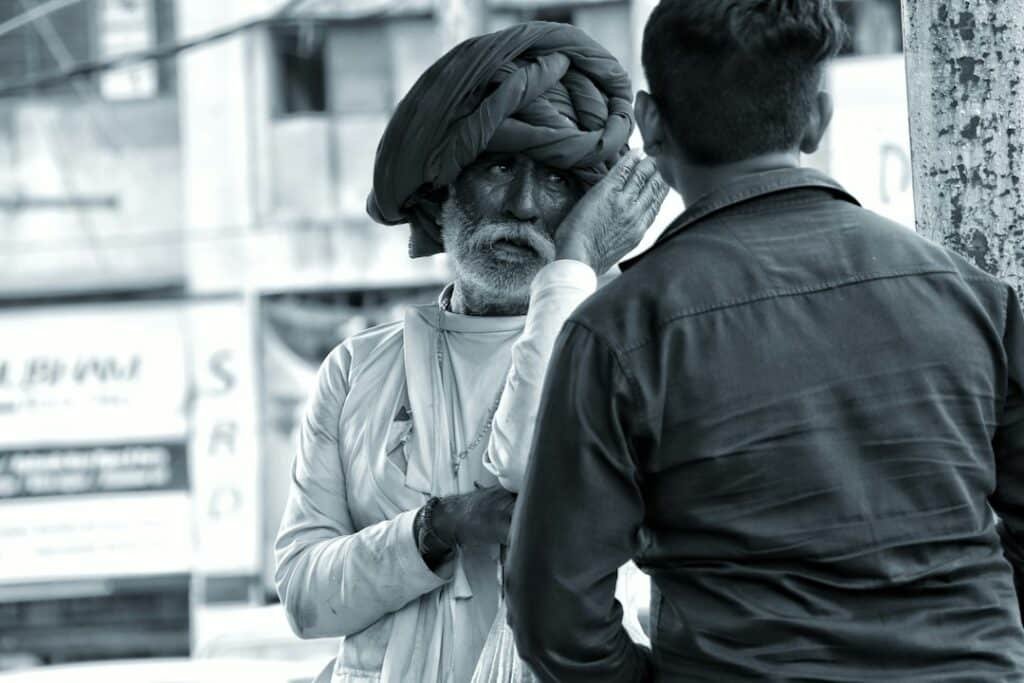
In this investigation
Few religious identities are as immediately visible as a Sikh wearing uncut hair and a turban. Kesh—hair left unshorn—is one of the Five Ks associated with the Khalsa, while the turban or dastar organizes, covers and publicly displays that commitment.
Modern explanations sometimes add claims that uncut hair preserves neurological energy, that the turban stimulates pressure points or that hair functions like an antenna. Those claims are much harder to support. The historical evidence is strongest for discipline, obedience to the Guru, dignity, collective identity and public visibility.
Kesh belongs to the Khalsa discipline
Guru Gobind Singh formalized the Khalsa in 1699, and the Five Ks became enduring markers of initiated Sikh identity: kesh, kangha, kara, kachera and kirpan.
Uncut hair therefore functions as a discipline. It is not simply a hairstyle preference but a continuing commitment visible every day.
THE CORE HISTORICAL POINT
Kesh is best understood first as a religious obligation and identity marker. Any biomedical claim must be established separately.
Uncut hair turns belief into a continuous bodily practice
Many religious acts happen at particular times: prayer, fasting, pilgrimage or festival. Kesh is different because it is continuous. The body itself becomes the site of discipline.
This gives the practice unusual psychological force. Commitment cannot be confined to private worship because the visible body carries it into ordinary life.
The turban makes that commitment publicly legible
Long hair can be kept in different ways, but the Sikh turban turns it into a distinctive public identity. The dastar organizes the hair, protects it and gives the wearer a recognizable silhouette.
The same garment therefore has practical and symbolic functions at once.
The turban carries older South Asian meanings of honour and rank
Turbans long predate Sikhism in South Asia and were associated in many settings with dignity, office, rank and masculinity. Sikh adoption of the turban therefore entered an existing social vocabulary.
Sikh tradition transformed that vocabulary by making visible dignity part of a collective religious identity rather than leaving turbaned prestige exclusively to rulers or higher-status groups.
Visibility was part of the point
A uniform works partly because others can recognize it. The Khalsa form similarly makes the adherent identifiable.
This matters socially because a Sikh can be held publicly accountable to ideals of courage, service and ethical conduct. The identity is difficult to hide when convenient.
Distinctive appearance can strengthen internal solidarity
Visible group markers help people recognize one another, especially in diaspora. Shared appearance can create solidarity across strangers who understand the same code.
The turban therefore acts as a portable community symbol.
But visibility also increases exposure to prejudice
Research among Sikh Asian Indians in the United States found that participants wearing turbans or scarves reported higher levels of discrimination than those who did not.
Discrimination in that study was also associated with poorer self-reported mental and physical health.
The same marker that produces belonging can therefore create vulnerability in settings where outsiders misunderstand it.
Post-9/11 misidentification intensified that burden
Sikh communities in North America have documented harassment linked to the mistaken identification of turbaned Sikhs as Muslim, Arab or associated with terrorism.
This produces a distinctive social challenge: Sikhs must sometimes explain an identity that is already deliberately visible.
Diaspora children negotiate visibility differently from their parents
Research on Sikh families in the United States shows that second-generation young people may experience the turban as faith, family expectation, ethnic identity, social burden or some combination of these.
Visible tradition therefore becomes a negotiation between inherited commitment and the pressures of the surrounding society.
Not every Sikh wears a turban
The turban is strongly associated with Sikhism, but Sikh communities are internally diverse. Some Sikh men cut their hair or do not wear turbans. Sikh women vary in whether they cover their hair or wear a full dastar.
It is therefore inaccurate to treat one visible form as the only way an individual can identify culturally or religiously as Sikh, even though kesh is central to Khalsa discipline.
Gender complicates the public image
Popular imagery often presents the turban as primarily male. Sikh scholarship has increasingly examined women who wear turbans or emphasize the gender-neutral implications of Khalsa identity.
The debate shows that religious symbols can remain stable while gendered interpretations change.
The turban also protects and manages long hair
Kesh creates a practical problem: long hair needs to be contained, kept clean and protected during work and movement. The turban solves that problem effectively.
This practical function does not explain the religion by itself, but it helps explain why head wrapping works so well with uncut hair.
The kangha shows that keeping hair uncut does not mean neglecting it
The wooden comb is another of the Five Ks. Its pairing with kesh emphasizes cleanliness and order.
Religious naturalness is therefore disciplined rather than careless: the hair is not cut, but it is combed, tied and maintained.
Claims that hair stores spiritual energy are not required historically
Contemporary explanations sometimes claim that hair acts as an antenna, stores prana or redirects electromagnetic energy into the brain.
These claims do not have strong support in modern physiology. Hair shafts outside the scalp are largely keratinized tissue and are not known to transmit spiritual or electromagnetic signals in the manner described by such accounts.
THE EVIDENCE LIMIT
Hair has biological functions, but none establish that leaving it uncut produces special neurological energy. Sikh historical meaning is already well documented without that claim.
The “tenth gate” explanation belongs to theology, not laboratory anatomy
Some Sikh spiritual interpretations connect the covered crown of the head with the Dasam Duaar or “tenth gate.” This belongs to religious language about consciousness and spiritual realization.
It should not be converted casually into a claim that a turban physically stimulates a hidden anatomical opening in the skull.
Pressure from a turban is not evidence of acupressure therapy
A properly tied turban creates pressure around the head. That can change tactile sensation and how secure the covering feels.
There is no strong clinical evidence that ordinary turban pressure activates therapeutic points or improves brain function.
Poorly fitted headwear can create ordinary physical problems
Any tight head covering can cause discomfort, headache, traction or skin irritation in some users. Hair care under a turban also requires attention to drying and scalp hygiene.
Those practical health considerations are more evidence-based than claims of hidden energetic benefit.
The COVID-19 pandemic exposed a conflict between faith and PPE design
Sikh healthcare professionals with unshorn facial hair faced difficulty achieving a seal with standard tight-fitting respirators during the COVID-19 pandemic.
Medical literature documented the need for alternative protective equipment and institutional accommodation rather than demanding abandonment of faith.
This is an important modern case: a religious identity practice can collide with technology designed around a different assumed body.
Accommodation is a design problem as well as a legal problem
Workplaces, militaries and institutions have sometimes treated turbans and uncut hair as exceptions to uniform rules. Many have since developed accommodations.
The deeper issue is whether systems can maintain safety and function while respecting visible religious identity.
Military service shows how the meaning of uniform can be renegotiated
Sikh soldiers have historically served in armies while wearing turbans. Modern disputes over helmets, grooming rules and uniformity reveal a tension between institutional standardization and religious visibility.
Accommodation demonstrates that uniforms can be redesigned without necessarily eliminating group cohesion.
Colour can add context without having one universal code
Sikh turbans appear in many colours. Particular colours may be associated with events, organizations, personal preference or symbolic meanings, but there is no single universal colour dictionary followed by all Sikhs.
Modern outsiders often over-interpret colour when the wearer may simply prefer it.
Tying style can carry regional and generational identity
Different turban styles develop through region, occupation, fashion and family practice. The cloth is therefore not one frozen uniform.
Tradition remains recognizable while allowing substantial variation.
A visible marker can produce moral accountability
When a community teaches that the turban represents dignity and service, public visibility can influence behaviour. The wearer knows others may associate conduct with the group.
This is a social mechanism rather than a supernatural one: identity can change behaviour because reputation matters.
Distinctiveness strengthens memory
A highly visible identity marker makes Sikh presence memorable in social environments where Sikhs are a small minority.
That can support recognition and representation, but it can also make stereotyping more persistent.
Removing the turban can therefore feel like more than changing clothes
For observant wearers, removing visible Khalsa identity in response to pressure can feel like concealing faith or breaking a discipline.
This helps explain why accommodations matter psychologically even when outsiders see the issue as a simple dress-code question.
Modern Sikh identity is debated from within
Scholars of Sikhism note continuing debate over how normative the Khalsa form should be for all Sikhs. Media, diaspora life and generational change all shape that discussion.
Living traditions are rarely unanimous about their own boundaries.
What survives scrutiny?
- Uncut hair is a central Khalsa discipline and one of the Five Ks.
- The turban organizes and protects long hair while making Sikh identity publicly visible.
- The turban entered a South Asian world where headwear already carried meanings of honour and rank.
- Visible Khalsa identity supports solidarity, recognition and public accountability.
- The same visibility can increase exposure to discrimination and misidentification in diaspora contexts.
- Sikh communities are internally diverse; not every Sikh wears a turban or maintains the same outward form.
- Gendered interpretations of the turban are changing, with Sikh women also asserting turbaned identities.
- Kesh and kangha together emphasize disciplined maintenance rather than neglect of hair.
- Claims that uncut hair stores neurological or electromagnetic energy lack strong physiological evidence.
- Claims that turban pressure provides special acupressure or brain stimulation are not established.
- Modern safety conflicts, such as respirator fitting, are best addressed through accommodation and equipment design rather than speculative physiology.
The Tradivior Evidence Profile
Historical Authenticity — Strong. Kesh and visible Khalsa identity are firmly rooted in Sikh history and codes of conduct.
Original-Purpose Evidence — Strong. Discipline, obedience, dignity, equality, identity and public visibility are historically well supported.
Scientific Mechanism — Moderate. Social signalling, identity commitment and discrimination provide strong modern mechanisms; biomedical energy claims are weak.
Experimental Evidence — Limited to Moderate. Social-science research supports effects of visible religious identity and discrimination, while physiological claims attached to hair and turban pressure lack strong evidence.
Cross-Cultural Evidence — Moderate. Uncut hair and head coverings appear in many religions, but the Khalsa combination is specifically Sikh.
Modern Relevance — Strong. Kesh and the turban remain central to Sikh identity, accommodation debates and diaspora life.
The Tradivior Conclusion
Primarily Symbolic/Cultural—with strong social effects. Sikhs keep uncut hair and wear the turban because these practices materialize Khalsa discipline, dignity and public religious identity. Their social consequences are measurable: visibility strengthens recognition and solidarity while also exposing wearers to discrimination. The strongest evidence therefore lies in history, theology and social psychology. Claims that hair stores special neurological energy or that turban pressure activates hidden physiological systems are not established and are unnecessary to explain the practice’s enduring power.
Continue investigating
- Why Do Religions Cover the Head in Worship?
- Why Did Traditional Clothing Evolve Around Climate and Work?
- Why Do Humans Bow, Fold Hands, Kiss or Shake Hands in Greeting?
Sources and further reading
- Nesbitt E. Sikhism: A Very Short Introduction. Oxford University Press; chapter on turban, Khalsa and codes of conduct.
- The Oxford Handbook of Sikh Studies. Oxford University Press; chapters on Khalsa identity, gender and modern Sikh life.
- Klein WL. “Turban Narratives: Discourses of Identification and Difference among Punjabi Sikh Families in Los Angeles.” Oxford University Press; 2009.
- “The Association between Discrimination and the Health of Sikh Asian Indians.” 2016. PMCID: PMC4810452.
- “Your Hair or Your Service: An Issue of Faith for Sikh Healthcare Professionals During the COVID-19 Pandemic.” 2021. PMCID: PMC7929463.
- “Mistaken Identities: The Media and Parental Ethno-Religious Socialization in a Midwestern Sikh Community.” Religions. 2019;10(10):571.
- “Interrogating Gender in Sikh Tradition and Practice.” Religions. 2020;11(1):34.
Continue exploring
Partially Supported
Why Do Religions Purify With Water?
Water can wash dirt, cool the body and symbolize moral renewal, making it a recurring medium of purification across religions. Tradivior will compare ritual washing while separating hygiene effects from…
Partially Supported
Why Do Sikhs Sing Gurbani in Raga?
Sikh scripture is deeply connected to musical organization through prescribed ragas and congregational singing. Tradivior will investigate how music shapes interpretation, memory and devotion without reducing Gurbani to a generic…
Evidence Supported
Why Do Humans Sing in Worship?
Sacred singing appears in churches, temples, synagogues, gurdwaras and ritual traditions worldwide. Tradivior will investigate why melody became a vehicle for prayer and memory, and what group-singing research shows about…
Partially Supported
Why Do Religious Processions Take Sacred Things Into the Street?
Religious processions move sacred presence, symbols and communities through public space. They can expand shared identity through coordinated movement and visibility, but the same public occupation can mark boundaries and…
Picked for your curiosity
Enable JavaScript to build a reading profile and see recommendations.