 tradivior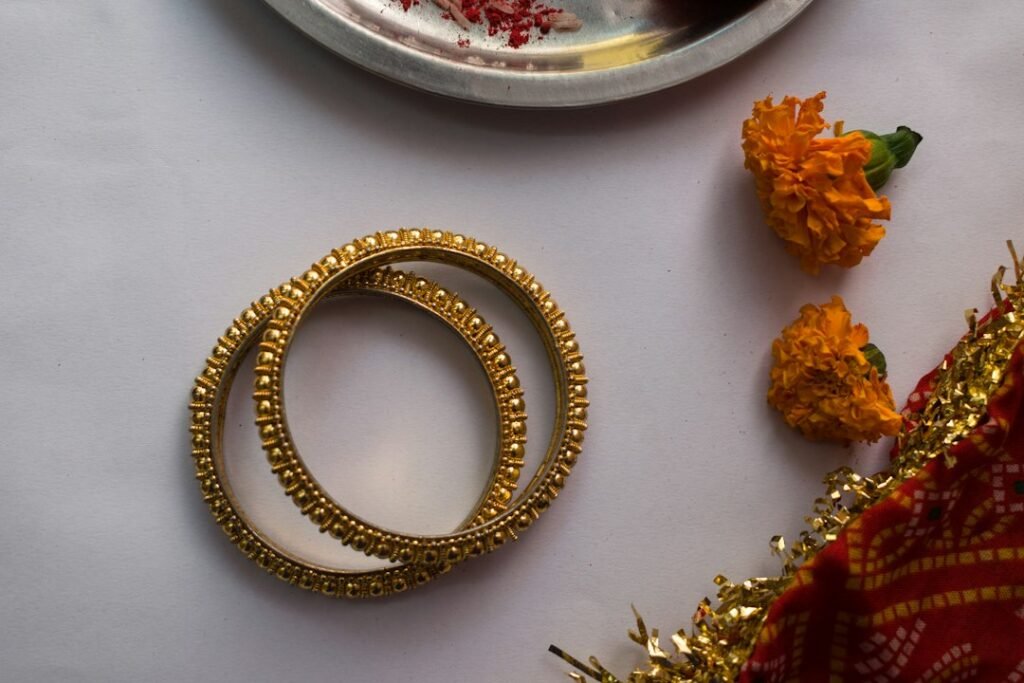
In this investigation
Jewellery is one of the oldest ways humans make social information visible. A bangle can show marriage, region, wealth or ritual status. Anklets can mark gender, age or family custom. Nose rings can signal marriage, beauty, community identity or fashionable self-expression. The metal and design matter, but so does who is allowed or expected to wear them.
South Asia offers especially rich evidence because ornaments appear in archaeology, sculpture, literature, ethnography and living practice. Modern wellness explanations often add another layer, claiming that nose rings ease menstrual pain, anklets improve circulation or bangles regulate energy. Those claims need to be separated from the much stronger historical evidence for social signalling.
Bangles were already socially important in the Indus world
Archaeological work at Harappa and other Indus sites shows extensive manufacture and use of shell, faience, terracotta, metal and stone ornaments. Bangles were not rare decorative extras. They formed a highly visible part of the material culture.
Jonathan Mark Kenoyer’s research on Harappan shell industries found that shell bangles appeared in burials and that their manufacture followed standardized techniques across sites. He argued that bangles helped define and reinforce socio-ritual order rather than serving as decoration alone.
THE ARCHAEOLOGICAL SIGNAL
When a society repeatedly invests labour, rare materials and standardized design into ornaments worn on particular bodies, jewellery becomes evidence about identity as well as craft.
Shell bangles may have carried ritual meaning thousands of years ago
Harappan burials include adult women wearing shell bangles, while some other valuable ornaments appear to have been removed before burial. Kenoyer interpreted this difference as evidence that shell bangles had a particular ritual or identity value tied to the wearer.
Later South Asian traditions also use white shell bangles as marriage markers in some regions. Direct continuity over several millennia cannot simply be assumed, but the archaeological evidence shows that bangles had symbolic potential very early.
Jewellery makes life stage visible
Marriage changes a person’s social position. Jewellery can make that transition immediately recognizable. Bangles, toe rings, nose rings, necklaces and forehead marks may all become part of a regional marriage-marker system.
The precise combination differs sharply across India. No single ornament is a universal “married woman” marker for the entire subcontinent.
The nath became an especially visible marriage ornament in many regions
Museum collections and ethnographic records show elaborate nath or nose-ring traditions across western, northern and other parts of India. In some communities, married women traditionally wore a nose ring or stud; in others it was associated with regional identity, beauty or ceremonial dress rather than marital status alone.
The Metropolitan Museum of Art notes the traditional use of the nath by married women in Indian jewellery systems while also documenting substantial regional and historical variation.
Nose piercing is probably later than bangle traditions in South Asia
Unlike bangles, which have very early archaeological evidence in the Indus world, the history of widespread nose piercing in India is less ancient and more difficult to reconstruct. It became prominent in later historical periods and likely spread through multiple cultural contacts and regional fashion systems.
Claims that every familiar ornament descends unchanged from Vedic antiquity therefore need caution.
Anklets make presence audible as well as visible
Anklets, especially those with bells, add sound to ornament. Movement produces rhythm, making walking or dancing perceptible even without direct sight.
In performance traditions this can be highly functional. Dance anklets such as ghungroo are instruments as well as adornment, translating footwork into sound.
Everyday anklets can communicate gender and age
In many South Asian communities, anklets are strongly associated with women and girls. Design, metal and sound can distinguish everyday wear from bridal, ceremonial or dance use.
As with all jewellery traditions, these associations are cultural rather than biologically fixed.
Material communicates wealth
Gold, silver, shell, glass, ivory, copper alloys and precious stones have different costs and social meanings. Jewellery therefore acts as portable wealth.
In societies where women had limited formal property rights, personal ornaments could also function as assets controlled or at least closely associated with the woman. The degree of actual economic control varied greatly by law, family and region.
Jewellery can be savings worn on the body
Precious-metal ornaments can store wealth in a compact, recognizable form. They can be pawned, sold or passed between generations.
This gives jewellery a practical economic role beyond beauty. A wedding gift of gold can simultaneously communicate status, provide security and transfer family wealth.
But portable wealth can also become a source of control
Jewellery given to a bride may be described as hers while remaining effectively controlled by husbands or in-laws. In other cases, women retain meaningful authority over their ornaments.
It is therefore misleading to assume that jewellery always empowered women economically simply because it had monetary value.
Ornaments communicate region and community
A jewellery specialist can often identify regional traditions from shape, fastening, metalwork and placement. Large nose rings, particular glass-bangle colours, silver anklets or tribal ornament forms can function like visual dialects.
This is especially useful in culturally diverse environments where clothing styles overlap but jewellery remains locally distinctive.
Standardization can make identity more legible
The repeated use of recognizable ornament forms allows strangers to infer marital status, regional background or ritual belonging quickly.
Social-signalling theory explains why such conventions are durable: visible markers reduce uncertainty inside a community.
Bangles can mark marriage through presence—and widowhood through absence
In some communities, married women wear particular bangles while widows remove or change them. The ornament therefore marks not only beauty but social transition.
Breaking, removing or replacing bangles during widowhood rituals can make bereavement publicly visible in the same way mourning clothing does.
Glass bangles show how industry can become tradition
Modern glass-bangle industries produce enormous colour and design variety. Manufacturing centres such as Firozabad became closely associated with the trade.
What feels like timeless tradition is therefore partly shaped by changing production technology and commercial networks.
Sound itself can become a social marker
Bangles and anklets may chime as the wearer moves. Popular explanations sometimes claim this sound produces scientifically proven positive vibrations.
There is a simpler social explanation: audible jewellery makes movement noticeable and can become associated with femininity, domestic presence, dance or ceremony through repeated cultural exposure.
The claim that bangles improve blood circulation is weak
Some wellness explanations argue that circular pressure from bangles increases wrist circulation or preserves “energy.” Ordinary loose bangles do not apply the controlled pressure used in medical compression devices.
No robust clinical evidence demonstrates that routine bangle wearing produces meaningful cardiovascular benefits.
THE EVIDENCE LIMIT
Jewellery can press, pull, pierce, chime and alter skin contact. Those physical effects are real. Broad claims about circulation, fertility, menstruation or nervous-system regulation require separate clinical evidence.
Nose-ring claims are often borrowed from acupuncture without evidence
A widespread claim says piercing the left nostril relieves menstrual pain or assists childbirth because the site corresponds to reproductive organs in Ayurveda or acupuncture.
Acupuncture research on dysmenorrhea does report possible pain benefits in some trials, though reviews note methodological limitations. But that evidence concerns active needling or stimulation at defined treatment points—not passive jewellery worn continuously in a nostril.
Evidence for acupuncture cannot simply be transferred to nose-ring tradition without demonstrating that the anatomical site, stimulation and dose are equivalent.
Piercing has real physiological effects, but they are mostly local
Nose and ear piercing cause a controlled wound. Healing involves inflammation, tissue repair and risk of infection or scarring.
These are measurable biological effects. They do not establish systemic reproductive or neurological benefits.
Metal choice matters for skin health
Nickel and some metal alloys can trigger allergic contact dermatitis. Heavy or poorly fitted jewellery can stretch tissue, while contaminated piercing equipment can transmit infection.
Modern safety therefore depends more on material quality, hygiene and fit than on whether an ornament is traditional.
Silver anklets may reflect material preference rather than hidden bioelectricity
Popular accounts sometimes claim silver anklets absorb earth energy or regulate body electricity. Silver is conductive, but conductivity alone does not demonstrate a health effect when worn as jewellery.
Historically, silver’s appearance, workability, value and social conventions provide sufficient reasons for its popularity.
Gold’s social value is stronger than claims about therapeutic ions
Gold resists corrosion, is visually distinctive, easily worked and stores wealth efficiently. These properties made it ideal for high-status jewellery.
Claims that ordinary gold ornaments release medically useful energy or regulate the body are not supported by comparable evidence.
Jewellery can constrain movement as well as decorate it
Heavy anklets, large nose rings and stacked bangles affect how the body moves and what activities are comfortable.
This can be intentional in ceremonial dress but impractical for heavy labour. Archaeological interpretations of bangle thickness at Harappa have even considered whether more delicate forms may reflect elite women doing less manual work.
Adornment can display freedom from manual labour
Fragile or elaborate ornaments can signal that the wearer is not expected to perform physically demanding work.
Jewellery therefore communicates class indirectly through what kinds of movement and labour it permits.
Ritual jewellery becomes emotionally powerful through life events
A bangle received at marriage, a nose ring worn for the first time during a wedding or an heirloom anklet passed between generations carries autobiographical memory.
The object becomes inseparable from the event and relationship that produced it.
The same ornament can shift from obligation to fashion
Urbanization and changing gender norms have weakened some compulsory jewellery rules. Nose rings, anklets and bangles can now be worn by people outside the communities or marital statuses historically associated with them.
This does not erase the earlier meaning; it adds a new layer of personal fashion and identity.
Commercial fashion can detach ornaments from ritual status
Mass production makes traditional-looking jewellery available globally. A wearer may choose an ornament for aesthetics without knowing its regional or ritual history.
Traditions therefore travel beyond the social systems that originally made their meanings obvious.
Cultural appropriation debates arise because ornaments can carry community memory
When jewellery is treated purely as fashion, communities may feel that sacred, marital or identity markers are being stripped of context.
Other communities may welcome wider adoption. There is no universal rule; meaning depends on the specific tradition and power relationship.
Jewellery works because bodies are public social surfaces
The body is always visible in social interaction. Placing ornaments on wrists, ankles, nose, ears or neck turns the body into a communication surface.
This is the simplest reason jewellery becomes socially powerful. It travels everywhere the wearer does.
What survives scrutiny?
- Bangles have deep archaeological roots in South Asia and were socially meaningful in the Indus tradition.
- Jewellery can mark marriage, widowhood, age, region, community, wealth and ritual status.
- South Asian jewellery traditions vary sharply; no single ornament has one meaning across the entire region.
- Nose rings became important marriage and identity markers in several later regional traditions, but should not automatically be projected into the earliest Vedic past.
- Anklets add sound as well as visual identity, especially in dance and ceremonial contexts.
- Gold and silver jewellery can function as portable wealth as well as adornment.
- Jewellery can reinforce class and gender hierarchy as well as personal identity.
- Claims that bangles improve circulation or that silver anklets regulate body electricity lack strong clinical evidence.
- Evidence that acupuncture may affect menstrual pain does not prove that passive nose jewellery has the same effect.
- The strongest explanation is social signalling, portable wealth and ritual identity rather than hidden biomedical engineering.
The Tradivior Evidence Profile
Historical Authenticity — Strong. Bangles and other ornaments are extensively documented in South Asian archaeology, art, museum collections and living traditions.
Original-Purpose Evidence — Strong. Adornment, status, marriage, identity, wealth and ritual transition are well-supported historical functions.
Scientific Mechanism — Unsupported for broad health claims. Jewellery has local mechanical and dermatological effects, but claims about circulation, reproductive organs or body-energy regulation lack demonstrated mechanisms.
Experimental Evidence — Unsupported for jewellery-specific health claims. Acupuncture studies cannot be treated as evidence for passive ornaments without direct testing.
Cross-Cultural Evidence — Strong. Body ornaments function as status and identity signals across many societies, while specific South Asian forms remain culturally distinctive.
Modern Relevance — Strong. Bangles, anklets and nose rings remain important in marriage, fashion, regional identity, ritual and family inheritance.
The Tradivior Conclusion
Primarily Symbolic/Cultural and Historically Practical. South Asian jewellery became powerful because it turned the body into a readable social surface. Bangles, anklets and nose rings could mark marriage, wealth, community, age and life transition while also storing portable value. Archaeology shows that bangles carried social meaning thousands of years ago. Modern claims that ordinary jewellery regulates circulation, menstruation or body energy are not supported by comparable evidence. These ornaments survive scrutiny most strongly as social signals, ritual objects and portable wealth—not as passive medical devices.
Continue investigating
- Why Do Married Indian Women Wear Sindoor, Mangalsutra and Other Marriage Markers?
- Why Did Humans Wear Jewellery?
- Why Do Metals and Gemstones Become Protective or Auspicious Objects?
Sources and further reading
- Kenoyer JM. “Trade and Technology of the Indus Valley: New Insights from Harappa, Pakistan.” World Archaeology. 1997;29(2).
- Kenoyer JM. “Ornament Styles of the Indus Valley Tradition.” Archaeological research on shell bangles and socio-ritual identity.
- The Metropolitan Museum of Art. “Rites of Passage in the Indian Jewelry Tradition.” Museum scholarship on bangles, nath and life-stage jewellery.
- South Asian art-historical and ethnographic scholarship on bangles, anklets, nose rings, marriage ornaments and regional jewellery traditions.
- Woo HL, et al. “The efficacy and safety of acupuncture in women with primary dysmenorrhea: A systematic review and meta-analysis.” Medicine. 2018. PMID: 29879061.
- Cho SH, Hwang EW. “Systematic review of clinical trials of acupuncture-related therapies for primary dysmenorrhea.” 2008. PMID: 18951224.
- There is no robust clinical evidence demonstrating that passive nose rings, bangles or anklets reproduce acupuncture effects or provide broad circulatory or reproductive-health benefits.
Continue exploring
Partially Supported
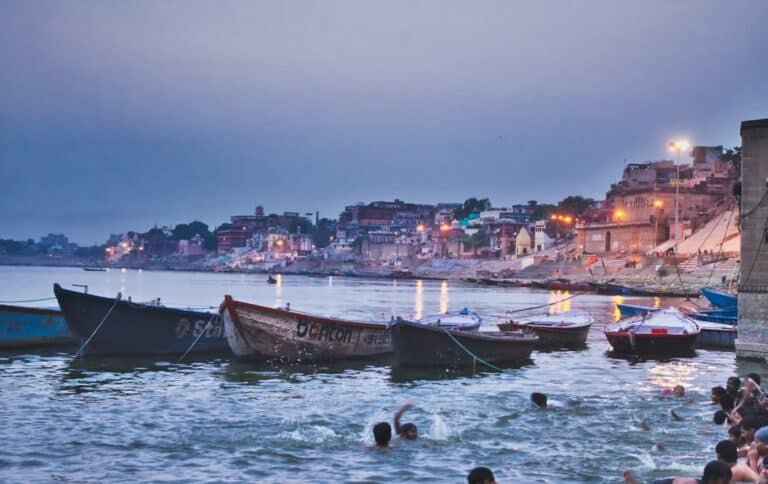
Why Is the Ganga Sacred?
The Ganga is river, goddess, pilgrimage route, purifier and national symbol. Tradivior will trace how these layers developed and evaluate modern claims about unusual self-purifying properties without confusing microbial findings…
Evidence Supported
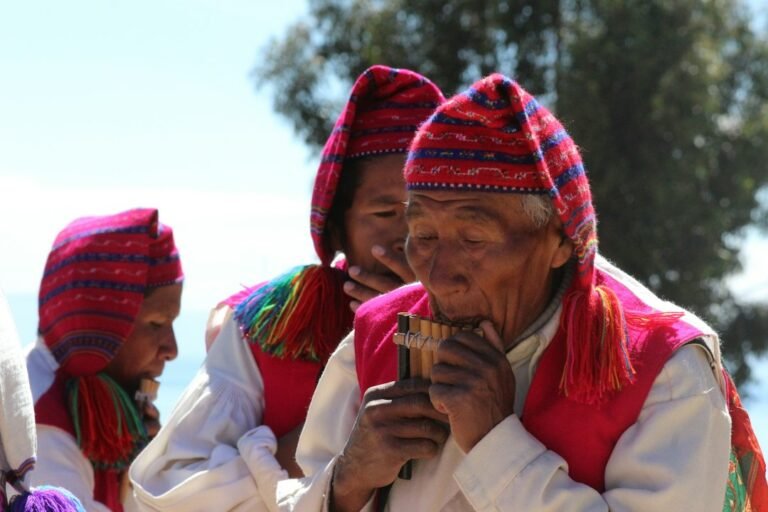
Why Do Oral Traditions Use Rhythm and Melody to Remember?
Epic poems, genealogies, prayers and work knowledge often survive through metre, rhyme, melody and formula. Tradivior will examine how oral cultures engineered memory before writing was widespread.
Evidence Supported
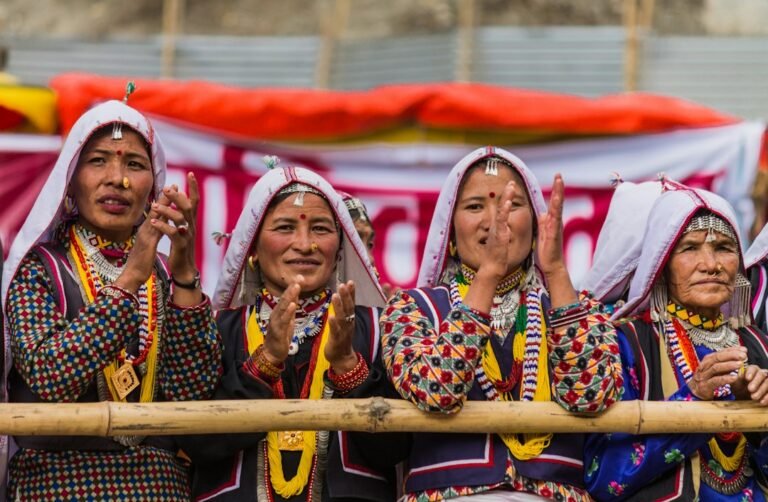
Why Do Work Songs and Collective Chants Synchronize Groups?
Rowers, labourers, soldiers and protesters have used rhythm to coordinate effort and create solidarity. Tradivior will examine when synchronized sound improves timing or endurance and when its main power is…
Partially Supported
Why Do Certain Sounds Feel Sacred?
A chant, bell, organ, drum or call to prayer can feel sacred to one listener and ordinary to another. Tradivior will investigate how acoustics, repetition, memory, expectation and cultural learning…
Picked for your curiosity
Enable JavaScript to build a reading profile and see recommendations.