 tradivior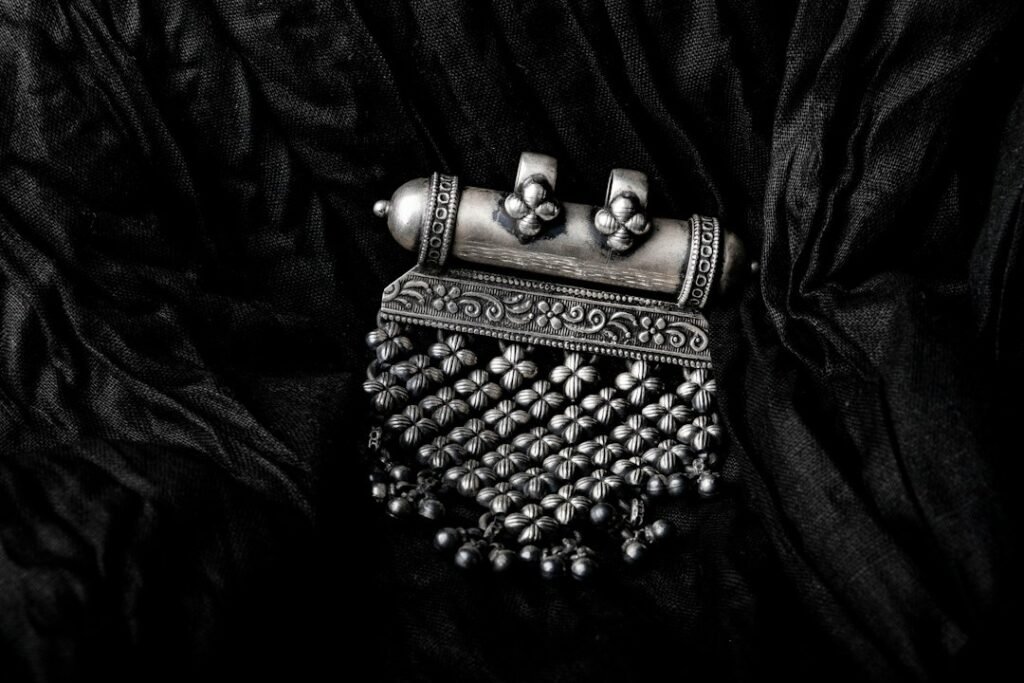
In this investigation
Humans have repeatedly treated durable, shining and rare materials as more than decoration. Gold becomes auspicious. Iron wards off danger. Silver purifies. Copper protects. Gemstones are assigned planets, deities, diseases and destinies. Rings, amulets and talismans carry these materials close to the body in the hope that their properties extend beyond beauty.
Some material effects are real. Copper and silver can kill microbes under the right conditions. Metals differ in corrosion, conductivity and skin reactivity. Gemstones differ in optical and mechanical properties. But those facts do not automatically validate astrological or therapeutic claims attached to jewellery. The central question is which effects belong to chemistry, which belong to symbolism and which are unsupported extrapolations.
Rare materials become meaningful because scarcity is visible
Gold, precious stones and unusual metals are difficult to obtain, transport or manufacture. Their rarity makes them useful status signals. A ruler wearing gemstones communicates access to resources before saying a word.
Once elite materials enter temples, crowns and royal regalia, their political value can become sacred value. The material does not need an intrinsic spiritual force for the association to become culturally powerful.
THE MATERIAL-SYMBOL LINK
Durability, rarity, colour and brilliance make materials excellent carriers of social meaning. Symbolism can grow from physical properties without being reducible to them.
Gold became auspicious partly because it does not corrode easily
Gold is chemically stable, visually distinctive and easy to work. It does not tarnish like many common metals. These properties make it a powerful symbol of permanence, purity and wealth.
In South Asian marriage, temple and household traditions, gold can therefore carry both economic and auspicious value. The material stores wealth while also participating in ritual.
Silver occupies a different symbolic and practical niche
Silver is less scarce than gold, easier to obtain in larger amounts and historically important for coins, vessels and jewellery. It also has genuine antimicrobial properties when biologically active silver ions are released.
Modern medicine uses silver compounds and engineered silver materials in wound care and antimicrobial applications. But intact skin is an effective barrier, and ordinary silver jewellery does not deliver controlled antimicrobial therapy throughout the body.
Copper really can kill microbes on contact
Copper’s antimicrobial activity is well established. Reviews describe rapid “contact killing” of bacteria and other microorganisms on metallic copper surfaces, driven by copper ions and damage to membranes, proteins and genetic material.
This is a real material property. It explains why copper surfaces are studied in healthcare environments.
But it does not mean a copper bracelet disinfects the wearer’s bloodstream, reduces arthritis or balances “body electricity.” A surface killing microbes and a bracelet treating systemic disease are very different claims.
Copper bracelets have not performed well in controlled pain trials
A randomized placebo-controlled crossover trial in people with osteoarthritis compared copper bracelets and magnetic wrist straps with control devices. It found no meaningful difference in pain, stiffness, physical function or medication use.
The result is important because copper bracelets are often marketed using real facts about copper chemistry to support unrelated pain claims.
THE EVIDENCE LIMIT
A material can have one scientifically real property without every traditional or commercial claim about that material becoming true.
Static magnets illustrate the same problem
Magnetic bracelets and pendants are marketed for pain, circulation and “energy balance.” Static magnetic fields are real physical phenomena.
But systematic review evidence does not support static magnets as an effective general pain treatment. A meta-analysis of randomized trials found no significant pain reduction compared with placebo, and other controlled studies have reached similar conclusions.
Magnetic field therapy is not the same thing as a magnetic bracelet
Medical and research devices can generate controlled pulsed electromagnetic fields with defined intensity and timing. That technology should not be confused with a small permanent magnet worn in jewellery.
Even modern reviews of specialized electromagnetic therapies find mixed or limited evidence depending on condition. The existence of medical electromagnetic research does not validate ordinary magnetic amulets.
Gemstones became powerful because colour and rarity invite interpretation
Rubies, sapphires, emeralds, diamonds and other stones differ dramatically in colour, hardness, transparency and scarcity. These properties make them easy to distinguish and assign meaning to.
Once a stone is linked with a planet, deity, ruler or desired quality, repeated ritual use reinforces the association.
Navaratna links nine gems with a cosmic system
South Asian traditions of navaratna arrange nine gemstones in relation to the nine grahas of classical Indian astrology. The specific stone-planet correspondences became important in jewellery, courtly art and ritual practice.
Within the astrological system, wearing an appropriate gemstone may be recommended to strengthen or balance planetary influence. Historically, this is a coherent symbolic practice. Scientifically, the causal claim requires evidence that gemstones alter human outcomes through the proposed planetary mechanism.
Astrological gemstone therapy lacks a demonstrated physical pathway
Gemstones can transmit and reflect specific wavelengths of light, but wearing a stone in a ring does not produce a known mechanism by which a distant planet’s influence is amplified in the body.
Optical properties are measurable. Astrological causation is a separate claim and has not been established through comparable controlled evidence.
Crystals can feel powerful without emitting a unique healing force
Modern crystal-healing culture often assigns emotional or medical effects to quartz, amethyst, rose quartz and other stones. People may report calm, focus or comfort while handling them.
Those experiences can arise through expectation, ritual attention, tactile sensation and personal meaning. Subjective benefit is real as experience, but it does not demonstrate that the crystal emits a therapeutic energy unknown to physics.
Placebo effects are not the same thing as “fake” effects
Expectation can influence pain, anxiety and perception. Ritual objects can therefore change how a person feels even when the proposed material mechanism is absent.
This does not justify false claims about chemistry or energy. It means meaning itself can influence experience.
Protective amulets reduce uncertainty
Danger is often unpredictable: illness, travel, childbirth, warfare, envy and bad luck. Carrying a protective object gives a person something concrete to do in situations where control is limited.
Psychologically, this can reduce uncertainty and create a sense of preparedness.
The object also communicates protection socially
An amulet can identify religious or community membership. Others may recognize the symbol and treat the wearer differently.
Protection can therefore operate socially even when no physical force is emitted by the object.
Iron acquired protective meanings in many traditions
Iron transforms dramatically under heat, produces weapons and tools and can appear technologically powerful in societies where metalworking is specialized.
Folklore in parts of Europe and elsewhere assigns iron protective power against supernatural beings. The symbolism plausibly draws from iron’s material strength and cultural importance, though specific traditions have their own histories.
Lead, mercury and arsenic remind us that “traditional metal” is not automatically safe
Some traditional remedies and ritual materials historically included toxic metals or mineral compounds. Cultural antiquity is not a safety guarantee.
Modern toxicology must override symbolic claims when exposure creates known risk.
Skin contact with metals can cause allergy
Nickel is a common cause of allergic contact dermatitis. Jewellery alloys can therefore produce genuine biological effects that are undesirable rather than therapeutic.
Material purity and alloy composition matter more for skin safety than claims that one metal is spiritually auspicious.
Copper can stain the skin without “drawing out toxins”
Copper jewellery can leave greenish discoloration where corrosion products react with sweat and skin chemistry.
This is ordinary chemistry, not evidence that toxins are being extracted from the body.
Silver tarnish is chemistry, not loss of spiritual power
Silver reacts with sulfur-containing compounds to form dark silver sulfide. Tarnishing therefore reflects environmental chemistry.
Traditional interpretations may assign symbolic meaning to changes in an amulet’s appearance, but the physical process has a straightforward explanation.
The brilliance of gems helps them become signs of purity and power
Transparent, saturated and highly reflective stones stand out visually. Humans notice them because they are unusual in ordinary environments.
That perceptual salience can support symbolic associations with clarity, fire, blood, sky, water or divine light.
Gem value also depends on trade networks
A stone’s sacred prestige can increase when it arrives from distant mines through elite trade. Distance and rarity amplify value.
Political control of gem sources can therefore shape religious symbolism as well as economics.
Royal use can turn luxury into sacred legitimacy
When rulers wear gemstone crowns or donate jewels to temples, precious materials become associated with divine favour and sovereignty.
The political and sacred meanings reinforce one another.
Inherited jewellery accumulates family meaning
A ring passed through generations may feel protective because it embodies family continuity and memory.
The emotional effect is real even when the material itself has no unusual medical property.
Ritual blessing changes the object’s social status
An ordinary thread, ring or stone can become an amulet after consecration. The physical object may remain unchanged while its ritual identity changes completely.
This demonstrates that protective power is often located in relationship, blessing and belief rather than material composition alone.
Protective objects can shape behaviour
A person wearing a sacred object may behave more cautiously, confidently or consistently with religious expectations.
Those behavioural changes can create real outcomes. The mechanism is psychological and social rather than a gemstone altering fate.
Confidence can influence performance
Ritual objects may function like lucky charms. Experimental psychology has found that activating superstition or perceived luck can sometimes improve persistence or performance through increased confidence.
This is a plausible pathway for subjective benefit that does not require supernatural causation.
Protection claims become dangerous when they replace effective care
An amulet worn alongside medical treatment is primarily a meaning system. An amulet used instead of urgent treatment can create harm.
Traditional symbolism deserves respect without allowing unsupported therapeutic claims to override evidence-based care.
Material science can validate some properties without validating the belief system
Copper contact killing and silver antimicrobial chemistry are excellent examples. Traditional communities may have observed that certain materials resisted spoilage or behaved differently from others.
But a real antimicrobial property does not prove astrological alignment, aura cleansing or systemic healing through jewellery.
What survives scrutiny?
- Metals and gemstones have long functioned as status markers, ritual objects, amulets and symbols of auspiciousness.
- Rarity, brilliance, durability and corrosion resistance help explain why precious materials acquire symbolic value.
- Copper and silver possess genuine antimicrobial properties under appropriate material conditions.
- Those antimicrobial properties do not establish that copper or silver jewellery produces systemic health benefits.
- Randomized trials generally do not support copper or static magnetic bracelets for osteoarthritis pain.
- Static magnetic fields are real, but ordinary magnetic jewellery should not be confused with controlled medical electromagnetic devices.
- Astrological gemstone systems are historically coherent symbolic traditions but lack demonstrated physical mechanisms linking stones to planetary effects on health or fate.
- Crystal-healing experiences can be influenced by expectation, ritual attention and personal meaning without proving emitted healing energy.
- Some metals can cause allergy, toxicity or other adverse effects, so “traditional” does not mean universally safe.
- The strongest explanation combines material value, social signalling, ritual meaning and psychological effects rather than hidden universal bioenergy.
The Tradivior Evidence Profile
Historical Authenticity — Strong. Protective and auspicious use of metals, gems and amulets is extensively documented across religious and cultural traditions.
Original-Purpose Evidence — Strong. Protection, status, astrology, divine favour, identity and portable wealth are well documented purposes.
Scientific Mechanism — Partially Supported. Some metals have real antimicrobial or dermatological properties, but broader claims about energy, planetary influence or systemic healing lack demonstrated mechanisms.
Experimental Evidence — Limited to Unsupported for therapeutic jewellery. Controlled trials generally fail to show meaningful benefit from copper or static magnetic bracelets, while antimicrobial material effects are well demonstrated in different contexts.
Cross-Cultural Evidence — Strong. Protective objects made from valued materials appear in many independent traditions.
Modern Relevance — Strong. Gemstones, amulets and metal jewellery remain important in astrology, religion, fashion, identity and complementary-health markets.
The Tradivior Conclusion
Partially Supported. Metals and gemstones genuinely differ in chemistry, rarity, durability and optical properties, and some metals such as copper and silver have measurable antimicrobial effects. Those facts help explain why materials became culturally distinctive. But they do not validate claims that jewellery balances energy, alters planetary influence or treats systemic disease. Protective and auspicious objects survive scrutiny most strongly as material symbols whose psychological and social effects can be real—even when the proposed supernatural or biomedical mechanism is not.
Continue investigating
- Why Did Bangles, Anklets and Nose Rings Become Social Signals in South Asia?
- Why Do Humans Carry Amulets and Talismans?
- Why Is the Evil Eye Found Across Cultures?
Sources and further reading
- Vincent M, Hartemann P, Engels-Deutsch M. “Antimicrobial applications of copper.” Review literature on copper contact killing.
- Grass G, Rensing C, Solioz M. “Metallic copper as an antimicrobial surface.” Applied and Environmental Microbiology. 2011. PMID: 21193661.
- Vishwanath N, et al. “Silver as an Antibiotic-Independent Antimicrobial: Review of Current Formulations and Clinical Relevance.” 2022. PMID: 36178480.
- Hadrup N, Sharma AK, Loeschner K. “Toxicity of silver ions, metallic silver, and silver nanoparticle materials after in vivo dermal and mucosal surface exposure: A review.” 2018. PMID: 30125612.
- Pittler MH, Brown EM, Ernst E. “Static magnets for reducing pain: systematic review and meta-analysis of randomized trials.” 2007. PMID: 17893349.
- Richmond SJ, et al. “Therapeutic effects of magnetic and copper bracelets in osteoarthritis: a randomised placebo-controlled crossover trial.” 2009. PMID: 19942103.
- Historical scholarship on navaratna, courtly gemstone traditions, amulets and astrological jewellery in South Asia.
Continue exploring

Partially Supported
Why Is the Ganga Sacred?
The Ganga is river, goddess, pilgrimage route, purifier and national symbol. Tradivior will trace how these layers developed and evaluate modern claims about unusual self-purifying properties without confusing microbial findings…
Partially Supported
Why Do People Keep Ashes, Relics and Memorial Objects?
Hair, ashes, bones, clothing, photographs and relics allow the dead to remain materially present. Tradivior will examine why objects carry memory so powerfully and how continuing bonds differ from pathological…

Evidence Supported
Why Do Cultures Set Aside Days to Remember the Dead?
From Pitru Paksha and Qingming to Día de Muertos and All Souls’ Day, cultures repeatedly create calendar time for the dead. Tradivior will compare how recurring remembrance renews kinship, grief…
Historically Practical
Why Do Cultures Preserve the Dead?
Mummification, embalming, freezing, smoking and desiccation reflect very different beliefs about bodies and afterlives. Tradivior will compare preservation traditions with the chemistry of decomposition and the practical limits of each…
Picked for your curiosity
Enable JavaScript to build a reading profile and see recommendations.