 tradivior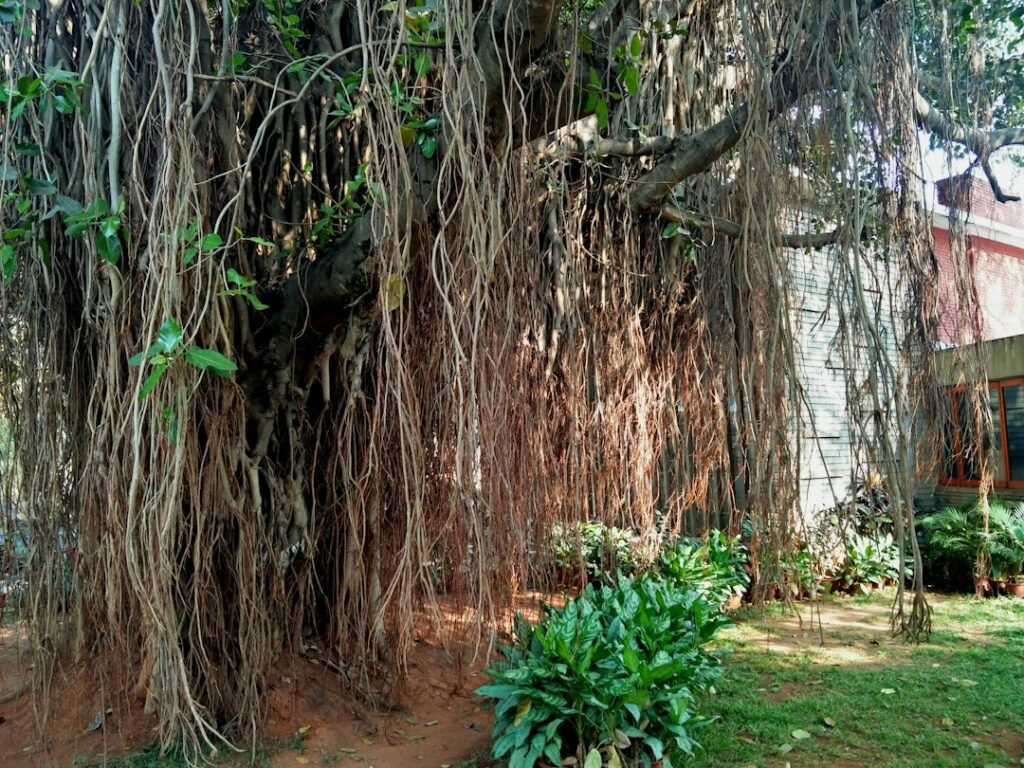
In this investigation
Sacred trees are found across civilizations because trees are unusually powerful biological objects for human imagination. They outlive individuals, regenerate after damage, change visibly with the seasons, provide shade and food, mark places and connect underground roots with sky-reaching branches. Many cultures therefore made particular trees into ancestors, divine dwellings, ritual centres, legal landmarks or symbols of fertility and continuity.
But sacred trees should not be romanticized as evidence that ancient societies invented modern conservation biology. Reverence can protect trees and habitats, sometimes remarkably well. The ecological benefit may be real even when conservation was not the original religious purpose.
Trees make time visible
A mature tree can survive through several human generations. People may remember grandparents gathering beneath it and later bring grandchildren to the same place. That continuity gives an individual tree unusual power as a witness to lineage and local history.
Long life also makes trees natural memorial anchors. Unlike a movable object, a tree fixes memory to a particular location.
Regeneration creates symbolism
Deciduous trees lose leaves and return. Coppiced or damaged trees can sprout again. Seeds produce new life from apparently inert matter. These ordinary botanical processes readily support symbolic associations with renewal, fertility, immortality and rebirth.
FAO reviews of cultural forest traditions note that trees have frequently represented endurance, fertility, sacred presence and links between worlds in very different societies.
The vertical form invites cosmology
Roots disappear into the earth while branches reach upward. That visible structure lends itself to world-tree imagery connecting underworld, human world and heavens.
The recurrence of “tree of life” motifs does not prove one prehistoric religion. Similar human bodies and environments can generate similar metaphors independently.
Some trees become sacred through events
A tree may be revered because a saint, prophet, ancestor or deity is associated with it. The Bodhi tree is a clear Buddhist example: the tree at Bodh Gaya is sacred because tradition locates the Buddha’s awakening there.
In other traditions, a tree may mark an apparition, burial, oath, village founding or ancestral event. Sacredness can therefore attach to biography and place rather than to species alone.
Other species become culturally privileged
In India, species of Ficus, especially peepal and banyan, have long religious associations and are frequently protected. Neem, tamarind and other species can also acquire ritual significance depending on region.
In Shinto contexts, particular trees may be marked as dwelling places or manifestations of sacred presence. In parts of Africa, large trees function as places of deliberation, initiation, ancestral connection or ritual sacrifice.
A sacred tree can become a social institution
Large shade trees often provide practical gathering places. Councils, storytelling, dispute resolution and ceremonies can all occur beneath them. Over time, the tree becomes inseparable from the social functions performed there.
FAO documentation from West Africa describes “palaver trees” as places where elders meet, decisions are made and political or judicial matters are discussed.
From sacred tree to sacred grove
When sacredness extends from one tree to a patch of forest, the ecological consequences can be significant. Taboos may restrict cutting, hunting, grazing or collection. The result can be a refuge for species in landscapes where surrounding vegetation is heavily used.
This pattern is well documented in India. Sacred groves occur under many regional names and can preserve native vegetation, medicinal plants and wildlife.
Do sacred groves conserve biodiversity?
Often yes, but not automatically. FAO and academic studies describe groves that function as biodiversity refuges and local gene reservoirs because extraction is limited by religious rules.
Yet sacred status can weaken, rules can change and groves can be invaded, fragmented or exploited. Conservation outcomes depend on continuing institutions, not merely on the label “sacred.”
Conservation may be an effect rather than the original goal
A community may protect a grove because a deity resides there, because ancestors are buried there or because violating it is dangerous. The ecological result can be forest preservation even when nobody formulated a biodiversity objective.
This distinction matters. Saying that a religious taboo conserved habitat is supported by evidence; saying the taboo was created because ancient people understood ecosystem science requires historical evidence that is usually absent.
Sacredness can also concentrate human pressure
Not every sacred tree is ecologically protected. Pilgrimage, offerings, paving, nails, strings, candles, soil compaction and construction can damage roots or trunks. Some revered trees survive only through intensive human maintenance.
Religious value therefore changes human behaviour, but the ecological direction of that change depends on practice.
Why sacred trees survive urbanization
A tree that has acquired ritual status may remain standing when nearby vegetation disappears. Shrines, roads or buildings may bend around it rather than remove it.
This persistence can make sacred trees living archives of older landscapes, although urban survival may leave them ecologically isolated.
What psychology can add
Humans respond strongly to large, old and visually distinctive natural objects. Environmental psychology finds that trees and green spaces can affect attention, stress and place attachment.
Those effects can help explain why a sacred tree feels emotionally powerful, but they do not establish the truth or falsity of a community’s religious interpretation.
What survives scrutiny?
- Sacred trees occur in many unrelated religious and cultural traditions.
- Longevity, regeneration, size, shade and vertical form make trees especially powerful symbols.
- Individual trees often become sacred through association with ancestors, saints, deities or remembered events.
- Sacred groves can measurably protect biodiversity by restricting extraction.
- Ecological protection is often a consequence of religious rules rather than their demonstrable original purpose.
- Sacred status can weaken or even create ecological pressure when ritual use becomes intensive.
- No single universal “tree religion” is required to explain the cross-cultural recurrence.
The Tradivior Evidence Profile
Historical Authenticity — Strong. Sacred trees and groves are extensively documented across Asia, Africa, Europe and other regions.
Original-Purpose Evidence — Strong. Religious presence, ancestry, fertility, protection, memory and communal identity are repeatedly documented meanings.
Scientific Mechanism — Moderate. Longevity, regeneration, ecosystem services and psychological responses to nature plausibly contribute to persistence, but they do not explain all sacred meanings.
Experimental Evidence — Moderate. Ecological studies can measure biodiversity and habitat outcomes; experimental tests of why a tree becomes sacred are necessarily limited.
Cross-Cultural Evidence — Strong. The phenomenon appears in many societies without one shared doctrine.
Modern Relevance — Strong. Sacred groves remain important for heritage, community identity and biodiversity conservation.
The Tradivior Conclusion
Trees became sacred not because one ancient civilization discovered a hidden property, but because trees sit at an unusual intersection of biology, memory and place. They live long, regenerate, feed and shelter communities, dominate landscapes and visibly connect earth and sky.
Religious protection can produce genuine conservation. The evidence is strongest when Tradivior states that effect directly and resists the retrospective claim that every taboo encoded modern ecology. Sacredness and conservation can reinforce one another without being the same idea.
Sources and further reading
- Food and Agriculture Organization of the United Nations: cultural and symbolic importance of forest resources.
- FAO: Center for the Conservation of Biodiversity — Sacred Groves in India.
- Swamy PS, Kumar M, Sundarapandian SM. Spirituality and ecology of sacred groves in Tamil Nadu, India. FAO / XII World Forestry Congress material.
- Kent EF. Sacred Groves and Local Gods: Religion and Environmentalism in South India. Oxford University Press, 2013.
Continue exploring

Partially Supported
Why Is the Ganga Sacred?
The Ganga is river, goddess, pilgrimage route, purifier and national symbol. Tradivior will trace how these layers developed and evaluate modern claims about unusual self-purifying properties without confusing microbial findings…

Partially Supported
Why Do People Keep Ashes, Relics and Memorial Objects?
Hair, ashes, bones, clothing, photographs and relics allow the dead to remain materially present. Tradivior will examine why objects carry memory so powerfully and how continuing bonds differ from pathological…

Evidence Supported
Why Do Cultures Set Aside Days to Remember the Dead?
From Pitru Paksha and Qingming to Día de Muertos and All Souls’ Day, cultures repeatedly create calendar time for the dead. Tradivior will compare how recurring remembrance renews kinship, grief…

Historically Practical
Why Did Cremation Become Central to Hindu Death Ritual?
Cremation has deep roots in many Hindu traditions but varies by community, age, status and circumstance. Tradivior will investigate its historical logic, environmental consequences and modern changes without treating one…
Picked for your curiosity
Enable JavaScript to build a reading profile and see recommendations.