 tradivior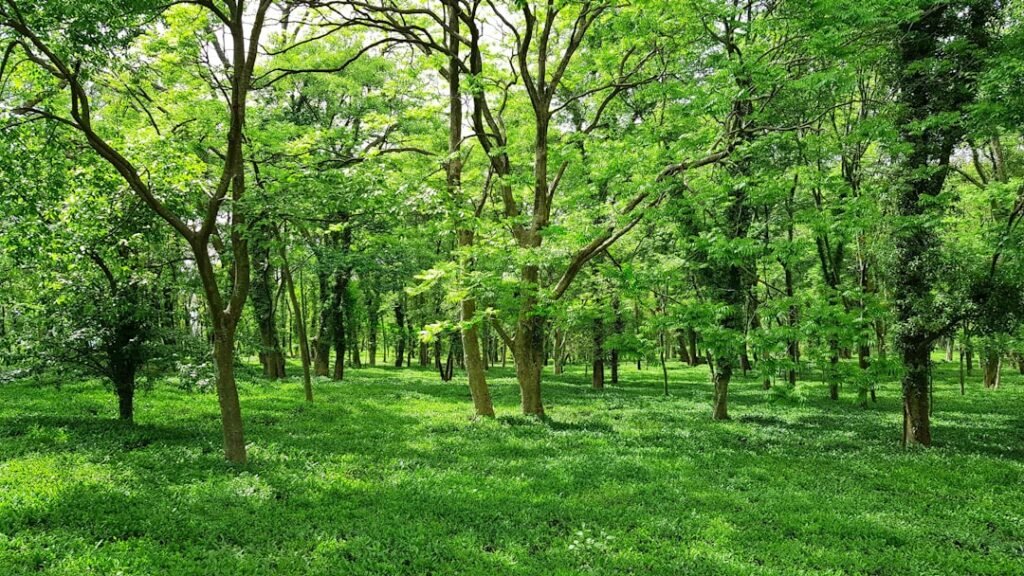
In this investigation
A sacred grove can look like an ecological reserve, but historically it may not have been created as one. A patch of forest is left standing because a deity lives there, an ancestor is associated with it, a local spirit is feared, a ritual must be performed there, or cutting trees is considered taboo. The ecological result can be conservation even when biodiversity protection was not the explicit original goal.
This distinction matters because sacred groves are often romanticized as proof that traditional societies consciously practised modern conservation science. That claim is too simple. Communities protected groves for religious, social and customary reasons. Yet those rules frequently reduced extraction, limited disturbance and allowed native vegetation to persist in landscapes transformed by agriculture or settlement.
India contains thousands of sacred groves under many regional names and traditions. Their size ranges from tiny village patches to substantial forest areas. Some are associated with temples; others with local deities, spirits, ancestors or village guardians. Some remain biologically rich. Others have been fragmented, encroached or reduced to symbolic remnants.
Sacred groves are not one Indian institution
India’s sacred groves occur across very different regions: the Western Ghats, Himalaya, Northeast India, central India, Rajasthan and elsewhere. Their names, deities, ownership systems and extraction rules differ.
A grove in Kodagu, a devrai in Maharashtra, a Khasi sacred forest in Meghalaya and a Himalayan deity grove should not be treated as interchangeable expressions of one ancient national conservation program.
THE CENTRAL DISTINCTION
Sacred groves are a family of community-protected landscapes whose ecological effects can be similar even when their religious meanings, institutions and histories are very different.
Religious protection can create real extraction limits
Many grove traditions restrict tree felling, hunting, grazing, removal of deadwood or collection of particular plants. In some places, taking material without ritual permission is believed to anger a deity or spirit.
From an ecological perspective, the mechanism is straightforward: reduce disturbance and more vegetation, deadwood, soil structure and habitat remain intact. The rule can work even if its justification is supernatural rather than ecological.
Taboo can be cheaper to enforce than formal policing
A protected forest normally requires monitoring, rules and sanctions. Sacred groves can embed those functions in belief. If people think violating the grove risks illness, crop failure or divine punishment, compliance may occur even when no guard is present.
This gives taboo an institutional role. It converts ecological restraint into moral and religious behaviour.
A deity can function as a nonhuman owner
Some sacred groves are understood as belonging to a deity rather than to ordinary individuals. That changes the moral status of extraction.
Cutting a tree is no longer simply taking a natural resource; it becomes trespass against a sacred owner. This can stabilize protection where private property or state regulation would otherwise be weak.
Village institutions often make the rules concrete
Sacredness alone is not enough. Groves are often governed by village councils, temple trusts, hereditary custodians, priests or customary assemblies that decide what can be collected and when.
A study of sixty-six sacred groves in Maharashtra’s Western Ghats found a mixture of ownership arrangements, including village councils, temple trusts, forest authorities and private ownership. This institutional diversity is important because conservation outcomes depend partly on who can enforce rules.
The religious motive may be stronger than ecological awareness
The same Maharashtra study found high local awareness of religious and cultural meanings but much lower awareness of ecological or utilitarian value.
This is a critical finding. People do not need to describe biodiversity science in order to protect biodiversity. Conservation can emerge as an indirect effect of a sacred institution.
The Western Ghats provide some of the clearest ecological evidence
The Western Ghats are a global biodiversity hotspot with extensive agricultural and plantation landscapes. Small forest fragments can therefore become important refuges for native species.
Research in Kodagu and other parts of the Western Ghats has shown that sacred groves can harbour native rainforest biodiversity, including rare plants and endemic birds, while improving habitat connectivity among larger forest areas.
Small patches can matter disproportionately in fragmented landscapes
A tiny grove may not sustain every forest species, but it can provide stepping-stone habitat between larger patches. Birds, insects, small mammals and plant dispersers can move through networks of fragments.
Landscape ecology therefore values not only total area but also connectivity and position.
Old trees can survive where surrounding forests disappear
When cutting is restricted, sacred groves may retain mature trees that become rare in farmed or logged landscapes.
Large old trees provide cavities, shade, epiphyte habitat, deadwood and structural complexity that younger secondary vegetation may lack.
Sacred groves can conserve plant diversity
Botanical surveys in several Indian regions report high species richness and the presence of medicinal, endemic or threatened plants inside groves.
The strongest comparisons are local because species richness naturally varies with rainfall, elevation, soil, grove size and surrounding land use.
A grove is not automatically pristine forest
Some sacred groves are old remnants of larger forests. Others have regenerated after earlier disturbance. Cultural protection can encourage reforestation as well as preservation.
Research in the Western Ghats shows that some groves described as ancient forest patches have dynamic histories, including phases of degradation and recovery.
THE ECOLOGICAL CAUTION
Sacred status can promote conservation, but it does not guarantee untouched forest. Groves are social-ecological systems that can improve, decline or recover over time.
Carbon storage is a real but context-dependent benefit
Forest biomass stores carbon. Sacred groves that retain mature woody vegetation therefore hold above-ground carbon that would be lost if the land were cleared.
But the amount varies with grove size, forest type, disturbance history and climate. Sacredness is not a carbon measurement by itself.
Long-term monitoring reveals that protection can weaken
A satellite-based study of Kodagu sacred groves compared official records with present forest cover and tracked biomass change from 2000 to 2010. It found that many small listed groves could no longer be located as forest and that above-ground biomass across the network declined over the study period.
Local communities identified encroachment and illicit logging among the threats. This evidence directly contradicts romantic claims that sacred groves are automatically safe because tradition protects them.
Customary institutions can erode faster than trees
A grove may still exist physically while the rules protecting it weaken. Younger residents may know the site but no longer fear sanctions. Ritual specialists may disappear. Land values may rise.
Once the institution erodes, ecological decline can follow.
Urbanization changes the cost of keeping land forested
When roads, tourism or urban development increase land prices, the opportunity cost of leaving a grove untouched rises.
A sacred patch that survived centuries under agrarian land use may come under new pressure from construction, extraction or infrastructure.
Tourism can protect and damage the same grove
Visitors can bring conservation attention, income and political visibility. They can also bring litter, trampling, road construction and commercial development.
The effect depends on governance rather than on tourism being inherently good or bad.
Ritual use itself can create disturbance
Festivals may involve crowds, fires, animal movement, offerings, temporary structures and vehicle access.
A grove can therefore be both protected from routine extraction and periodically disturbed by the very rituals that preserve its sacred importance.
Different species respond differently to small protected patches
Some plants and animals tolerate fragmentation well; others require large continuous habitat. Sacred groves cannot substitute completely for large protected forests.
Their strongest role may be complementary: refuges, seed sources, habitat links and culturally defended patches inside human-dominated landscapes.
Water protection can emerge as a secondary benefit
Forested patches influence infiltration, shade, erosion and local moisture conditions. Some sacred groves protect springs, streams or headwater zones.
Where vegetation remains intact around water sources, reduced soil disturbance can help protect water quality and flow stability.
But hydrological claims should not be universalized
A one-hectare grove does not control regional rainfall. Forest-water relationships depend on scale, soil, geology and climate.
Claims that sacred groves “create rain” or guarantee perennial water go beyond what local ecological studies can establish.
Sacred groves can preserve culturally important medicinal plants
Where harvesting is restricted, species used in traditional medicine may survive inside groves after disappearing from heavily used surrounding land.
This creates both ecological and knowledge value. But conservation and medicinal efficacy are separate questions: preserving a plant does not prove every medicinal claim made about it.
Sacred landscapes preserve memory as well as species
Groves contain shrines, stones, trees, paths and stories that link present communities with ancestors and local history.
This cultural continuity can be a stronger protection motive than abstract biodiversity value.
Ecology and identity become mutually reinforcing
When a grove defines village identity, protecting it preserves both landscape and social memory. Ecological loss then feels like cultural loss.
This can create durable conservation incentives that formal protected-area language alone may not reproduce.
Sacred groves complicate the idea that conservation requires state ownership
Modern conservation often relies on national parks, wildlife sanctuaries and forest departments. Sacred groves show that communities can also conserve habitat through customary institutions.
That does not mean customary systems are always superior. It means governance can work through multiple institutions.
Formal protection can help—but can also displace local authority
Legal recognition can protect a grove from development and provide resources for conservation. But if formal agencies ignore local ritual custodians, the community may lose responsibility and motivation.
Successful integration therefore requires institutional design, not simply declaring the grove protected.
India’s biodiversity law offers possible institutional support
Researchers have argued that provisions under the Biological Diversity Act and local biodiversity-management institutions could help support sacred groves while respecting cultural values.
The challenge is to strengthen protection without converting a living community institution into a museum category.
Sacred groves are not automatically egalitarian institutions
Access rules can reflect caste, gender, lineage or ritual status. Some people may control rituals or decision-making more than others.
Celebrating ecological outcomes should not erase the social hierarchy embedded in some customary institutions.
Conservation rules can restrict local livelihoods
A taboo on extraction preserves habitat, but it also limits access to fuel, fodder or timber. Communities accept those costs when the sacred value is strong enough.
Modern conservation programs must understand who bears the cost of protection rather than assuming every restriction is universally welcomed.
The original motive should not be rewritten as biodiversity science
A village may protect a grove because a goddess resides there. Modern ecologists may later discover rare species inside it.
Both statements can be true. The ecological value does not prove that historical villagers protected the grove because they had a modern species-conservation theory.
THE HISTORICAL CONNECTION
Modern science can demonstrate an ecological consequence. It cannot automatically establish the original reason a sacred rule emerged.
Cultural selection can still preserve useful institutions
A practice does not need an explicit ecological theory to have adaptive value. Communities can notice that a protected grove provides shade, water, ritual continuity or resources during crisis.
Useful consequences can reinforce sacred rules over generations even if they were not the original cause.
Comparison with formal reserves reveals strengths and weaknesses
State reserves may cover larger areas, employ professional staff and have legal enforcement. Sacred groves may have stronger local legitimacy and finer-grained social monitoring.
The strongest conservation landscapes may use both rather than treating them as competitors.
Networks of groves can matter more than any single patch
A landscape containing dozens or hundreds of community-protected groves can preserve distributed habitat even where no individual grove is large.
Network-level mapping is therefore important for understanding their conservation role.
Official inventories can overstate what still survives
The Kodagu study found that official records did not always match present forest cover, especially for smaller sites.
This is a warning for heritage statistics. A grove listed on paper is not necessarily a functioning forest on the ground.
Remote sensing improves accountability
Satellite imagery can track canopy cover, biomass and land-use change over time. This allows researchers to test whether culturally protected landscapes are actually retaining vegetation.
Combining remote sensing with interviews is especially valuable because ecological change and institutional change can be studied together.
Biodiversity surveys need appropriate comparison sites
Finding many species in a grove is not enough to prove the sacred institution caused high diversity. The correct comparison is with nearby habitat of similar size, soil, elevation and forest type.
Without controls, climate or geography may be mistaken for cultural protection.
Small groves face strong edge effects
When a forest patch is tiny, sunlight, wind, invasive species and human disturbance penetrate much of it from the edges.
This means a half-hectare sacred grove may preserve cultural value while still struggling to maintain interior-forest conditions.
Larger groves often provide stronger ecological refuge
Greater area generally supports more habitat diversity and reduces the proportion affected by edges.
But small groves can still be important if they protect rare species, springs or strategic connectivity points.
Sacred-grove conservation is vulnerable to belief change
If younger generations no longer accept the deity, taboo or ritual authority associated with a grove, the institution may lose its enforcement mechanism.
Ecological education can help, but replacing sacred motivation with scientific explanation is not always straightforward.
Ecological awareness can become a second reason for protection
Communities do not have to choose between sacred and scientific value. A grove can remain a deity’s landscape while also being recognized as habitat, carbon storage and water protection.
Multiple reasons can make conservation more resilient when one source of motivation weakens.
Modern conservation can learn from the enforcement logic
Sacred groves show that rules work better when they are tied to identity, morality and community legitimacy rather than only external policing.
This lesson is institutional rather than mystical: conservation succeeds when people believe the rule belongs to them.
But sacredness cannot simply be manufactured by policy
A government cannot declare an arbitrary forest spiritually sacred and expect centuries of customary authority to appear.
The effectiveness of sacred protection comes from lived belief, ritual and social history.
The most important modern threat may be institutional rather than ecological
Logging, invasive species and fragmentation are visible ecological threats. Underneath them may lie a deeper cause: weakening community authority and changing land values.
Restoring canopy without restoring governance may therefore produce only temporary success.
The tradition is strongest when treated as social ecology
A sacred grove is simultaneously habitat, shrine, property regime, memory system and community institution.
Reducing it to either “superstition” or “ancient conservation science” misses the reason it persisted.
Khasi sacred forests show how religion and governance interlock
Among Khasi communities in Meghalaya, sacred forests are often embedded in indigenous political and ritual institutions. Groves can be associated with priests, village heads, clan structures and local assemblies rather than existing as isolated pieces of forest.
Research on Khasi sacred forests emphasizes that their preservation historically depended on both belief and social authority. A taboo has greater force when a community also knows who has the right to interpret and enforce it.
Mawphlang is a famous example—but should not stand in for all Meghalaya
The Mawphlang sacred forest in the East Khasi Hills is widely cited because of its size, biodiversity and strong association with local guardian spirits. Traditional rules prohibit removing material from the grove, and ritual institutions remain central to its identity.
Its fame can create a sampling problem. A well-protected, culturally prominent grove is not necessarily representative of every sacred forest in the region. Some sites have weaker institutions and greater extraction pressure.
Legal recognition does not automatically replace customary authority
Khasi and Jaintia forest governance includes Autonomous District Council structures and legal categories for community forests. Yet legal recognition can coexist with enforcement gaps.
This reinforces a recurring lesson: formal law is strongest when it supports functioning local institutions rather than assuming paperwork alone protects trees.
Religious change can alter conservation incentives
Historical and ethnographic work in Meghalaya documents weakening of some sacred-grove beliefs through conversion, modernization, timber markets and development pressures.
The ecological effect is not predetermined. Some communities reinterpret the grove culturally or environmentally even when older religious beliefs weaken; others lose the institution entirely.
Rajasthan’s Orans show that sacred conservation is not limited to dense forest
In Rajasthan, sacred natural sites known as Orans can include woodland, scrub, pasture and semi-arid habitat rather than lush closed forest.
This is ecologically important because conservation value depends on the native ecosystem. A semi-arid sacred landscape should not be judged by how closely it resembles a rainforest.
Orans can protect birds, grazing systems and dryland biodiversity
A 2024 study in Udaipur district compared sacred groves with random surrounding points and recorded greater bird-species richness inside the sacred sites, including species of conservation concern.
The result shows that sacred protection can matter even in highly human-modified, semi-arid landscapes where forest cover is not the only ecological metric.
Dryland sacred sites reveal a problem with forest-only conservation metrics
If conservation success is measured only by tree cover, grasslands, scrub and rangelands can be misclassified as degraded. Some Rajasthan Orans are ecologically valuable precisely because they preserve non-forest habitats.
Modern conservation assessment therefore has to respect ecosystem type rather than assuming more trees always means better ecology.
New mapping shows that land-use threats differ by region
Recent statewide research on Rajasthan sacred natural sites found different trajectories, including urbanization, agricultural expansion, forest expansion and relatively stable areas.
This undermines one-size-fits-all conservation policy. A grove threatened by real-estate expansion needs a different response from a rangeland pressured by irrigation-driven agricultural conversion.
Climate change adds another layer of risk
Sacred status does not insulate ecosystems from drought, fire, invasive species or shifting rainfall. Climate stress can alter vegetation even when human extraction remains low.
Conservation plans therefore need ecological monitoring in addition to cultural protection.
The strongest groves often combine social and ecological redundancy
A grove is more resilient when several forms of protection overlap: religious belief, village ownership, legal recognition, social monitoring and ecological awareness.
If one layer weakens, another can continue to protect the site. Systems depending on one fragile authority are more vulnerable to rapid change.
Ecological monitoring can support rather than replace tradition
Remote sensing, bird surveys and vegetation plots can show whether the grove is retaining habitat. Those methods need not compete with ritual custodians.
The most constructive model lets local institutions define cultural meaning while scientific monitoring identifies ecological change that may otherwise go unnoticed.
Sacred groves complicate the idea of “wilderness”
Many groves are not untouched wilderness. They are cultural landscapes shaped by ritual paths, shrines, selective access and community memory.
Their conservation value therefore does not depend on excluding humans completely. It depends on the intensity and type of human use.
Community conservation can preserve habitat while allowing ritual presence
This is a useful alternative to the false choice between total human exclusion and unrestricted extraction. Some sacred groves demonstrate that low-intensity ritual use can coexist with substantial ecological protection.
Whether that balance persists depends on scale, visitor pressure and governance.
Cultural legitimacy may be the hardest conservation asset to replace
Funding can restore fences. Government can create protected-area boundaries. Ecologists can document species. None of those interventions automatically recreates the moral authority of a belief that a grove belongs to a deity or ancestor.
That legitimacy is slow to build and easy to weaken, making it one of the most valuable features of functioning sacred-grove institutions.
The future of sacred groves is therefore partly cultural policy
If younger generations encounter sacred groves only as tourist attractions, the institution may survive aesthetically while losing the norms that once regulated extraction.
Education, local documentation, ritual continuity and community authority can therefore matter as much as biological restoration.
Success has to be measured on more than one axis
A sacred grove can succeed culturally while declining ecologically, or remain biologically rich while its customary institutions collapse. Treating conservation as a single score hides these differences.
A stronger assessment asks at least three questions: Is native habitat actually being retained? Are the local rules and custodians that regulate use still functioning? And do community members still regard the grove as legitimately theirs to protect rather than as an external conservation project imposed on them?
Ecological condition needs direct monitoring
Canopy cover, species composition, regeneration, invasive plants, biomass and water condition can all change even when the sacred boundary remains formally intact. Periodic field surveys and satellite monitoring therefore provide information that ritual status alone cannot.
This does not reduce the grove to a scientific plot. It simply prevents symbolic protection from being mistaken for ecological security when the habitat is deteriorating.
Institutional continuity is equally important
A functioning sacred grove usually has people who know the rules, remember the stories, organize rituals, resolve disputes and respond when someone violates customary restrictions. If those roles disappear, the grove may retain a name while losing its practical governance.
Recording custodianship, sanctions and community participation is therefore as important as counting trees when the goal is long-term protection.
Local legitimacy is difficult to replace once lost
External conservation agencies can provide law, funding and technical expertise, but they cannot instantly manufacture the trust that comes from a rule embedded in local identity. Where communities continue to recognize the grove’s authority, protection can be remarkably persistent.
The strongest future model is therefore plural rather than nostalgic: customary institutions where they remain legitimate, ecological monitoring where evidence is needed, and formal legal support where outside pressure exceeds what a village can control alone.
What survives scrutiny?
- Sacred groves are widespread but culturally diverse community-protected forest patches in India.
- Religious taboos and customary institutions can reduce tree cutting, hunting, grazing and extraction.
- Protection can conserve native vegetation even when biodiversity was not the original explicit motive.
- Western Ghats research shows that sacred groves can harbour rare plants, endemic birds and native rainforest biodiversity.
- Networks of groves can improve habitat connectivity in heavily modified landscapes.
- Forested groves store biomass and carbon, but the amount varies strongly with size, forest type and disturbance.
- Some groves protect springs, soils and locally important medicinal plants.
- Not all groves are pristine or stable; some are regenerated forests and others are declining.
- Satellite studies in Kodagu found loss and biomass decline in parts of the sacred-grove network despite formal listings.
- Weakening local institutions, encroachment, logging and changing land values threaten protection.
- Formal conservation can strengthen groves, but should not erase community governance and ritual meaning.
- Ecological outcomes should not be retroactively presented as proof that historical communities possessed modern conservation science.
- The strongest modern model combines customary legitimacy, ecological monitoring and legal protection.
The Tradivior Evidence Profile
Historical Authenticity — Strong. Sacred groves are extensively documented across multiple Indian regions and communities.
Original-Purpose Evidence — Strong. Deity residence, ancestral association, ritual obligation, taboo and local protection are well documented, while explicit modern conservation motives are often later interpretations.
Scientific Mechanism — Strong. Reduced disturbance, habitat retention, connectivity, biomass preservation and water-source protection provide clear ecological mechanisms.
Experimental Evidence — Moderate to Strong. Field surveys, biodiversity assessments, remote sensing and landscape studies demonstrate ecological value, while results vary among regions and grove sizes.
Cross-Cultural Evidence — Strong. Sacred forests and culturally protected natural sites occur across Asia, Africa and other regions, though institutions and beliefs differ.
Modern Relevance — Strong. Sacred groves remain important for community conservation, biodiversity connectivity, heritage and locally legitimate environmental governance.
The Tradivior Conclusion
Evidence Supported—with historical-purpose caution. Sacred groves in India can produce real conservation outcomes. Taboos, deity ownership and customary governance often reduced extraction strongly enough to preserve native vegetation, habitat connectivity and culturally important species. Modern ecological studies confirm those effects in many regions. But the evidence does not justify a romantic claim that sacred groves were consciously designed as biodiversity reserves using ancient conservation science. Their protection grew primarily from religion, identity and community institutions. The ecological value is genuine; the modern scientific explanation is largely a later understanding of what those institutions accomplished.
Continue investigating
- Why Are Sacred Trees Found Across Civilizations?
- Why Did Communities Protect Water Sources Through Ritual Rules?
- Why Did Traditional Farmers Read Birds, Insects and Plants as Weather Signs?
Sources and further reading
- Bansude A, et al. “Cultural dimensions of sacred forests in the Western Ghats Biodiversity Hot Spot, Southern India and its implications for biodiversity protection.” International Journal of Anthropology and Ethnology. 2021.
- “Spatio-temporal variation in forest cover and biomass across sacred groves in a human-modified landscape of India’s Western Ghats.” Biological Conservation. 2014;178:193–199.
- “Conserving biodiversity through traditional beliefs in sacred groves in Uttarakhand Himalaya, India.” Resources, Conservation and Recycling. 2010;54(11):962–971.
- Bhagwat SA, Nogué S, Willis KJ. “Cultural drivers of reforestation in tropical forest groves of the Western Ghats of India.” Forest Ecology and Management. 2014;329:393–400.
- “Nucleus model of sacred groves: traditional beliefs, myths, anthropogenic threats and conservation in the lesser Himalayas, India.” Ecological Frontiers. 2024;44(2):217–233.
- Research on community-conserved areas, forest connectivity and sacred-grove institutions in Kodagu and the Western Ghats.
- Recent reviews of sacred groves as biodiversity refugia and community conservation systems.
Continue exploring

Why Is the Ganga Sacred?
The Ganga is river, goddess, pilgrimage route, purifier and national symbol. Tradivior will trace how these layers developed and evaluate modern claims about unusual self-purifying properties without confusing microbial findings…

Partially Supported
Why Do Humans Repeat Rituals?
Rituals repeat because fixed sequences create predictability, memory, identity and coordination. Experiments suggest ritualized repetition can regulate anxiety and social connection, while mantra repetition shows small benefits for psychological distress;…

Primarily Symbolic/Cultural
Why Do Humans Make Offerings to the Sacred?
Offerings make relationships with gods, ancestors and sacred powers materially visible. Gifts can express reciprocity, devotion, gratitude, sacrifice and group commitment; costly-signalling models illuminate some public effects but cannot substitute…
Partially Supported
Why Do Religious Processions Take Sacred Things Into the Street?
Religious processions move sacred presence, symbols and communities through public space. They can expand shared identity through coordinated movement and visibility, but the same public occupation can mark boundaries and…
Picked for your curiosity
Enable JavaScript to build a reading profile and see recommendations.