 tradivior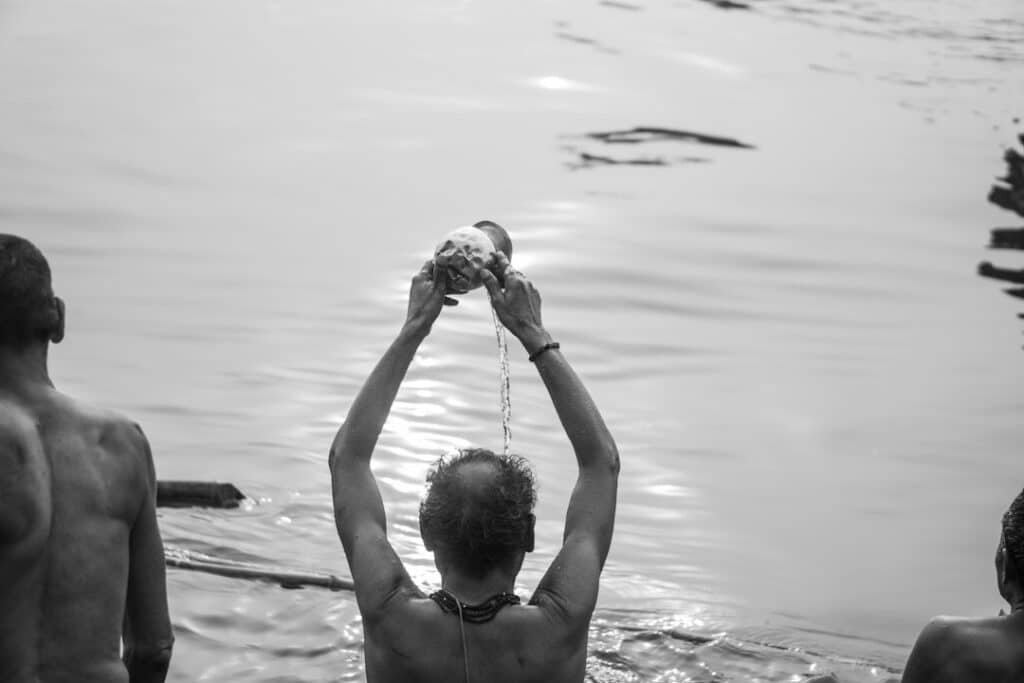
In this investigation
Rivers become sacred because they are simultaneously physical systems and social lifelines. They carry water, fertility, trade, danger, memory and death through the same landscape. That combination makes them unusually powerful religious objects.
A river can feed a civilization and destroy it in flood. It can mark territory, receive the dead, cleanse bodies, support agriculture and connect distant communities. Across cultures, those practical realities become woven into cosmology and ritual.
Water is never only water in religion
Anthropological research on water and religion shows that rivers, springs, rain, lakes and waterfalls can all become sacred in distinct ways. Their meanings depend on ecology, theology and local history.
Some waters bless and purify. Others mark danger, chaos or divine punishment. Even the same river can carry contradictory meanings at different times.
Rivers organize settlement and memory
Human settlements often cluster around reliable water because rivers support drinking, irrigation, fishing, transport and fertile floodplains. Over generations, dependence produces stories, rituals and identities tied to the watercourse.
This does not mean sacredness is merely a disguised survival strategy. Practical dependence and religious imagination can reinforce each other without one reducing to the other.
Rivers move, and that matters symbolically
Unlike a mountain or tree, a river is continuously in motion. It connects upstream and downstream, carries objects away and returns seasonally through floods.
That makes rivers natural symbols of transition, purification, impermanence, rebirth and passage between worlds.
Purification is one of the most widespread themes
Many religious traditions use flowing water for washing, ritual preparation or symbolic cleansing. The logic is intuitive: visible dirt can be carried away, so moral or ritual impurity can be represented through the same action.
But ritual purity is not the same thing as microbiological safety. Sacred water can be religiously pure while physically contaminated.
Rivers and death are often linked
Rivers can carry ashes, receive funerary offerings, border burial grounds or represent journeys to another realm. Their movement makes them powerful vehicles for imagining transition from life to death.
That association can intensify sacred status while also creating environmental pressures when large populations use the same river for ritual and waste disposal.
Sacredness can create protection
Religious rules can sometimes protect riverbanks, springs, fish, wetlands or particular reaches from extraction. Ritual calendars may also regulate access or seasonal use.
Where those rules remain strong, sacred status can contribute to conservation.
But reverence does not guarantee clean water
The Ganga demonstrates the paradox clearly. It is among the world’s most revered rivers and has also faced severe pollution from sewage, industry, solid waste and dense human use.
Scholarship on the Ganga repeatedly warns against assuming that sacred status automatically produces ecological stewardship. Ritual purity and physical water quality are different categories.
The conservation question must be tested, not assumed
If a sacred rule prohibits dumping, cutting or extraction, its ecological effect can be measured. If a river is revered but receives untreated sewage, reverence alone has not protected water quality.
The correct approach is empirical: examine actual behaviour and ecological outcomes rather than infer environmental virtue from religious language.
Sacred rivers can support political identity
Rivers also become symbols of kingdoms, nations, ethnic groups and regions. Control over a sacred river can therefore carry political weight beyond its economic value.
Pilgrimage routes, ritual centres and riverfront cities can transform a hydrological system into a map of collective identity.
Modern environmentalism can work with sacred narratives
Religious institutions can mobilize large communities quickly. When environmental campaigns connect water quality to sacred responsibility, they may strengthen public participation.
But narrative cannot substitute for sewage treatment, industrial regulation, flow management or monitoring. Cultural mobilization and engineering have to work together.
What survives scrutiny?
- Rivers repeatedly become sacred because water dependence, movement, fertility, danger and memory create powerful religious meanings.
- Purification rituals often use water symbolically without guaranteeing microbiological safety.
- Sacred status can sometimes protect river reaches or associated habitats.
- Reverence alone does not prevent pollution.
- Ritual purity and environmental quality are distinct concepts.
- Rivers can organize pilgrimage, political identity and territorial memory.
- Modern conservation works best when cultural authority and technical water management reinforce one another.
The Tradivior Evidence Profile
Historical Authenticity — Strong. Sacred rivers are extensively documented across many civilizations and religions.
Original-Purpose Evidence — Strong. Purification, fertility, pilgrimage, death, divine presence and territorial identity are well attested.
Scientific Mechanism — Moderate. Dependence on water, hydrological cycles and social behaviour explain some persistence, but not theological meaning itself.
Experimental Evidence — Limited to Moderate. Water quality and behaviour can be measured, while religious causation is harder to isolate.
Cross-Cultural Evidence — Strong. River sacrality appears in many unrelated societies.
Modern Relevance — Strong. Sacred rivers remain central to public health, conservation, pilgrimage and political life.
The Tradivior Conclusion
Humans treat rivers as sacred because rivers make dependence visible. They give life, carry danger, connect places and transform landscapes through time.
The strongest evidence rejects two extremes: sacred rivers are neither merely primitive environmental regulations nor inherently ecological institutions. Their religious meaning is real, and their conservation effect must be demonstrated case by case.
Sources and further reading
- Oestigaard T. Water and Religion. Oxford Research Encyclopedia of Anthropology.
- Agoramoorthy G. Sacred rivers: their spiritual significance in Hindu religion. Journal of Religion and Health. 2015.
- Behera HC, Singh D, Kumar KA. Water, Sacred Culture and Conservation in India: An Anthropological Overview. 2025.
- Sigdel et al. Resolving the Ganges pollution paradox: A policy-centric systematic review. River. 2023.
Continue exploring
Partially Supported
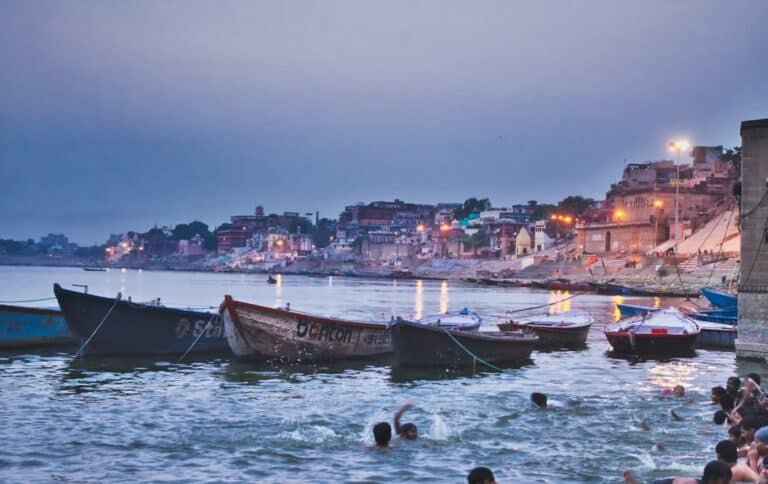
Why Is the Ganga Sacred?
The Ganga is river, goddess, pilgrimage route, purifier and national symbol. Tradivior will trace how these layers developed and evaluate modern claims about unusual self-purifying properties without confusing microbial findings…
Partially Supported
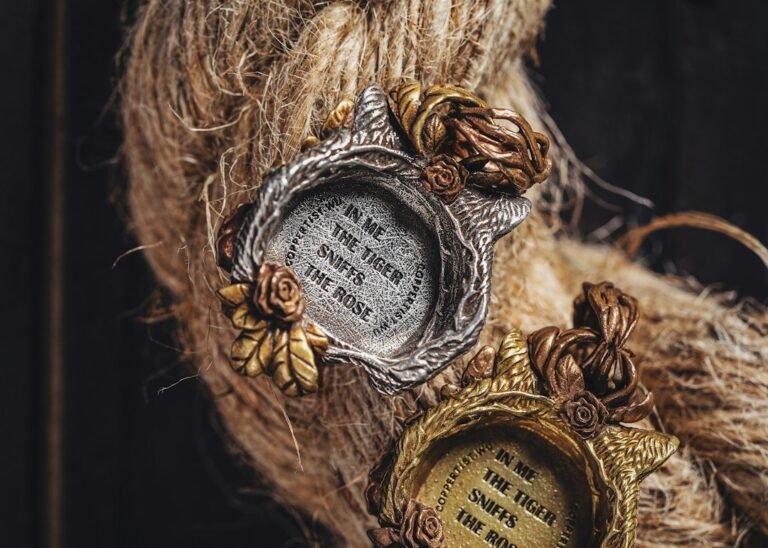
Why Do People Keep Ashes, Relics and Memorial Objects?
Hair, ashes, bones, clothing, photographs and relics allow the dead to remain materially present. Tradivior will examine why objects carry memory so powerfully and how continuing bonds differ from pathological…

Evidence Supported
Why Do Cultures Set Aside Days to Remember the Dead?
From Pitru Paksha and Qingming to Día de Muertos and All Souls’ Day, cultures repeatedly create calendar time for the dead. Tradivior will compare how recurring remembrance renews kinship, grief…

Historically Practical
Why Do Cultures Preserve the Dead?
Mummification, embalming, freezing, smoking and desiccation reflect very different beliefs about bodies and afterlives. Tradivior will compare preservation traditions with the chemistry of decomposition and the practical limits of each…
Picked for your curiosity
Enable JavaScript to build a reading profile and see recommendations.