 tradivior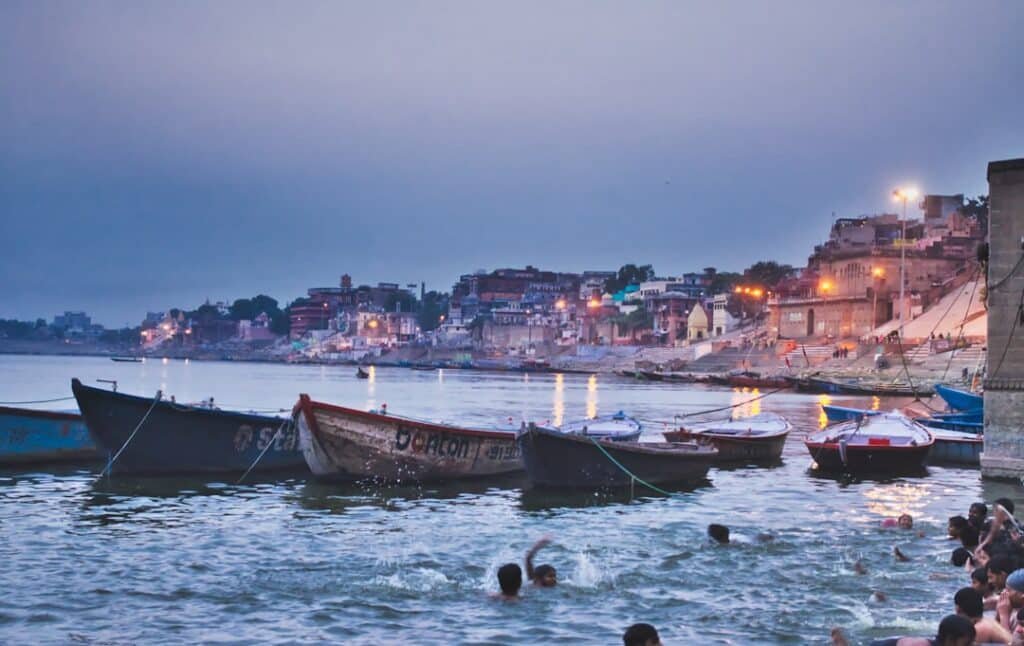
In this investigation
The Ganga is sacred because it is simultaneously a river, a goddess, a pilgrimage route, a purifier and a civilizational landscape. Its religious importance cannot be reduced to one myth or one ecological property. Texts, pilgrimage, cities, death rituals, kingship and everyday devotion accumulated around the river over centuries.
Modern science adds another layer. The Ganga has distinctive hydrology and microbial communities, including abundant bacteriophages in some studies. Those findings are interesting, but they should not be inflated into proof of theological claims or into the idea that the river is immune to pollution.
Ganga is both water and divine presence
In Hindu traditions, Ganga is not merely a river that later acquired religious symbolism. She is personified as a goddess and appears in mythic narratives connecting heaven, earth, kings, sages and ancestors.
This personification allows the river to be encountered simultaneously as physical water and sacred being. Bathing, offering and pilgrimage therefore engage both dimensions.
The descent of Ganga links cosmic myth to geography
One of the best-known narratives describes Ganga descending from heaven to earth, with Shiva receiving the force of her descent in his hair. The story connects the river to divine mediation, purification and the rescue of ancestors.
Myth gives geography a sacred history. A river course becomes not only a natural feature but the visible trace of a cosmic event.
Purification is central
Ganga water is widely associated with purification from sin and ritual impurity. Pilgrims bathe in the river, carry water home and use it in ceremonies far from the riverbank.
This portability matters. Sacred water allows the river’s presence to travel beyond its physical channel.
Pilgrimage made the river a network
Haridwar, Prayagraj, Varanasi and many smaller tirthas turn the Ganga into a linked geography of sacred crossings, bathing places, temples and festivals.
The river is therefore not one shrine. It is a moving pilgrimage system whose sacredness is renewed through repeated journeys.
Death intensifies the river’s significance
Varanasi and other riverfront sites connect the Ganga with cremation, ashes and hopes for liberation. The river becomes part of the transition between life, death and ancestral memory.
That association deepens sacred status while also creating difficult modern questions about urban waste, cremation practices and river management.
The Ganga is also an ecological and economic system
The basin supports hundreds of millions of people through agriculture, fisheries, drinking water, transport and groundwater recharge. Its cultural importance is inseparable from this material dependence.
That does not mean religion is merely a response to economics. It means the river’s sacredness grew in a landscape where survival, settlement and ritual were continuously intertwined.
Why claims of “self-purifying” water became so famous
Historical observers noted that Ganga water sometimes behaved differently from expectations, including apparent suppression of some bacteria. Later researchers proposed several mechanisms, especially bacteriophages, dissolved oxygen, trace elements and hydrological conditions.
These observations encouraged the popular idea that Ganga water is naturally incorruptible.
Bacteriophages are real—but the claim needs precision
Bacteriophages are viruses that infect bacteria. Multiple modern studies have identified diverse phage populations in the Ganga and have found higher phage abundance or phage-to-bacteria ratios in some comparisons with other rivers or sites.
A 2020 study during Maha Kumbh reported phages capable of infecting several bacterial groups and argued that they may help suppress bacterial growth. A 2023 metagenomic study also documented diverse bacteriophages associated with pathogenic bacterial hosts.
These findings support a microbial mechanism that can influence bacterial populations. They do not mean the river sterilizes itself completely.
Recent research strengthens the phage story, but not the miracle claim
A 2026 study of Ganga and Yamuna microbial communities reported higher phage diversity and a greater phage-to-bacteria ratio in the Ganga, along with lower abundance of some high-fatality pathogens.
That is scientifically interesting. It still does not establish that Ganga water is always safe to drink, cannot transmit disease, or remains pure regardless of pollution.
Natural resilience has limits
Research on river self-cleansing also reports that heavy human use can worsen water-quality indicators. Natural microbial and hydrological processes do not provide unlimited protection against sewage, industrial discharge or other contamination.
This is the central scientific caution: ecological resilience and potable-water safety are different questions.
Different parts of the river are not identical
Microbial communities, dissolved oxygen, sediment, temperature and pollutant load change along the Ganga.
A finding from one site or season should therefore not be generalized automatically to the entire river.
Ritual purity and microbiological safety are different categories
For a devotee, Ganga may remain sacred even when laboratory measurements identify contamination.
Religious purity is a theological category; public-health safety is measured through pathogens, chemicals and water-quality standards.
Sacredness can support conservation—but cannot replace infrastructure
Religious institutions and pilgrimage networks can mobilize volunteers, public attention and moral responsibility around river care.
But sewage treatment, industrial regulation, ecological flows, waste management and long-term monitoring remain indispensable.
The pollution paradox is social rather than theological
People can revere a river while living within urban and industrial systems that degrade it. Environmental harm is produced by infrastructure, governance, population density and cumulative behavior—not by one individual’s beliefs alone.
The useful question is therefore how religious attachment can reinforce effective environmental governance.
What survives scrutiny?
- Ganga’s sacredness is deeply rooted in Hindu myth, pilgrimage, purification and death rituals.
- The river’s cultural importance is reinforced by its enormous ecological and economic role.
- Modern studies identify diverse bacteriophages and distinctive microbial patterns in parts of the Ganga.
- Those findings may contribute to microbial regulation but do not make the river universally sterile or safe to drink.
- Natural self-cleansing processes can be overwhelmed by contamination.
- Ritual purity and microbiological safety are distinct categories.
- Conservation works best when cultural mobilization and technical water management reinforce one another.
The Tradivior Evidence Profile
Historical Authenticity — Strong. Ganga’s sacred status is extensively documented in Hindu textual, ritual and pilgrimage traditions.
Original-Purpose Evidence — Strong. Purification, divine presence, pilgrimage, ancestry, death and liberation are explicit religious meanings.
Scientific Mechanism — Moderate. Hydrology, dissolved oxygen, microbial ecology and bacteriophages can contribute to natural resilience, but none demonstrates unlimited self-purification.
Experimental Evidence — Moderate. Multiple microbiological and metagenomic studies support distinctive phage and microbial patterns, while results remain site- and condition-specific.
Cross-Cultural Evidence — Strong. Sacred rivers and ritual waters occur widely, though Ganga’s theology is specifically Hindu and South Asian.
Modern Relevance — Strong. The river remains central to public health, ecology, pilgrimage, culture and national policy.
The Tradivior Conclusion
The Ganga is sacred because centuries of theology, geography, pilgrimage and lived practice made the river into both divine presence and civilizational landscape.
Science does identify unusual and potentially important microbial features, especially diverse bacteriophages, but those findings should sharpen rather than weaken caution. They can help explain part of the river’s ecological resilience; they do not prove miraculous immunity to pollution. Respecting the Ganga today requires keeping theological meaning and environmental measurement distinct while allowing each to motivate better stewardship.
Sources & further reading
- Agoramoorthy G. “Sacred rivers: their spiritual significance in Hindu religion.” Journal of Religion and Health. 2015.
- Dwivedi S et al. Research on self-cleansing properties of Ganga during mass ritual bathing. Environmental Monitoring and Assessment. 2020.
- Behera BK et al. Research on bacteriophage diversity in the Ganga. Environmental Science and Pollution Research. 2023.
- Comparative metagenomic research on major Indian river ecosystems, 2024.
- Dwivedi S et al. Research on Ganga and Yamuna microbial communities. Journal of Environmental Sciences. 2026.
- Policy-focused systematic-review literature on the Ganges pollution paradox.
Continue exploring
Historically Practical
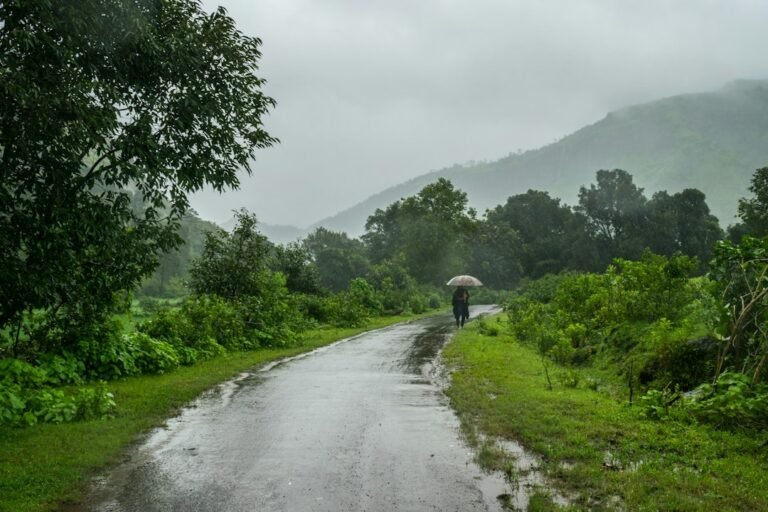
Why Did the Monsoon Shape Calendars and Rituals in South Asia?
In South Asia, rain determines sowing, travel, disease risk and food security, so the monsoon naturally entered ritual and seasonal calendars. Tradivior will trace how climate uncertainty became social time.
Historically Practical
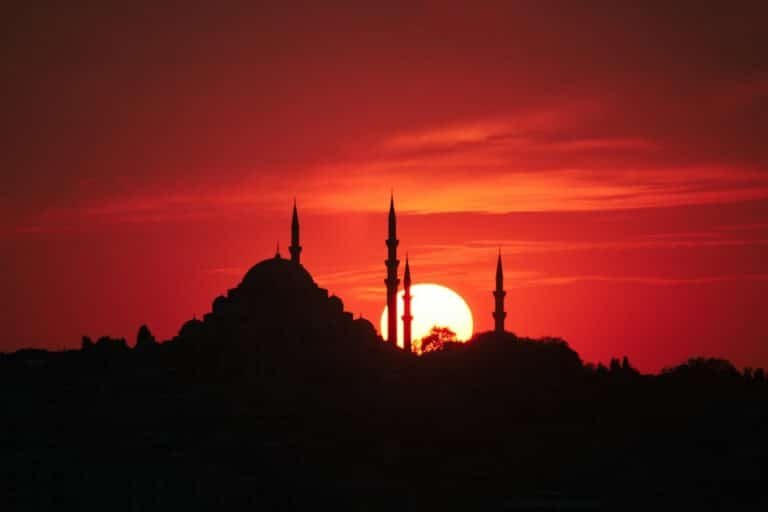
Why Did People Divide the Day Into Sacred Hours?
Canonical hours, prayer watches, sandhya, salat times and other traditions punctuate the day with religious obligations. Tradivior will ask how astronomy, social order and daily rhythm turned clock time into…

Unsupported Claim
Why Do Indians Choose Muhurta for Auspicious Timing?
Muhurta assigns favourable times to weddings, travel, construction and other acts through calendrical and astrological rules. Tradivior will investigate its textual history and distinguish social coordination from unsupported causal claims…

Contradicted by Evidence
Why Did Astrology Become So Influential Across Civilizations?
Astrology linked the sky to personality, politics, medicine and fate across South Asia, the Mediterranean, China and the Islamic world. Tradivior will trace its intellectual history and examine why it…
Picked for your curiosity
Enable JavaScript to build a reading profile and see recommendations.