 tradivior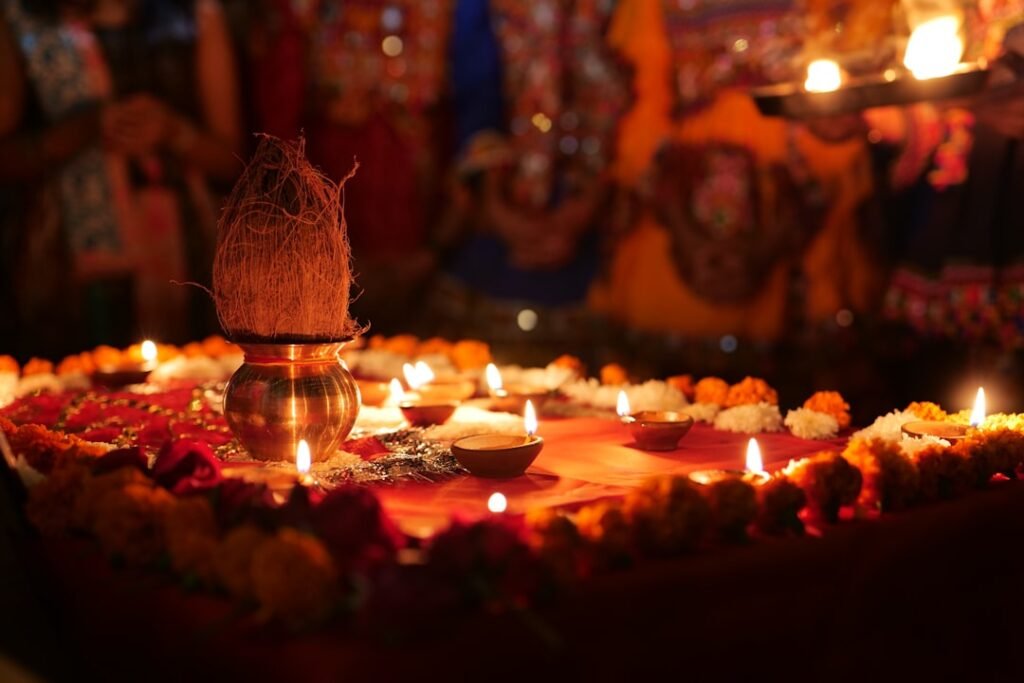
In this investigation
Hindus perform Shraddha because relationships with ancestors do not end completely at death. Shraddha rituals offer food, water and remembrance to departed kin while helping descendants fulfill obligations to lineage and maintain a relationship between living family and ancestral past.
The practice has theological meanings that cannot be reduced to grief psychology, even though social and psychological mechanisms help explain why ancestor ritual persists.
Ancestor obligation is central
Classical Hindu traditions describe duties toward ancestors alongside duties toward gods, teachers and society.
Being born into a lineage creates debts that ritual action helps repay.
Shraddha includes offering
Food, water and ritual substances may be offered through prescribed rites, often with brahmin participation depending on tradition.
The exact procedures vary by region, family and school.
Pinda offerings materialize remembrance
Rice balls or other offerings can represent nourishment for the departed in ritual logic.
Material offering gives grief and obligation a concrete form.
Timing matters
Shraddha may be performed after death during defined rites and later on annual death anniversaries or during Pitru Paksha.
Recurring timing prevents remembrance from disappearing into private memory alone.
Pitru Paksha creates a collective ancestor season
A period devoted to ancestors allows many families to perform remembrance within a shared calendar.
Collective timing reinforces social legitimacy.
Gaya and other pilgrimage sites intensify the practice
Certain locations are especially associated with ancestral rites, creating pilgrimage economies around death remembrance.
Place adds sacred authority to family obligation.
Ritual can organize grief
After death, families face uncertainty about what to do with memory and obligation. Prescribed rites provide sequence and role.
This can reduce decision burden during bereavement.
Ancestor ritual reinforces genealogy
Naming and remembering predecessors teaches younger generations who belongs to the family line.
Ritual therefore acts as a form of genealogical memory.
Does Shraddha scientifically feed the dead?
There is no empirical method demonstrating that physical food offerings are consumed by deceased ancestors through a measurable mechanism.
That claim belongs to theology and ritual metaphysics rather than experimental science.
Psychology does not replace theology
Saying that Shraddha supports grief or memory does not prove that those were its only or original purposes.
For practitioners, the ritual concerns actual duty toward ancestors.
What survives scrutiny?
- Shraddha is a longstanding Hindu ancestor ritual with diverse regional forms.
- Offerings, lineage duty and remembrance are explicit purposes.
- Recurring ritual preserves genealogical memory and family obligation.
- Structured rites can help organize bereavement and social roles.
- Claims about the postmortem receipt of offerings are theological rather than experimentally testable.
- Psychological explanations should supplement, not erase, religious meaning.
The Tradivior Evidence Profile
Historical Authenticity — Strong. Shraddha is extensively documented in Hindu texts and practice.
Original-Purpose Evidence — Strong. Ancestor obligation, offering and post-death rites are explicit.
Scientific Mechanism — Strong for memory, kinship and ritual-maintenance mechanisms; metaphysical claims are not experimentally testable.
Experimental Evidence — Moderate for psychosocial effects.
Cross-Cultural Evidence — Strong. Ancestor offerings occur in many traditions, though Hindu theology is specific.
Modern Relevance — Strong. Shraddha and Pitru Paksha remain living practices.
The Tradivior Conclusion
Hindus perform Shraddha because ancestry creates continuing religious obligations between the living and the dead.
Ritual also preserves genealogy and gives bereavement a structured form, but those social effects should not be substituted for the tradition’s own theological claims. Tradivior can explain what the ritual does socially while remaining clear about what science cannot test.
Sources & further reading
- Dharmashastra and Puranic literature on Shraddha and ancestor rites.
- Ethnographic scholarship on Hindu death ritual and Pitru Paksha.
- Bereavement research on continuing bonds and memorial ritual.
Continue exploring

Partially Supported
Why Is the Ganga Sacred?
The Ganga is river, goddess, pilgrimage route, purifier and national symbol. Tradivior will trace how these layers developed and evaluate modern claims about unusual self-purifying properties without confusing microbial findings…
Partially Supported
Why Do People Keep Ashes, Relics and Memorial Objects?
Hair, ashes, bones, clothing, photographs and relics allow the dead to remain materially present. Tradivior will examine why objects carry memory so powerfully and how continuing bonds differ from pathological…
Evidence Supported
Why Do Cultures Set Aside Days to Remember the Dead?
From Pitru Paksha and Qingming to Día de Muertos and All Souls’ Day, cultures repeatedly create calendar time for the dead. Tradivior will compare how recurring remembrance renews kinship, grief…
Historically Practical
Why Do Cultures Preserve the Dead?
Mummification, embalming, freezing, smoking and desiccation reflect very different beliefs about bodies and afterlives. Tradivior will compare preservation traditions with the chemistry of decomposition and the practical limits of each…
Picked for your curiosity
Enable JavaScript to build a reading profile and see recommendations.