 tradivior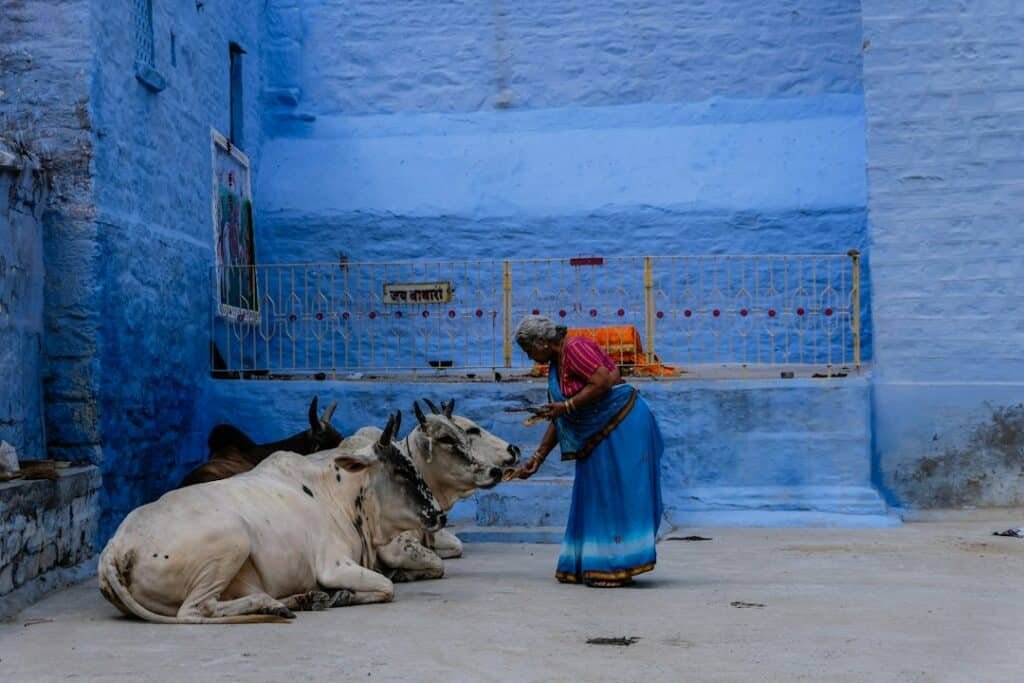
In this investigation
Humans do not treat all animals as equivalent sources of food, labour or danger. Some species are worshipped, some protected, some sacrificed, some avoided, some eaten only by particular groups, and some considered unclean or ominous. The rules vary so widely that no single biological explanation can account for them.
Modern environmental storytelling often presents animal taboos as ancient conservation strategies. Sometimes they do protect species. But that effect should not be confused automatically with original intent. A community may avoid an animal because it is a clan ancestor, a divine vehicle, a dangerous scavenger, a disease risk, a pregnancy taboo, a symbol of impurity or simply because local custom says it should not be eaten.
Sacredness and taboo are not opposites
An animal can be protected because it is sacred, avoided because it is polluted, sacrificed because it is valuable, or eaten ritually precisely because it is special. Sacredness does not always mean “never touch” and taboo does not always mean “hated.”
This is one reason animal symbolism is difficult to reduce to simple categories. A species may occupy several ritual roles at once.
THE CENTRAL DISTINCTION
Protection can be a consequence of taboo without being the original reason for the taboo. Tradivior therefore separates ecological effect from historical motive.
Animals enter religion because they are already part of everyday life
People notice the animals that surround them. Cattle provide milk and traction. Snakes threaten and fascinate. Birds migrate and disappear. Predators occupy the edge of settlement. Scavengers consume death. Domesticated animals become part of household economy.
Religious meaning often grows from those practical encounters. Animals become symbols because people repeatedly observe their behaviour, depend on them, fear them or compete with them.
Totemic animals connect identity to nonhuman life
In many societies, clans or lineages associate themselves with particular animals, plants or natural features. The relationship may include origin stories, prohibitions on killing or eating the totem, ritual obligations or distinctive names.
Such taboos can protect the associated species locally. But the primary meaning may be social identity rather than wildlife management.
Dangerous animals can become sacred because they demand attention
Snakes, crocodiles, big cats and other dangerous animals frequently enter religious symbolism. Their ability to harm humans gives them unusual psychological salience.
A dangerous animal can become a divine symbol, guardian, ancestor or omen. Ritual respect may help structure behaviour around an animal people cannot fully control.
Useful animals can acquire moral protection
Animals central to transport, agriculture, milk or household wealth may accumulate symbolic status because they are economically valuable. Their ritual protection can then reinforce practical dependence.
This does not mean people consciously invented religion to protect livestock. Economic usefulness can shape symbolism over generations without a formal design process.
Food taboos are one of the clearest measurable forms of animal avoidance
Animal food taboos restrict who may eat a species, when, or under what circumstances. Some apply to an entire community. Others apply only during pregnancy, childhood, illness or ritual periods.
A 2023 systematic review of wildlife food taboos identified one hundred species associated with taboos across the studies that met its criteria. The authors reported that the overwhelming majority of those taboos reduced killing or consumption of the species concerned.
THE CONSERVATION SIGNAL
Food taboos can reduce local hunting pressure. That is an ecological effect. It does not prove that conservation was always the cultural reason the taboo existed.
Conservation effects can be strong even when motives are spiritual
A community may avoid killing turtles because they are linked to ancestors, not because anyone is tracking population biology. Ecologically, the result can still be lower mortality.
This is a recurring feature of traditional environmental rules: a belief system can produce conservation as a side effect.
Sacred habitats can protect many species at once
Some taboos apply not to one animal but to a place. Hunting may be forbidden in sacred groves, lakes, hills or temple landscapes.
These habitat taboos can create refuges for multiple species. Modern conservationists increasingly study such areas because cultural protection can preserve biodiversity outside formal reserves.
But not every taboo helps conservation
A taboo may protect one species while increasing hunting pressure on another. A sacred predator may be spared while its prey is heavily hunted. A feared animal may be persecuted rather than protected.
Ecological outcomes therefore need to be measured rather than assumed.
Disgust is another powerful route into taboo
Humans show strong food-disgust responses to rot, parasites, bodily waste and unfamiliar textures. Some animal foods may become culturally coded as disgusting because of smell, feeding behaviour or habitat.
Scavengers, carrion eaters, bottom-feeders and animals associated with filth can therefore become likely candidates for avoidance in some societies.
Disgust can protect against disease—but it is not a perfect disease detector
Behavioural-immune-system theories propose that disgust evolved partly to reduce exposure to pathogens. Avoiding visibly diseased meat, feces or decomposition can clearly reduce infection risk.
But cultural disgust can attach to perfectly safe foods and fail to attach to risky ones. Disease avoidance therefore explains some taboos better than others.
Pregnancy and childhood taboos often focus on feared bodily effects
Many societies restrict particular animal foods during pregnancy or early childhood. Explanations may claim that the animal’s colour, behaviour or body form could be transferred to the child.
Recent research among Congo Basin hunter-gatherers found food avoidances strongly clustered around concerns about infants and illness, with explanations often invoking resemblance between animal traits and feared effects on children. That pattern fits sympathetic-magic reasoning more closely than nutritional science.
Sympathetic magic treats resemblance as causation
A common human intuition is that things resembling one another may influence one another: eating a slow animal might make a child slow, eating an animal with a deformity might transmit deformity, or consuming a powerful animal might transfer strength.
These associations are psychologically understandable but are not reliable biological mechanisms.
Animals can become “out of place” in cultural classification
Anthropologist Mary Douglas famously argued that some purity rules make sense as systems of classification rather than simple hygiene. Creatures that do not fit expected categories may be treated as anomalous or polluting.
This approach has influenced interpretation of dietary laws and animal prohibitions because cultures classify the natural world symbolically as well as biologically.
Classification theories explain patterns but should not become universal formulas
Later scholarship has criticized attempts to explain every animal taboo through one symbolic system. Economic ecology, local history, theology, identity and politics can be equally important.
The strongest approach is plural: ask what the rule means locally and then test its practical effects separately.
Sacrifice shows that sacred animals are not always protected
Across many ancient religions, animals considered ritually important were killed in sacrifice. Their sacred value made them suitable offerings rather than untouchable beings.
This is a direct warning against equating sacredness with conservation. A species can become central to ritual precisely because it is valuable enough to give up.
Domestic animals sit at the intersection of economy and ritual
Cattle, goats, sheep, pigs and chickens are economically useful and ritually significant in many cultures. Their symbolic status can never be understood purely through religious texts or purely through subsistence economics.
People build cosmologies around the animals with which they live most closely.
Predators create especially unstable moral categories
Large predators can be admired, feared, worshipped and killed. A tiger may symbolize power while also threatening livestock and human life.
Protection therefore depends on changing ecological conditions. A sacred association may weaken if conflict becomes frequent.
Taboos can weaken when resource scarcity increases
Ethnobiological studies show that food rules are not always absolute. When preferred protein becomes scarce, people may relax older restrictions.
This reveals that cultural taboos exist inside economic systems. Belief can constrain behaviour strongly, but survival pressure can renegotiate belief.
Colonialism and market integration can disrupt animal taboos
Commercial hunting, logging, missionary activity, migration and state law can weaken local institutions that once regulated access to animals.
Conversely, governments sometimes formalize culturally protected areas after recognizing that local taboos already reduce hunting.
Conservation should not romanticize Indigenous or traditional communities
Traditional ecological knowledge can be highly effective. But communities are not timeless guardians living outside markets, politics or demographic pressure.
Some customary systems conserve species; others allow sustainable use; others can become unsustainable under changing technology or population density.
Animal taboo can also intensify persecution
An animal considered dangerous, demonic or polluting may be killed whenever encountered. Bats, snakes, owls and carnivores can suffer from fear-based beliefs in some regions.
Religious or cultural meaning is therefore not inherently conservation-friendly.
Modern conservation can work with cultural meaning rather than replacing it
Where communities already protect a species for religious or ancestral reasons, conservation programmes can strengthen those norms rather than imposing an entirely external rationale.
The approach is especially promising when local belief, legal protection and ecological monitoring point in the same direction.
Scientific conservation and sacred protection ask different questions
Conservation biology asks whether populations remain viable, genetic diversity is maintained and habitats persist. Sacred protection asks what a species means to a community.
The two systems can reinforce each other, but they should not be confused.
Why animal symbolism is so persistent
Animals are ideal symbols because they are both familiar and unlike humans. Their bodies, habits and ecological roles provide vivid metaphors for strength, danger, purity, cunning, fertility, death and transformation.
Once a symbolic association becomes embedded in ritual and identity, it can persist long after the original ecological conditions change.
The same species can be sacred in one place and food in another
No animal carries one universal human meaning. Pigs, cows, dogs, snakes, horses and birds move across radically different moral categories depending on region and religion.
This cultural variability is powerful evidence against biological determinism. Human classification is shaped by ecology, history and symbolic systems together.
What survives scrutiny?
- Sacred-animal traditions and animal taboos are historically widespread and culturally diverse.
- Animals become symbolically important because they intersect with livelihood, danger, identity, ecology and religion.
- Food taboos can measurably reduce hunting or consumption of particular species.
- A 2023 systematic review found predominantly protective effects among the wildlife food taboos it examined.
- Protective ecological effects do not prove that conservation was the original motive.
- Some taboos are better explained by disgust, disease concerns, sympathetic magic, social identity or religious classification.
- Sacred animals can still be sacrificed, showing that sacredness does not always mean protection.
- Some beliefs encourage persecution rather than conservation.
- Taboos can weaken when economic conditions, food availability or social institutions change.
- Modern conservation can benefit from culturally grounded protection when local norms and ecological goals align.
The Tradivior Evidence Profile
Historical Authenticity — Strong. Sacred animals, totemic associations and animal food taboos are extensively documented across religious and ethnographic traditions.
Original-Purpose Evidence — Moderate. Local motives are often well documented, but they vary widely and cannot be reduced to one universal purpose such as conservation.
Scientific Mechanism — Moderate. Reduced hunting pressure, disgust, pathogen avoidance, signalling, classification and social identity provide plausible mechanisms for different taboo systems.
Experimental Evidence — Limited to Moderate. Conservation effects are supported mainly by ethnobiological and observational studies; causal evidence varies by context.
Cross-Cultural Evidence — Strong. Animal sacredness and taboo occur globally but attach to different species for different reasons.
Modern Relevance — Strong. Cultural animal protections remain relevant to conservation, public health and human-wildlife conflict.
The Tradivior Conclusion
Partially Supported. Animal taboos can have real ecological effects, including reduced hunting and local protection, and modern reviews provide meaningful evidence for that outcome. But it is too simple to say ancient societies made animals sacred in order to conserve them. Different traditions arose from religion, identity, danger, disgust, livelihood, symbolic classification and social rules. Conservation sometimes survives as a powerful side effect. The tradition survives scrutiny best when ecological consequence is separated from historical motive.
Continue investigating
- Why Is the Cow Sacred in India?
- Why Were Sacred Groves Protected in India?
- Why Did Traditional Farmers Read Birds, Insects and Plants as Weather Signs?
Sources and further reading
- Landim AS, et al. “Food taboos and animal conservation: a systematic review on how cultural expressions influence interaction with wildlife species.” Journal of Ethnobiology and Ethnomedicine. 2023;19:31. PMID: 37454092.
- Douglas M. Purity and Danger. Routledge.
- OpenStax. “Symbolism and Meaning of Animals.” Introduction to Anthropology.
- Ethnobiological literature on totemism, food taboos, wildlife conservation and sacred habitats.
- 2026 research on animal food taboos among Congo Basin hunter-gatherers examining illness concerns, infant-related avoidances and sympathetic-magic explanations.
Continue exploring

Partially Supported
Why Is the Ganga Sacred?
The Ganga is river, goddess, pilgrimage route, purifier and national symbol. Tradivior will trace how these layers developed and evaluate modern claims about unusual self-purifying properties without confusing microbial findings…
Partially Supported
Why Do People Keep Ashes, Relics and Memorial Objects?
Hair, ashes, bones, clothing, photographs and relics allow the dead to remain materially present. Tradivior will examine why objects carry memory so powerfully and how continuing bonds differ from pathological…

Evidence Supported
Why Do Cultures Set Aside Days to Remember the Dead?
From Pitru Paksha and Qingming to Día de Muertos and All Souls’ Day, cultures repeatedly create calendar time for the dead. Tradivior will compare how recurring remembrance renews kinship, grief…

Historically Practical
Why Do Cultures Preserve the Dead?
Mummification, embalming, freezing, smoking and desiccation reflect very different beliefs about bodies and afterlives. Tradivior will compare preservation traditions with the chemistry of decomposition and the practical limits of each…
Picked for your curiosity
Enable JavaScript to build a reading profile and see recommendations.