 tradivior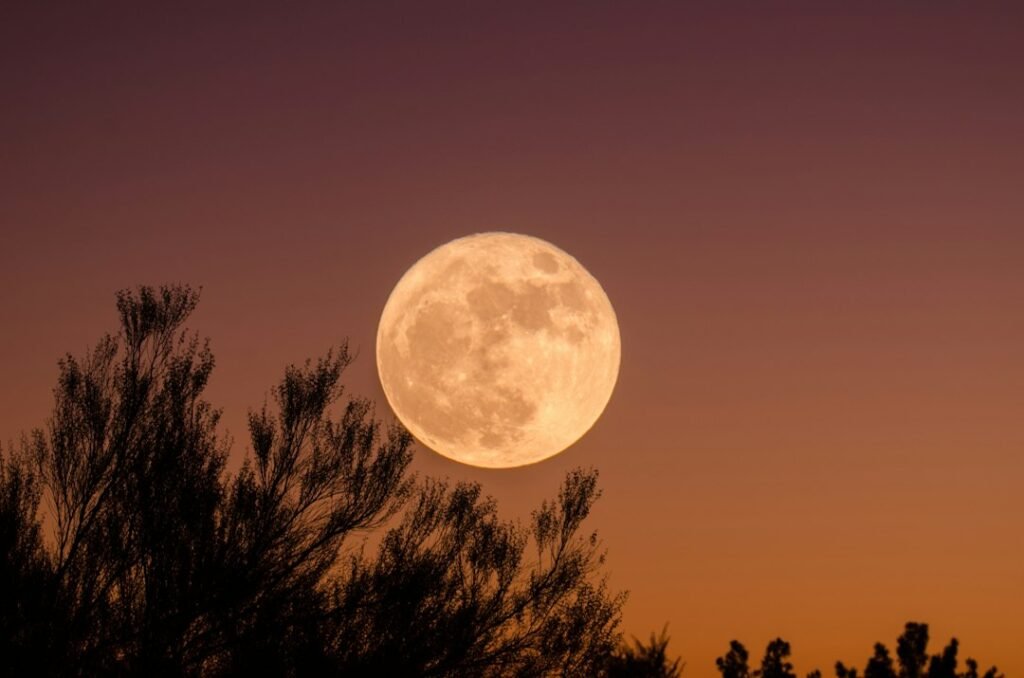
In this investigation
No object in the night sky is easier to watch than the Moon. It is bright enough to reshape the landscape, large enough to show visible phases without instruments, regular enough to count time and close enough to move the oceans. Long before precise clocks, satellites or printed calendars, the Moon offered people a moving celestial marker that could be observed from almost anywhere on Earth.
That visibility made the Moon useful—but also made it a magnet for explanation. Humans connected lunar phases with tides, months, planting, menstruation, fertility, madness, birth, ritual danger and auspicious timing. Some of those connections are physically real. Some are culturally meaningful. Others survive mainly because repeating cycles make coincidences easy to notice.
The central question is therefore not whether the Moon “affects Earth.” It unquestionably does. The scientific task is to identify which effects are large enough, reliable enough and biologically plausible enough to matter in each domain.
The Moon is a natural calendar visible to the naked eye
The synodic lunar cycle—the interval from one new moon to the next—is about 29.5 days. That period is long enough to divide the year into useful social units yet short enough for people to observe directly.
The changing crescent, half moon and full moon provide visible markers within the month. A community does not need writing to know that one phase follows another in a predictable sequence.
THE BASIC ADVANTAGE
Unlike an abstract numbered month, lunar phase is publicly observable. The sky itself displays the calendar.
Why months are so often lunar even when years are solar
The word “month” itself preserves the historical relationship between lunar cycles and timekeeping in several language traditions. The problem is that twelve lunar months total only about 354 days, roughly eleven days shorter than the solar year.
This mismatch forced civilizations to choose. Some calendars remain primarily lunar and let months move through the seasons. Others add leap months or other corrections so lunar months remain roughly aligned with the solar year.
The calendar problem produced sophisticated astronomy
Once agriculture, taxation, festivals and administration depend on calendars, the difference between lunar and solar cycles becomes a technical problem. Babylonian, Greek, Hebrew, Chinese and Indian calendrical traditions developed methods for coordinating lunar months with the seasonal year.
Observing the Moon therefore did more than mark ritual dates. It encouraged mathematical astronomy, record-keeping and prediction.
A purely lunar calendar behaves differently from a lunisolar one
The Islamic Hijri calendar provides a clear example of a lunar system. Its months move through the solar seasons because no leap month is added to keep them fixed to the year.
By contrast, traditional Hebrew, Chinese and many Indian calendars are lunisolar: lunar months remain central, but adjustments keep festivals broadly connected to seasonal cycles.
These systems demonstrate that lunar observation was practical mathematics, not merely astrology.
The Moon changes the brightness of the night
Before electric lighting, the difference between a moonless night and a bright full-moon night was socially significant. Travel, hunting, guarding animals, gathering, fishing and night ceremony could all be affected by visibility.
Moonlight does not turn night into day, but under clear conditions it can transform what people and animals are able to see.
The full Moon gave people usable nocturnal light
Communities could plan some night activities around bright lunar phases. Ethnographic and historical records describe moonlit travel, fishing, communal work and ritual gatherings.
This practical effect is easy to underestimate from a modern city. Artificial light has largely severed everyday life from the Moon’s changing illumination.
Animal behaviour provides some of the clearest biological lunar effects
Ecological research shows that many animals alter behaviour according to lunar light. Predators may hunt more effectively under bright conditions; prey may reduce exposed activity. Nocturnal species can change foraging location, movement and communication.
A major review of “chronobiology by moonlight” documents lunar effects across terrestrial and marine animals, including reproduction, predation risk and activity timing.
Marine life can be especially tightly linked to lunar timing
Coastal and marine organisms experience both changing moonlight and tides. Some species synchronize reproduction with lunar or semilunar cycles.
Mass coral spawning provides a striking example. Large numbers of corals can coordinate reproductive release within narrow windows influenced by seasonal and lunar cues. The Moon here is not symbolic—it is part of an environmental timing system.
THE STRONGEST BIOLOGICAL EVIDENCE
Lunar cycles clearly affect some animals through night illumination, tides and endogenous timing mechanisms. Evidence from other species should not automatically be transferred to humans.
The Moon really does move the oceans
The Moon is the dominant astronomical influence on Earth’s tides. Its gravity acts slightly more strongly on the side of Earth nearer the Moon and slightly less strongly on the far side. This differential gravitational force contributes to tidal bulges in the oceans.
The Sun also contributes. When the Sun, Earth and Moon align around new and full moon, their tidal effects combine to produce larger spring tidal ranges. Around first and third quarter, the effects partially oppose one another, producing smaller neap tides.
Tides do not simply “follow the Moon overhead”
Popular explanations often imagine a mound of ocean water directly underneath the Moon. Real tides are much more complicated. Coastline shape, ocean depth, basin geometry and Earth’s rotation influence when high and low tides occur at specific places.
NOAA emphasizes that astronomical forcing creates the tidal system, but local geography strongly controls actual timing and amplitude.
Coastal societies had strong reasons to track lunar-tidal patterns
Fishing, shellfish gathering, navigation, harbour access and travel across tidal flats all depend on tides. Repeated observation would reveal relationships among lunar phase, tidal range and local water behaviour even without gravitational theory.
Traditional tide knowledge can therefore be empirically accurate without using modern physics.
The Moon’s physical influence does not mean every lunar claim is plausible
A common rhetorical move says: “The Moon moves oceans, and humans are mostly water, therefore the Moon must strongly control the human body.” This analogy misunderstands tidal forces.
Tides arise because gravitational force differs across extremely large distances. The human body is tiny compared with Earth, so the Moon’s differential gravitational force across one body is correspondingly minuscule.
Human physiology is dominated by much larger local forces, internal regulation and the solar light-dark cycle.
The Moon’s gravity affects land too—but only slightly
Earth’s solid crust experiences measurable body tides. Sensitive instruments detect the deformation.
This is an important scientific fact, but again magnitude matters. Detectability with precise instruments is not evidence of a large behavioural effect on people.
Human sleep is one of the most interesting unresolved areas
Some controlled and observational studies report modest changes in sleep across the lunar cycle. A 2013 laboratory reanalysis found reduced deep sleep, longer sleep onset and shorter total sleep around full moon even though participants were not aware that lunar phase would be studied.
Other studies have also reported associations, including sex-specific patterns or changes across waxing and waning phases.
But the sleep literature is inconsistent
Not all large studies replicate the same phase, direction or magnitude of effect. Some find no meaningful lunar association. Others detect patterns in subgroups.
This inconsistency makes sweeping claims inappropriate. A small circalunar influence on human sleep remains scientifically discussable; a strong universal full-moon effect is not established.
Pre-electric moonlight offers a plausible pathway to sleep effects
Before artificial lighting, bright evenings around the full moon increased outdoor illumination. Later sleep onset on moonlit evenings would be biologically plausible because light can delay sleep timing.
Modern indoor lighting overwhelms much of this natural signal, which could help explain why contemporary effects are small and inconsistent.
An endogenous lunar rhythm in humans remains uncertain
Some researchers argue that human sleep, menstrual or mood patterns may show intermittent lunar synchrony that disappears when large populations are averaged together.
This is an interesting hypothesis rather than settled consensus. Longitudinal individual-level studies are valuable, but complex post hoc synchronization patterns can also increase the risk of finding apparent cycles by chance.
The menstrual-cycle comparison is visually compelling but biologically weak
The average menstrual cycle is often described as 28 days, close to the 29.5-day lunar cycle. In reality, cycle length varies substantially among individuals and across a person’s reproductive life.
Some studies report intermittent synchronization between menstrual and lunar cycles, but the evidence does not support a universal rule that menstruation naturally follows one lunar phase.
The numerical resemblance likely contributed to powerful symbolism around Moon, fertility and menstruation even where biological coupling was weak.
Birth rates do not reliably rise at full moon
The belief that more babies are born during a full moon remains common among the public and even some healthcare professionals.
Large analyses and reviews generally fail to show a meaningful relationship between lunar phase and birth frequency. Apparent patterns often disappear when sufficiently large datasets and appropriate statistics are used.
Psychiatric emergencies also fail the large-data test
The word “lunacy” preserves an ancient cultural association between the Moon and mental disturbance. Yet modern hospital datasets generally do not show higher psychiatric admissions or emergency consultations during full moon.
A 2026 French study analysed 69,764 psychiatric emergency consultations from 2016 to 2023 and found no significant relationship with lunar phase, diagnosis or admission.
Earlier large studies reached similar conclusions.
THE HUMAN-BEHAVIOUR LIMIT
The Moon is physically powerful at planetary scale, but modern evidence does not support the popular claim that full moon reliably produces psychiatric crisis, violence or widespread behavioural instability.
Why do professionals sometimes believe they see a full-moon surge?
Full moons are memorable. A chaotic shift during a full moon is likely to be noticed and retold. A chaotic shift two nights later is less likely to become part of a lunar story.
This is a classic setting for confirmation bias: people remember events that fit an expectation and forget the many nights that do not.
Repeating cycles generate coincidences automatically
There are twelve or thirteen full moons each year, thousands of births, emergencies and accidents, and endless human events. Some dramatic events will inevitably coincide with lunar phases.
Without comparing full-moon periods to appropriate control periods, coincidence can look like causation.
Agricultural lunar rules mix observation, calendar convenience and belief
Traditional farming calendars frequently assign planting, pruning or harvesting to lunar phases. Some rules may have originated from practical timing, moonlight or tidal observations. Others may be astrological or ritual.
Controlled evidence for broad claims that plant growth improves simply because seeds were sown under a particular lunar phase is limited and inconsistent.
Night illumination can matter to farmers even without a plant-growth effect
A bright moon could extend working hours or make nighttime harvest and travel safer. A lunar calendar could also coordinate labour among people without mechanical clocks.
These practical advantages should be distinguished from claims that lunar gravity directly pulls sap through plants in a clinically or agriculturally meaningful way.
Fishing traditions have a stronger ecological basis
Fish behaviour can change with tides and night illumination. Coastal fishers therefore have plausible reasons to connect lunar phase with catch conditions.
But local species and coastlines differ. A lunar fishing rule that works in one place may fail in another because tide timing, water clarity and species behaviour differ.
Lunar calendars synchronize communities
A visible moon allows dispersed communities to coordinate rituals without centralized clocks. If everyone knows that a ceremony occurs on the full moon or the first crescent, the sky itself provides the public timing signal.
This helps explain why lunar phases became embedded in festivals, fasts and religious observances even when no environmental mechanism was involved.
The first crescent can become legally or religiously important
In calendars based on actual or traditional lunar observation, sighting the new crescent determines the beginning of a month. Religious communities therefore developed rules about who observes, what counts as a valid sighting and how uncertainty is resolved.
The astronomical event becomes an institutional event.
Full moons are ritual magnets because they are visually unmistakable
A full moon is bright, dramatic and easy to identify. It offers a natural date around which communities can organize festivals and night gatherings.
Buddhist observance days, Hindu festivals and many local ceremonies use lunar phases because the phase itself is part of the cultural calendar.
Indian lunar tradition is mathematically sophisticated
Indian calendrical systems track tithi, the angular relationship between Sun and Moon, rather than treating lunar days as simple midnight-to-midnight units. Nakṣatra, solar movement and other astronomical variables may also be incorporated.
This sophistication should not be collapsed into astrology. Calendar computation and astrological interpretation can coexist historically while remaining different kinds of claim.
Eclipses demonstrated that the Moon participates in a predictable celestial system
Lunar and solar eclipses are among the most dramatic sky events. Ancient astronomers in several civilizations learned that eclipses recur in patterns and developed increasingly accurate prediction methods.
Mythic interpretations and mathematical astronomy could exist simultaneously. A culture could tell a story about an eclipse while also learning when one was likely to occur.
The Moon helped reveal that celestial events are periodic
Regular lunar cycles provided an accessible training ground for astronomical prediction. Once observers recognized repetition, they could compare months, seasons and eclipse intervals.
Calendrical astronomy therefore grew partly from the simple act of watching the Moon night after night.
Navigation can use the Moon, but less simply than the Sun or stars
The Moon changes position relative to the stars from night to night, so using it for navigation requires knowledge of phase and time. Its rising and setting directions also vary.
Nevertheless, skilled navigators can use lunar position as one of many celestial cues. In some maritime traditions, Moon, stars, swell, wind and animal behaviour form an integrated navigation system.
Moon myths often preserve observation without preserving mechanism
A story linking the Moon to tides may preserve the fact that tide patterns and lunar cycles are related without containing gravitational physics.
Similarly, a fertility myth may preserve a perceived numerical resemblance between cycles without establishing hormonal causation.
Tradivior therefore has to separate observation from explanation: an accurate correlation can coexist with an incorrect mechanism.
Not every old lunar rule came from environmental observation
Some rules are explicitly religious, symbolic or divinatory. Their purpose may be ritual coordination rather than empirical prediction.
Looking for hidden science in every lunar custom can distort traditions by refusing to take symbolic meaning seriously on its own terms.
Astrology transforms lunar observation into personality and fate
Astronomical observation establishes where the Moon appears and how it moves. Astrology assigns human significance to those positions.
The first domain is measurable astronomy. The second makes predictive claims about personality or events that require separate testing. The Moon’s real gravitational and ecological effects do not validate astrological interpretation automatically.
The Moon became a symbol of change because it visibly changes
Unlike most stars, the Moon transforms shape across the month and periodically disappears from the evening sky. This made it a powerful metaphor for death, rebirth, renewal, fertility and impermanence.
Symbolic use is not a failed scientific theory. The changing Moon genuinely provides an unusually vivid natural image for cyclical transformation.
Artificial light weakens one of the Moon’s oldest environmental effects
In brightly lit cities, the difference between full and new moon is visually modest. Streetlights, buildings and screens dominate the nocturnal environment.
This is historically new. For most humans, lunar illumination was one of the strongest predictable changes in night brightness.
Light pollution also disrupts animals that evolved under lunar cycles
Artificial night lighting can mask natural lunar cues. Ecologists increasingly study how this affects nocturnal behaviour, migration, predator-prey relationships and reproduction.
Ironically, modern people may be least able to appreciate lunar ecology precisely because our own lighting system has overwhelmed it.
The popular full-moon effect survives because it is narratively satisfying
A bright full moon feels like it should matter. It is visually dramatic, culturally saturated and easy to remember.
This creates fertile ground for stories about births, crime, emergency rooms and strange behaviour even when large datasets show no reliable effect.
Strong real effects can lend credibility to weak adjacent claims
Because tides are undeniably lunar, other lunar claims can borrow scientific authority from them. The rhetorical sequence becomes: “the Moon moves oceans, therefore it influences everything containing water.”
Science requires each claim to be evaluated independently. A powerful oceanic effect does not imply a powerful psychiatric or reproductive effect.
Traditional observation remains impressive even when some interpretations fail
Recognizing weak claims does not diminish the achievement of early lunar observation. Humans accurately tracked phases, developed months, predicted eclipses and coordinated complex calendars long before modern instruments.
The historical accomplishment becomes clearer when astronomy is separated from later overclaiming.
The Moon mattered because several real functions overlapped
No single explanation accounts for global lunar traditions. The Moon was simultaneously a clock, source of light, tidal marker, ecological cue, ritual symbol and astronomical object.
Those functions reinforced one another. A celestial body already important for timekeeping became an obvious place to attach myth, ritual and divination.
Repeated observation turned the Moon into a school of prediction
Because lunar phases repeat visibly, they reward careful memory. A community can notice not only that the full moon returns, but how its rising time shifts, how the crescent changes orientation through the year and how eclipses recur within longer cycles.
This makes lunar observation a natural apprenticeship in astronomy. The observer learns that celestial events are not random. Once recurrence is recognized, prediction becomes possible.
That intellectual transition matters historically. A sky event that first appears divine or mysterious can gradually become calendrically predictable without losing religious meaning.
Eclipse prediction gave lunar astronomy political value
Solar and lunar eclipses are dramatic enough to frighten populations and attract rulers’ attention. Ancient Babylonian astronomers accumulated long sequences of observations that allowed eclipse possibilities to be anticipated with increasing accuracy. Similar traditions of eclipse computation developed elsewhere.
Prediction creates authority. A priestly or scholarly class able to forecast unusual celestial events gains prestige, administrative usefulness and sometimes political influence.
This helps explain why lunar astronomy became institutionalized rather than remaining a household pastime. The Moon was part of state calendars, omen systems and learned mathematical traditions.
Indigenous calendars often embed the Moon inside a larger ecological system
Many Indigenous seasonal calendars do not treat the lunar month in isolation. Moon phases may be read together with flowering plants, animal migrations, tides, rainfall, temperature and the appearance of particular stars.
This integrated approach is important because ecological timing rarely follows one astronomical cycle alone. A community can use the Moon as one reliable cue among several rather than imagining it causes every seasonal event.
Modern ecological science increasingly recognizes the value of such multi-cue observations, especially where local knowledge has been accumulated across generations.
The Moon can help organize nocturnal travel without acting as a compass by itself
Moonlight makes terrain visible, while lunar position can supplement knowledge of stars, prevailing winds and landscape. But the Moon is a moving target: its position changes from night to night and through the night.
Experienced travellers can account for that movement. Less experienced observers cannot simply treat the Moon as if it always rises in the east at the same time or points in one fixed direction.
The practical value therefore lies in skilled celestial literacy, not in a universal shortcut.
Agricultural lunar calendars may work as scheduling systems even when their causal theory is wrong
A farming community needs agreed dates for sowing, pruning, communal labour and ritual. Tying those dates to lunar phases creates a visible schedule that everyone can verify.
This means a lunar agricultural rule can be socially useful even when the claimed biological mechanism—such as lunar gravity “pulling sap upward”—is unsupported. The calendar can coordinate people independently of whether the Moon directly improves plant growth.
Tradivior’s distinction is crucial here: a practice can work institutionally without working through the mechanism later attached to it.
Why lunar symbolism became so unusually durable
The Moon offers several symbolic advantages at once. It visibly grows and shrinks. It disappears and returns. Its cycle is short enough to notice within one lifetime and regular enough to anticipate. It lights darkness but does not abolish it.
Those features make the Moon an unusually powerful image for fertility, death, renewal, impermanence, femininity, time and return. Different cultures emphasize different associations, but the physical source of the symbolism is easy to understand.
This symbolic power does not need to hide a scientific mechanism. Metaphor is itself a cultural function.
Calendar authority can survive after observation becomes unnecessary
Today a phone can calculate lunar phase instantly, yet religious communities still observe or commemorate the crescent, full moon or lunar date. The persistence is not technological failure. The act of seeing can itself matter.
Observation links participants to a tradition, to one another and to the same sky their predecessors watched. What began as practical timekeeping can become identity and ritual continuity.
Scientific literacy improves the tradition rather than stripping it of meaning
Knowing that tides arise from differential gravity does not make lunar festivals meaningless. Knowing that psychiatric emergencies do not spike at full moon does not erase centuries of lunar symbolism.
Separating robust physical effects from unsupported folklore allows the real achievements of lunar observation to stand out more clearly: calendar building, navigation, tidal knowledge, ecological timing and astronomical prediction.
Before mechanical clocks, the Moon was a shared public time signal
One of the Moon’s least dramatic advantages may have been one of its most useful: everyone could see it. A village did not need a central clock tower, printed almanac or synchronized watches to know roughly where it was in the lunar month.
This made lunar timing socially powerful. Ritual leaders, farmers, travellers and households could coordinate expectations around the same visible object. The Moon therefore functioned not only as an astronomical body but as a distributed public clock—imprecise by modern standards, yet extraordinarily accessible.
That shared visibility helps explain why lunar dates became so resistant to replacement. Even after written calendars improved, the Moon remained a direct sensory confirmation that the community’s reckoning of time corresponded to something observable in the sky.
What survives scrutiny?
- The approximately 29.5-day lunar phase cycle provides a visible natural basis for months and ritual calendars.
- Lunisolar calendars developed sophisticated corrections because twelve lunar months do not equal the solar year.
- The Moon is the dominant astronomical driver of Earth’s tides, with the Sun modifying tidal range.
- Coastal peoples had practical reasons to track lunar-tidal patterns for fishing, navigation and gathering.
- Lunar illumination measurably changes the behaviour of many animals and helps time reproduction in some marine species.
- Human sleep may show small lunar associations in some studies, but findings are inconsistent and much weaker than popular claims imply.
- Evidence does not support a universal lunar synchronization of menstruation.
- Large studies do not show meaningful full-moon increases in births or psychiatric emergencies.
- Agricultural lunar traditions combine calendar coordination, practical observation, ritual and unproven causal claims.
- Astronomical accuracy does not validate astrological claims about fate or personality.
- Artificial light has reduced humans’ everyday exposure to natural lunar illumination while disrupting lunar cues for wildlife.
- The Moon became culturally powerful because several genuine functions—timekeeping, illumination, tides and ecological timing—overlapped with symbolism.
The Tradivior Evidence Profile
Historical Authenticity — Strong. Lunar observation is central to calendars, astronomy, ritual and coastal knowledge across many civilizations.
Original-Purpose Evidence — Strong. Timekeeping, ritual coordination, navigation, tides, night illumination and divination are historically documented purposes.
Scientific Mechanism — Strong for tides and illumination; Limited to Moderate for most direct human physiological claims. Gravitational tidal forcing and moonlight are well established, while proposed human circalunar mechanisms remain less certain.
Experimental Evidence — Strong for tides and many animal responses; Limited or inconsistent for broad human behavioural effects. Large datasets do not support many popular full-moon claims.
Cross-Cultural Evidence — Strong. Lunar calendars and lunar ritual systems appear across historically independent societies.
Modern Relevance — Strong. Lunar cycles remain central to astronomy, tides, ecology, religious calendars and cultural identity, while modern evidence can clarify which inherited claims are physically supported.
The Tradivior Conclusion
Partially Supported—strong astronomy and ecology, weak universal human-effects claims. Humans watched the Moon closely because it was genuinely useful: it provided a visible calendar, altered nocturnal light, helped organize tidal knowledge and offered predictable astronomical cycles. Modern science strongly validates those functions and many lunar effects on animal behaviour. But the Moon’s real planetary influence has often been extended into claims that do not survive testing. Full moons do not reliably produce more births, psychiatric emergencies or universal behavioural disturbance, and human biological synchronization remains limited and inconsistent. The Moon survives scrutiny as an exceptionally important environmental clock and cultural symbol—not as a master controller of human fate.
Continue investigating
- Why Did Indian Calendars Track Both Sun and Moon?
- Why Do Festivals Move Through the Lunar Calendar?
- Why Did Astrology Become So Influential Across Civilizations?
Sources and further reading
- NOAA. “Tides.” Educational overview of lunar and solar tidal forcing.
- NOAA National Ocean Service. “Gravity, Inertia, and the Two Bulges” and related tidal science resources.
- Kronfeld-Schor N, et al. “Chronobiology by moonlight.” Proceedings of the Royal Society B. 2013. PMCID: PMC3712431.
- Cajochen C, et al. “Evidence that the lunar cycle influences human sleep.” Current Biology. 2013;23(15):1485–1488. PMID: 23891110.
- “Association between lunar phase and sleep characteristics.” 2014. PMID: 25266502.
- “Sex-specific association of the lunar cycle with sleep.” 2021. PMID: 34520928.
- Wehr TA, Helfrich-Förster C. “Longitudinal observations call into question the scientific consensus that humans are unaffected by lunar cycles.” BioEssays. 2021. PMID: 34028873.
- McLay RN, Daylo AA, Hammer PS. “No effect of lunar cycle on psychiatric admissions or emergency evaluations.” Military Medicine. 2006;171(12):1239–1242. PMID: 17256692.
- “The influence of the lunar cycle on psychiatric emergency consultations: myth or reality?” 2026. PMCID: PMC13107721.
- Rotton J, Kelly IW. Literature examining purported lunar effects and statistical bias in human events.
- “No evidence of purported lunar effect on hospital admission rates or birth rates.” 2015. PMID: 25756232.
- Historical scholarship on Babylonian, Hebrew, Chinese, Islamic and Indian lunar and lunisolar calendrical systems.
Continue exploring

Partially Supported
Why Is the Ganga Sacred?
The Ganga is river, goddess, pilgrimage route, purifier and national symbol. Tradivior will trace how these layers developed and evaluate modern claims about unusual self-purifying properties without confusing microbial findings…
Partially Supported
Why Do People Keep Ashes, Relics and Memorial Objects?
Hair, ashes, bones, clothing, photographs and relics allow the dead to remain materially present. Tradivior will examine why objects carry memory so powerfully and how continuing bonds differ from pathological…

Evidence Supported
Why Do Cultures Set Aside Days to Remember the Dead?
From Pitru Paksha and Qingming to Día de Muertos and All Souls’ Day, cultures repeatedly create calendar time for the dead. Tradivior will compare how recurring remembrance renews kinship, grief…
Historically Practical
Why Do Cultures Preserve the Dead?
Mummification, embalming, freezing, smoking and desiccation reflect very different beliefs about bodies and afterlives. Tradivior will compare preservation traditions with the chemistry of decomposition and the practical limits of each…
Picked for your curiosity
Enable JavaScript to build a reading profile and see recommendations.