 tradivior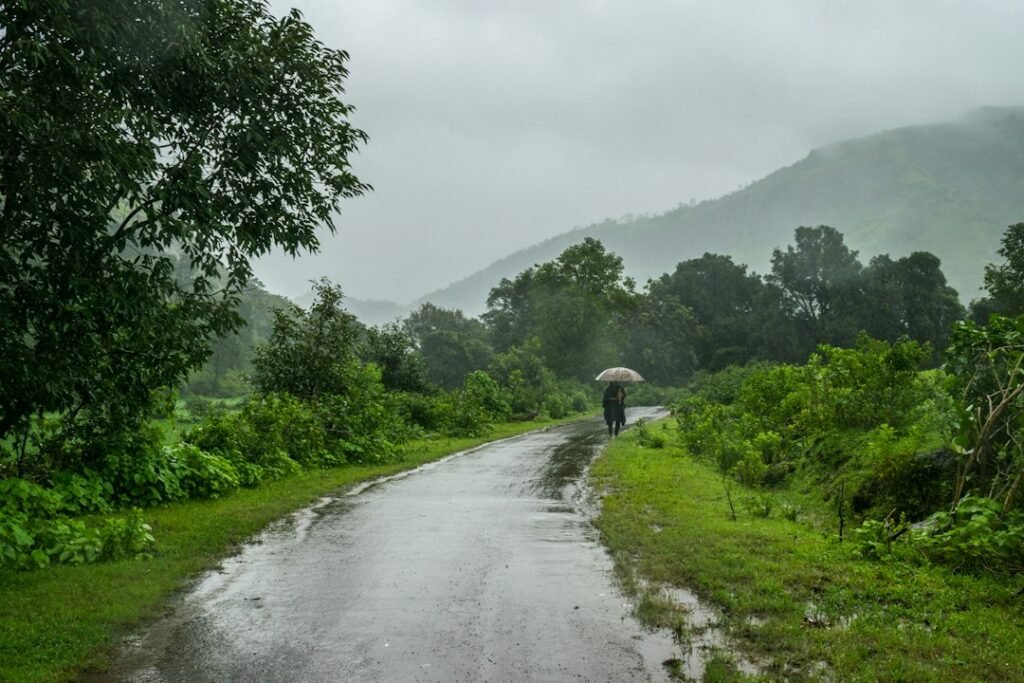
In this investigation
The monsoon shaped South Asian calendars because rain was never just weather. It determined when fields could be ploughed, when seeds could be sown, when rivers filled, when roads became difficult, when livestock moved, when diseases changed and whether harvests would succeed.
In such an environment, seasonal time naturally became social and religious time. Festivals, vows, agricultural rites and travel patterns accumulated around the expected arrival, strength and retreat of the rains.
South Asia lives with a seasonal reversal
Large parts of the subcontinent experience a pronounced annual shift between dry conditions and monsoon rainfall. The southwest monsoon supplies much of the year’s precipitation to many regions, while the northeast monsoon is especially important in parts of southeastern India.
This seasonality means the year is not evenly productive. Water availability, labour demand and movement change sharply across the calendar.
Rain determines agricultural possibility
Before large-scale irrigation and modern pumping, many farming systems depended directly on seasonal rain. The timing of sowing could determine whether a crop established successfully or failed.
Farmers therefore needed to organize seed, labour, cattle and land preparation around uncertain but recurring rainfall.
The problem is not only how much rain falls
Monsoon agriculture depends on onset, distribution, breaks, intensity and withdrawal. A season with average total rainfall can still damage crops if rain arrives too late, falls in destructive bursts or disappears during a critical growth stage.
This helps explain why monsoon timing became culturally salient rather than being reduced to one annual rainfall number.
Calendars turn uncertainty into expectation
A seasonal calendar cannot control rain, but it can organize preparation. Communities can place ploughing, seed selection, ritual and labour around periods when rain is usually expected.
Even an imperfect seasonal framework is useful because agriculture requires action before the outcome is known.
Festivals became attached to agricultural transitions
Ethnographic work in Karnataka shows how annual festivals connect religious ritual, food and the agricultural season. Ugadi marks a regional New Year and can coincide with the beginning of a new agricultural phase, while harvest rituals give thanks after crops are gathered.
Other local festivals explicitly address rain deities before the expected monsoon.
Prayer for rain is rational in one sense and theological in another
When rainfall determines food security, communities have strong reasons to devote ritual attention to it. The practical dependency is obvious.
But praying to a rain deity is not equivalent to meteorological forecasting. One explains social and religious response to uncertainty; the other attempts to predict atmospheric dynamics.
Monsoon waiting creates a distinctive social mood
Before the rains arrive, heat, water scarcity and agricultural anticipation can intensify. Farmers watch the sky, wind, clouds, insects, birds and flowering patterns for signs of change.
The monsoon’s arrival can therefore feel like a collective event rather than a routine weather transition.
Travel historically changed with the rains
Heavy rainfall can transform roads, rivers and mountain routes. In premodern conditions, transport became slower or more dangerous in many regions.
Seasonal travel restrictions and monastic residence periods can therefore intersect with weather for practical as well as religious reasons.
The Buddhist rains retreat is a clear example
Buddhist monastic traditions developed a rains retreat in which monks remain in one place for a defined period during the wet season.
Its religious meaning is substantial, but the monsoon environment also matters historically: travel during heavy rains is difficult and can damage crops, paths and small organisms.
Jain seasonal discipline shows a related pattern
Jain monastics also reduce travel during the rainy season, when mobile life risks harming proliferating small forms of life and when travel conditions become difficult.
Again, environmental seasonality and ethical theology reinforce one another without being reducible to the same thing.
Monsoon calendars differ by region
There is no single “Indian monsoon calendar.” Kerala, Rajasthan, Bengal, Tamil Nadu, the Deccan and Himalayan regions experience rain differently.
The southwest monsoon may dominate one agricultural system while the northeast monsoon matters more elsewhere. Local ritual calendars therefore cannot be explained by one national weather pattern.
The northeast monsoon matters especially in the southeast
Tamil Nadu and adjoining regions receive a substantial share of annual rainfall during the later northeast monsoon. Agricultural and festival timing there differs accordingly.
This regional difference is important evidence against simplistic claims that one set of rituals encodes one uniform environmental schedule.
Traditional indicators were observational, not magical by default
Farmers have long watched animal behaviour, cloud forms, winds, plant flowering and celestial cues. Some indicators may correlate with seasonal transitions because organisms themselves respond to temperature, humidity or rainfall.
Others may be unreliable folklore. Each indicator needs independent testing rather than being celebrated or dismissed as a class.
Forecasting the monsoon remains difficult even with modern science
The history of the India Meteorological Department demonstrates how difficult long-range monsoon prediction has been. In 1886, under pressure from famine and administration, the colonial IMD began issuing seasonal forecasts.
Historian Sarah Carson shows that early long-range methods repeatedly failed to achieve reliable prediction even as public demand forced forecasting to continue.
This matters when judging traditional prediction
If modern meteorology struggled with monsoon forecasting despite instruments and global data, claims that a simple traditional sign can predict an entire season with high precision should be treated cautiously.
Local indicators can still be useful at short range without becoming infallible seasonal forecasts.
Monsoon variability shaped political power
Rainfall affected taxation, grain prices, migration and famine risk. Governments therefore had strong incentives to monitor rainfall and agricultural conditions.
Seasonal calendars were not only religious devices; they were also economic and administrative frameworks.
Food calendars followed the rains
Seasonal vegetables, grains, pulses and preserved foods changed across wet and dry periods. Diet was therefore partly a calendar of rainfall.
Festive foods often reflect this seasonal availability, although later trade and refrigeration loosened those constraints.
Disease patterns also shift with monsoon conditions
Rain changes mosquito breeding, water contamination, humidity and crowding patterns. Some infectious disease risks therefore rise or change during monsoon months.
Traditional seasonal restrictions may occasionally align with real health risks, but that does not mean every rule was designed from germ theory.
Why fasting and dietary rules may cluster seasonally
Religious fasting periods can overlap with changing food supply, agricultural workload or disease conditions. Those overlaps are worth investigating.
But correlation is not enough to prove environmental origin. Ritual calendars also follow theology, scripture and inherited chronology.
Rain turns the landscape religiously visible
Dry riverbeds fill, vegetation returns, tanks recharge and fields change colour rapidly after monsoon onset. The transformation is dramatic enough to invite symbolic interpretation.
Rain can therefore represent fertility, divine generosity, danger and renewal without being reduced to agricultural economics.
The monsoon links ecology to emotion
South Asian poetry, music and art repeatedly use rain as a language of longing, reunion and fertility. The monsoon became culturally expressive because it was already materially consequential.
Ecology and aesthetics reinforced one another.
Modern irrigation changed dependence but did not erase the calendar
Dams, canals, pumps and groundwater reduce direct dependence on rainfall in some places. Yet monsoon performance still affects reservoirs, aquifers, crops, electricity generation and food prices.
Seasonal religious calendars therefore survive even where the original economic dependency has changed.
Climate change complicates inherited expectations
Shifts in extreme rainfall, heat and local onset patterns can make older seasonal expectations less reliable. Communities may retain fixed festival dates while environmental conditions become more variable.
This is a reminder that cultural calendars can remain stable while climate changes around them.
What survives scrutiny?
- The monsoon strongly shapes agriculture, water, travel and food security across South Asia.
- Seasonal festivals and rituals often cluster around sowing, rain arrival and harvest.
- Regional monsoon patterns differ substantially, so there is no single environmental explanation for every South Asian ritual calendar.
- Traditional weather indicators may contain useful local observation but vary greatly in reliability.
- Modern long-range monsoon forecasting has itself been historically difficult.
- Religious rain rituals respond to genuine environmental uncertainty without becoming meteorological mechanisms.
- Monsoon seasonality can influence travel, monastic residence, diet and disease risk.
- Environmental usefulness does not prove that a ritual originated as hidden science.
The Tradivior Evidence Profile
Historical Authenticity — Strong. Monsoon-linked agricultural and ritual calendars are extensively documented across South Asia.
Original-Purpose Evidence — Strong. Rain, fertility, harvest, travel and seasonal obligation are explicit in many local traditions.
Scientific Mechanism — Strong for environmental effects; Limited for ritual causation. Rainfall clearly changes agriculture, transport, ecology and disease risk, while ritual acts do not control monsoon dynamics.
Experimental Evidence — Moderate. Meteorological and ecological effects are well measured; traditional forecasting signs vary by indicator and locality.
Cross-Cultural Evidence — Strong. Seasonal rainfall and agricultural calendars shape ritual life in many monsoonal and agrarian societies.
Modern Relevance — Strong. Monsoon variability still affects agriculture, water security, infrastructure and public policy.
The Tradivior Conclusion
The monsoon shaped South Asian calendars because it shaped the conditions of life. Rain determined when people could sow, travel, harvest and store water, so seasonal uncertainty naturally entered ritual and social time.
The evidence supports a layered interpretation: real climate dependence, local observation and religious meaning became intertwined. That does not make every monsoon ritual a meteorological technology, nor every traditional sign a reliable forecast. The most defensible reading is that people built culture around one of the most consequential recurring environmental events they experienced.
Sources & further reading
- Carson S. “Anticipating the monsoon: the necessity and impossibility of the seasonal weather forecast for South Asia, 1886–1953.” British Journal for the History of Science. 2021.
- Research on millet farming, food culture and seasonal ritual in Karnataka published in Modern Asian Studies.
- Gough K. “The Annual Round.” In Rural Society in Southeast India. Cambridge University Press.
- Historical and climatological literature on southwest and northeast monsoon agriculture in South Asia.
Continue exploring

Partially Supported
Why Is the Ganga Sacred?
The Ganga is river, goddess, pilgrimage route, purifier and national symbol. Tradivior will trace how these layers developed and evaluate modern claims about unusual self-purifying properties without confusing microbial findings…
Partially Supported
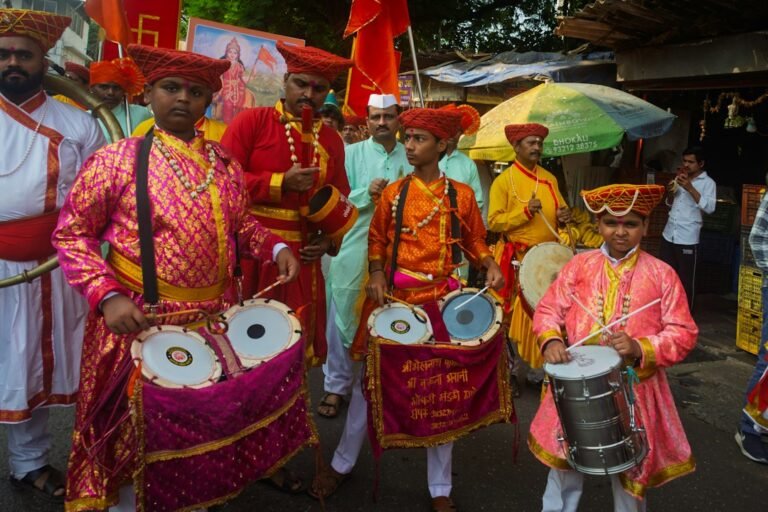
Why Do New Year Festivals Cluster Around Seasonal Turning Points?
Why do New Year festivals mark different seasonal thresholds? Compare calendar rules, cultural meanings and the evidence for fresh starts across civilizations.
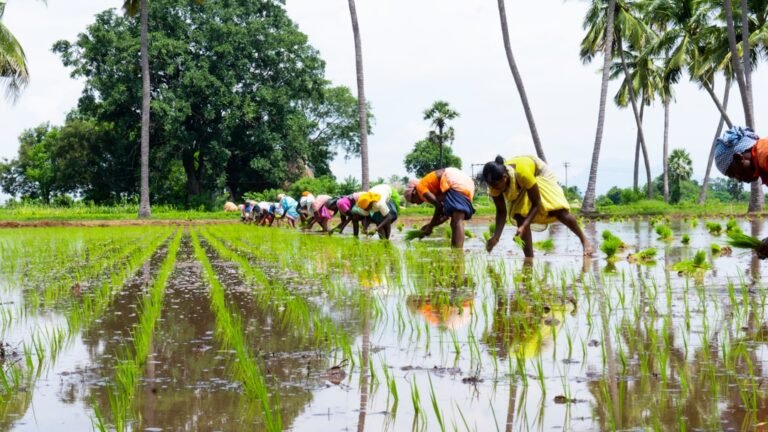
Why Did Harvest Calendars Become Religious Calendars?
Sowing and harvest once structured food, labour, taxation and survival, so agricultural timing frequently became ritual timing. Tradivior will examine when religion preserved ecological scheduling and when later meanings took…

Historically Practical
Why Did People Divide the Day Into Sacred Hours?
Canonical hours, prayer watches, sandhya, salat times and other traditions punctuate the day with religious obligations. Tradivior will ask how astronomy, social order and daily rhythm turned clock time into…
Picked for your curiosity
Enable JavaScript to build a reading profile and see recommendations.