 tradivior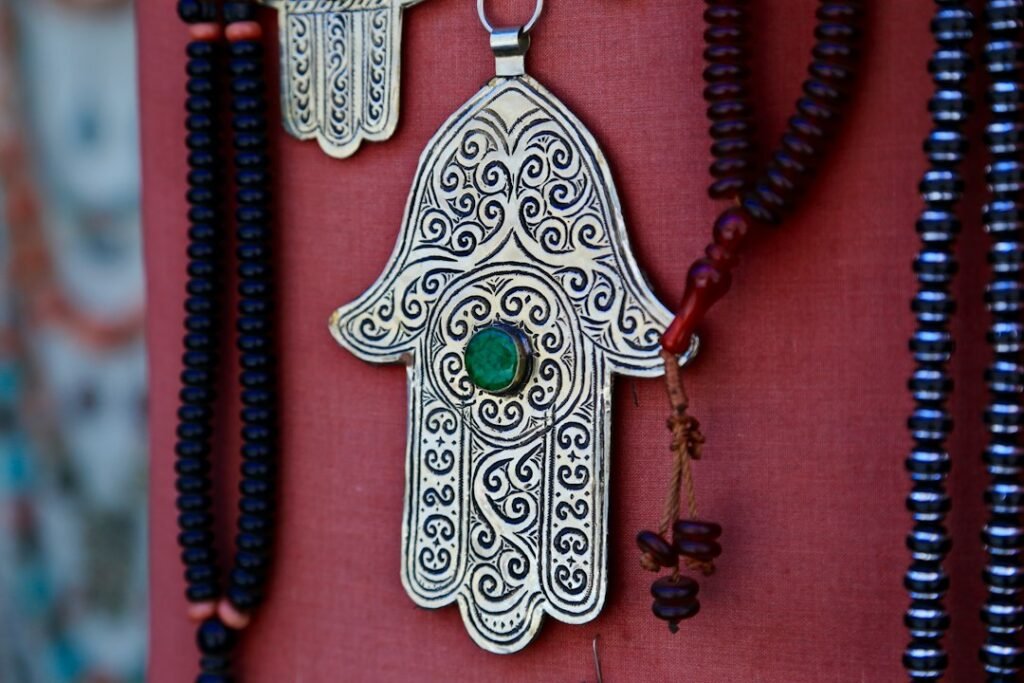
In this investigation
Humans carry amulets and talismans because danger is often uncertain while objects are tangible. A small object worn on the body can turn protection into something visible, portable and socially recognizable.
Amulets appear across religions and cultures: Quranic pendants, protective threads, medals, gemstones, carved symbols, written charms and relics. Their meanings differ, but they all materialize a promise of protection.
An amulet makes protection portable
A prayer spoken once disappears; an object can remain with the wearer all day.
This persistence gives protective belief a physical anchor.
Talismans often carry authorized symbols
Words, verses, divine names, geometric signs or images may be inscribed on an object. The material gains meaning through the authority attached to those symbols.
Protective objects mark identity
An amulet can tell others which community, saint, deity or lineage a person trusts.
Protection and belonging can therefore be intertwined.
Uncertainty encourages protective ritual
People turn especially strongly to charms in situations they cannot fully control: illness, pregnancy, travel, war, childhood or business risk.
Psychology repeatedly shows that uncertainty increases demand for control and pattern.
Objects can reduce anxiety
If a person believes an amulet protects them, carrying it may reduce perceived threat or increase confidence.
That subjective effect can be real without the object physically blocking disease or misfortune.
Expectation can change behaviour
A protective object may encourage confidence, persistence or caution. Those behavioural changes can alter outcomes indirectly.
This is different from a supernatural or electromagnetic protective mechanism.
Why heirloom amulets become powerful
An object inherited from a parent or grandparent carries autobiographical memory in addition to religious meaning.
Attachment may therefore persist even when literal belief weakens.
Some amulets contain hazardous materials
Traditional cosmetic or protective objects can contain lead, mercury, arsenic or other substances depending on material and manufacture.
Protective symbolism should never override toxicology.
Do gemstones emit protective energies?
Crystals and gemstones have real optical, electrical and mineral properties. There is no established evidence that wearing them produces the broad luck, disease-prevention or planetary effects often claimed.
Material science should not be confused with astrology or talismanic belief.
Religious objects can still have social power
A medal, thread or charm may reassure family members, mark a rite of passage or signal that a vulnerable person is being cared for.
These are genuine social functions.
What survives scrutiny?
- Amulets and talismans are historically widespread.
- They materialize protection, identity and memory.
- Uncertainty and anxiety help explain demand for protective objects.
- Expectancy can change confidence and behaviour.
- There is little evidence for broad physical protection from luck, disease or planetary forces.
- Some materials used in charms can themselves create toxicological risks.
The Tradivior Evidence Profile
Historical Authenticity — Strong. Protective objects are documented across ancient and modern cultures.
Original-Purpose Evidence — Strong. Protection, blessing, identity and divine association are explicit.
Scientific Mechanism — Moderate for psychological and social effects; Weak for claimed physical protection.
Experimental Evidence — Moderate for expectancy effects; Weak for supernatural efficacy.
Cross-Cultural Evidence — Strong. Amulets are nearly global.
Modern Relevance — Strong. Protective jewelry and charms remain widely used.
The Tradivior Conclusion
Amulets persist because they turn invisible uncertainty into a manageable object that can be worn, touched and inherited.
Psychological reassurance and social identity are plausible mechanisms. Claims that the object itself physically blocks disease, luck or planetary influence require evidence that is generally absent.
Sources & further reading
- Anthropological and archaeological scholarship on amulets and protective objects.
- Psychological literature on uncertainty, control and superstition.
- Toxicology literature on hazardous substances in traditional protective products.
Continue exploring

Partially Supported
Why Is the Ganga Sacred?
The Ganga is river, goddess, pilgrimage route, purifier and national symbol. Tradivior will trace how these layers developed and evaluate modern claims about unusual self-purifying properties without confusing microbial findings…
Partially Supported
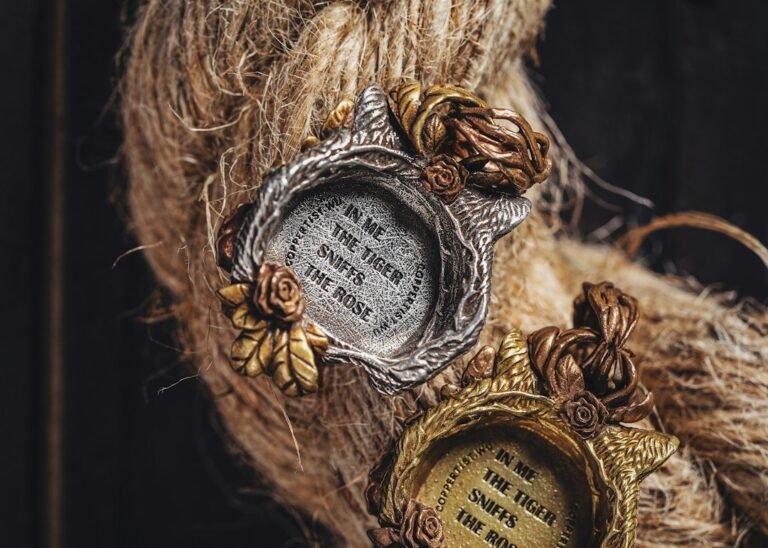
Why Do People Keep Ashes, Relics and Memorial Objects?
Hair, ashes, bones, clothing, photographs and relics allow the dead to remain materially present. Tradivior will examine why objects carry memory so powerfully and how continuing bonds differ from pathological…

Evidence Supported
Why Do Cultures Set Aside Days to Remember the Dead?
From Pitru Paksha and Qingming to Día de Muertos and All Souls’ Day, cultures repeatedly create calendar time for the dead. Tradivior will compare how recurring remembrance renews kinship, grief…
Historically Practical
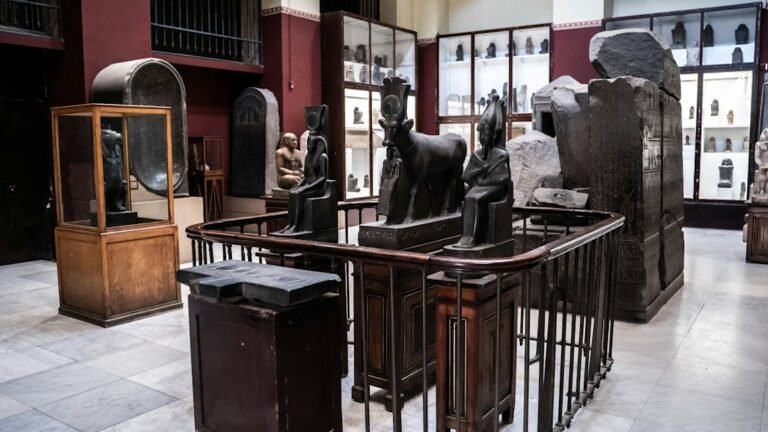
Why Do Cultures Preserve the Dead?
Mummification, embalming, freezing, smoking and desiccation reflect very different beliefs about bodies and afterlives. Tradivior will compare preservation traditions with the chemistry of decomposition and the practical limits of each…
Picked for your curiosity
Enable JavaScript to build a reading profile and see recommendations.