 tradivior
In this investigation
The glass of water at the centre of a relationship
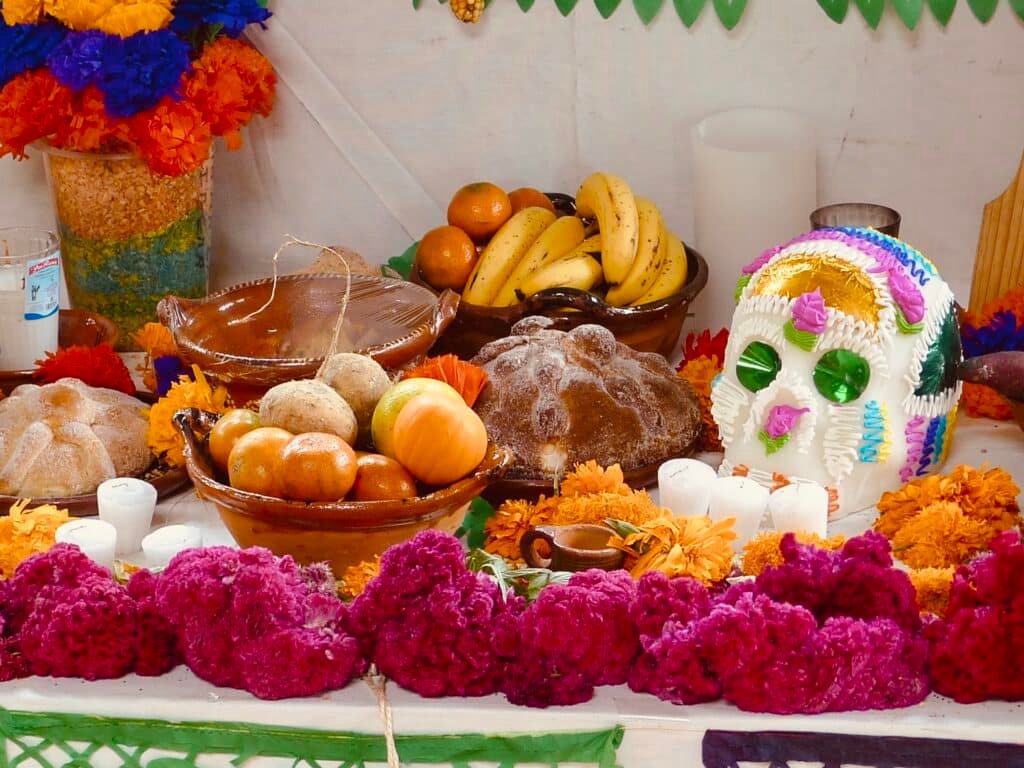
On a Mexican Día de Muertos ofrenda, a glass of water may sit beside a photograph, candles, orange marigolds and a dish that a deceased relative loved. It is easy for an outsider to see a striking arrangement and ask what each symbol means. A more revealing question is whom the arrangement welcomes. The glass can be an act of hospitality in a worldview where the dead remain part of family memory and, for some practitioners, are understood to return during the season. The photograph identifies a person; the food recalls their habits and tastes. Neither object is a museum specimen detached from the living. Yet the festival is often described as if today’s altar had descended unchanged from one ancient civilization. That tidy claim obscures the interaction of Indigenous commemorations, Catholic dates, regional creativity, migration and modern public display. The history is not less meaningful because it is complicated. It reveals a tradition whose continuity is made through acts of change.
An ofrenda is not a compulsory inventory
An ofrenda is an offering or remembrance space, not a universal construction kit. Families may include photographs, bread, food, water, candles, flowers, incense, textiles, toys or personal possessions, but the combinations and interpretations differ. Some households prepare altars at home; others attend to graves or participate in community observances. A loved one’s favourite dish may carry a meaning that no printed diagram could predict. The Smithsonian describes the altar as a temporary place for photographs and mementos, with objects understood in some explanations as representing water, wind, earth and fire. That educational framework is useful but should not be promoted as a rule followed by every family. Nor is a colourful altar necessarily proof that its makers believe every theological explanation associated with it. Traditions are practised by people with different convictions, resources and relationships. The central fact is not uniformity. It is the deliberate creation of a space for remembrance.
The November dates are part of a longer encounter
The modern observance commonly centres on 1 and 2 November, dates associated with All Saints’ Day and All Souls’ Day in the Christian calendar. Indigenous communities in Mesoamerica also maintained complex practices concerning ancestors and death before Spanish conquest, but their calendars, rites and meanings were not identical to a contemporary November ofrenda. This is why the origin question is contentious. An essay published by Mexico’s National Institute of Anthropology and History (INAH), by archaeologist Víctor Joel Santos Ramírez, argues against calling the present November celebration a direct pre-Hispanic survival. Smithsonian educational materials emphasize Indigenous traditions intertwined with Spanish Catholic observances. These positions address different layers of the historical record. It is possible for the November dates to have a medieval Christian genealogy while Indigenous families shaped the observance through their own relationships with the dead. One need not erase either history to recognize the other.
Why a simple origin story can become a trap
A claim of uninterrupted antiquity can help a festival appear distinctive to visitors, but it can also turn contemporary communities into actors in a historical pageant. The opposite simplification—declaring everything a European import—risks denying Indigenous agency, adaptation and continuity. Historical investigation should separate several questions: When did the November calendar become established? Which practices of ancestor remembrance are documented before colonization? When do records show particular foods, objects or altar designs? How did families and communities adapt the observance in later centuries? A modern altar can be authentic even if its arrangement has changed in the last generation. Authenticity in a living tradition is not a test of whether every detail can be dated to antiquity. It can also mean that the people involved recognize the practice as their own, inherit responsibilities through it and reshape it to honour particular lives.
Flowers and food do more than decorate
The orange cempasúchil, a marigold associated with the season, may mark a path or surround a memorial. Its vivid colour and scent are commonly described as guides for visiting souls. Candles and copal incense create light and fragrance; bread and favourite foods make hospitality tangible. These explanations are meaningful accounts of practice, not scientific measurements of spirits. Smithsonian folklorist Norma Cantú describes changing altars that incorporate salt, herbs, water, copal, flowers, candles and food. Her account also warns against treating one arrangement as a national standard. A family that remembers someone through a particular recipe is not simply adding a symbolic food category. It is recalling the person who cooked it, requested it or shared it. The altar becomes a vocabulary of intimate details. That is why a checklist of objects, however informative, can never fully explain an offering’s significance.
At the cemetery, remembrance is not always a performance
Día de Muertos is frequently photographed in crowded streets and cemeteries. But a visit to a grave may be quiet, private and emotionally difficult. Families may clean a burial place, bring flowers, share stories or spend time together. Some regions, including communities around Lake Pátzcuaro in Michoacán, have attracted intense outside attention for observances associated with the season. Visibility can support cultural recognition and livelihoods, but it can also create pressure to perform for visitors. A cemetery is not automatically a public stage, and a grieving person is not a decorative part of a travel photograph. A respectful account distinguishes community practice from tourist representation. It also avoids assuming that all families share the same theology or that participation is equally enthusiastic everywhere. Local permission and context matter more than the visitor’s desire for a dramatic image.
What UNESCO recognized—and what it did not
UNESCO proclaimed the Indigenous Festivity Dedicated to the Dead in 2003 and inscribed it on the Representative List of the Intangible Cultural Heritage of Humanity in 2008. Its description emphasizes Indigenous communities, a seasonal relationship with departed relatives and the agricultural cycle of maize. Recognition concerns the cultural significance and transmission of living practices. It is not a scientific ruling that spirits return, nor a declaration that every Mexican altar has an identical ancient origin. International heritage language can encourage attention and respect, but it can also make local variations disappear behind a single label. A designation should be read as an invitation to learn from practitioners, not as a substitute for their explanations. The same festival can be experienced differently in a rural community, a city household and a migrant family’s apartment abroad.
A museum altar changes the audience
Smithsonian programmes have included community and artist-made ofrendas, showing how remembrance can be expressed in museums and diasporic settings. At home, an image on an altar may be immediately recognizable to every family member. In a public institution, it becomes an object strangers interpret. That change is not necessarily a betrayal of tradition: public memorials can honour shared losses, migration or histories that deserve visibility. But the display should be described as a particular contemporary creation, not a transparent reconstruction of every precolonial ritual. The museum can preserve testimony and foster understanding while also transforming the relationship between maker, object and viewer. Asking who designed an altar, for whom, and with what authority is more informative than counting the number of levels or skulls it contains.
Festive colour does not cancel grief
Sugar skulls, paper banners, music and lively public processions have helped make Día de Muertos recognizable internationally. Outsiders sometimes mistake the festive register for an absence of mourning. But remembering a loved one can include laughter, favourite jokes and painful silence within the same evening. Humour does not mean death is trivial, just as solemnity does not prove sincerity. A skull can be playful in one setting and solemn in another. The visual language of the festival should not be reduced to a universal instruction to celebrate rather than grieve. What matters is the capacity to hold different emotions together. In many families, the remembered person’s particular character determines the tone more than any national slogan about death.
The six dimensions of an evidence profile
Narrow proposition: The modern Día de Muertos ofrenda has one uniform, unchanged design inherited directly from a single pre-Hispanic ceremony. Historical documentation: the November dates have Christian liturgical histories, and direct continuity of every modern object is not demonstrated. Material evidence: earlier Indigenous ancestor practices are real, but do not establish one complete modern altar design. Regional comparison: documented differences among communities contradict a uniform national pattern. Practitioner and ethnographic perspectives: families and cultural researchers describe varying objects, settings and purposes. Empirical testability: dates, objects and documented practices can be studied; a devotional belief about visiting souls is not being tested here. Contemporary meaning and transmission: home, cemetery, museum and diaspora adaptations show continuing creative change. Verdict on the narrow historical proposition: Not supported. This is not a verdict on the value of Día de Muertos or on the truth of anyone’s religious belief.
How to learn without turning remembrance into a souvenir
When invited to observe, ask whose memory is being honoured and follow the host’s guidance. Do not touch offerings, photograph people or enter private spaces without permission. Avoid declaring that every altar must contain seven levels or that a colour means exactly the same thing everywhere. If preparing a public educational display, credit the communities and sources informing it and identify contemporary artistic additions as such. Comparisons with ancestor observances elsewhere, including India, can be illuminating when they respect differences in calendar, theology and social authority. The resemblance of two offerings does not make them historically interchangeable. Cultural respect begins with specificity: which people, in which place, at which time, and for what relationship?
An altar can change and still remain faithful
A family may add a new photograph this year, remove an object that no longer feels right or bring a recipe from another city. Such changes are not evidence that the tradition has lost its identity. They may be precisely how it continues to matter. Historical research can show that the festival’s calendar and forms have multiple origins without diminishing the act of welcome. The water on the altar does not prove a supernatural return. It shows that the living still know how they would receive someone they miss. That is a cultural and human fact worthy of attention, whether one approaches the offering through devotion, history or memory.
Sources, competing interpretations and image credit
- UNESCO, Indigenous Festivity Devoted to the Dead (2003 proclamation; 2008 inscription)
- INAH, Víctor Joel Santos Ramírez, El origen del Día de Muertos
- Smithsonian Center for Folklife, Norma Cantú, Altered Altars
- Smithsonian, Five Facts About Día de los Muertos
- Mexico Secretaría de Cultura, Día de Muertos observances
- Smithsonian National Museum of the American Indian, Indigenous Day of the Dead programme
Featured photograph: an actual Mexican ofrenda photographed 2 November 2013 by Juanscott, Wikimedia Commons, CC BY-SA 4.0. The image is a specific documented altar, not a universal template; no modifications claimed.
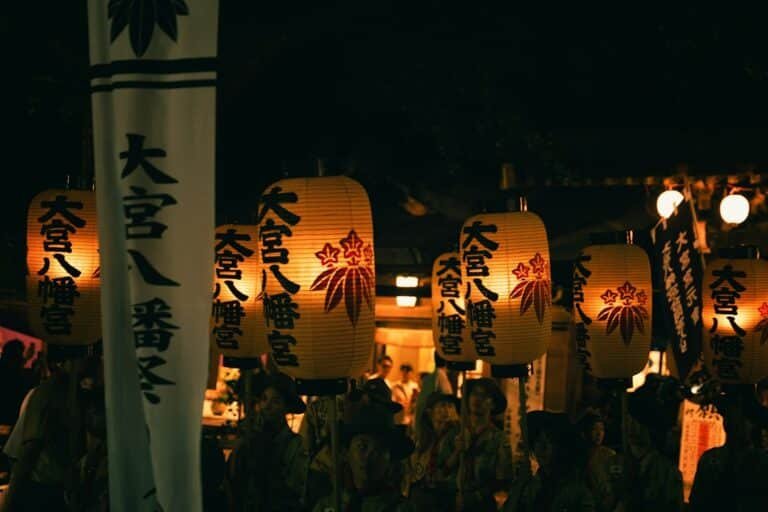
For another regional ancestor-remembrance investigation, see Japan’s Obon and its changing calendars.
Continue exploring
The Burden That Becomes a Promise: Thaipusam’s Journey from Tamil Hills to Singapore Streets
From a 1932 silver chariot stopped by trolley wires to Singapore's 2026 procession, Thaipusam reveals how Tamil devotion and diaspora life reshape one another.
The People Beneath the Tower: How Catalonia’s Castells Learned to Reach Higher
From eighteenth-century dances to modern safety debates, Catalonia's castells reveal how a living tradition balances collective trust, ambition and risk.
When the New Year Has More Than One Star: Matariki, Puanga and the Art of Remembering
Matariki is not one fixed star count or ceremony. Explore Māori regional traditions, Puanga, hautapu, the lunar calendar and New Zealand's public holiday.
When Ancestors Come Home: Obon, Japan’s Summer Fires, and the Festival with Three Calendars
Why does Obon unfold in July, August and the lunar calendar? Explore Kyoto's farewell fires, Gujō's overnight dances and the history of Japanese ancestor remembrance.
Picked for your curiosity
Enable JavaScript to build a reading profile and see recommendations.