 tradivior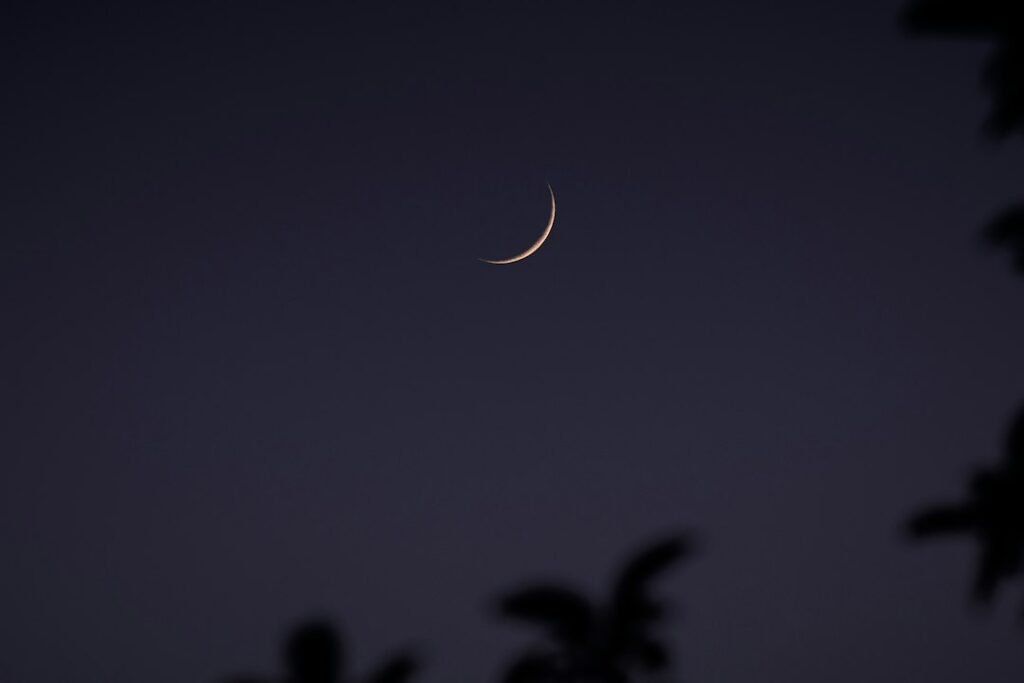
In this investigation
Many major religious festivals refuse to stay on the same date of the modern Gregorian calendar. Ramadan moves. Passover moves. Diwali moves. Vesak moves. Lunar New Year moves. To people raised on fixed civil dates, this can look like inconsistency. In fact, it is usually the opposite: the festival is staying faithful to a different calendar.
The key distinction is between lunar and lunisolar calendars. A purely lunar calendar follows the Moon and allows months to drift through the solar seasons. A lunisolar calendar also follows lunar months but periodically adds corrections so festivals remain broadly tied to the same seasonal part of the year.
A lunar month is shorter than a solar month
The synodic month from one new moon to the next lasts about 29.5 days. Twelve such months total about 354 days.
The solar year is about 365.24 days. The gap is therefore roughly eleven days each year.
THE CALENDAR EFFECT
If a calendar follows twelve lunar months without inserting a leap month, its festivals move about eleven days earlier through the solar year each year.
The Islamic calendar deliberately allows seasonal drift
The Hijri calendar is fundamentally lunar. Twelve lunar months define the year, and no intercalary month is added to keep Ramadan or other observances fixed to a solar season.
This means Ramadan can occur in winter, spring, summer or autumn over the course of roughly thirty-three solar years.
Seasonal drift changes the lived difficulty of fasting
When Ramadan falls in summer at high latitudes, daylight fasting periods can be very long. In winter they can be much shorter.
The religious rule remains tied to the lunar month, while the physical burden changes with latitude and season. The calendar therefore creates a rotating experience rather than fixing the fast to one climate.
Crescent observation makes the calendar publicly visible
Traditional Islamic month beginnings are associated with sighting the new crescent. Different communities may rely on local observation, national announcements or astronomical calculation.
The resulting disagreements over festival dates are not necessarily evidence of astronomical ignorance. They often reflect different rules about what counts as authoritative observation.
Jewish festivals move on the Gregorian calendar but remain seasonal
The Hebrew calendar is lunisolar. Months follow lunar cycles, but leap months are inserted in selected years to prevent the calendar from drifting away from the solar seasons.
This is particularly important for Passover, which is traditionally linked to spring. A purely lunar system would eventually move the festival into autumn or winter.
Intercalation preserves religious-seasonal relationships
The Hebrew calendar uses a nineteen-year cycle containing seven leap years with an extra month.
This is one solution to the same astronomical mismatch faced by Indian and Chinese calendrical traditions: lunar months are convenient, but the seasons follow the Sun.
Hindu festivals also move because tithis are not Gregorian dates
Many Hindu festivals are defined by a lunar month and tithi rather than by a fixed civil date. Diwali, Holi, Janmashtami and numerous regional observances therefore appear on different Gregorian dates each year.
Yet because traditional Hindu calendars are generally lunisolar, these festivals remain within broad seasonal windows rather than drifting continuously through the year.
Adhika masa prevents long-term seasonal drift
Indian lunisolar systems periodically insert an extra month, commonly called adhika māsa. The correction reconciles accumulated mismatch between lunar months and the solar year.
This is why Diwali remains broadly associated with autumn even though its Gregorian date changes.
Festival dates can differ between Indian regions
Different regional calendar traditions may use amanta or purnimanta month reckoning, different local sunrise calculations and different ritual rules for deciding which civil day hosts a tithi.
Two communities can therefore celebrate closely related festivals on different civil dates without using different Moons.
Buddhist lunar calendars are similarly diverse
Many Buddhist traditions organize observance days around full moon, new moon or other lunar phases. Vesak, for example, is commonly associated with a full moon but falls on different Gregorian dates across countries.
Different national Buddhist calendars use different intercalation and civil-date conventions, so one “Buddhist lunar calendar” should not be assumed.
East Asian lunar festivals are usually lunisolar
Lunar New Year, Mid-Autumn Festival and related observances are tied to lunisolar calendars rather than a purely lunar system.
Leap months are inserted so the calendar remains linked to the solar seasonal cycle.
The Moon offered a calendar people could see
Before printed almanacs and smartphones, lunar phase was publicly observable. A full moon or crescent gave communities a natural timing cue.
This visibility made lunar dates especially well suited to communal fasting, pilgrimage, feast days and ritual gatherings.
Festival mobility can strengthen ritual attention
A moving date requires active calendrical awareness. Communities consult almanacs, religious authorities or astronomical announcements rather than letting the festival become simply “the same date every year.”
That process can reinforce communal participation because the date itself is periodically recalculated or announced.
A moving Gregorian date does not mean a moving traditional date
Diwali can occur on different dates in October or November while remaining on the same relevant lunar tithi. Ramadan begins on different Gregorian dates while remaining the ninth month of the Hijri calendar.
The festival is stable inside its own calendar and mobile only when translated into another.
Gregorian fixed dates are themselves a cultural convention
Modern global society often treats January 1 or December 25 as inherently fixed. They are fixed because the Gregorian calendar is solar and socially dominant.
From the perspective of a lunar calendar, the Gregorian date is the moving reference.
Why some religions preferred the Moon
Lunar months are easy to observe directly. A visible crescent or full moon makes the calendar accessible even without centralized infrastructure.
Religions that organize fasting, pilgrimage or ritual around lunar months inherit this direct connection between sky and sacred time.
Why others needed the Sun as well
Agricultural festivals often need seasonal stability. Harvest, planting and spring observances lose practical meaning if they drift through the entire year.
Lunisolar systems preserve lunar ritual timing while using solar corrections to keep festivals near the intended season.
THE SIMPLE RULE
Pure lunar calendars drift through the seasons. Lunisolar calendars move on the Gregorian calendar but correct themselves so they remain broadly seasonal.
Calendar mobility can create coordination challenges
Schools, workplaces, airlines and governments typically use a fixed solar civil calendar. Religious holidays that move therefore require annual scheduling.
This creates administrative complexity but also shows that multiple calendars can coexist within one society.
Astronomical calculation reduces uncertainty but does not eliminate convention
Modern astronomy can predict lunar conjunctions and crescent visibility with great precision.
Communities must still decide whether the calendar follows local sighting, global sighting, calculated visibility or fixed arithmetic rules.
Different rules can produce different legitimate dates
Religious calendar disputes are often disagreements about authority rather than disagreements about celestial mechanics.
Two communities may know the same astronomical data yet apply different ritual rules.
Moon phases carry symbolic meaning as well as calendrical function
Full moons can symbolize fullness, illumination or completion. New moons can symbolize beginnings or absence. Crescents can mark emergence.
These meanings can reinforce why a festival is attached to a particular lunar phase even when the original reason was calendrical or ritual rather than environmental.
Scientific astronomy explains the movement without explaining the theology
Astronomy can explain why the Gregorian date changes, how a leap month works and when a crescent becomes visible.
It cannot determine why a community believes a particular day is sacred. That requires historical and religious evidence.
The moving date is evidence of calendrical continuity
From a modern administrative perspective, moving holidays can look inconvenient. Historically, their persistence shows the opposite: communities continue to preserve older calendar systems even while using the Gregorian calendar for civil life.
A festival moving on one calendar can therefore be evidence of remarkable stability in another.
What survives scrutiny?
- Festivals move on the Gregorian calendar because many are defined by lunar months, lunar phases or lunisolar dates.
- A purely lunar year is roughly eleven days shorter than the solar year.
- The Islamic Hijri calendar allows festivals and fasting months to move through all solar seasons.
- Hebrew, Hindu, Chinese and many Buddhist calendars use lunisolar corrections to prevent long-term seasonal drift.
- Leap months are a mathematical solution to the mismatch between lunar months and the solar year.
- Hindu festivals move within the Gregorian calendar while generally remaining seasonally anchored because of intercalation.
- Different regional and religious rules can produce slightly different civil festival dates from the same astronomical sky.
- Lunar timing was historically attractive because phases are directly visible to ordinary observers.
- A festival can be stable in its traditional calendar while appearing mobile only when converted into Gregorian dates.
- Astronomy explains date movement; religious history explains why a particular lunar date is sacred.
The Tradivior Evidence Profile
Historical Authenticity — Strong. Lunar and lunisolar festival calendars are extensively documented across Hindu, Islamic, Jewish, Buddhist and East Asian traditions.
Original-Purpose Evidence — Strong. Ritual coordination, fasting, seasonal observance and communal timekeeping are explicit purposes.
Scientific Mechanism — Strong. The movement of festival dates follows directly from the difference between lunar and solar year lengths and from intercalation rules.
Experimental Evidence — Strong for astronomy; N/A for sacred meaning. Calendar movement is mathematically predictable and observationally verifiable.
Cross-Cultural Evidence — Strong. Multiple religious traditions independently use lunar or lunisolar calendars.
Modern Relevance — Strong. Moving religious dates continue to affect public holidays, work, education, travel and communal life worldwide.
The Tradivior Conclusion
Evidence Supported. Festivals move because they remain anchored to traditional lunar or lunisolar calendars rather than to fixed Gregorian dates. Pure lunar calendars let observances rotate through the solar seasons, while lunisolar systems use leap months to keep festivals broadly seasonal. The movement is therefore not calendrical inconsistency but the visible consequence of preserving a different system of sacred time. Astronomy explains the mechanics; religion explains why communities continue to care about the date.
Continue investigating
- Why Did Humans Watch the Moon So Closely?
- Why Did Indian Calendars Track Both Sun and Moon?
- Why Do New Year Festivals Cluster Around Seasonal Turning Points?
Sources and further reading
- Dershowitz N, Reingold EM. Calendrical Calculations. Comparative treatment of lunar, lunisolar, Hebrew, Islamic, Chinese and Hindu calendars.
- Chatterjee SK. “Indian Calendars.” International Astronomical Union Colloquium.
- Classical and modern scholarship on the Hebrew nineteen-year lunisolar cycle and Islamic Hijri calendar.
- Historical research on Buddhist and East Asian lunar/lunisolar festival calendars.
- Astronomical references for the synodic month and tropical year.
Continue exploring
Partially Supported
Why Do New Year Festivals Cluster Around Seasonal Turning Points?
Why do New Year festivals mark different seasonal thresholds? Compare calendar rules, cultural meanings and the evidence for fresh starts across civilizations.
Why Did Harvest Calendars Become Religious Calendars?
Sowing and harvest once structured food, labour, taxation and survival, so agricultural timing frequently became ritual timing. Tradivior will examine when religion preserved ecological scheduling and when later meanings took…
Why Did the Monsoon Shape Calendars and Rituals in South Asia?
In South Asia, rain determines sowing, travel, disease risk and food security, so the monsoon naturally entered ritual and seasonal calendars. Tradivior will trace how climate uncertainty became social time.
Why Did People Divide the Day Into Sacred Hours?
Canonical hours, prayer watches, sandhya, salat times and other traditions punctuate the day with religious obligations. Tradivior will ask how astronomy, social order and daily rhythm turned clock time into…
Picked for your curiosity
Enable JavaScript to build a reading profile and see recommendations.