 tradivior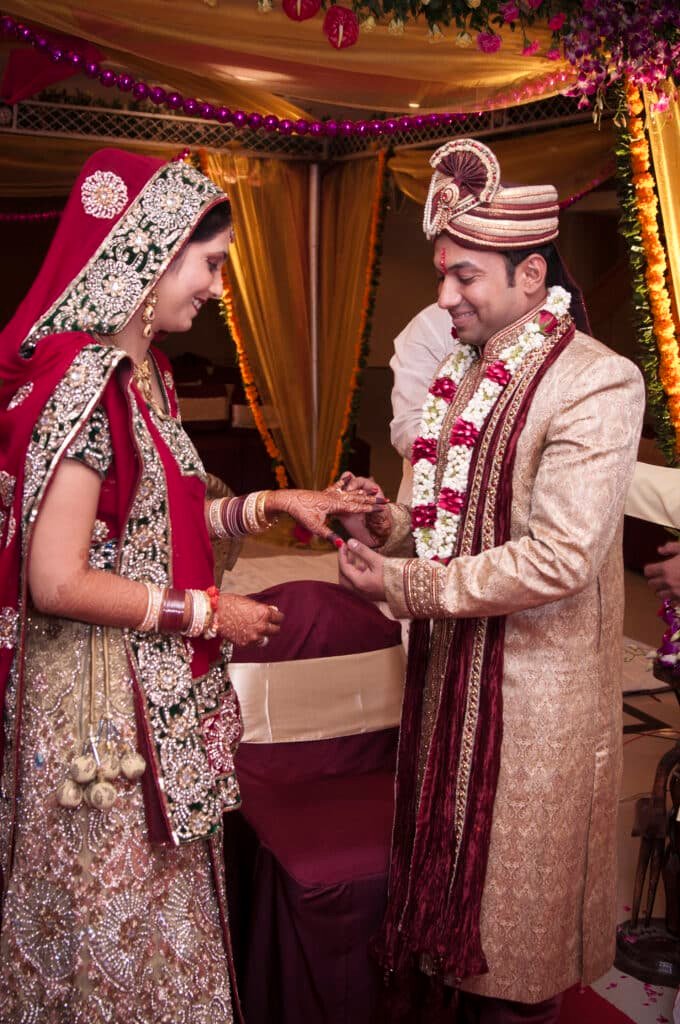
In this investigation
A married woman in India may be marked by a red line of sindoor, a mangalsutra or thali, glass or shell bangles, toe rings, an iron bangle, a nose ornament, a bindi—or by none of these. There is no single Indian marriage marker. What looks like one tradition from a distance is actually a large family of regional, caste, linguistic and religious practices.
These markers do important social work. They can make marital status immediately visible, connect a woman to a husband’s family, communicate auspiciousness, carry family wealth and participate in ritual ideas about the husband’s well-being. They can also make marriage more visibly inscribed on women than on men, which has made them important sites of modern debate about gender, choice and identity.
Contemporary wellness explanations sometimes add claims about pressure points, hormones, reproductive organs, mercury absorption or “energy channels.” Historical meaning and biomedical mechanism must be separated. A symbol can be culturally powerful without having a special physiological effect, and some products—particularly poorly regulated sindoor—can introduce real health risks rather than benefits.
There is no single pan-Indian marriage marker
North Indian Hindu communities may emphasize sindoor in the hair parting, mangalsutra in some regions, bangles or toe rings. In Bengal, red-and-white shankha-pola bangles and sindoor can be especially visible. In Maharashtra, black-and-gold mangalsutra forms are common. In South India, the thali or tali wedding pendant is often more important than sindoor.
Some Kerala Syrian Christian communities use a marriage pendant incorporating a Christian cross. Some communities do not use mangalsutras at all. Sikh, Muslim, Christian, tribal and regional traditions follow their own patterns.
THE FIRST CORRECTION
“Indian married women wear X” is usually too broad. Marriage markers are regional and community-specific, and their meanings have changed over time.
Visible marital status solves a social-information problem
In societies where marriage changes household, sexual, ritual and inheritance relationships, knowing who is married matters. A visible marker allows strangers to infer status without asking directly.
The signal can affect etiquette, courtship, ritual participation and the way a woman is addressed or treated.
Marriage changes identity, so the body is changed with it
Rites of passage often alter clothing, hairstyle, ornament or body markings. The wedding transforms a person’s social position; marriage markers make that transformation durable beyond the ceremony.
The logic resembles rings in Europe, although Indian systems often use several markers at once and may embed them more deeply in ritual ideas of auspicious married womanhood.
Sindoor makes marital status highly visible
Sindoor is a red or vermilion powder applied in the parting of the hair by many married Hindu women, particularly in northern, central and eastern India. In wedding rituals, the groom may apply it to the bride as part of the transition into married status.
The colour red has wider associations with fertility, auspiciousness, sexuality, power and life in many South Asian ritual settings. Sindoor therefore participates in a broader visual language rather than functioning as an isolated cosmetic.
Sindoor is not simply an ancient Vedic medical device
Popular explanations sometimes claim that sindoor was prescribed by the Vedas for hormonal or neurological reasons. Historical evidence does not support that neat story.
Marriage use of vermilion developed within later Hindu traditions and regional practice. Its symbolic association with married womanhood is historically meaningful without needing to be retrofitted into a biomedical technology.
The hair parting itself becomes a symbolic boundary
Placing colour along the central hair parting makes the marker visible on the head, a highly noticeable part of the body. It can be reapplied daily, turning marital identity into a repeated act rather than a one-time wedding event.
That repetition also reinforces social recognition: the wearer and observers repeatedly encounter the status marker.
Modern feminist analysis highlights the gendered ownership message
Contemporary scholars have examined sindoor as more than a neutral symbol. Devaleena Das argues that it can mark heterosexual marital identity, fidelity and the social regulation of women’s bodies.
This interpretation does not mean every wearer experiences sindoor as oppression. It demonstrates that the marker operates inside gender systems where women’s marital status is often more publicly visible than men’s.
A symbol can be both chosen and structurally gendered
A woman may wear sindoor proudly because it connects her to marriage, faith, family or personal aesthetics. Another may feel pressured to wear it. A third may deliberately reject it.
Individual agency and structural inequality can coexist. The meaning of a practice cannot be inferred from the object alone.
Mangalsutra is better understood as an evolving family of wedding necklaces
The Sanskrit expression mangala sutra literally evokes an auspicious thread. Modern forms range from black-beaded chains with pendants to community-specific gold necklaces.
Historical jewellery scholarship cautions against treating the modern standardized mangalsutra as a single unchanged Vedic object. Sacred threads, bridal jewellery and neck ornaments have older histories, but the present ritual form and community-specific designs evolved over time.
The classical marriage texts do not describe one universal mangalsutra rite
Historians of Indian jewellery note that early domestic ritual texts do not present the modern mangalsutra as the universal act that solemnizes marriage.
Literary and material evidence instead shows changing neck ornaments, auspicious threads and later regional marriage pendants. The tradition is old in important forms but not historically uniform.
South Indian thalis demonstrate enormous internal diversity
Thali pendants vary by caste, locality and religious tradition. Designs can contain deities, temple forms, symbols, geometric motifs or community emblems.
A Chettiar marriage necklace in the Smithsonian collection, for example, contains elaborate religious imagery and was historically connected to the bride’s dowry and merchant-community identity.
Museum and literary evidence suggests the thali’s marital meaning developed historically
Research from the Madras Government Museum notes that necklaces and ornaments appear in early South Indian sources but cautions against assuming every depicted necklace was already a marriage emblem.
The thali seems to have acquired more explicit significance as a marker of married status over time, with later forms becoming increasingly standardized within particular communities.
This is how traditions often evolve
An older material form—a thread, bead or necklace—can acquire a new ritual function. The later tradition is not therefore “fake.” It is historically layered.
Authenticity should not be confused with immutability.
Black beads carry symbolic meanings that vary by community
Modern mangalsutras often use black beads, sometimes explained as protection against the evil eye or harmful influence. Such protective interpretations belong to living cultural practice.
There is no strong evidence that black beads themselves block a measurable external “negative energy.” Their protective power is symbolic and religious unless a specific material mechanism is separately demonstrated.
Marriage jewellery can also function as wealth
Gold ornaments given at marriage can carry substantial financial value. In historical settings where women had limited access to land or formal employment, jewellery could provide an asset that was portable and potentially liquid.
Indian legal and social traditions around stridhan reflect the importance of property transferred to women at marriage, although actual control over such assets has varied greatly.
Financial security and patriarchal display can coexist
A wedding ornament may provide a woman with valuable property while simultaneously marking her new status within her husband’s household.
Neither interpretation cancels the other. Material traditions often have multiple functions at once.
Bangles can mark auspicious married life
Different regions use glass, conch-shell, coral, gold or other bangles in marriage symbolism. Bengali shankha-pola pairs white conch bangles with red coral or red bangles. Other regions favour green glass or gold.
Colour, material and number vary. There is no single physiological explanation connecting all of them.
Toe rings are another highly visible marital marker
In parts of India, married women wear toe rings known by regional names such as bichhiya. The ornament marks status through placement on the feet rather than the head or neck.
Modern claims sometimes say toe rings regulate reproductive organs through nerves or acupressure. Such claims are widely repeated but lack strong clinical evidence.
Anatomical proximity does not establish therapeutic effect
A toe ring touches skin and can apply pressure. That does not demonstrate that the pressure selectively regulates the uterus, menstrual cycle or fertility.
Specific biomedical claims require controlled evidence, not analogy between body maps and ornament placement.
The iron bangle in Bengali traditions adds another material meaning
Some Bengali Hindu married women wear an iron bangle, often covered or combined with gold, known as loha. It participates in the regional system of married identity.
Iron can carry ideas of strength or protection, but wearing an iron bangle is not an evidence-based method of treating iron deficiency. Nutritional iron must be absorbed through appropriate physiological pathways.
A metal’s nutritional role does not transfer automatically to jewellery
The body needs iron, copper and other minerals. This fact is sometimes used to create health claims for metal ornaments.
But a nutrient is beneficial when delivered in usable dose and chemical form. Skin contact with an ornament is a different exposure pathway.
Sindoor raises a real modern toxicology issue
Unlike vague energy claims, contamination of some commercial sindoor products is directly measurable. A study of samples purchased in New Jersey and India found lead in a large majority of products tested, with some samples containing extremely high concentrations.
Among the samples from India in that study, 43 percent exceeded the U.S. Food and Drug Administration’s 20 micrograms-per-gram lead limit used for cosmetics.
THE SAFETY EVIDENCE
Sindoor’s cultural use does not make every commercial formulation chemically safe. Lead-containing products can pose a real exposure risk, especially if powder is ingested accidentally by children or used improperly.
Historical vermilion and modern sindoor are not chemically identical categories
Red pigments can be made from different materials. Traditional vermilion can refer to mercury sulfide, while modern products may contain synthetic pigments, lead compounds, fillers or other ingredients.
It is therefore unsafe to make one chemical claim about “sindoor” without testing the actual formulation.
Mercury stories are often scientifically inverted
Some wellness explanations claim sindoor contains mercury because mercury supposedly cools the body, reduces stress or stimulates hormones.
Mercury compounds are toxicological concerns, not established wellness ingredients. Historical use of a substance does not convert toxicity into therapeutic benefit.
The appropriate modern question is product safety
Consumers should care about regulated ingredients, contamination and exposure rather than assuming that brighter colour or “traditional formulation” is healthier.
A culturally meaningful marker can be manufactured with safer ingredients.
Marriage markers are unusually gendered
One of the most important social questions is why women’s marital status is often marked more visibly and continuously than men’s.
Historically, marriage could change a woman’s household residence, sexual status, labour expectations, inheritance position and ritual classification more dramatically than it changed a man’s public identity.
Visible status helps regulate sexuality
A marital marker tells potential suitors and the wider community that the wearer is socially unavailable under prevailing norms.
This signalling function is not unique to India; wedding rings perform a related role elsewhere. What differs is the number and gender asymmetry of the markers.
Widowhood reveals how strongly markers are tied to auspicious married status
In some traditions, widows historically removed sindoor, bangles, thali or other ornaments and changed clothing. The absence of jewellery itself became a status marker.
This makes clear that these objects are not merely decorative: they participate in a classification of women by marital state.
The ideology of the sumangali links the woman’s status to the husband’s life
In parts of Hindu tradition, the auspicious married woman—sumangali—is defined partly by having a living husband. Marriage ornaments can therefore symbolize both marital status and prayers for the husband’s longevity.
This symbolism can be deeply meaningful while also revealing asymmetry: equivalent daily markers of a wife’s continued life are less commonly required of husbands.
Modern couples increasingly reinterpret that asymmetry
Some women wear traditional markers selectively—for ceremonies, festivals or family occasions rather than every day. Others treat them primarily as fashion or heritage. Some reject them on feminist grounds.
Men may adopt rings or reciprocal symbols, and couples may reinterpret the tradition as mutual commitment rather than one-sided marital marking.
A tradition can persist through voluntary reinterpretation
If the meaning changes from compulsory proof of marital status to a chosen expression of identity, the object remains while the power relationship around it changes.
This is one of the most common ways living traditions survive modernization.
Cinema helped nationalize regional symbols
Indian film and television repeatedly use sindoor and mangalsutra as visual shorthand for marriage, widowhood, fidelity or marital crisis.
Mass media can make regionally variable practices appear pan-Indian by repeating the same symbols before national audiences.
The mangalsutra became more standardized through modern consumer culture
Jewellery companies market recognizable mangalsutra designs nationally. Fashion industries update pendants, chain lengths and materials while preserving the marital label.
Commercialization can therefore increase uniformity even when historical practice was more diverse.
Regional markers can become identity politics
When a symbol is challenged, redesigned or publicly discarded, debates may shift from personal jewellery to questions of religion, feminism, nation and cultural authenticity.
This intensity exists because the object is carrying more than aesthetics.
Health explanations can depoliticize gender customs
Claiming that every marriage ornament has a hidden medical benefit can make a social practice appear scientifically inevitable.
A gendered rule then becomes difficult to question: if toe rings supposedly regulate fertility or sindoor supposedly controls hormones, refusing them can be framed as unhealthy rather than simply nontraditional.
This is why retrospective science needs special caution
Some traditions may acquire practical advantages that were not their historical purpose. Non-contact greetings can reduce pathogen transfer; gold can store value; jewellery can create social signals.
But an effect must be demonstrated independently before it can be claimed, and the existence of a modern mechanism does not prove ancient intent.
The strongest explanation is social visibility
Sindoor, thali, bangles and toe rings all differ materially. No one physiological theory plausibly explains every item.
What they share is visibility. They place marital status on the body, reinforce ritual identity and make an otherwise invisible relationship publicly legible.
Portable wealth is the second strong mechanism
Gold marriage jewellery can preserve resources across generations and provide emergency liquidity. This is a real material function with no need for hidden medical theory.
Its value depends on ownership and control, but the economic logic is historically strong.
Ritual repetition makes the marriage socially durable
Applying sindoor each morning or wearing a thali continuously renews awareness of married identity. The relationship is not marked only on the wedding day.
Repeated bodily symbols help institutions persist because people enact them daily.
Choice determines much of the modern ethical meaning
A voluntarily worn marker can be heritage, devotion, fashion or love. A compulsory marker backed by punishment or stigma functions differently.
The object may be identical; autonomy changes the social experience.
What survives scrutiny?
- Indian marriage markers vary substantially by region, caste, religion and community; there is no single universal set.
- Sindoor functions as a visible marker of married Hindu womanhood in many northern, central and eastern communities, but is not universal across India.
- The modern mangalsutra/thali tradition evolved historically from older auspicious threads, jewellery and regional neck ornaments rather than appearing as one unchanged Vedic requirement.
- South Indian thalis show extensive community-specific variation and acquired increasingly explicit marital meaning over time.
- Bangles, toe rings and other ornaments make marital status public and can participate in ritual ideas of auspicious married life.
- Gold marriage jewellery can also function as portable wealth and women’s property, though actual control over it varies.
- Modern claims that toe rings regulate reproductive organs, iron bangles treat deficiency or sindoor balances hormones lack strong clinical evidence.
- Some commercial sindoor products have contained hazardous lead concentrations, making formulation safety a genuine modern health issue.
- Marriage markers are strongly gendered and can both express chosen identity and reinforce expectations about women’s sexuality, fidelity and social role.
- Modern women and couples increasingly reinterpret, selectively wear or reject these symbols, demonstrating that living traditions are not static.
- The strongest common mechanism is social signalling: the body makes marital status visible.
The Tradivior Evidence Profile
Historical Authenticity — Strong. Indian marriage ornaments and body markers are extensively documented, though their forms and chronology differ substantially by region and community.
Original-Purpose Evidence — Strong. Marital identity, auspiciousness, ritual status, protection, community affiliation and property are well-documented meanings.
Scientific Mechanism — Limited. Social signalling and portable wealth are strong mechanisms, but specific biomedical claims about placement, metals or powders are poorly supported.
Experimental Evidence — Limited. Toxicology provides strong evidence for contamination risks in some sindoor products; claimed therapeutic effects of the ornaments themselves lack robust clinical support.
Cross-Cultural Evidence — Moderate. Marriage markers occur globally, but sindoor, thali and related forms are historically specific to South Asian communities.
Modern Relevance — Strong. Marriage markers remain widely visible while being actively reinterpreted through gender equality, fashion, health regulation and individual choice.
The Tradivior Conclusion
Primarily Symbolic/Cultural—with real economic and safety dimensions. Sindoor, mangalsutra, thali, bangles and toe rings developed as visible social and ritual markers of marriage, auspiciousness, community and family identity. Gold jewellery can also function as portable wealth. The evidence does not support the modern claim that these objects were designed as hidden biomedical technologies for hormones, fertility or energy balance. In the case of sindoor, product chemistry can create the opposite problem: some formulations contain hazardous lead. These traditions survive scrutiny most strongly as material symbols of marital identity whose contemporary meaning depends increasingly on choice rather than compulsion.
Continue investigating
- Why Did Humans Wear Jewellery?
- Why Do Wedding Rings Mark Marriage?
- Why Do Hindus Mark the Forehead With Tilak, Bindi or Vibhuti?
Sources and further reading
- Balakrishnan U, Kumar MS. Indian Jewelry: Dance of the Peacock. Scholarship on Indian ornaments, marriage jewellery and regional design traditions.
- Flueckiger JB. Material Acts in Everyday Hindu Worlds. State University of New York Press; 2020.
- Das D. “Body, Boundaries and Sindoor Feminism in India.” South Asia: Journal of South Asian Studies. 2020;43(6):1019–1040. doi:10.1080/00856401.2020.1816018.
- Madras Government Museum. The Tali in Relation to South Indian Initiation Rites. Historical museum research on the development of thali marriage symbolism.
- Smithsonian Institution. “Marriage necklace (Chettiar thali).” Freer/Sackler collections.
- Shah MP, et al. “Lead Content of Sindoor, a Hindu Religious Powder and Cosmetic: New Jersey and India, 2014–2015.” American Journal of Public Health. 2017;107(10):1630–1632. PMCID: PMC5607663.
- “Case of elevated blood lead in a South Asian family that has used Sindoor for food coloring.” Clinical toxicology case report. PMID: 16035209.
- Historical and ethnographic scholarship on stridhan, sumangali, regional wedding ornaments and marital status markers.
Continue exploring
Partially Supported
Why Do Religious Processions Take Sacred Things Into the Street?
Religious processions move sacred presence, symbols and communities through public space. They can expand shared identity through coordinated movement and visibility, but the same public occupation can mark boundaries and…
Primarily Symbolic/Cultural
Why Is Diwali Built Around Light?
Diwali’s lamps are historically and religiously meaningful symbols whose interpretations vary across Hindu, Jain, Sikh and regional traditions. Light makes sacred time visible and transforms homes and streets; modern science…
Primarily Symbolic/Cultural
Why Did Indians Circle Sacred Fire at Weddings?
Sacred fire in Hindu weddings is historically a witness, offering medium and divine presence rather than a hidden biomedical technology. Circumambulation and vows make marriage public, memorable and religiously binding;…
Historically Practical
Why Did Humans Boil Food?
Boiling transformed human diets by making grains, pulses, roots, meat and water safer and softer in a single vessel. Heat kills most foodborne microbes and moist cooking improves digestibility, but…
Picked for your curiosity
Enable JavaScript to build a reading profile and see recommendations.