 tradivior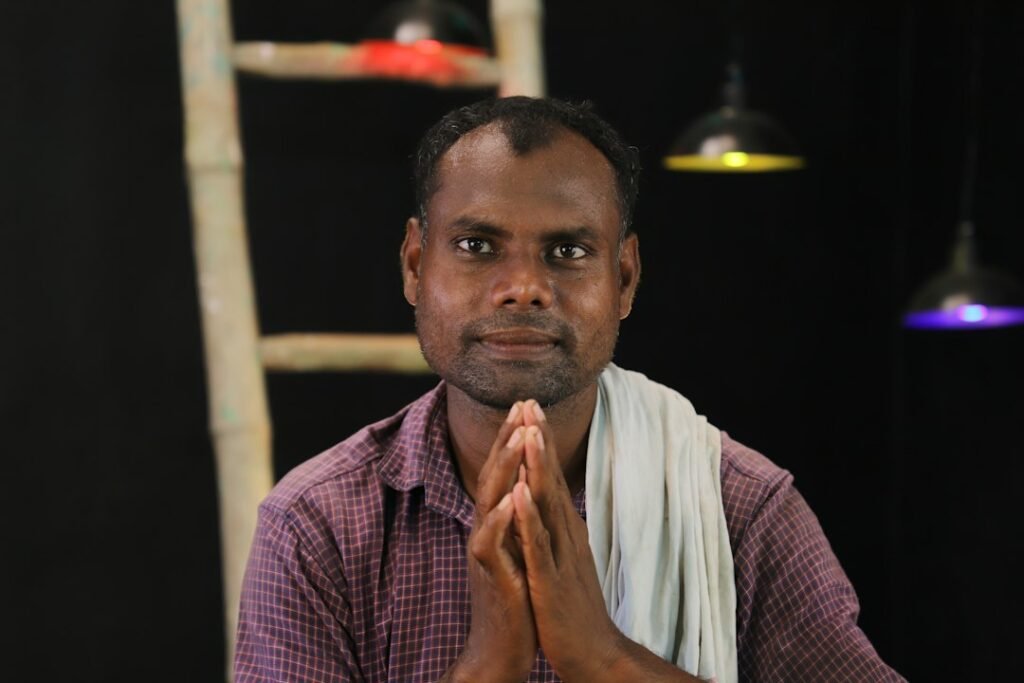
In this investigation
Few gestures are as instantly associated with India as two palms pressed together with a slight bow. Around the world, this gesture is usually labelled “namaste.” In India itself, the picture is more complex: the spoken salutation, the folded-hand gesture and the many regional ways of greeting overlap, but they are not identical.
Modern explanations sometimes describe namaste as a perfectly engineered no-contact greeting, a yogic energy circuit or a scientific way to prevent disease. The historical record supports something simpler and more interesting. Namaste and añjali became powerful because they could express respect, reverence and acknowledgement across social and religious settings. Their non-contact form has modern practical advantages, but those should not be confused with the original cultural meaning.
Namaste is a word before it is a gesture
The Sanskrit expression namas te combines namaḥ—homage, obeisance or salutation—with te, “to you.” At its core, the expression conveys respectful salutation: “obeisance to you” or “I bow to you.”
Forms related to namas appear in early Sanskrit literature in contexts of reverence, worship and respectful address. The expression therefore has deep textual roots independent of modern yoga culture.
The folded hands are añjali
The joined-palms gesture is usually called añjali or añjali mudrā. Historically, it can be used with spoken namaste, with other words or without speech.
This distinction matters. Namaste is not simply the anatomical position of the hands. Añjali is a gesture with a wider ritual life that includes prayer, reverence, greeting and offering.
THE DISTINCTION
Namaste is a salutation. Añjali is a joined-hand gesture. They are closely associated but not interchangeable in every historical or social context.
The Nāṭyaśāstra documents añjali as a social hierarchy of respect
The classical Nāṭyaśāstra describes añjali as two hands placed together and gives different uses according to whom the performer greets.
For deities, the joined hands are held high; for venerable people such as parents or teachers, they are held near the face; for friends, near the chest. This is unusually valuable historical evidence because it shows the same physical gesture being calibrated to social rank.
Respect therefore was not encoded only by whether the hands were joined but by where they were placed and to whom the gesture was directed.
The gesture works because it is visibly symmetrical
Joined hands create a compact, balanced posture. Neither hand is extended toward the other person. The body remains contained, while the slight bow adds an element of deference.
Socially, this makes the gesture flexible. It can be formal without being aggressive, respectful without requiring physical contact and readable from several metres away.
Namaste can bridge rank differences without requiring intimacy
Handshakes, hugs and cheek kisses depend on norms about touch. Añjali does not. This allows respectful acknowledgement between people who are not socially close enough to embrace or touch casually.
That flexibility is especially useful in societies where age, gender, caste, religious role and familiarity can shape acceptable bodily contact.
The spiritual translation popular abroad is not the only historical meaning
Global yoga culture often explains namaste as “the divine in me bows to the divine in you.” That formulation captures a spiritual interpretation many modern practitioners value, but it should not be presented as the single literal translation.
The linguistic meaning is closer to reverential salutation. Religious traditions can layer deeper metaphysical interpretations onto the gesture, but ordinary social use does not require the speaker to make a theological claim.
India never had one greeting for everyone
Namaste and namaskar are important, but Indian greeting traditions are plural. Regional and religious communities use expressions such as Ram Ram, Sat Sri Akal, Jai Jinendra, Assalamu alaikum, Namo Buddhaya and many others.
Urban professional settings may use handshakes. Family settings may involve touching elders’ feet. Devotional settings may use joined hands with a deity even when no spoken namaste occurs.
Calling namaste “the Indian greeting” is useful shorthand but historically incomplete.
A non-contact greeting has a genuine hygiene advantage
Modern microbiology shows that direct hand contact can transfer microorganisms. Experimental studies comparing handshakes with lower-contact greetings find less bacterial or viral transfer when contact area and duration are reduced.
A completely non-contact greeting logically removes the hand-to-hand transmission route altogether.
THE MODERN ADVANTAGE
Namaste is useful during infectious-disease outbreaks because it requires no touch. That does not establish that ancient people adopted it because they understood microbial transmission.
The pandemic made an old gesture newly global
During COVID-19, political leaders and public-health messaging often replaced handshakes with bows, waves or joined hands. Namaste became globally visible as a ready-made contactless greeting.
This is a good example of how traditions acquire new relevance. The gesture did not need to be invented for hygiene in order to be hygienically useful under modern conditions.
There is no good evidence that pressing the palms creates a special energy circuit
Some modern explanations claim that joining the palms activates pressure points, balances hemispheres of the brain or prevents energy from escaping through the hands. These claims are often repeated without clear experimental evidence.
Symmetrical hand posture can certainly influence body awareness and attention. But a measurable postural effect is not the same thing as proving an invisible energy circuit.
The bow changes the meaning of the gesture
Joined palms alone may be prayer, dance, yoga or request. A slight bow clearly adds submission or respect.
This combination is socially efficient: the hands signal formal containment while the lowered head signals deference.
The gesture can be both religious and secular
Inside a temple, añjali may express devotion. Between colleagues, namaste may simply be polite. At a funeral it may convey condolence. During a political meeting it can function as formal protocol.
The same form survives because it is semantically flexible.
Touch-free does not mean emotionally distant
Modern Western social norms often associate warmth with touch. Namaste shows that respect and warmth can also be communicated through posture, eye contact, facial expression and vocal tone.
Human social connection does not depend on one sensory channel.
Namaste can reduce ambiguity across unfamiliar relationships
A handshake requires decisions about who initiates and whether touch is acceptable. An embrace requires more familiarity. Joined hands allow a person to communicate courtesy without testing those boundaries.
This likely contributes to the gesture’s durability in diverse social environments.
Respect is cultural, not mechanical
The gesture is respectful because people agree that it is respectful. Pressing the palms together has no universal biological meaning outside convention.
This is why the same body posture can mean prayer in one context, greeting in another and apology in another.
The gesture’s antiquity does not make every modern explanation ancient
Namaste and añjali have deep historical roots. Modern wellness culture often attaches newer explanations to them: nervous-system regulation, energy balancing, acupressure or immunity.
The antiquity of the gesture does not automatically transfer to the explanation. Historical practice and modern mechanism must be established separately.
Why the gesture remained useful through social change
Many traditional gestures disappear when their social system changes. Namaste persists partly because it is simple, low-cost and adaptable. It works in religious and secular settings, across social distance and without physical contact.
Its flexibility may matter more to its survival than any single symbolic interpretation.
Namaste, namaskar and pranam overlap without being identical
Modern English-language discussion often treats namaste as the single formal Indian greeting, but South Asian languages preserve a wider vocabulary. Namaskar can function as a more formal salutation in several regions, while pranām commonly emphasizes reverential bowing or respect toward elders and teachers. In some families, the spoken form matters less than the posture and relationship: joined hands may accompany namaste, pranam, a deity’s name or no words at all.
This variation matters historically because respect was not encoded by one standardized national gesture. Gesture, speech, bodily height and relationship worked together. A younger person touching an elder’s feet and a colleague offering namaskar may both be expressing respect through very different embodied scripts.
Colonial and modern public life changed the greeting environment
Under colonial rule and later globalization, handshakes became increasingly common in bureaucratic, commercial and diplomatic settings. Indian elites could move between greeting systems depending on context: an English-style handshake in an office, joined hands in a religious or formal Indian setting, and pranam toward elders at home.
This flexibility continued after independence. Namaste became especially useful in public life because it looked recognizably Indian without belonging exclusively to one region or spoken language. Politicians, diplomats and public figures could use it as a broad gesture of respect even in linguistically diverse audiences.
National symbolism helped standardize what had once been more varied
Modern mass media, tourism and state representation often present namaste as a national cultural symbol. That presentation is not false, but it compresses regional diversity into one easily recognizable image. A gesture that historically belonged to a wider family of salutations becomes, in global representation, shorthand for India itself.
The same process happens with many traditions. A practice becomes nationally iconic because it is portable, visually distinctive and easy to recognize—not because every person used it in exactly the same way throughout history.
Respect can be signalled without claiming equality
Joined hands can look egalitarian because both participants may perform the same gesture. Historically, however, social rank could still shape who initiated the greeting, how deeply a person bowed and where the hands were held. The Nāṭyaśāstra itself places the gesture at different heights for deities, venerable persons and friends.
This means namaste should not be romanticized as proof that traditional society erased hierarchy. It could express respect within hierarchy just as effectively as it could express mutual courtesy between equals.
Its global spread changed the meaning again
Yoga, migration, tourism and global media carried namaste far beyond South Asia. In international wellness culture it often became associated with inward calm, spirituality and universal respect. During the COVID-19 pandemic, its contact-free form added another layer: public-health practicality.
These newer meanings do not make the modern uses illegitimate. They show that traditions accumulate functions. What matters historically is distinguishing those later layers from the gesture’s older social and devotional uses.
What survives scrutiny?
- Forms of namas and respectful salutation have deep roots in Sanskrit literature.
- The joined-hand añjali gesture is explicitly described in the classical Nāṭyaśāstra for deities, venerable persons and friends.
- Namaste and añjali are closely associated but historically distinct: one is a salutation, the other a gesture.
- The gesture efficiently expresses respect without requiring physical contact.
- Placement and posture historically encoded differences in rank and reverence.
- India has always contained many other regional and religious greetings; namaste is important but not universal.
- Non-contact greetings have a real modern hygiene advantage during infectious-disease transmission.
- That hygiene benefit does not prove ancient knowledge of germs.
- Claims about special energy circuits, brain balancing or pressure-point activation are not established by the historical record or strong clinical evidence.
- The gesture persists because it is socially flexible, culturally meaningful and practical across many contexts.
The Tradivior Evidence Profile
Historical Authenticity — Strong. Namaste-related Sanskrit salutations and añjali gestures are well attested in textual and artistic traditions.
Original-Purpose Evidence — Strong. Respect, reverence, worship and social greeting are explicitly documented uses.
Scientific Mechanism — Limited to Moderate. Non-contact greeting has clear hygiene value, while posture and social-signalling effects are plausible. Energetic claims lack strong evidence.
Experimental Evidence — Limited. Contact-transmission studies support the modern hygiene advantage indirectly; there is little need for a biomedical mechanism to explain the traditional gesture itself.
Cross-Cultural Evidence — Moderate. Joined-hand gestures occur beyond India, but namaste’s linguistic and cultural development is specifically South Asian.
Modern Relevance — Strong. Namaste remains useful as a respectful, adaptable and contact-free greeting in India and globally.
The Tradivior Conclusion
Primarily Symbolic/Cultural—with a real modern practical advantage. Namaste became enduring because South Asian traditions gave joined hands and reverential salutation a clear language of respect. The historical evidence strongly supports social and religious meaning. Its contact-free form also offers a genuine hygiene advantage today, but that is a modern benefit rather than proof of ancient germ theory. Claims about energy circuits or special physiological activation go beyond the evidence. Namaste survives scrutiny as an elegant social technology: respectful, flexible and physically non-invasive.
Continue investigating
- Why Do Humans Bow, Fold Hands, Kiss or Shake Hands in Greeting?
- Why Do Elders Receive Special Deference?
- Why Do Hindus Mark the Forehead With Tilak, Bindi or Vibhuti?
Sources and further reading
- Nāṭyaśāstra 9.127–128, on añjali and its use toward deities, venerable people and friends.
- Classical Sanskrit lexical sources for namas, namaste and reverential salutation.
- Mela S, Whitworth DE. “The fist bump: a more hygienic alternative to the handshake.” American Journal of Infection Control. 2014;42(8):916–917. PMID: 25087144.
- Ghareeb PA, et al. “Reducing pathogen transmission in a hospital setting. Handshake versus fist bump: a pilot study.” Journal of Hospital Infection. 2013.
- Jones L, et al. “What’s in a Handshake? Exploring the Best Form of Greeting to Prevent Hand to Hand Spread of Viruses.” Infection Control & Hospital Epidemiology. 2020.
- Historical and art-historical scholarship on añjali in South Asian sculpture, dance and devotional practice.
Continue exploring
Partially Supported
Why Do Religious Processions Take Sacred Things Into the Street?
Religious processions move sacred presence, symbols and communities through public space. They can expand shared identity through coordinated movement and visibility, but the same public occupation can mark boundaries and…
Primarily Symbolic/Cultural
Why Is Diwali Built Around Light?
Diwali’s lamps are historically and religiously meaningful symbols whose interpretations vary across Hindu, Jain, Sikh and regional traditions. Light makes sacred time visible and transforms homes and streets; modern science…
Primarily Symbolic/Cultural
Why Did Indians Circle Sacred Fire at Weddings?
Sacred fire in Hindu weddings is historically a witness, offering medium and divine presence rather than a hidden biomedical technology. Circumambulation and vows make marriage public, memorable and religiously binding;…
Historically Practical
Why Did Humans Boil Food?
Boiling transformed human diets by making grains, pulses, roots, meat and water safer and softer in a single vessel. Heat kills most foodborne microbes and moist cooking improves digestibility, but…
Picked for your curiosity
Enable JavaScript to build a reading profile and see recommendations.