 tradivior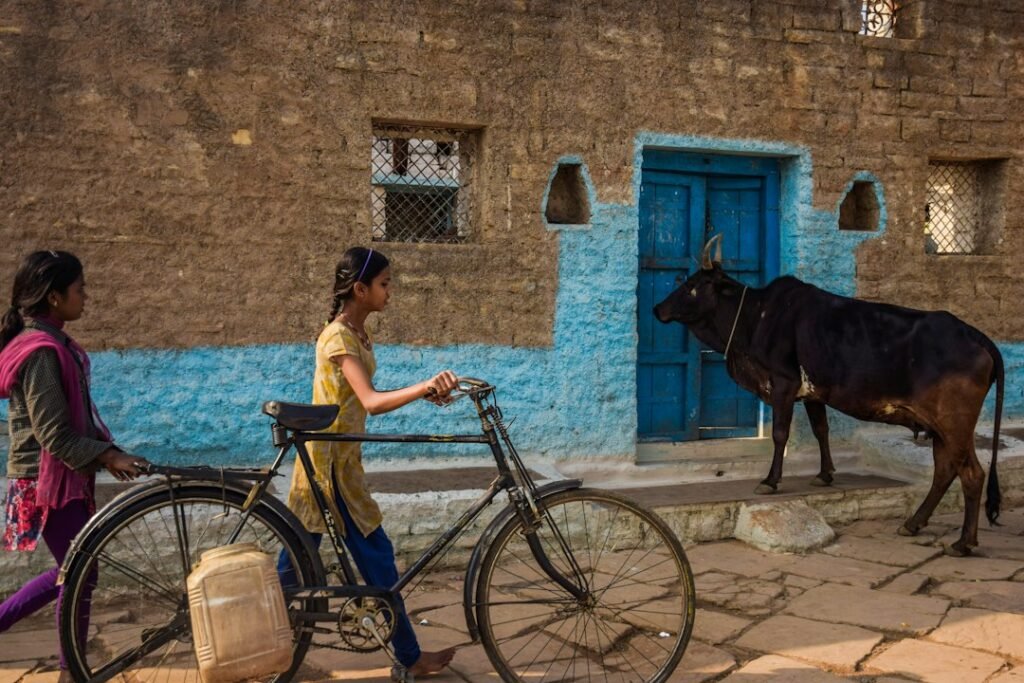
In this investigation
The cow is one of the most recognizable religious symbols associated with India, but its sacred status did not emerge from one event, one scripture or one economic calculation. Cattle were central to subsistence, ritual and wealth in ancient South Asia. Over centuries, ideas about sacrifice, nonviolence, dairy, kingship, caste, pastoral life and devotion changed the moral status of the cow.
That history became even more complex in the colonial and modern periods, when cow protection moved from religious sentiment into mass politics, communal identity, law and nationalism. Any evidence-led account therefore has to separate several questions: What role did cattle play economically? What do early texts actually show? When did non-killing norms strengthen? How did Krishna devotion shape symbolism? And when did cow protection become a political movement?
Cattle were economically important long before modern cow politics
In agrarian South Asia, cattle provided traction, manure, milk, hides and wealth. Oxen pulled ploughs and carts. Dung became fuel and fertilizer. Milk could be transformed into curd, butter and ghee.
This practical value helps explain why cattle received sustained social attention. But economic usefulness alone does not explain sacredness. Many societies depend on animals without treating them as religiously inviolable.
THE CORE DISTINCTION
Cattle utility can help explain why cows became culturally important. It cannot by itself explain the specific Hindu religious meanings that later developed around cow protection.
Early Vedic cattle culture was not identical to modern Hindu cow protection
Vedic texts reveal a society in which cattle were deeply valuable. Cows appear as wealth, gifts, sacrificial animals and measures of prosperity. Cattle imagery is woven throughout ritual and poetry.
The historical record also shows that animal sacrifice existed in Vedic ritual, and scholarly debate has long examined evidence for cattle consumption in some ancient contexts. This makes it unsafe to project today’s norms backward unchanged into the earliest Vedic period.
“Sacred” does not mean cultural meaning never changed
Religious traditions evolve. A species can move from sacrificial value toward stronger protection as ritual systems, ethical ideals and social institutions change.
South Asian attitudes toward cattle therefore need chronology rather than a timeless statement such as “Hindus have always treated cows exactly the same way.”
The rise of nonviolence changed the moral landscape
Ideas of ahiṃsā—non-injury—became increasingly important in Jain, Buddhist and Hindu traditions. The growth of ethical concern for living beings made animal killing morally more complex.
Cattle, because of their economic and ritual importance, became especially visible within this changing moral world.
Jain and Buddhist traditions influenced the wider culture of animal restraint
Jainism developed exceptionally strong prohibitions against harming living beings. Buddhism also restricted killing and encouraged compassion.
These traditions did not simply “create” Hindu cow protection, but they formed part of a broader South Asian ethical environment in which animal slaughter could become morally charged.
The cow became linked to maternal imagery
Dairy animals convert grass and agricultural by-products into milk. In religious language, the cow therefore became easy to imagine as a nourishing mother.
Terms and devotional expressions that treat the cow as maternal draw on this visible fact of nourishment. Symbolism grows from biology but is transformed by culture.
Milk deepened the cow’s ritual importance
Milk, curd, butter and ghee play major roles in Hindu ritual and cuisine. Ghee is used in offerings and fire rituals. Dairy products appear in temple offerings, domestic worship and festival foods.
This creates a feedback loop: the animal produces substances considered pure or auspicious, which strengthens the animal’s own sacred status.
Krishna devotion gave cattle an especially powerful emotional role
Krishna’s association with cowherding is one of the strongest devotional foundations of cow symbolism in later Hinduism. Stories of Krishna among cowherds in Vraja make cattle part of a beloved sacred landscape.
Here the cow is not merely economically useful. It belongs to a theology of pastoral intimacy, play, devotion and divine protection.
Pastoral life made cattle socially central even outside theology
Herding communities depend on cattle for mobility, milk, manure, transport and social wealth. Livestock can function as savings in societies with limited banking infrastructure.
The practical and sacred layers can reinforce one another without one being reducible to the other.
The “ecological sacred cow” theory was influential—but incomplete
Twentieth-century anthropologists debated whether the sacred-cow system could be explained as an ecological adaptation. Marvin Harris famously argued that protecting cattle made sense because even old or low-milk animals could contribute dung, traction or replacement stock.
This perspective usefully challenged the idea that religious cattle protection was economically irrational. But later scholarship warned against reducing a complex religious symbol to one material function.
THE EVIDENCE LIMIT
Economic usefulness can help a cattle-protection norm persist. It does not prove that religious sanctity was consciously invented as an ecological management strategy.
Not every cow has equal economic value
A lactating cow, a draught ox, an infertile animal and an ageing cow contribute differently to a household economy. Modern cattle systems also vary dramatically between regions.
Any ecological argument that assumes every protected cow always has high practical value oversimplifies actual farm economics.
Sacred protection can create welfare problems when cattle become economically unwanted
If slaughter is restricted while farmers cannot afford to maintain unproductive cattle, animals may be abandoned. Modern India has faced serious problems involving stray cattle, road accidents, crop damage and overcrowded shelters.
A norm designed to prevent killing therefore does not automatically guarantee good animal welfare.
Gaushalas translate religious protection into institutions
Cow shelters, or gaushalas, developed as charitable institutions that protect cattle, including animals no longer commercially useful.
They show how sacred status can create organized care systems. Their effectiveness varies widely with funding, veterinary care and management.
Cow protection became a mass political movement in the nineteenth century
The late nineteenth century marks a major historical transformation. Cow protection organizations mobilized Hindu communities in North India and turned the cow into a public political symbol.
Arya Samaj activism and wider cow-protection associations used print, meetings and fundraising to organize around slaughter restrictions and cattle welfare.
Colonial rule sharpened religious boundaries around cattle
British rule created new political institutions, print networks and census categories that could harden communal identities. Cow slaughter became a visible issue around which Hindu and Muslim political identities could be mobilized.
Historical scholarship shows that late nineteenth-century cow protection contributed to communal tensions and violence, especially in North India.
The cow became a symbol of Hindu unity precisely because Hindu society was diverse
Hindu traditions differ by region, caste, sect and practice. A powerful shared symbol can bridge those differences.
Cow protection movements used the animal as a unifying image capable of connecting urban and rural populations, devotional sentiment and political organization.
Political symbolism changed the meaning without inventing the sacredness from nothing
Colonial cow politics did not create Hindu reverence for cows from nothing. Earlier religious and ethical traditions already existed.
Politics selected, amplified and standardized a symbol whose meanings were already culturally available.
Modern cow protection is therefore both religious and political
Contemporary debates cannot be understood only through scripture or only through agriculture. Cow protection now intersects with Hindu identity, electoral politics, minority rights, meat economies, leather work and animal welfare.
The symbol carries centuries of religious meaning and more recent layers of political mobilization.
Caste complicates any claim about a single Hindu attitude to beef
Indian dietary practices vary by caste, class, region and religion. Dalit, Adivasi, Muslim, Christian and other communities may have different relationships to cattle and beef.
Claims about what “Indians” or even all “Hindus” eat risk erasing substantial diversity.
The leather economy reveals hidden dependence on cattle death
Even societies that protect living cattle use leather and other animal products. Historically, handling carcasses and hides became associated with particular caste occupations.
This creates a social paradox: sacred status can coexist with economic systems that depend on cattle death and assign stigmatized labour to marginalized communities.
Sacredness does not eliminate material contradiction
Religious ideals operate inside economies. Dairy systems require breeding, male calves, ageing animals and decisions about maintenance.
The moral status of cows cannot remove those practical questions; it changes how society answers them.
Article 48 gave cattle protection constitutional significance
India’s Constitution includes a Directive Principle calling on the state to organize agriculture and animal husbandry on modern scientific lines and to prohibit slaughter of cows, calves and other milch and draught cattle.
The provision reflects the political strength of cattle protection at independence while framing it partly through agriculture and animal husbandry rather than simply religious law.
State laws vary because India does not have one uniform cattle regime
Cattle-slaughter law is largely regulated at state level, producing variation in which animals can be slaughtered and under what conditions.
This legal diversity mirrors India’s wider diversity in cattle economies and political histories.
Cow protection can become dangerous when symbolic offence justifies violence
Recent scholarship on cow vigilantism emphasizes that accusations involving beef or cattle can expose Muslims, Dalits and others to intimidation or violence.
An evidence-led account must distinguish respect for religious belief from justification of harm to human beings. Sacredness does not make extrajudicial violence legitimate.
The cow is a “key symbol” precisely because it carries many meanings at once
Anthropologists describe certain symbols as culturally dense: they condense economics, morality, religion, identity and politics into one image.
The Indian cow fits this pattern unusually well. It can symbolize nourishment, motherhood, nonviolence, Krishna, village economy, Hindu identity, charity and political conflict at the same time.
No single theory explains the full history
The economic explanation is too narrow. The purely theological explanation is also incomplete. The political explanation arrives too late to explain earlier sacred associations.
The strongest historical account is cumulative: cattle mattered materially; nonviolence changed ethical attitudes; dairy and ritual deepened purity associations; Krishna devotion gave emotional power; and modern politics transformed reverence into mass mobilization.
What survives scrutiny?
- Cattle were economically and ritually important in South Asia long before modern cow-protection politics.
- Early Vedic cattle practices were not identical to modern Hindu norms, and animal sacrifice existed in ancient ritual contexts.
- Ideas of ahiṃsā and animal restraint strengthened over time across Jain, Buddhist and Hindu traditions.
- Dairy, traction and manure gave cattle sustained economic value but do not fully explain religious sanctity.
- Krishna devotion gave cattle an especially powerful emotional and theological role.
- Ecological theories help explain how cattle protection can remain economically functional but should not be mistaken for complete historical explanations.
- Late nineteenth-century cow-protection movements transformed religious reverence into organized political identity.
- Modern cattle protection has real welfare trade-offs, including the challenge of maintaining unwanted animals humanely.
- Indian dietary and cattle practices vary substantially by caste, region and religion.
- Contemporary cow politics cannot be understood without considering minority rights, caste labour, agriculture and animal welfare together.
The Tradivior Evidence Profile
Historical Authenticity — Strong. Cattle reverence, protection, ritual importance and later organized cow-protection movements are extensively documented.
Original-Purpose Evidence — Moderate to Strong. Economic, ritual, devotional and ethical meanings are well documented, but their relative importance changes across periods.
Scientific Mechanism — Moderate. Dairy, traction, manure, livelihood economics and herd ecology explain some practical value without accounting fully for sacred symbolism.
Experimental Evidence — Limited. The central question is historical and anthropological rather than experimental; modern cattle economics and welfare can be measured directly.
Cross-Cultural Evidence — Moderate. Sacred livestock and protected animals occur elsewhere, but the Indian cow developed an unusually dense and durable symbolic role.
Modern Relevance — Strong. Cow protection remains religiously, economically, legally and politically significant in contemporary India.
The Tradivior Conclusion
Historically Practical and Primarily Symbolic/Cultural. The sacred cow cannot be explained by one hidden scientific or economic reason. Cattle mattered materially because they supplied milk, traction and manure, and those functions helped keep them central to agrarian life. But sacredness also developed through ahiṃsā, ritual purity, maternal symbolism and Krishna devotion. In the nineteenth and twentieth centuries, cow protection gained another layer as a political marker of Hindu identity. The tradition survives scrutiny as a cumulative historical institution in which livelihood, ethics, theology and politics became inseparable—not as proof that one ecological calculation created the belief.
Continue investigating
- Why Are Certain Animals Sacred or Taboo?
- Why Were Sacred Groves Protected in India?
- Why Do Humans Organize Themselves Into Castes, Clans and Lineages?
Sources and further reading
- Lodrick DO. “Symbol and Sustenance: Cattle in South Asian Culture.” Dialectical Anthropology. 2005;29:61–84. doi:10.1007/s10624-005-5809-8.
- Harris M. Anthropological work on the “sacred cow” and ecological/materialist explanations of cattle protection.
- Pandey G. The Construction of Communalism in Colonial North India. Oxford University Press; 2006.
- Gundimeda S, Ashwin VS. “Cow Protection in India: From Secularising to Legitimating Debates.” 2018.
- Natrajan B. “Being Vigilant about Sacred Cows: On Belief and Violence in India.” Current Anthropology. 2024;65(6):1084–1105.
- Copland I. “Cows, Congress and the Constitution: Jawaharlal Nehru and the Making of Article 48.” South Asia. 2017;40(4):723–743.
- Review literature on gaushalas, unwanted cattle and cattle welfare in India.
Continue exploring

Why Is the Ganga Sacred?
The Ganga is river, goddess, pilgrimage route, purifier and national symbol. Tradivior will trace how these layers developed and evaluate modern claims about unusual self-purifying properties without confusing microbial findings…
Partially Supported
Why Do Religious Processions Take Sacred Things Into the Street?
Religious processions move sacred presence, symbols and communities through public space. They can expand shared identity through coordinated movement and visibility, but the same public occupation can mark boundaries and…
Primarily Symbolic/Cultural
Why Is Diwali Built Around Light?
Diwali’s lamps are historically and religiously meaningful symbols whose interpretations vary across Hindu, Jain, Sikh and regional traditions. Light makes sacred time visible and transforms homes and streets; modern science…

Primarily Symbolic/Cultural
Why Did Indians Circle Sacred Fire at Weddings?
Sacred fire in Hindu weddings is historically a witness, offering medium and divine presence rather than a hidden biomedical technology. Circumambulation and vows make marriage public, memorable and religiously binding;…
Picked for your curiosity
Enable JavaScript to build a reading profile and see recommendations.