 tradivior
In this investigation
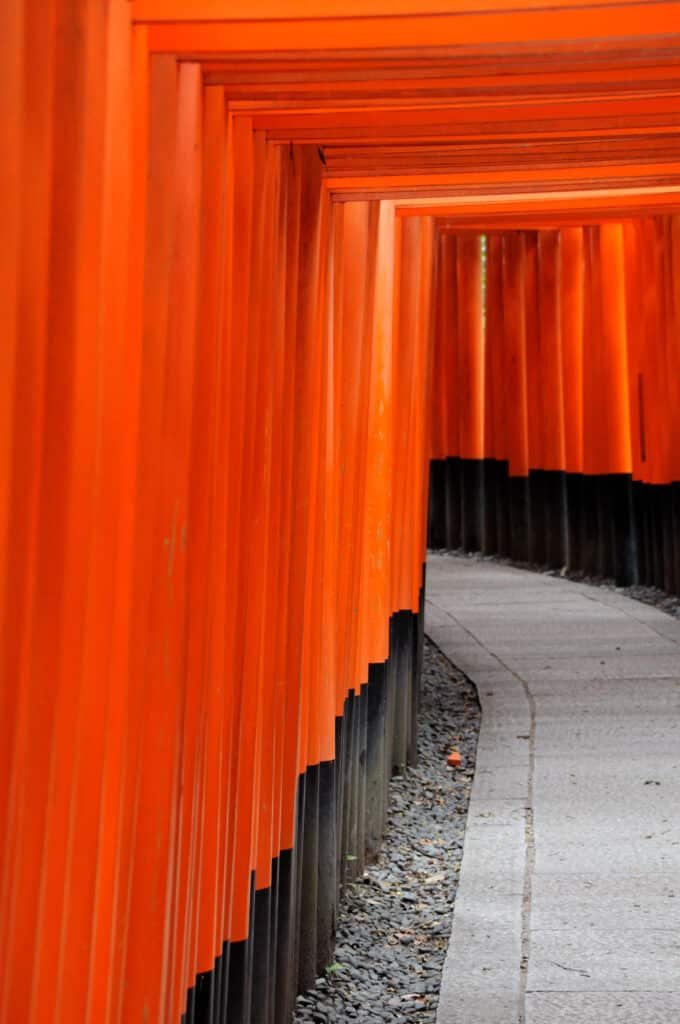
At Fushimi Inari Taisha in Kyoto, a path disappears into a corridor of vermilion gates. The timber posts stand so close together that daylight becomes a sequence of narrow bands. Visitors often photograph the corridor as if it were a spectacular optical illusion. But the gates are not simply an architectural trick, and the path is not a tunnel built all at once by a single patron. It is a living accumulation of offerings, prayers and remembered relationships between worshippers and a shrine.
That is the first surprise of the famous Senbon Torii, the “thousand torii” gates. The number in the name evokes abundance rather than serving as a fixed inventory. The shrine itself explains that worshippers have donated torii in expressions of prayer and gratitude since the Edo period. What looks from a distance like one continuous work of art is, in part, a record of many separate acts of devotion across time. Understanding the gates therefore requires looking not only at their colour and shape but at the people who placed them there.
To do that respectfully, we need to distinguish three kinds of statement. The shrine’s religious account describes a relationship with Inari Okami, the deity venerated there. Historical documents and objects can tell us when practices are recorded and how they changed. Observations of the site show how visitors and worshippers use it now. None of these can be reduced to a laboratory verdict about whether devotion itself is true or false.
A boundary you can cross without entering a building
In English a torii is often called a shrine gate, but that translation can mislead. Many torii do not close like doors, and some stand in open landscapes without walls. Their importance is not that they lock a sacred object away. They mark a transition. Jinja Honcho, the Association of Shinto Shrines, explains that a shrine’s sacred precinct includes more than its buildings. Once someone passes through the torii, they are in an area where respectful conduct is expected, even if they are still standing among trees or on an open path.
That principle changes how the architecture works. A gate can be a boundary without being a barrier. It asks for a change in attention, posture and behaviour rather than an entry ticket. The experience may resemble crossing a threshold into a library, a court or a memorial garden, where people instinctively lower their voices. Yet the analogy is only partial. In a Shinto shrine the boundary has a devotional meaning tied to the kami and to practices of reverence, not merely to secular rules of quietness.
Jinja Honcho also cautions visitors against obstructing prayer, entering shrine buildings without permission or treating sacred objects as ordinary souvenirs. These are not exotic rules invented for tourists; they follow from the shrine’s role as a place where people come to venerate the kami. The distinction between a visitor’s enjoyment and a worshipper’s purpose is essential to understanding a place that now circulates widely through travel photography.
Why Fushimi Inari is not just a collection of red arches
Fushimi Inari Taisha is associated with Inari Okami and with traditions of sustenance, prosperity and the life of the land. The shrine’s own historical account connects its origins to narratives recorded in the Yamashirokoku Fudoki and other ancient materials. One story describes a rice cake becoming a swan, leading to an auspicious sign and the growth of rice. Another shrine account places the enshrinement of three deities in 711, during the reign of Empress Genmei.
These are important traditions of origin, but an editor should not mistake them for a modern archaeological certificate. The swan story is a sacred narrative, not an event that historical methods can independently confirm. The 711 date is part of the shrine’s transmitted historical account and is best identified as such. What the stories do reveal is the significance of rice, abundance, land and reciprocity in the shrine’s self-understanding. They explain why a place known today for photographs of timber gates also belongs to a much older religious landscape.
The mountain matters as much as the buildings. The shrine grounds and routes extend onto Inariyama, where smaller sacred places punctuate the ascent. A visitor who treats the most photographed corridor as the whole shrine misses the spatial rhythm of the site: approach, threshold, prayer, ascent, smaller points of veneration, and return. The gates participate in that rhythm rather than replacing it.
When a prayer becomes timber
The shrine’s official explanation of Senbon Torii dates the established custom of donating torii as expressions of prayer and gratitude to the Edo period, from 1603 to 1868. This is a narrower and more defensible claim than saying that every gate in the present corridor has stood there for centuries. Timber weathers; structures are maintained and renewed. The visible path is historical in its practice, not necessarily ancient in each surviving piece of wood.
Donations transform a private relationship into something other people can walk through. An individual or business may make an offering connected with hopes, thanks or a relationship with the deity. The gate then becomes part of a collective approach to the shrine. A person who has never met the donor passes beneath the material sign of that devotion. This is one reason the corridor feels different from a monument with a single founding inscription: it is composed of many gestures that do not need to be identical to coexist.
Some gates carry donors’ names and dates on their reverse sides. The writing is easy to miss when a visitor concentrates on the glowing fronts. Yet it is the reverse face that makes the architecture legible as social history. These marks do not allow us to infer the exact private motive of every donor. They do establish that named people and institutions participated in the practice. The traveller sees a colour; the historian sees an accumulating record of patronage; the worshipper may see a testimony of gratitude or hope.
The official shrine account associates the vermilion colour with brightness, life, the earth and the blessings of Inari Okami. The Japanese term ake, used in words connected with red or dawn, carries resonances of light and hope in that explanation. It would be careless to turn this into a universal claim that all torii everywhere must be red or that a single pigment has the same meaning in every shrine. Shinto architecture varies, and local histories matter. The distinctive vermilion of Inari shrines should be understood within that tradition.
The seventeenth-century painting that complicates a modern cliché
There is a useful historical counterpoint in the Metropolitan Museum of Art’s early seventeenth-century painting The Torii Gate of Gion Shrine. It shows people moving through a red torii at the entrance to what is now Yasaka Shrine, with market activity and festival life nearby. The scene reminds us that shrine thresholds have long belonged to inhabited urban worlds. They were not always isolated, silent spaces cut off from commerce and ordinary movement.
The museum notes that the shrine’s architecture incorporated Buddhist temple elements, an important reminder that Japanese religious history cannot be neatly sorted into timeless, mutually exclusive boxes. Shinto and Buddhist institutions and practices interacted across long periods, even though modern administrative and religious distinctions may present them separately. A torii in a historical artwork therefore has a context: the shrine, its festival, its patrons, the surrounding city and the religious arrangements of its time.
This painting also prevents an easy error about Fushimi Inari. The striking modern density of its gate corridor should not be projected backward onto every Japanese shrine in every century. A single large entrance torii, a procession of donated gates, and a torii represented in a festival painting are related forms, not interchangeable evidence of one unchanging custom.
What a shrine’s own sources can and cannot establish
Fushimi Inari Taisha’s official site is an indispensable source for how the shrine describes its beliefs and practices. It is also a participant in the tradition, not a detached laboratory. A visitor should neither dismiss that perspective as mere folklore nor treat every origin story as independently verified chronology. Historical study works by identifying the kind of evidence available: shrine records, inscriptions, artworks, buildings, contemporary observations and the testimonies of practitioners.
Japan’s government publication Highlighting Japan has described the Senbon Torii as a path through sacred space formed by many donated gates, and discusses the importance of abundance and reverence in the shrine’s traditions. The official shrine website offers a more direct explanation of donor practice. A University of Tokyo-hosted architectural account describes how the close-set gates shape the visitor’s spatial experience. Together these sources support the interpretation of the corridor as architecture, social offering and religious passage, while leaving the truth of devotional claims to the domain of faith.
For a narrow historical proposition—whether the donation of torii along this approach is a documented custom rather than a modern tourism invention—the evidence is strong: the shrine explicitly dates the practice to the Edo period, and the surviving donor inscriptions and historical accounts are consistent with it. That is not an evidence verdict on Inari Okami or on Shinto devotion. The distinction matters because applying a scientific label to an untestable religious commitment would misdescribe both religion and science.
The path is also a modern place of encounter
Photography has given the corridor an international audience. Its visual geometry invites images: repeated horizontal beams, converging perspective, red timber against shadow, and a path that seems to curve out of sight. But a camera records only a slice of the experience. It cannot show the history of each offering, the relationship between the gates and the mountain, or the intentions of people who come to pray.
That does not mean photography is disrespectful by definition. It means visitors should read the space before treating it as a backdrop. People may be making offerings, pausing at smaller shrines, or moving through the path as part of a religious visit. One practical form of respect is to avoid blocking the route for extended photo sessions, to observe local instructions and to refrain from treating worshippers as unconsenting visual props.
The photograph accompanying this article was taken at the actual Senbon Torii path in August 2015 by Josep M. Gracia. It shows a curving passage between vermilion gates. It is not an image of the Edo period, nor proof of any particular donor’s story. That distinction between a genuine modern photograph and historical evidence is simple but essential: authentic pictures can document a place without documenting every claim made about its origins.
Why thresholds recur across cultures—and why comparisons have limits
Human communities often mark transitions into places of special significance. A threshold can signal a shift from ordinary activity toward attention, reverence or restraint. The analogy may bring to mind temple gateways in India, entrances to memorial grounds or other sacred precincts. Such comparisons can illuminate a shared social function: architecture teaches people that behaviour changes with place.
But similarity in function is not evidence of identical theology or a common historical origin. A torii does not become a Hindu gopuram simply because both are associated with sacred approaches. Their materials, visual forms, patronage systems, ritual practices and histories differ. Tradivior’s exploration of why the Ganga is sacred offers another example of how devotion can attach to a landscape, but the river’s meanings should not be imported wholesale into a Japanese shrine.
Comparison works best when it makes differences clearer. At Fushimi Inari, the repetition of donated gates produces an especially visible relation between private acts and collective space. Elsewhere, a single gateway may be monumental, while another tradition emphasizes water, sound, movement or seasonal return. The shared human question is how places acquire obligations; the answers remain culturally specific.
What to notice when walking through Senbon Torii
Begin with the first threshold rather than the most famous photograph. Notice that a torii marks sacred space even when no wall encloses it. As the gates multiply, watch how the view changes: open sky gives way to an almost continuous roof of beams, and the path seems to narrow and turn. Look, without obstructing others, for inscriptions that record donors. Remember that the same gate can be understood as a gift, a marker of passage and part of an architectural composition.
Then attend to what the corridor does not explain by itself. The mountain beyond the photographed passage is part of the shrine. The religious meaning of the site cannot be read solely from colour symbolism. A donor’s inscription is evidence of participation, not a transcript of an answered prayer. And the dates of an ancient shrine narrative and a much later custom of repeated gate donation need not be forced into one timeless story.
The most compelling fact about Senbon Torii is therefore not an exact gate count or a claim that the colour possesses measurable powers. It is that a landscape of individual offerings has become a shared route through sacred space. Each visitor walks a path built from gestures made by people they may never know. The corridor is memorable because it turns gratitude and hope into architecture, without requiring every person who passes beneath it to experience that meaning in precisely the same way.
Sources and image attribution
- Fushimi Inari Taisha, “Senbon Torii” — shrine’s direct account of donor practice, vermilion and religious significance.
- Fushimi Inari Taisha, “History” — traditional origin narratives and 711 account, identified as shrine tradition.
- Jinja Honcho, “Entering a Jinja” — contemporary guidance on sacred precincts and respectful conduct.
- Metropolitan Museum of Art, The Torii Gate of Gion Shrine — early seventeenth-century visual evidence and historical context.
- Government of Japan, Highlighting Japan, October 2020 — published discussion of the gates and shrine traditions.
- University of Tokyo repository, architectural account of Fushimi Inari Taisha — discussion of the corridor’s spatial character.
Featured photograph: “Senbon torii path at Fushimi Inari-taisha, Kyoto, Japan,” photographed in August 2015 by Josep M. Gracia, CC BY-SA 4.0. Reproduced without intentional alteration; website-generated size variants may differ. This is a contemporary photograph of the real shrine, not a historical image of the Edo period.
Continue exploring
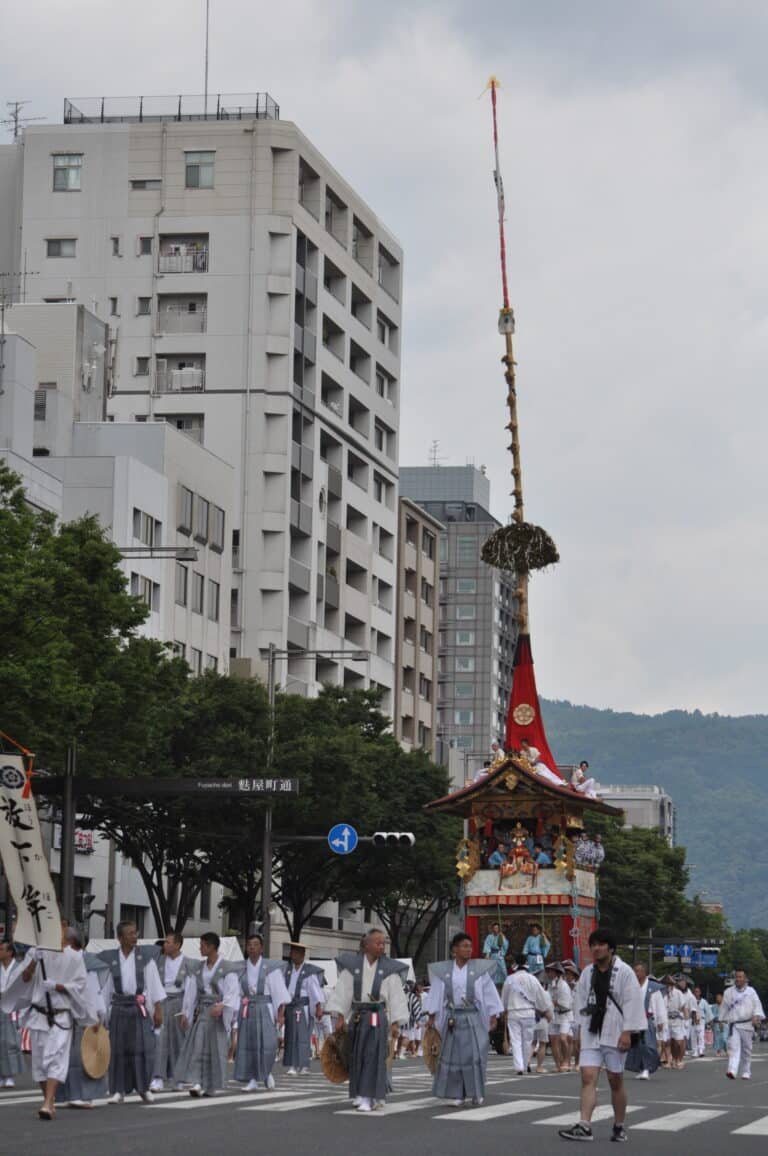
The Festival Born of an Epidemic: How Kyoto’s Gion Matsuri Became a Moving City
Gion Matsuri began with a ninth-century epidemic story and became a living Kyoto tradition of sacred processions, elaborate floats and neighbourhood cooperation.
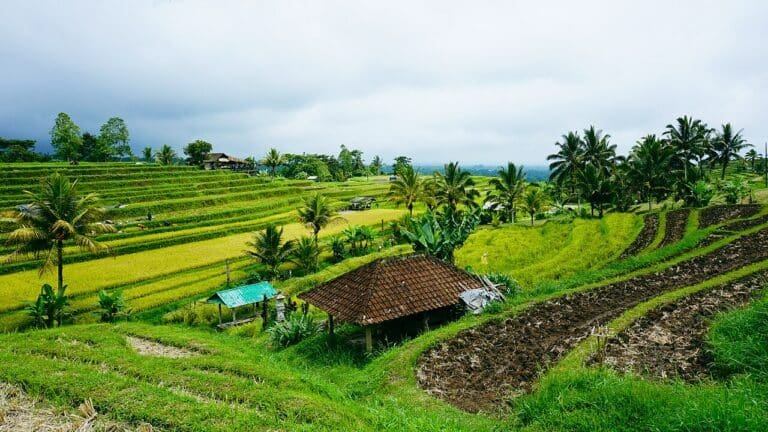
When a Temple Decides Who Gets Water: Bali’s Subak and the Sacred Politics of Rice
Bali's water temples are more than scenic shrines: they help coordinate irrigation, harvests and collective responsibility. A documented history of subak and its present pressures.
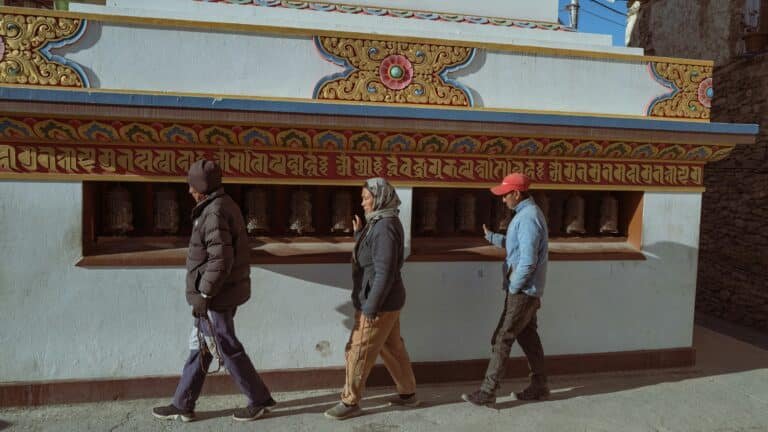
Why Do Tibetan Buddhists Turn Prayer Wheels Clockwise?
Explore why Tibetan Buddhist prayer wheels are turned clockwise, how sacred text and ritual action connect, and what historical and scientific evidence can establish.
Why Is Tulsi Worshipped in Hindu Homes? Faith, Botany and Evidence
Why is tulsi sacred in Hindu households? Investigate its devotional history, botanical science, cultural meaning and what medical evidence can actually prove.
Picked for your curiosity
Enable JavaScript to build a reading profile and see recommendations.