 tradivior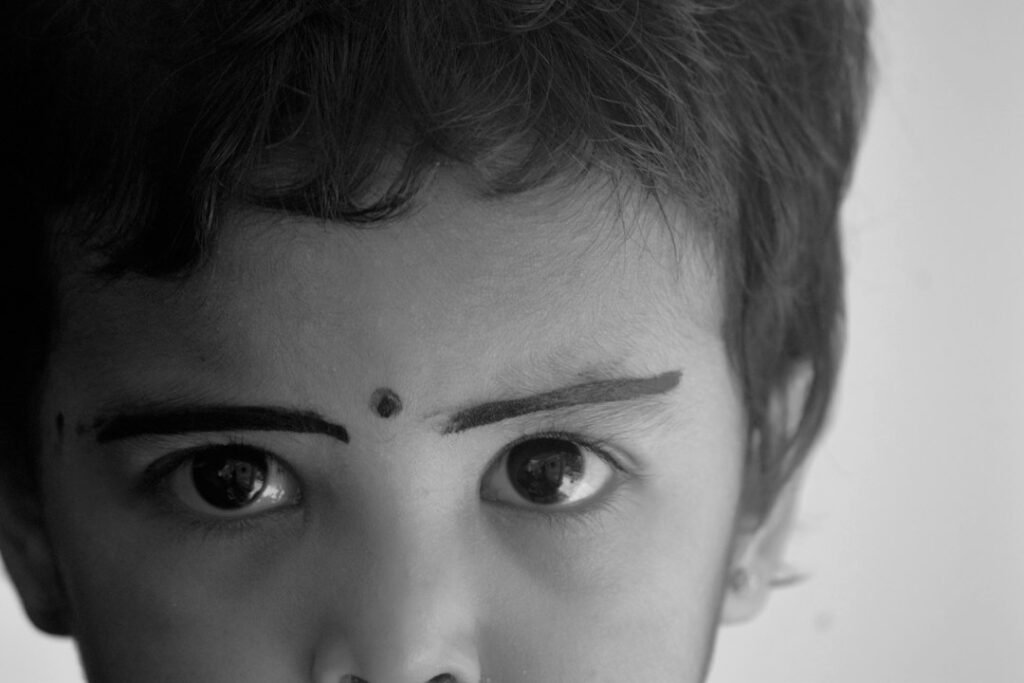
In this investigation
A black mark around a baby’s eyes can carry several meanings at once: beauty, family custom, protection from the evil eye and, in some traditions, a belief that the substance itself benefits the eyes. Kajal, kohl and surma have crossed generations and regions. But this is also a case where cultural continuity collides with a measurable modern hazard.
A mark meant to beautify—and protect
Dark eye cosmetics have long histories across South Asia, the Middle East and parts of Africa. Names such as kajal, surma and kohl are often used loosely or interchangeably, although modern product testing shows that the names can correspond to different regional products and compositions.
For babies and children, application can be more than cosmetic. Families may believe the mark enlarges or beautifies the appearance of the eyes, improves eyesight, protects against eye disease or wards off the evil eye. An Indian paediatric survey of 100 children found kajal use in 86; most mothers said they applied it on the advice of elders, while many could not identify a specific benefit.
The evil eye is a cultural claim, not a toxicology claim
Protective markings make sense within belief systems in which admiration, envy or hostile attention can expose a child to danger. A conspicuous black mark can function symbolically as protection or as a way of disrupting idealized beauty. Science cannot meaningfully test a supernatural evil-eye mechanism in the same way it can measure lead in a cosmetic.
Tradivior therefore separates the questions. The protective belief can be historically and culturally authentic without being a biomedical effect. The substance placed near the eye, meanwhile, can be chemically analyzed and its health consequences investigated.
The safety problem is not hypothetical
Traditional eye cosmetics are not chemically standardized. Some preparations contain little or no detectable lead; others sold under related names have contained extraordinary concentrations. Public-health investigations have repeatedly linked lead-containing eye cosmetics to elevated blood lead levels in children.
A 2024 Pediatrics study analyzed 220 samples of traditional eye cosmetics and cultural powders collected during investigations and store surveys. Lead concentrations varied substantially by product type and regional terminology, but the researchers concluded that these products can significantly add to children’s lead burden. Surma and kohl samples tended to contain more lead than products identified as kajal, illustrating why the names should not be treated as chemically interchangeable.
THE EVIDENCE
Lead exposure from some traditional eye cosmetics is a documented paediatric hazard. The fact that formulations vary does not make untested products safe; appearance and traditional name cannot reveal lead content.
Indian data point in the same direction
A feasibility study involving children using traditional Indian products found significantly higher mean blood lead levels among children whose parents reported cosmetic use including kohl, surma or kajal. A study of infants in Nagpur likewise identified surma use as a significant risk factor for elevated blood lead levels.
These studies do not establish that every Indian kajal product is contaminated, and children can have multiple sources of lead exposure. They do establish enough risk that applying an unknown traditional preparation to an infant cannot be defended on the assumption that long use proves safety.
Why babies deserve a higher safety threshold
Lead is especially concerning in young children because their nervous systems are developing and exposure can occur without obvious immediate symptoms. Material placed around the eyes can reach hands and then the mouth; direct ocular application can also introduce contamination or cause irritation and mechanical injury.
CDC advises contacting a child’s healthcare provider when exposure to lead-containing traditional cosmetics is suspected. Laboratory testing, not colour, smell, packaging or family experience, is what can determine whether a product contains lead.
Does kajal improve eyesight?
There is no credible basis for assuming that dark pigment applied to or around an infant’s eye enlarges the eye anatomically or improves visual development. Such claims are traditional beliefs, not established ophthalmic treatments. Applying a cosmetic near a baby’s eye should therefore face a safety test, not receive a therapeutic exemption.
Can the cultural symbol survive without the hazardous exposure?
Traditions are not frozen recipes. If the purpose is symbolic protection or cultural identity, preserving the meaning does not logically require preserving an unsafe material or placing pigment on the eyelid margin. Communities routinely adapt practices when materials, environments and knowledge change.
This distinction avoids two mistakes: dismissing families as irrational because a practice has cultural meaning, and treating cultural meaning as evidence that a substance is medically safe. Respect for a tradition and scrutiny of a product can coexist.
The word “kajal” does not identify one chemical product
Families use the words kajal, kohl, surma and related names for products made in very different ways. Some are soot-based cosmetics prepared from lamp black and oils; others contain mineral powders; commercially manufactured eyeliners may use regulated pigments; and some traditional preparations contain large amounts of lead compounds.
This variation is central to the safety question. A cultural name cannot be used as a chemical specification. Two products sold or inherited under the same name may have completely different heavy-metal profiles.
Lead is dangerous because children absorb and retain it differently
Lead is a neurotoxin with no known beneficial role in the human body. Young children are particularly vulnerable because their nervous systems are developing and because they absorb a greater proportion of ingested lead than adults. Exposure can occur when kajal contaminates fingers, tears or the skin and is then transferred to the mouth, or when particles drain through the tear duct.
The absence of obvious symptoms does not make low-level exposure harmless. Lead can affect neurodevelopment, behaviour and learning before classical signs of poisoning appear.
The FDA warning is unusually direct
The U.S. Food and Drug Administration warns that traditional kohl, kajal and surma products often contain high concentrations of lead, sometimes accounting for more than half of product weight. The agency also notes documented links with lead poisoning in children and treats such preparations as unapproved colour additives in the United States.
This does not mean every modern cosmetic sold as kajal contains dangerous lead. It means the traditional label alone cannot establish safety and that products with unknown composition deserve caution, especially around infants.
A 2024 pediatric study shows the exposure remains current
A 2024 study in Pediatrics examined traditional eye cosmetics and cultural powders used by children in immigrant communities. It found that products called surma, kohl and kajal varied by regional origin and could contribute significantly to elevated blood lead levels in children.
The study is important because it moves the discussion beyond historical case reports. Traditional eye cosmetics remain a contemporary exposure route when products of uncertain composition continue to circulate across families and markets.
Indian studies have repeatedly found the same pattern
Older South Asian investigations found strikingly high lead concentrations in some kohl and surma samples and higher blood lead levels among children who used them. More recent feasibility work in India has continued to identify traditional eye cosmetic use as a plausible contributor to lead burden.
The consistency across decades matters more than any one sample. Product composition varies, but the hazard is sufficiently recurrent that unknown homemade or unregulated kajal should not be assumed safe for babies.
The eye itself is also vulnerable to contamination
Applying a stick, finger or applicator repeatedly to the eyelid margin can transfer bacteria between container, hand and eye. Products can also contain particulate matter capable of irritating the conjunctiva or cornea.
Newborns and infants are especially poor candidates for unnecessary eye-area exposure because they cannot report pain, blurred vision or irritation and may rub the product into the eye.
“Natural” soot is not automatically sterile
Homemade lamp-black kajal is sometimes presented as safer because it is prepared from ghee, oil, camphor or a household flame. But combustion products and household preparation do not create pharmaceutical sterility. Hands, storage containers and applicators can introduce microorganisms, while the chemical profile of soot depends on fuel and combustion conditions.
A homemade origin may be culturally meaningful, but it does not substitute for contaminant testing or microbiological quality control.
The evil-eye tradition should be evaluated as symbolism, not ophthalmology
In many South Asian households, a dark mark near the eye, forehead or cheek is intended to protect a beautiful child from nazar, the harmful gaze of envy. That protective meaning belongs to a broad cross-cultural family of evil-eye beliefs.
Science cannot test the metaphysical claim in the same way it tests blood lead. It can, however, separate the symbol from the hazardous material. A family can preserve a protective mark through a demonstrably lead-free, skin-safe cosmetic placed away from the eye if the symbolism remains important.
There is no evidence that kajal makes eyes larger, stronger or brighter
Cosmetic contrast can make the whites of the eyes appear brighter and the eye outline look larger. That visual effect is real. It is not evidence of improved eyesight, stronger ocular muscles or better eye development.
Claims that kajal “cleans the eyes,” improves vision or prevents infection require clinical evidence that is not available for traditional infant application.
Tearing after application is not proof of detoxification
An irritating product may cause watering because the eye is trying to dilute and remove a foreign substance. Interpreting tearing as the eye expelling toxins reverses the likely physiology.
Persistent redness, discharge, swelling, light sensitivity or apparent eye pain should prompt medical assessment rather than repeated application.
Modern regulated eyeliner is a different category from traditional infant kohl
Adults using a tested cosmetic eyeliner on external eyelid skin face a different exposure scenario from a newborn receiving an untested powder along the inner eyelid margin every day. Age, product composition, site of application, frequency and hand-to-mouth behaviour all change risk.
Therefore, a blanket statement that “all kajal is toxic” is as imprecise as the claim that “traditional kajal is always safe.” The defensible position is product- and exposure-specific.
Lead testing is more informative than brand folklore
A product can look familiar, smell traditional and be sold by a trusted shop while still containing lead. Conversely, a modern product labelled kajal may use regulated pigments and meet local cosmetic standards.
Where a child has used traditional kohl or surma of uncertain composition, clinicians may consider the exposure history when evaluating blood lead risk rather than relying on whether the family regards the product as “herbal.”
Cultural continuity does not require ocular exposure
The safest way to preserve a symbolic practice is to identify what the family values about it. If the goal is a protective black dot, the mark does not need to be placed inside the eyelid. If the goal is aesthetic, it can wait until the child is older and a regulated cosmetic can be chosen.
This is a useful Tradivior principle: preserve meaning where possible, but do not preserve an avoidable toxic exposure merely because the two became historically associated.
Lead exposure from kajal can be invisible to the family
Because the cosmetic may be used for weeks without obvious illness, caregivers can reasonably conclude from experience that it is harmless. Lead toxicity is deceptive precisely because developmental effects may be subtle, cumulative and detected only through blood testing.
This explains why cultural reassurance from “we used it on every child” cannot settle the toxicology question. Absence of an immediate reaction is not evidence of absence of exposure.
Imported products can escape the consumer’s normal safety expectations
Traditional cosmetics may travel in personal luggage, informal markets or online sales outside the regulatory system where the user lives. Labels may not disclose heavy metals or may use familiar cultural names rather than standardized ingredient lists.
For infant use, traceability matters. A product of unknown composition should not be placed near the eye simply because it is sold as natural or traditional.
A safer symbolic substitute should be chemically boring
If families want a protective dot, the safest substitute is not another secret herbal formula. It is a clearly labelled, lead-free cosmetic intended for external skin use and kept away from the eyelid margin and mucous membrane.
The goal is to preserve the social symbol while making the exposure as unremarkable and testable as possible.
“Lead-free” should mean tested, not merely claimed
Heavy metals are not always deliberately listed ingredients. They can enter pigments through mineral sources or poor manufacturing control. A reassuring package therefore matters less than compliance with reliable cosmetic standards and contaminant limits.
For newborns, the benefit of eye-area kajal is cosmetic or symbolic rather than medically necessary. That low benefit raises the safety threshold: when composition is uncertain, avoiding the exposure is more rational than accepting even a small preventable neurotoxic risk.
The safest public-health message can still be culturally respectful
Families do not need to be told that a protective tradition was foolish. They need accurate information that some products sold under familiar names contain lead and that babies are unusually vulnerable. Respecting intent while changing the material is both safer and more likely to preserve trust.
For infants, symbolic benefit can be preserved through safer materials; preventable lead exposure has no compensating developmental advantage.
This is also a useful model for culturally sensitive public health: identify the valued symbol, measure the actual material hazard, and change the exposure without demanding that families abandon identity or affection.
What survives scrutiny?
- Kajal, kohl and surma belong to authentic and longstanding cosmetic and protective traditions across several regions.
- Application to children may express beauty, family continuity, eye-health beliefs or protection from the evil eye.
- The names do not identify one standardized chemical formulation.
- Some traditional eye cosmetics contain dangerous concentrations of lead and have been associated with elevated blood lead levels in children.
- Traditional use does not establish ophthalmic benefit or infant safety.
- Claims that kajal improves eyesight or enlarges eyes are unsupported.
- The cultural meaning can be preserved or adapted without exposing babies to an unverified eye cosmetic.
The Tradivior Evidence Profile
Historical Authenticity — Strong. Dark eye cosmetics and protective markings have deep cultural continuity across South Asia, the Middle East and Africa.
Original-Purpose Evidence — Strong. Cosmetic use, eye-health beliefs and supernatural protection are clearly documented traditional purposes.
Scientific Mechanism — Unsupported for claimed eye strengthening or evil-eye protection. These claims do not have established biomedical mechanisms.
Experimental Evidence — Contradictory to safety claims for unverified traditional products. Toxicological and epidemiological evidence demonstrates lead exposure from some preparations.
Cross-Cultural Evidence — Strong. Related eye cosmetics occur across multiple regions under different names and formulations.
Modern Relevance — Limited as an infant eye cosmetic. Cultural symbolism remains relevant, but infant application of an unverified traditional product is difficult to justify given avoidable exposure risk.
The Tradivior Conclusion
Contradicted by Evidence for routine infant application of unverified traditional kajal/kohl/surma. The tradition itself is authentic and its symbolic meanings deserve accurate representation. But medical claims about improving a baby’s eyesight are unsupported, while lead exposure from some traditional eye cosmetics is well documented. This is precisely the kind of tradition where respect should lead to adaptation rather than automatic preservation of the material practice.
Continue investigating
Sources & further reading
- American Academy of Pediatrics, Pediatrics, 2024: Traditional Eye Cosmetics and Cultural Powders as a Source of Lead Exposure.
- US Centers for Disease Control and Prevention: guidance on lead in foods, cosmetics and traditional medicines.
- US Food and Drug Administration: Kohl, Kajal, Al-Kahal, Surma, Tiro, Tozali, or Kwalli—lead-poisoning warning.
- Blood Lead Levels of Children Using Traditional Indian Medicine and Cosmetics: A Feasibility Study, 2019.
- Feeding practices and blood lead levels in infants in Nagpur, India.
Continue exploring

Primarily Symbolic/Cultural
Why Do Cultures Create Fertility Rituals?
Fertility rituals appear wherever reproduction, inheritance and survival carry uncertainty. Tradivior will compare prayers, offerings, symbols and seasonal rites while distinguishing social meaning from unsupported claims that rituals directly increase…

Historically Practical
Why Does Pregnancy Become a Protected Social State?
Pregnancy often brings exemptions, restrictions, blessings and intense social attention. Tradivior will examine why societies formalized protection around pregnancy and where protective customs help, do nothing or cause harm.

Why Do Societies Create Prohibitions Around Sacred Days, Places and Objects?
Sacred time and space are often protected by rules about work, food, touch, speech or access. Tradivior will investigate how prohibitions create boundaries and commitment, and when they also conserve…

Primarily Symbolic/Cultural
Why Do Menstrual Taboos Appear Across Cultures?
Menstruation has been treated as sacred, dangerous, polluting, powerful or private in different societies. Tradivior will investigate why restrictions emerged and distinguish rest or privacy from exclusion that harms health…
Picked for your curiosity
Enable JavaScript to build a reading profile and see recommendations.