 tradivior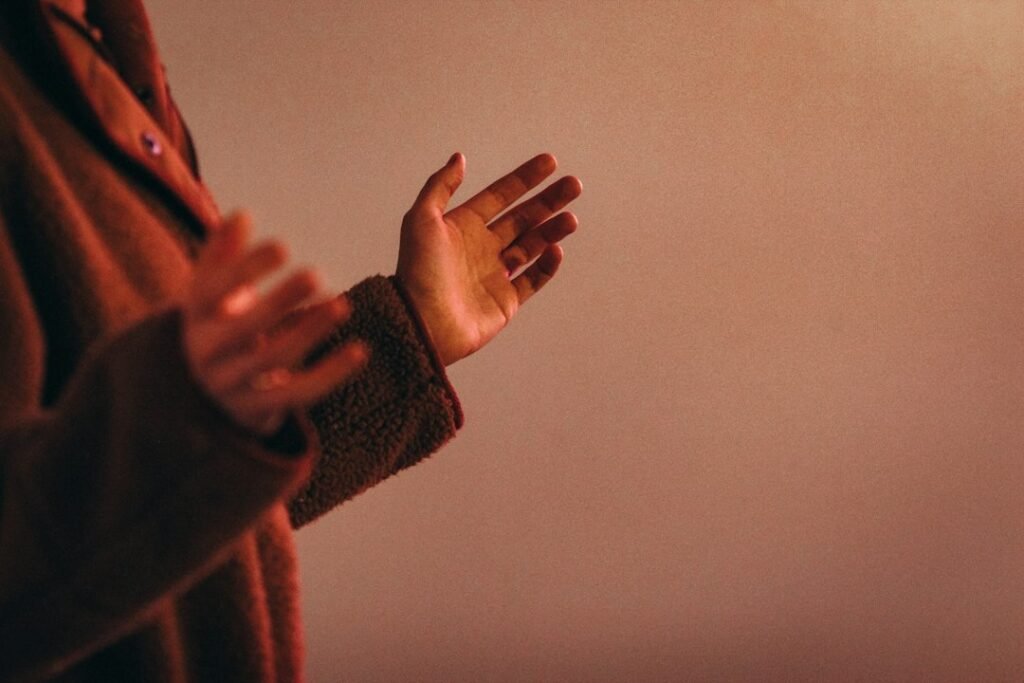
In this investigation
Across history, human beings have spoken into silence and believed—or hoped—that someone, something or some sacred reality was listening. Prayer can be whispered alone, sung by a congregation, recited at fixed hours, improvised in crisis, repeated on beads, written on paper, chanted in rhythm, performed through posture, or offered without words at all. It can ask, thank, confess, praise, bargain, remember, surrender, protest or simply attend.
That diversity is the first clue to why prayer has survived. There is no single human behaviour called “prayer” with one origin, one mechanism or one measurable outcome. A Christian petition, Islamic salat, Hindu stotra, Sikh ardas, Jewish Amidah, Buddhist aspiration prayer and an Indigenous invocation can all involve address to the sacred, yet they differ in theology, language, body, timing and purpose.
The modern temptation is to flatten that diversity into one of two stories: either prayer is a supernatural technology that science will eventually prove, or it is merely a psychological trick that can be explained away. The evidence supports neither simplification.
The question behind the question
“Why do humans pray?” contains several different questions. Why did traditions historically prescribe prayer? Why does prayer recur across cultures? What does praying do to attention, emotion and social life? Can it change health outcomes? And can science test claims about divine response?
Those questions must be kept separate. A measurable effect during prayer does not prove that historical practitioners invented prayer in order to produce that effect. Nor can a brain scan determine whether the object of prayer is metaphysically real. Science can study the human act of praying; it cannot turn theology into a laboratory variable without changing the question.
Prayer is older than any one religious system
Prayer is documented across literate civilizations and ethnographic traditions in forms that include petition, invocation, thanksgiving, praise, confession, penitence, intercession and blessing. Even within one tradition, prayer can move between these categories in a single act. Biblical traditions, for example, preserve prayers of petition, thanksgiving and penitence as well as fixed liturgical formulas. Comparable diversity appears elsewhere: devotional address, mantra, remembrance, supplication, vow, praise and communal recitation are distributed across religious histories rather than belonging to a single lineage.
This wide distribution does not prove that prayer emerged independently everywhere, because traditions borrow from one another. But it does make one point difficult to avoid: prayer answers recurring human problems. People face uncertainty, mortality, danger, gratitude, guilt, dependence, hope and events beyond personal control. Prayer gives these conditions a language and a ritual form.
Prayer is not only asking for things
Modern popular discussion often treats prayer as a request sent upward: “Please make this happen.” Historically, that is far too narrow. Prayer can praise without requesting, confess without bargaining, give thanks after an event, remember sacred narratives, rehearse communal obligations or cultivate submission to divine will. It may be less about changing the world than changing the relationship between the worshipper and the sacred.
That matters scientifically. If prayer is defined only as petition, a study of intercessory prayer for medical recovery is treated as a test of prayer itself. But intercessory prayer is only one subtype. A trial asking whether strangers praying for cardiac patients changes mortality does not test whether repeated devotional prayer affects attention, social support, stress appraisal or meaning-making in the person who prays.
Why fixed prayer survives
Many traditions deliberately structure prayer through fixed words, times, directions or bodily sequences. This can look restrictive from the outside, but repetition solves practical problems. It reduces the need to invent a response in moments of distress. It transmits doctrine through memory. It synchronizes communities. It allows children to learn participation before they understand theology in full. And it turns abstract belief into a recurring habit embedded in the day.
Fixed forms also create continuity. A prayer repeated by grandparents, parents and children links individual biography to a longer tradition. That continuity is not merely cognitive. Words acquire emotional associations through weddings, funerals, festivals, illness and ordinary family life. Over time, the prayer becomes a cue for a whole network of memories and expectations.
What happens in the brain during prayer?
Neuroimaging does not reveal whether prayer reaches a deity. It reveals what the brain is doing while a person performs a religiously meaningful task. A 2026 systematic review covering religious and spiritual practices across multiple traditions reported practice-specific patterns involving prefrontal regions, anterior cingulate cortex, default-mode networks, insula, amygdala, hippocampus and temporoparietal regions. Prayer, in particular, often recruited systems involved in social cognition and relational processing.
That pattern is plausible. Personal prayer frequently involves addressing an intentional other: one imagines being heard, known, judged, comforted or accompanied. A 2025 systematic review comparing Christian prayer with attachment-related neural systems found overlap in networks involved in mentalizing and theory of mind. This does not show that God is “generated by the brain.” It shows that human beings may use some of the same social-cognitive machinery when relating to a divine person as when representing important human relationships.
This is an important distinction. Every human experience has neural correlates. Finding a neural pattern for prayer no more disproves the object of prayer than finding a neural pattern for conversation disproves the existence of the person being spoken to.
Prayer can change physiology—without being magic
A 2021 systematic analysis of controlled experiments identified studies measuring immediate physiological or neurocognitive changes during prayer. Most found some objective change; several reported slowing of physiological measures such as heart or respiratory activity, while neuroimaging studies showed altered activity in attention, control and pain-related systems.
These findings are compatible with ordinary mechanisms. Slow recitation can slow breathing. Still posture reduces movement. familiar words reduce cognitive uncertainty. Repetition can stabilize attention. Emotional trust can reduce threat appraisal. Group prayer can add synchrony and social reassurance. None of these requires a hidden energy field.
But prayer is not physiologically uniform. A quiet contemplative prayer, ecstatic charismatic worship, lament, repetitive chanting and urgent petition can produce very different levels of arousal. The scientifically responsible question is not “What does prayer do to the body?” but “What does this kind of prayer, performed by these people in this context, do?”
Prayer as a way of regulating uncertainty
Prayer is especially common when control is limited: illness, war, childbirth, disaster, bereavement, examinations, migration and financial uncertainty. This does not mean prayer is irrational. Humans need ways to act when direct action is incomplete. Prayer can create a bounded response to an unbounded problem.
In psychological terms, it may shift a person from helpless rumination toward structured coping. A person can name fear, formulate hope, confess responsibility, imagine support and place events within a larger story. Meta-analytic research on religious coping has repeatedly found that positive forms of religious coping are associated with better psychological adjustment, while negative forms—such as feeling abandoned or punished by God—are associated with worse outcomes.
That asymmetry matters. “Religion is good for mental health” is too crude. Religious coping can comfort, but it can also intensify guilt, fear or perceived rejection. Prayer may soothe one person and deepen distress in another depending on theology, personality, community and circumstance.
The social function of praying together
Public prayer does something private prayer cannot: it makes inner commitments observable. When a congregation recites together, participants hear others make the same declarations, requests and praises. Shared timing creates coordination. Shared words create common memory. Shared posture makes belonging visible.
Collective prayer can therefore reinforce identity even when no one is consciously trying to “build cohesion.” The act says: these are our words, our sacred stories, our calendar and our community. In small groups, it may also communicate care: people hear their illness, grief or need named publicly. That can mobilize practical help regardless of whether supernatural intercession is scientifically measurable.
Can prayer heal illness?
This is where the evidence becomes both more famous and more frequently misrepresented. Randomized trials of distant intercessory prayer have asked whether patients recover differently when other people pray for them, often without the patients knowing whether they are in the prayer group.
Cochrane reviews of this literature concluded that the evidence does not provide a reliable basis for recommending or rejecting intercessory prayer as a medical intervention. Across trials, effects were inconsistent, outcomes heterogeneous and methodological interpretation difficult. Some early studies reported apparent benefits; larger or later analyses did not establish a stable clinical effect across mortality, complications or recovery measures.
This does not settle theology. A randomized trial can test whether a defined prayer protocol produces a reproducible difference in a defined medical outcome. It cannot establish the existence or non-existence of God, nor can it force a theology in which divine action is mechanically triggered by random assignment.
The practical medical conclusion is simpler: prayer should not replace evidence-based treatment. A person may pray while receiving chemotherapy, antibiotics, surgery or psychotherapy. The scientific problem begins when prayer is sold as a substitute for interventions known to work.
Personal prayer is not the same as distant intercession
It is easy to confuse two very different research questions. Distant intercessory prayer asks whether another person’s prayer changes an outcome in the recipient. Personal prayer asks what happens to the person doing the praying. The latter can involve attention, breathing, language, social cognition, memory, expectation and emotion—all mechanisms directly available to study.
Religious and spiritual interventions that include active participation have shown some benefits in randomized mental-health research, particularly for anxiety in certain contexts. But these interventions are heterogeneous: some combine psychotherapy, meditation, scripture, social support and prayer. Their effects should not be credited to prayer alone unless the design isolates prayer.
Why unanswered prayer does not automatically destroy prayer
If prayer were only a vending-machine request, repeated non-fulfilment should make it disappear. Yet traditions have developed sophisticated responses to unanswered prayer: divine timing, human limitation, karmic consequence, surrender, mystery, testing, acceptance or the idea that prayer changes the worshipper rather than the event.
From a scientific perspective, these explanations make prayer difficult to falsify as a metaphysical practice. From a religious perspective, that may be beside the point. The purpose of prayer is often relational or devotional, not experimental. The mistake is to pretend both domains are asking the same question.
Prayer, placebo and expectation
Calling prayer “just placebo” usually obscures more than it clarifies. Placebo effects involve expectation, conditioning, context and meaning; those are real psychobiological processes, not imaginary outcomes. But prayer also includes relationships, doctrine, identity, ethics and community, none of which is captured by the word placebo.
At the same time, expectancy matters. If a person believes prayer will calm them, the ritual context may amplify calm. If prayer evokes fear of punishment, expectancy may worsen distress. The effect of meaning is not evidence that every belief attached to the meaning is factually true.
Does prayer reduce anxiety?
The answer is: sometimes, for some people, in some forms. Prayer can slow a racing internal narrative by replacing it with familiar language. It can provide a perceived attachment figure. It can create a sense of being heard. It can organize uncontrollable events within a worldview. It can also connect a person to a community that provides tangible support.
But prayer can worsen anxiety when it becomes compulsive, when a person believes an imperfect prayer will cause catastrophe, or when every setback is interpreted as punishment. In clinical settings, excessive ritualized praying can appear as part of scrupulosity or obsessive-compulsive disorder. The behaviour cannot be judged by form alone; function matters.
Why repetition matters
Many prayer traditions repeat words or phrases. Repetition can narrow attention and reduce the number of choices the mind must make. It also strengthens memory and makes participation possible in groups. When linked to breathing, repeated prayer can become physiologically rhythmic.
Yet repetition is not universally calming. High-arousal chanting, lamentation and ecstatic prayer can intensify emotion. Again, the category “prayer” contains both down-regulating and up-regulating practices.
Why posture matters
Kneeling, bowing, standing, prostrating, raising hands or folding them does more than decorate prayer. Posture communicates submission, receptivity, equality, rank or praise. It also anchors abstract intention in bodily action.
Embodied cognition research suggests that posture can influence attention and emotion, but claims should be modest. A kneeling posture may reinforce a sense of humility because the person has learned its social meaning; that is different from claiming that the knee angle itself activates a universal humility circuit.
Why direction matters
Some prayer traditions orient the body toward a sacred centre. Direction solves a social and symbolic problem: dispersed communities can perform the same act while imagining a shared geography. Orientation transforms space into relationship.
Modern explanations sometimes invoke magnetic fields or cosmic energy, but those claims are unnecessary and generally unsupported. Direction already has powerful religious and social meaning without an invisible physical mechanism.
Prayer as memory technology
Repeated prayer preserves language, stories and doctrine. A child who memorizes a prayer learns more than sentences: names, moral categories, cosmology and an emotional script for fear, gratitude or grief. Oral repetition can therefore function as cultural storage.
This helps explain why prayer traditions often resist translation or improvisation. Exact wording can become a bridge to ancestors and community, not merely a vehicle for semantic information.
The danger of retrospective neuroscience
Once researchers find that prayer changes brain activity, a seductive story appears: ancient people must have designed prayer to optimize the prefrontal cortex, vagus nerve or default-mode network. There is usually no historical evidence for that claim.
Premodern practitioners gave their own reasons for prayer: worship, obedience, petition, remembrance, repentance, thanksgiving, liberation, merit, devotion or communion. Those reasons should be taken seriously. A modern mechanism can explain an effect without becoming the ancient purpose.
What prayer cannot safely replace
Prayer is compatible with medicine when it supports meaning, coping or community. It becomes dangerous when used to delay urgent care, replace effective treatment, shame people for illness or imply that recovery depends on sufficient faith.
The strongest modern position is neither anti-prayer nor medically credulous: spiritual practices can matter deeply to patients, but claims about clinical outcomes should be held to the same evidentiary standards as other interventions.
Across traditions: similar behaviour, different theology
Comparative study is useful only if similarity does not erase difference. A Muslim performing salat is not doing the same theological act as a Christian praying the Lord’s Prayer, a Hindu reciting a stotra or a Sikh participating in ardas. Even when repetition, posture or collective timing overlap, the sacred reference and doctrinal meaning differ.
Tradivior therefore treats cross-cultural similarity as a question, not an answer. Shared human cognitive capacities may make prayer-like practices possible in many traditions; culture determines what those capacities are used to say.
Prayer in Hindu traditions: address, praise, mantra and devotion
Hindu traditions complicate any attempt to define prayer narrowly. Devotional life can include spoken petition, sung praise, mantra recitation, meditation on a deity, offerings accompanied by formulaic speech, scriptural recitation and intensely personal conversation with the divine. In bhakti traditions, the relational dimension can be central: the worshipper may approach a deity as parent, child, beloved, friend, lord or protector. The psychological language of “attachment” may illuminate why such relationships feel emotionally powerful, but it does not replace the theological grammar through which devotees understand them.
Mantra also shows why prayer and meditation cannot always be cleanly separated. A mantra may be devotional, protective, initiatory, contemplative or liturgical depending on the tradition. Repetition can regulate attention and breathing, but historically the efficacy of sacred sound was often explained through revelation, lineage, deity, ritual authority or the intrinsic status of the utterance—not through autonomic physiology. When modern wellness culture explains mantra exclusively through vagal tone or “frequency,” it usually compresses a much larger religious world into one mechanism.
Islamic prayer: submission structured through time and body
Islamic prayer demonstrates that prayer can be simultaneously verbal, bodily, spatial and calendrical. Salat is performed at prescribed times, with purification, orientation toward the qibla, recitation and a sequence of standing, bowing, prostration and sitting. Du’a, by contrast, can be more personal and petitionary. Treating both simply as “relaxation techniques” would miss their religious structure.
From a behavioural perspective, fixed prayer times can function as powerful temporal anchors. They interrupt the flow of work, travel and ordinary activity and repeatedly return attention to a sacred frame. But the existence of a useful habit mechanism does not mean that habit formation was the historical purpose. The explicit religious logic is worship and submission to God. The scientific observation is secondary: regularly timed acts can stabilize routines and strengthen identity because they are repeated under socially meaningful conditions.
Christian prayer: petition, contemplation and relationship
Christian prayer includes petition, thanksgiving, confession, praise, liturgical recitation, contemplative silence and charismatic forms of spontaneous speech. Biblical and later Christian traditions developed rich taxonomies of prayer, and many forms are relational rather than instrumental. The worshipper speaks to God, listens, confesses, asks, thanks or rests in perceived presence.
Recent neuroscience has explored this relational dimension by comparing prayer with social-cognitive and attachment processes. The overlap is conceptually unsurprising: if a person experiences God as a responsive personal agent, the brain may recruit some networks also used for thinking about intentional others. But two cautions are essential. First, much neuroimaging work is small and heterogeneous. Second, a neural correlate is not a verdict on the truth of a belief. Science can show that relational prayer uses relational cognition; it cannot infer from that alone whether the relationship has an external divine referent.
Jewish prayer: memory, law and communal time
Jewish prayer traditions demonstrate how prayer can hold memory and law together. Fixed texts, blessings, psalms and daily prayer cycles carry scriptural language across generations and embed historical memory into ordinary time. Repetition is not merely repetitive; it is a disciplined re-entry into inherited language.
This illustrates a broader anthropological point. Standardized prayer is a cultural archive. It preserves not only beliefs but emotional scripts: how to mourn, give thanks, ask forgiveness, praise, remember catastrophe or articulate hope. In oral and partially literate societies, formulaic repetition may have been especially important for continuity, but the function remains visible in literate ones.
Sikh prayer: remembrance, congregation and disciplined identity
Sikh devotional life includes recitation, kirtan, remembrance of the divine name and ardas. Here again, prayer cannot be separated from sound, community and scripture. Collective practice joins personal devotion to a shared historical identity. The psychological effects of group singing, repeated recitation and communal participation are researchable, but they are not sufficient descriptions of why Sikhs pray.
For Tradivior, this distinction is central. A social scientist may observe synchrony, memory reinforcement and identity signalling. A participant may describe remembrance of Waheguru, humility or alignment with the Guru’s teaching. These accounts operate at different explanatory levels and do not have to cancel one another.
Buddhist prayer and the problem of category boundaries
Buddhist traditions expose the limits of Western categories even more sharply. Some practices look like prayer—aspirations, devotional invocations, requests for blessing, dedication of merit—while others are more accurately described as recitation, meditation or ritual remembrance. Depending on the school, the metaphysical assumptions can differ substantially.
Scientific studies that place all such practices under “prayer” risk creating a category broad enough to become analytically weak. Breath-focused meditation, deity visualization, sutra recitation and petitionary prayer may engage overlapping attention systems while differing in intention and cognitive demand. Future research is strongest when it specifies the actual practice instead of relying on a generic religious label.
Prayer and attachment: why the relationship model is compelling
Attachment theory offers one of the most productive modern frameworks for understanding personal prayer. Humans regulate distress partly through relationships with trusted figures. If God is experienced as available, protective, knowing or responsive, prayer may activate expectations similar to those involved in secure attachment.
This could help explain why prayer is especially salient during crisis. When a person cannot reach a doctor, relative or authority immediately—or when no human agent can reverse death, disaster or uncertainty—the perceived availability of a divine listener may reduce isolation. That effect can be psychologically real whether or not science can adjudicate the metaphysical claim.
But attachment to God can also be insecure. A person who fears abandonment, punishment or divine anger may experience prayer as distressing. This is consistent with the broader religious-coping literature, where positive and negative forms of religious coping show different associations with mental health. Prayer therefore should not be presumed beneficial merely because it is religious.
Prayer under uncertainty: control without control
Uncertainty is one of the most persistent conditions of human life. Traditional societies faced crop failure, epidemics, dangerous childbirth, storms, warfare and high child mortality with far less predictive control than modern populations possess. Modern people still face cancer diagnoses, accidents, relationship breakdown, economic shock and events no planning system can fully master.
Prayer provides an action when ordinary action reaches its limit. This is psychologically significant because complete passivity is difficult. Ritualized action can restore a sense of agency, even when the person openly acknowledges that the final outcome is not under personal control. The paradox is important: prayer can create agency by formalizing surrender.
That mechanism should not be confused with magical efficacy. Feeling less helpless is not the same as changing an external event. Yet reduced helplessness can influence coping, adherence, decision-making and social communication. These downstream consequences are ordinary pathways through which prayer may matter in real life.
Prayer and pain
Pain is shaped not only by tissue damage but also by attention, expectation, fear and meaning. Prayer can redirect attention, recruit familiar language, change emotional appraisal and increase perceived support. Small experimental studies have reported changes in pain tolerance or pain-related processing during religious practices, but the evidence is not strong enough to treat prayer as an analgesic therapy in its own right.
The more defensible interpretation is that prayer can change the experience around pain for some believers. This is comparable to other meaning-rich coping strategies: it may influence suffering without necessarily eliminating the underlying cause.
Prayer and breathing
Some forms of prayer naturally pace breathing because phrases are recited at a regular tempo. Slow vocalization can lengthen exhalation and reduce respiratory rate. This creates a plausible route to short-term autonomic changes, especially in quiet repetitive prayer.
But not all prayer is slow. Lament, ecstatic worship, rapid recitation and emotionally intense petition may increase rather than decrease arousal. Claims that “prayer activates the parasympathetic nervous system” should therefore be qualified by form, tempo and context.
Prayer and language: naming what cannot be solved
Prayer often converts diffuse emotion into structured language. Fear becomes petition. guilt becomes confession. gratitude becomes thanksgiving. anger may become lament or protest. This transformation matters because naming emotional states can change how they are processed.
Many religious traditions permit forms of prayer that are emotionally uncomfortable. Sacred texts include complaint, grief and accusation as well as serenity. That breadth may make prayer psychologically useful because it does not always demand immediate positivity. It can provide legitimate language for suffering within a shared tradition.
Why group prayer can mobilize real-world help
One reason religious communities sometimes appear to improve resilience has little to do with distant supernatural effects. Public prayer can function as an information system. When a congregation names someone who is ill, grieving or unemployed, other members learn who needs food, transport, money, childcare or companionship.
This creates an important confound in observational research. People who pray frequently may also belong to communities with denser support networks, more regular social contact and practical aid. If health outcomes differ, prayer may be part of the causal pathway—but not necessarily through the mechanism believers or researchers first imagine.
Why clinical trials of intercessory prayer are conceptually difficult
Intercessory-prayer trials are methodologically unusual because they attempt to randomize an act whose theological logic may reject experimental control. Several problems follow. Patients may already be prayed for by family members outside the study. The “dose” of prayer is impossible to standardize in a way comparable to a drug. Traditions disagree about what makes prayer efficacious. And many believers deny that divine response should follow a laboratory protocol.
These conceptual difficulties do not make trials meaningless. They simply narrow what the trials can conclude. They can ask whether a particular organized prayer intervention produces a reproducible measurable difference under study conditions. The cumulative evidence has not established such an effect robustly enough to guide clinical care.
Why “no effect in a trial” is not the same as “prayer is useless”
The word useful can refer to very different outcomes. A prayer may fail to change tumour size yet still reduce loneliness. It may not shorten a hospital stay yet help a family articulate hope. It may not alter mortality yet mobilize community support. Those are not substitutes for medical endpoints, but they are not nothing.
This is why discussions of prayer become polarized when they collapse all outcomes into one question. Medicine should ask whether prayer improves clinical endpoints if it is being proposed as treatment. Psychology should ask how prayer affects coping and emotion. Religious studies should ask what prayer means historically and theologically. Each discipline has a legitimate but different object of study.
Prayer, scrupulosity and when ritual becomes harmful
Religious practices can interact with obsessive-compulsive symptoms, particularly in scrupulosity. A person may repeat a prayer until it feels perfect, fear catastrophic consequences from an intrusive thought or interpret ordinary doubt as moral failure. In such cases, increasing prayer frequency is not automatically therapeutic.
This distinction protects both medicine and religion from crude assumptions. A clinician need not pathologize ordinary devotion, and a religious community should not assume every repetitive prayer is spiritually healthy. The relevant question is whether the practice is freely meaningful or compulsively driven by fear and impairment.
Prayer and placebo: a better way to frame the issue
Rather than asking whether prayer is “only placebo,” it is more useful to ask which contextual mechanisms are active. Expectation can matter. conditioning can matter. trust can matter. social support can matter. ritual familiarity can matter. breathing can matter. These mechanisms are not mutually exclusive.
Placebo research has shown that meaning and context can alter symptoms, especially subjective ones such as pain or anxiety. But a meaningful ritual can have effects while the literal causal story attached to it remains unverified. Tradivior applies the same rule here as elsewhere: effect does not prove historical explanation.
Does prayer make people more moral?
Religions often connect prayer with moral formation, but evidence should be interpreted cautiously. Prayer may remind participants of norms, reinforce accountability or prime compassion. It can also reinforce in-group boundaries or certainty. No universal moral upgrade follows automatically from religious practice.
Historical prayer texts themselves contain varied moral worlds. Some emphasize mercy, some obedience, some justice, some victory over enemies. Prayer is a medium; the ethical content depends partly on what is being prayed, taught and socially rewarded.
What the 2026 neuroscience synthesis adds
The 2026 systematic review of religious and spiritual practices is useful because it places prayer beside meditation, chanting, recitation, mystical experience and other practices rather than pretending one task represents all spirituality. Across 105 neuroimaging and neurophysiological studies, researchers reported recurring involvement of attention, emotion, self-referential and social-cognitive networks, but also practice-specific patterns.
The value of this synthesis is not that it has discovered a “God spot.” It points in the opposite direction: complex religious practices recruit distributed brain systems in ways shaped by task, training and meaning. The brain appears to process prayer as a rich cognitive-affective activity rather than through a single sacred module.
A warning about neuroscience headlines
Religious-neuroscience findings are unusually vulnerable to exaggeration. Small samples, multiple analytic choices, diverse practices and cross-sectional designs can produce results that sound more definitive in headlines than they are in the literature. Structural differences in long-term practitioners also do not automatically prove that practice caused the differences; people who sustain intensive religious routines may differ before training begins.
For this reason, Tradivior treats neuroimaging as one layer of evidence, not a stamp of validation. A colourful brain image does not convert theology into biology, and it does not establish clinical benefit.
Why prayer persists in highly technological societies
If prayer existed only because people lacked scientific explanations, industrialization should have eliminated it. It did not. The persistence of prayer in technologically advanced societies suggests that prayer answers needs not exhausted by prediction or control.
Medicine may explain a prognosis without resolving fear. Meteorology may explain a storm without answering grief after loss. Psychology may describe attachment without deciding whether a divine relationship is real. Prayer occupies these unresolved spaces of meaning, dependence and identity.
The strongest scientific claim we can make
The strongest defensible scientific claim is not that prayer heals disease, nor that prayer is inert. It is that praying is a complex human behaviour capable of changing the internal state and social environment of the person who prays. The size and direction of those effects vary by practice, belief, emotional context and community.
That conclusion is substantial without being sensational. It allows prayer to matter scientifically where evidence supports it while protecting both science and religion from false certainty.
What prayer research still cannot answer
Even after decades of research, several questions remain unresolved. One is dose: frequency of prayer is easy to count, but intensity, sincerity, familiarity and emotional meaning are not. Another is selection: people who pray regularly may differ in personality, family background, health behaviour and community involvement before any study begins. A third is cultural translation: a questionnaire designed around Christian personal prayer may not capture devotional recitation, communal liturgy or non-theistic aspiration practices elsewhere.
Longitudinal and experimental studies can improve causal inference, but religious practice is unusually difficult to randomize over long periods. Researchers can assign a brief prayer exercise; they cannot easily assign a lifetime of belief, community and ritual formation. This means some of the most important effects of prayer may remain better studied through converging methods—history, ethnography, psychology, physiology and neuroscience—than through one decisive experiment.
Why the historical question matters
If modern prayer research ended tomorrow, historians would still have a large question to answer: what did people themselves think they were doing? Traditional explanations repeatedly invoke relationship with the sacred, obligation, gratitude, confession, praise, merit, remembrance, surrender and petition. These explanations cannot be discarded simply because a later experiment detects lower respiratory rate.
This is one of Tradivior’s central safeguards against pseudoscience. A practice may produce a modern measurable effect while having arisen for an entirely different reason. The effect may help explain persistence without explaining origin. Prayer is a particularly clear example because the historical record so often states religious purposes explicitly.
A practical modern reading
For believers, the evidence does not require abandoning prayer. It does require caution about biomedical promises. Prayer can accompany treatment, create meaning, support relationships and structure difficult emotions. It should not be marketed as a replacement for medical diagnosis or as proof that illness reflects insufficient faith.
For non-believers, the evidence also argues against dismissing prayer as behaviour with no human consequences. The act can organize attention, memory, coping and social support in ways that are measurable and culturally consequential. One can recognize those effects without accepting the theology that surrounds them.
The most useful modern position is therefore plural but disciplined: respect the religious meaning, measure the measurable consequences, refuse unsupported causal claims, and keep metaphysical conclusions separate from experimental findings.
What survives scrutiny?
Several conclusions survive reasonably well. Prayer is historically authentic and extraordinarily widespread. It performs multiple functions beyond petition. Personal prayer can measurably alter attention, emotion and physiological state, although effects vary by form and practitioner. Positive religious coping is often associated with better adjustment, while negative religious coping can be associated with worse outcomes. Collective prayer can coordinate groups and reinforce shared identity.
What does not survive is the leap from these findings to a claim that science has demonstrated divine intervention, that one prayer formula has a unique biomedical frequency, or that ancient traditions secretly encoded modern neuroscience. Randomized intercessory-prayer research has not established a reliable clinical effect that should alter medical practice.
The Tradivior Evidence Profile
Historical Authenticity — Strong. Prayer is extensively documented across religious traditions, texts, liturgies and ethnographic records.
Original-Purpose Evidence — Strong. Traditions explicitly describe prayer as praise, petition, confession, remembrance, thanksgiving, devotion, intercession, surrender and other religious acts.
Scientific Mechanism — Moderate. Attention, breathing, social cognition, expectation, emotion regulation, memory and group synchrony provide plausible mechanisms for effects on the person praying.
Experimental Evidence — Moderate for effects on the person praying; Inconclusive for distant intercessory healing. Physiological and neurocognitive changes during prayer are measurable, while clinical trials of intercessory prayer do not show a stable medical treatment effect.
Cross-Cultural Evidence — Strong. Prayer-like practices appear widely, though forms and theologies differ substantially.
Modern Relevance — Strong. Prayer remains meaningful for billions of people and can be integrated with evidence-based healthcare when it does not replace effective treatment.
The Tradivior Conclusion
Partially Supported. Humans pray because prayer solves several enduring human problems at once: it gives uncertainty a language, turns belief into repeated action, organizes emotion, preserves memory, coordinates communities and creates a perceived relationship with the sacred. Modern research supports measurable effects on attention, physiology, coping and social cognition in at least some forms of prayer. But those findings do not demonstrate supernatural causation, prove that ancient people designed prayer around modern neuroscience, or establish distant intercessory prayer as a reliable medical treatment.
The most defensible conclusion is therefore more interesting than either “prayer works” or “prayer does nothing.” Prayer is a powerful human religious behaviour whose psychological and social consequences are real enough to study, while its theological claims remain theological questions.
Sources and further reading
- Roberts L, Ahmed I, Hall S. Intercessory prayer for the alleviation of ill health. Cochrane Database of Systematic Reviews, updated review.
- Ano GG, Vasconcelles EB. Religious coping and psychological adjustment to stress: a meta-analysis. Journal of Clinical Psychology, 2005.
- Gonçalves JPB et al. Religious and spiritual interventions in mental health care: a systematic review and meta-analysis of randomized controlled clinical trials. Psychological Medicine, 2015.
- Systematic analysis of controlled experiments on immediate physiological changes during prayer, 2021.
- The Neuroscience of Religious and Spiritual Practices: A Systematic Review of Neurotheological Evidence. 2026.
- Systematic review of Christian prayer and attachment-related neural systems, 2025.
Continue exploring
Why Do People Keep Ashes, Relics and Memorial Objects?
Hair, ashes, bones, clothing, photographs and relics allow the dead to remain materially present. Tradivior will examine why objects carry memory so powerfully and how continuing bonds differ from pathological…
Why Do Cultures Set Aside Days to Remember the Dead?
From Pitru Paksha and Qingming to Día de Muertos and All Souls’ Day, cultures repeatedly create calendar time for the dead. Tradivior will compare how recurring remembrance renews kinship, grief…
Why Do Cultures Preserve the Dead?
Mummification, embalming, freezing, smoking and desiccation reflect very different beliefs about bodies and afterlives. Tradivior will compare preservation traditions with the chemistry of decomposition and the practical limits of each…

Why Do People Change Names, Clothes or Homes After Marriage?
Marriage often transforms identity through surname changes, new dress, residence, kinship terms or household membership. Tradivior will investigate why marriage needs visible social consequences beyond the ceremony itself.
Picked for your curiosity
Enable JavaScript to build a reading profile and see recommendations.