 tradivior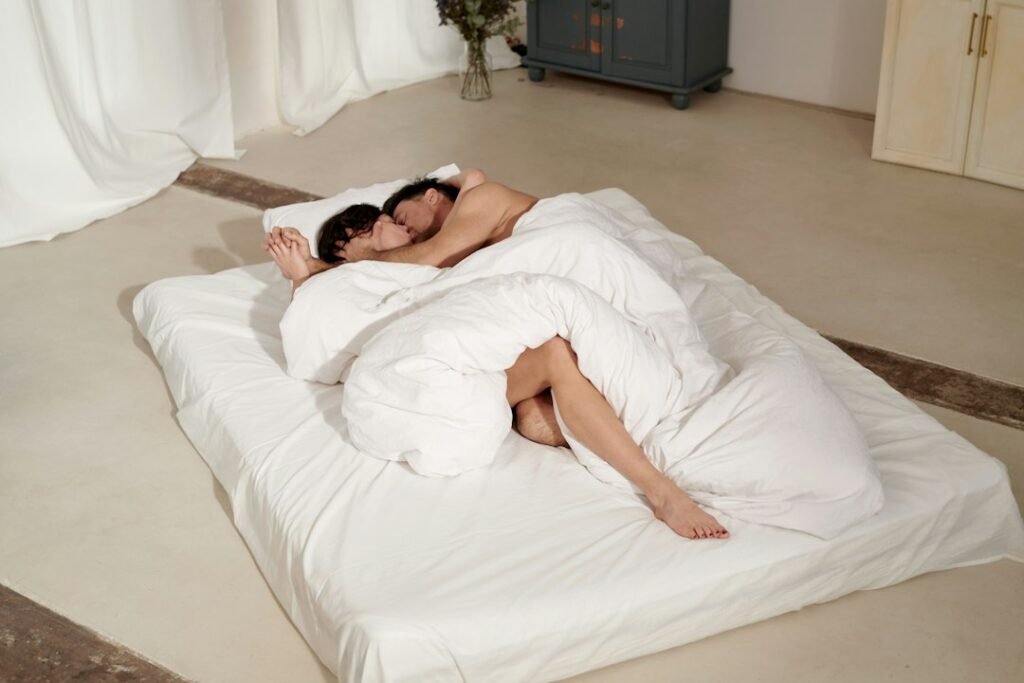
In this investigation
For most of human history, a tall upholstered bed with a thick commercial mattress was not the default place to sleep. People slept on woven mats, reed beds, animal skins, blankets, low platforms, wooden frames, rope cots and thin padded bedding. In many societies, bedding was rolled away during the day and the same room returned to eating, work or social life.
Modern wellness advice sometimes treats floor sleeping as an ancient health secret: the harder the surface, the straighter the spine and the better the sleep. The scientific evidence does not support that simple rule. Sleeping surfaces clearly matter, but very firm is not automatically better. History gives more practical reasons for low sleeping arrangements—cost, climate, portability, domestic flexibility and available materials—than a universal orthopedic theory.
“Sleeping on the floor” describes many different surfaces
A woven mat on packed earth, a Japanese futon over tatami, a cotton mattress on stone, a wool blanket on wood and a bare concrete floor are not ergonomically equivalent. Thickness, insulation, elasticity and pressure distribution differ enormously.
This distinction is often lost in modern arguments. A historical tradition of low sleeping does not prove that direct contact with a hard floor is beneficial.
THE FIRST CORRECTION
Low sleeping is a spatial arrangement. Hard sleeping is a surface property. Traditional cultures often used padding, weaving, mats or flexible supports even when the sleeper remained close to the floor.
Portable bedding makes small homes more flexible
When bedding can be rolled, folded or stacked, a room does not need to remain a bedroom for twenty-four hours. The same floor can support sleeping at night and family activity, work or dining during the day.
This is a major architectural advantage in compact dwellings. A large fixed bed consumes permanent floor area. A mat or thin mattress converts sleeping from a room type into a temporary activity.
Japanese tatami and futon illustrate this spatial logic
Traditional Japanese domestic space became strongly structured around modular floor mats and flexible room use. Futon bedding could be laid out for sleep and stored afterward, allowing a room to serve multiple purposes.
The system makes sense architecturally even before any health claim is considered. The floor is an active living surface rather than merely the area beneath furniture.
Indian rope cots solved a different environmental problem
The South Asian charpoy or woven cot is low but raised above the ground. Its rope or webbing surface is lightweight, ventilated and repairable. It can be moved into a courtyard, veranda or shaded outdoor area as temperature and household activity change.
This design undermines the claim that traditional sleeping was always on a hard surface. The charpoy is flexible rather than rigid and deliberately allows airflow beneath the sleeper.
Climate helps explain why heavy beds were not always desirable
Thick upholstery stores heat. In warm climates, lighter bedding can make heat dissipation easier. A woven cot permits air movement below the body; a thin mat may be cooler than deep padding.
In cold climates, however, floor proximity can increase heat loss. Traditional bedding therefore often includes insulating layers—straw, wool, hides, quilts or raised platforms. The “best” sleeping height is partly environmental.
The floor is often the coldest surface in a room
Cool air tends to settle while floors conduct heat according to their material. Stone, tile and concrete can draw heat from the body much faster than wood or padded bedding.
This matters because thermal comfort strongly affects sleep. A low sleeping arrangement that works well in a hot season may be uncomfortable in winter unless insulation changes with it.
Modern mattress research contradicts the “harder is always better” rule
A landmark randomized controlled trial involving 313 adults with chronic nonspecific low-back pain compared firm and medium-firm mattresses. After ninety days, participants using medium-firm mattresses had better outcomes for pain and disability.
Systematic reviews published later reached similar conclusions. Across available controlled studies, medium-firm surfaces generally perform better than very firm or very soft options for comfort, spinal alignment and nonspecific low-back pain.
THE EVIDENCE
Current evidence does not support recommending the hardest possible sleeping surface for back pain. Medium-firm support is the most defensible general finding, with individual variation remaining important.
Pressure distribution is one reason extreme hardness can be uncomfortable
The body is not flat. Shoulders, hips and other prominences concentrate pressure when they contact a rigid surface. Softer materials allow these areas to sink slightly, distributing load over a larger area.
A randomized pilot study comparing a mattress and the floor in a supine position found higher pain scores on the floor across most measured body regions. Even short exposure therefore shows why a rigid floor is not automatically comfortable simply because it is “supportive.”
Too soft can also create problems
A very soft surface can allow parts of the body to sink excessively, producing awkward alignment for some sleepers. This helps explain why evidence often converges on an intermediate level rather than one extreme.
Body size, sleep position, pain condition and personal adaptation all affect the optimum. Side sleepers typically need more pressure relief at the shoulder and hip than people sleeping supine.
There is no single neutral “correct spinal position” for everyone
Popular advice sometimes claims a hard floor forces the spine into perfect alignment. The spine is naturally curved, and alignment in sleep depends on body shape, position and surface compliance.
A surface that feels supportive to a light supine sleeper may create pressure points for a heavier side sleeper. This individual variability appears repeatedly in sleep-surface research.
Getting down to the floor is itself a physical demand
Low sleeping requires repeated transitions between standing and floor level. For young and mobile adults, this may be trivial. For people with arthritis, frailty, pregnancy, neurological conditions or recent surgery, it can be difficult or unsafe.
Modern care environments sometimes use very low beds to reduce fall injury, but those systems are designed around patient needs and assistance. Low height is not automatically healthier for all adults.
Floor sleeping can reduce fall height
One obvious benefit of sleeping close to the floor is that there is less distance to fall. This can matter for small children and some adults at elevated fall risk.
That benefit concerns injury geometry, not sleep quality. A low bed can reduce fall consequences without being the ideal pressure-distribution surface.
Dust, insects and moisture complicate the picture
The floor is where dust settles and crawling insects travel. In humid environments, bedding left directly on a poorly ventilated floor can trap moisture. Traditional systems often responded by lifting, airing or sunning mats and bedding during the day.
This is another reason portable bedding makes sense. The material can be dried, beaten, washed or exposed to sunlight rather than remaining permanently enclosed beneath a fixed bed.
Raised beds can be a response to animals and dampness
Humans also repeatedly invented raised sleeping platforms. Elevation can separate sleepers from wet ground, insects, rodents and cold surfaces.
The existence of both floor mats and raised beds across traditional societies demonstrates that there was never one ancestral sleeping solution. People adapted sleep surfaces to local constraints.
Low furniture changes social posture
Sleeping low often belongs to a broader domestic world in which sitting, eating and working also happen near the floor. The body moves repeatedly between squatting, kneeling, cross-legged sitting and standing.
These movement patterns may preserve mobility in people who perform them daily, but that does not mean the sleeping surface itself causes the mobility benefit. Habitual floor transitions and floor sleeping are separate variables.
A low bed can carry meanings of simplicity or discipline
Religious ascetics, monastics and householders in periods of mourning or ritual observance may choose simplified bedding to express restraint. Here discomfort itself can be meaningful.
The purpose is moral or spiritual rather than ergonomic. A deliberately austere bed should not be reinterpreted as evidence that discomfort was secretly prescribed for spinal health.
Social status has often been visible in bedding
Elaborate raised beds, carved frames, curtains, fine textiles and thick mattresses historically signaled wealth in many societies. Simpler mats or shared sleeping spaces could reflect economy rather than health philosophy.
This is another danger in romanticizing historical minimalism. People sometimes slept on simple surfaces because materials, space or money were limited.
Adaptation changes subjective comfort
People accustomed to one surface can sleep poorly when abruptly moved to another. Small sleep studies show adaptation can take days and that individuals respond differently to firmness changes.
This helps explain why lifelong floor sleepers may find a soft mattress uncomfortable while lifelong mattress users experience pain on a floor. Familiarity is not proof of universal superiority, but it is a real component of sleep quality.
Body size and sleep position matter more than tradition slogans suggest
Heavier bodies deform a sleeping surface more. Side sleeping places different pressure demands on the shoulder and hip than back sleeping. Age changes tissue tolerance and mobility.
Modern mattress reviews therefore recommend considering body habitus, preferred sleeping position and individual symptoms rather than prescribing one firmness to everyone.
Floor sleeping is not a treatment for chronic back pain
Someone with persistent pain may discover that a particular firm surface feels better. That individual response is legitimate. It should not be converted into the clinical claim that patients with back pain should sleep on the floor.
Current evidence points instead toward individualized support, often around medium firmness, and appropriate medical evaluation when pain is persistent, severe or associated with neurological symptoms.
Low bedding remains practical in flexible contemporary homes
The architectural advantages have not disappeared. Foldable mattresses, futons and mats still allow guest accommodation and multipurpose rooms without permanent furniture.
The modern relevance is therefore strongest in spatial flexibility rather than a claim of orthopedic superiority.
The smartest traditional systems managed bedding dynamically
Portable bedding can be moved with season and household need: toward airflow in hot weather, toward insulation in cold weather, outdoors under shade, or indoors during rain.
A fixed Western-style bed optimizes convenience. A movable sleeping system optimizes flexibility. Neither is inherently more advanced.
What survives scrutiny?
- Humans have historically slept on a wide range of low and portable surfaces rather than one universal ancestral bed.
- Low sleeping is not synonymous with sleeping directly on a hard floor.
- Portable mats and futons allow rooms to serve multiple functions and can be aired, cleaned and stored.
- Raised woven cots such as the charpoy show that traditional South Asian sleep systems could prioritize ventilation and flexibility rather than hardness.
- Climate strongly affects whether low bedding is thermally comfortable.
- Modern controlled evidence does not show that the hardest surface is best for back pain.
- Medium-firm mattresses generally outperform very firm mattresses for nonspecific low-back pain and sleep comfort.
- Rigid floors can increase pressure discomfort, especially at bony prominences.
- Floor-level sleeping can reduce fall height but can make getting up difficult for people with limited mobility.
- The strongest historical explanation for mats and low beds is practical adaptation to space, materials, climate and household life—not a universal hidden orthopedic principle.
The Tradivior Evidence Profile
Historical Authenticity — Strong. Mats, low bedding, futons, rope cots and other portable or low sleeping systems are widely documented across cultures.
Original-Purpose Evidence — Moderate to Strong. Space efficiency, portability, climate, material availability, status and ritual austerity provide well-supported explanations, though motives vary by culture.
Scientific Mechanism — Strong. Surface compliance affects pressure distribution, spinal support and thermal comfort, while bed height affects mobility and fall consequences.
Experimental Evidence — Strong. Controlled trials and systematic reviews show that sleep surface characteristics influence pain and comfort and generally favor medium-firm rather than extremely firm surfaces.
Cross-Cultural Evidence — Strong. Low, portable and raised sleeping systems recur across societies but solve different environmental and domestic problems.
Modern Relevance — Strong. Low and portable bedding remains useful for flexible space, but floor sleeping should be chosen for individual comfort and context rather than promoted as a universal health treatment.
The Tradivior Conclusion
Historically Practical. Mats, futons, low beds and woven cots persisted because they were economical, portable, climate-responsive and compatible with multipurpose domestic space. Modern science confirms that sleep surfaces matter, but it does not support the popular claim that harder is inherently healthier. In back-pain research, medium-firm surfaces generally perform better than very firm ones. The tradition survives scrutiny as adaptable household design, not as proof that sleeping on a bare floor is medically superior.
Continue investigating
- Why Did Courtyard Houses Appear Across Hot Climates?
- Why Did Indian Kitchens Separate Cooking, Eating and Purity Zones?
- Why Did Homes Centre Daily Life Around the Hearth?
Sources and further reading
- Kovacs FM, et al. “Effect of firmness of mattress on chronic non-specific low-back pain: randomised, double-blind, controlled, multicentre trial.” Lancet. 2003. PMID: 14630439.
- “Effect of different mattress designs on promoting sleep quality, pain reduction, and spinal alignment in adults with or without back pain; systematic review of controlled trials.” 2015. PMID: 29073401.
- Caggiari G, et al. “What type of mattress should be chosen to avoid back pain and improve sleep quality? Review of the literature.” 2021. PMID: 34878594; PMCID: PMC8655046.
- “Mattress impact on lifestyle and back pain: a 25-year orthopedic literature review guideline.” 2026. PMID: 42432412.
- Jacobson BH, Boolani A, Dunklee G, Shepardson A, Acharya H. “Effect of prescribed sleep surfaces on back pain and sleep quality in patients diagnosed with low back and shoulder pain.” Applied Ergonomics. 2010. PMID: 20579971.
- Bader G, Engdal S. “The influence of bed firmness on sleep quality.” Applied Ergonomics. 2000;31(5):487–497. PMID: 11059462.
- “Differences in the body pressure-related sensory changes between the floor and mattress in a static supine position for physiotherapy research: a randomized controlled pilot trial.” 2016. PMID: 27190432.
- Historical and architectural scholarship on Japanese tatami-based domestic space and flexible room use.
- Material-culture scholarship on South Asian charpoys and woven cots as portable household furniture.
Continue exploring

Partially Supported
Why Is the Ganga Sacred?
The Ganga is river, goddess, pilgrimage route, purifier and national symbol. Tradivior will trace how these layers developed and evaluate modern claims about unusual self-purifying properties without confusing microbial findings…
Why Do People Keep Ashes, Relics and Memorial Objects?
Hair, ashes, bones, clothing, photographs and relics allow the dead to remain materially present. Tradivior will examine why objects carry memory so powerfully and how continuing bonds differ from pathological…

Why Do Cultures Set Aside Days to Remember the Dead?
From Pitru Paksha and Qingming to Día de Muertos and All Souls’ Day, cultures repeatedly create calendar time for the dead. Tradivior will compare how recurring remembrance renews kinship, grief…
Why Do Cultures Preserve the Dead?
Mummification, embalming, freezing, smoking and desiccation reflect very different beliefs about bodies and afterlives. Tradivior will compare preservation traditions with the chemistry of decomposition and the practical limits of each…
Picked for your curiosity
Enable JavaScript to build a reading profile and see recommendations.