 tradivior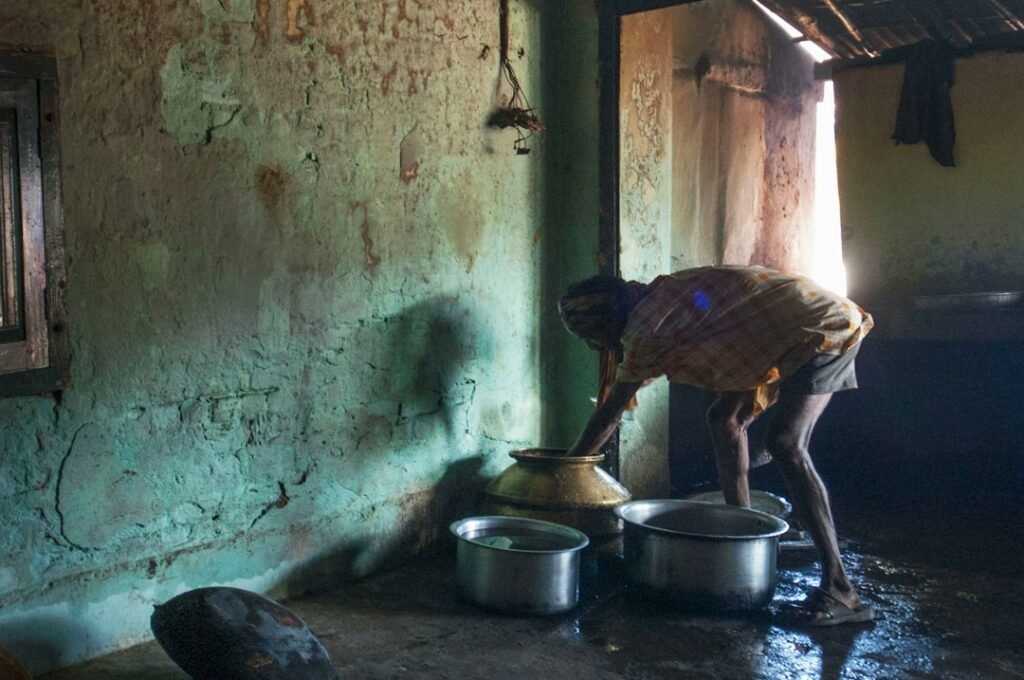
In this investigation
The entrance of a home is where the outside world becomes the inside world. Shoes cross it. Dust blows through it. Visitors pause there. Animals pass nearby. Deliveries arrive. In many Indian households and other cultures, the threshold is therefore cleaned early and often—swept, sprinkled or washed before the day’s domestic activity begins.
In South India, morning threshold cleaning is closely connected with the making of kolam. Elsewhere, washed courtyards or entrances may be associated with hospitality, auspiciousness, ritual order or the simple expectation that the house should begin the day clean.
The modern temptation is to say the tradition was “scientifically designed to kill germs.” The evidence supports a narrower claim. Frequent cleaning removes soil, organic debris and some allergens. Moist cleaning can suppress resuspended dust better than aggressive dry sweeping. But washing a threshold is not sterilization, and its ritual meanings cannot be reduced to microbiology.
The threshold is a high-traffic contamination zone
Entrances receive soil from feet and footwear, windblown particles, plant material, street dust, animal matter and whatever adheres to objects carried indoors. Even in a modern home, the doorway accumulates debris faster than many interior surfaces.
Cleaning the entrance before household traffic intensifies therefore has an obvious practical logic. Removing yesterday’s dust reduces the material available to be tracked deeper into the home.
THE PRACTICAL CORE
Threshold cleaning is most defensible as source control: remove dirt where it enters before repeated walking distributes it through the house.
Morning timing fits domestic traffic patterns
Cleaning early has practical advantages. Floors are relatively undisturbed after the night. The space can dry before visitors arrive. Dust removed before cooking and daytime movement is less likely to be redistributed immediately.
The timing can also be ritual. Beginning the day by ordering the threshold turns cleaning into a daily reset rather than a purely reactive chore.
Kolam traditions make cleaning part of creating
In Tamil communities, women traditionally prepare the threshold before drawing a kolam. The design may be made with rice powder, stone powder or chalk around a grid of dots. The drawing gradually wears away and is recreated.
Academic work on kolam describes the morning threshold as a recurring site of women’s artistic practice and community knowledge. The surface must first be made usable. Sweeping and washing therefore create the temporary canvas.
Cleaning and decoration turn the threshold into a visible sign of household order
An entrance is public in a way that a bedroom is not. Neighbours and visitors can see whether it is maintained. Daily threshold care therefore communicates diligence, hospitality and household identity.
This social signalling is not trivial. Domestic cleanliness can become part of reputation, gender expectations and ideas of respectability.
Auspiciousness adds another layer beyond physical cleanliness
In many Hindu households, a clean and decorated entrance is understood as appropriate for welcoming prosperity, guests or divine presence. Dirt and disorder may be treated not only as unpleasant but inauspicious.
This is a symbolic classification. A modern particle counter cannot measure auspiciousness, and the cultural meaning should not be translated into “low microbial load” simply because both favour cleaning.
Sweeping really does remove settled dust
Household dust contains soil, fibres, skin particles, pollen, hair, allergens and microorganisms. Removing deposited material reduces the reservoir available for later movement.
Cleaning studies consistently show that physical cleaning lowers floor soil and can reduce allergens or microbial load, although effectiveness depends on the surface, method, frequency and equipment.
But dry sweeping can temporarily put dust back into the air
The act of cleaning can itself resuspend particles. Research on household dust shows that walking, vacuuming and mechanical disturbance can lift settled material into the breathing zone.
This is especially relevant to vigorous brooming. The floor may end cleaner while airborne dust rises temporarily during the process.
THE MODERN NUANCE
Removing settled dust is useful, but the method matters. Damp or moist cleaning generally controls resuspension better than aggressive dry dusting.
Hard floors behave differently from carpets
Dust does not become embedded in a hard threshold the way it can in deep carpet. This makes hard floors relatively easy to sweep and wipe.
Experimental studies show complex differences in dust resuspension between carpet and laminate surfaces depending on cleaning method and particle size, but deep cleaning reduces the dust reservoir on both.
Moist cleaning often removes organic material effectively
Comparisons of floor-cleaning methods in hospitals find that moist or wet mopping can remove substantial organic soil and reduce floor bacteria. Hospital floors are not household entrances, but the physical principle is transferable: water helps capture material that dry movement may scatter.
The effect depends on the cleanliness of the cloth or mop. Reusing a heavily contaminated cleaning tool can redistribute microorganisms rather than remove them efficiently.
More water is not automatically better
Traditional washing methods can use generous water, but modern environmental hygiene does not assume that flooding a floor is optimal. Excess moisture can damage materials, encourage mould in persistently damp areas and spread contaminated water.
The safer principle is removal of soil with clean tools and appropriate moisture—not ritual quantity of water.
Water quality changes the outcome
Washing is only as hygienic as the water and cleaning material being used. Contaminated water can introduce microorganisms. Standing wastewater can attract insects or create slippery surfaces.
This is another reason a historical washing practice should not be described as automatically disinfecting. The result depends on local infrastructure.
Threshold cleaning works especially well with footwear control
Removing shoes before entering and cleaning the threshold address the same transport pathway from different directions. One reduces what crosses the boundary; the other removes what accumulates there.
Together they create a practical dirt-control system even though the cultural meanings of footwear and threshold purity may be much broader.
Courtyard cleaning has a different environmental role
An open courtyard accumulates leaves, dust, soil, animal droppings and material from food preparation or drying. It may also be where children play and family members sit.
Frequent sweeping is therefore ordinary maintenance of an outdoor-indoor hybrid space. The cleaner the courtyard, the less material is carried into adjacent rooms.
Traditional floor treatments could combine cleaning and surface maintenance
Some earthen floors were periodically treated with mud, clay, lime or mixtures involving cow dung depending on region and household tradition. Such practices are sometimes promoted online as natural disinfectants.
The evidence is far too variable to generalize. Material composition, pathogens, drying conditions and preparation methods differ. A historical floor coating may improve surface cohesion or reduce dust without functioning as a standardized disinfectant.
Cow-dung claims require particular caution
Cow dung carries strong ritual associations in Hindu traditions and has historically been used in floors and courtyards in some rural settings. Modern claims sometimes leap from sacred status to “antibacterial floor sterilizer.”
Fresh animal faeces can contain pathogens. Any antimicrobial compounds demonstrated under specific laboratory conditions do not convert untreated dung into a universally safe disinfectant. Ritual use, construction use and microbiological safety should be evaluated separately.
Daily cleaning can reduce allergen reservoirs—but not eliminate allergy
Frequent cleaning of household dust can lower some allergen concentrations. Studies of vacuum cleaning and broader household interventions report reductions in dust loading and selected allergens.
But allergic disease depends on many sources and exposures. Cleaning an entrance is one environmental-control measure, not a treatment for asthma or eczema by itself.
Ritual regularity may be the hidden strength of the practice
A cleaning method is useful only if people actually perform it. Ritualizing the task—do it each morning before kolam, worship or the day’s first visitors—creates a habit cue.
This is a plausible behavioural advantage. The symbolic system may sustain frequency even when the original practical reasoning is never verbalized.
Repeated cleaning also creates a sense of control
Ordering the threshold at the start of the day provides a visible completed task. In uncertain environments, routines can create predictability and agency.
This psychological effect does not prove that every cleaning ritual was invented for mental health. It helps explain why small repeated domestic acts can feel stabilizing.
Domestic cleanliness can become gendered moral labour
In many communities, women are expected to maintain the threshold, courtyard and decorative practices. Skill may be admired, but the responsibility can also become compulsory.
A house judged through its entrance may become a woman judged through the house. The social value of cleanliness therefore has a labour politics as well as a hygiene benefit.
The entrance is where hospitality becomes visible
Visitors encounter the threshold before any interior room. Sweeping, washing and decorating it signals readiness to receive others.
This makes threshold maintenance part of social communication. A clean entrance says the household is awake, ordered and attentive.
Modern apartments preserve the ritual even after the environmental context changes
An urban apartment corridor may carry less soil than a village courtyard, yet residents may still sweep the doorway and create rangoli or kolam. The practical dirt-control function decreases while identity and continuity remain.
This is how living traditions evolve: a practice can survive because its meaning changes even when its original environmental workload changes.
Chemical disinfectant is usually unnecessary for routine domestic floors
Modern hygiene distinguishes cleaning from disinfection. Cleaning removes dirt and lowers microbial burden. Disinfection uses agents intended to inactivate microorganisms and is most important in specific risk contexts.
A household threshold generally benefits more from regular physical cleaning than from indiscriminate heavy use of harsh chemicals.
The tradition survives best as routine source control
The evidence-supported core is simple: high-traffic entrances accumulate dirt, and frequent removal reduces what can be carried indoors. Moist methods can help capture particles rather than throwing them into the air.
The additional meanings—auspiciousness, hospitality, artistic practice and ritual readiness—belong to culture rather than environmental microbiology. They can coexist without being falsely converted into scientific claims.
What survives scrutiny?
- Entrances are high-traffic zones where outdoor soil and dust enter the home.
- Frequent cleaning reduces the reservoir of dirt, organic material and some allergens available to be tracked indoors.
- Morning cleaning fits practical traffic patterns and often prepares the threshold for daily ritual or decoration.
- Tamil kolam practice traditionally uses the household threshold as a repeatedly renewed artistic surface.
- Dry sweeping can temporarily resuspend particles even while removing settled dust.
- Moist cleaning can suppress dust and effectively remove organic soil when clean tools and water are used.
- Washing is not the same as sterilization, and poor water or dirty cleaning tools can reduce hygiene benefits.
- Claims that cow-dung floor treatment universally disinfects a home are not supported strongly enough to justify untreated animal waste as a modern sanitizer.
- Threshold cleaning also expresses hospitality, auspiciousness, domestic order and gendered household identity.
- The strongest modern interpretation is routine source control plus cultural meaning—not hidden germ theory.
The Tradivior Evidence Profile
Historical Authenticity — Strong. Routine sweeping and washing of thresholds and courtyards is well documented in South Asian household traditions, including the preparation of surfaces for kolam and related practices.
Original-Purpose Evidence — Moderate to Strong. Cleanliness, domestic order, hospitality, auspiciousness and preparation for ritual or decoration are all well-supported motives, though local explanations vary.
Scientific Mechanism — Strong. Physical removal of settled dust and organic material reduces the reservoir available for tracking and resuspension; cleaning method influences airborne particle generation.
Experimental Evidence — Moderate to Strong. Environmental cleaning studies demonstrate reductions in floor soil, microbes and selected allergens, though direct trials of traditional Indian threshold routines are limited.
Cross-Cultural Evidence — Strong. High-traffic entrances and courtyards are frequently targeted for routine cleaning across societies, while the ritual symbolism of the threshold varies.
Modern Relevance — Strong. Regular entrance cleaning remains sensible, especially when using methods that capture rather than resuspend dust; ritual and artistic dimensions remain culturally meaningful.
The Tradivior Conclusion
Historically Practical—with symbolic layers. Sweeping and washing entrances is a sensible domestic practice because thresholds accumulate outdoor dirt and repeated traffic can carry that material deeper indoors. Modern cleaning research supports frequent removal of dust and suggests moist methods can reduce resuspension. But traditional morning cleaning also prepares a culturally important threshold for hospitality, auspiciousness and practices such as kolam. The evidence supports the cleaning habit itself far more strongly than claims that every traditional material or washing method functioned as a hidden disinfectant.
Continue investigating
- Why Do Indian Households Draw Rangoli or Kolam at the Threshold?
- Why Do People Remove Shoes Before Entering a Home?
- Why Did Indian Kitchens Separate Cooking, Eating and Purity Zones?
Sources and further reading
- “Entropy trade-offs in artistic design: A case study of Tamil kolam.” Evolutionary Human Sciences. Cambridge University Press, 2021.
- Lewis RD, Ong KH, Emo B, et al. “Resuspension of house dust and allergens during walking and vacuum cleaning.” Journal of Occupational and Environmental Hygiene. 2018;15(3):235–245. PMID: 29283321.
- “Floor cleaning: effect on bacteria and organic materials in hospital rooms.” Journal of Hospital Infection. 2008. PMID: 19013671.
- Singh K, Siddharth V, Singh G. “Mechanized laundering of mops for floor cleaning can reduce infection transmission through hospital floor.” 2021. PMID: 33892975.
- “How clean is your house? A study of house dust mites, allergens and other contents of dust samples collected from households.” 2018. PMID: 29932732.
- “The effect of frequent vacuum cleaning on the house dust mite allergen, Der p 1 in carpets: a pilot study.” 1997. PMID: 9418840.
- “Allergen levels in inner city homes: baseline concentrations and evaluation of intervention effectiveness.” 2007. PMID: 18059423.
- Research on airborne dust generation during dusting and on hard-floor versus carpet particle resuspension.
Continue exploring

Partially Supported
Why Is the Ganga Sacred?
The Ganga is river, goddess, pilgrimage route, purifier and national symbol. Tradivior will trace how these layers developed and evaluate modern claims about unusual self-purifying properties without confusing microbial findings…
Evidence Supported
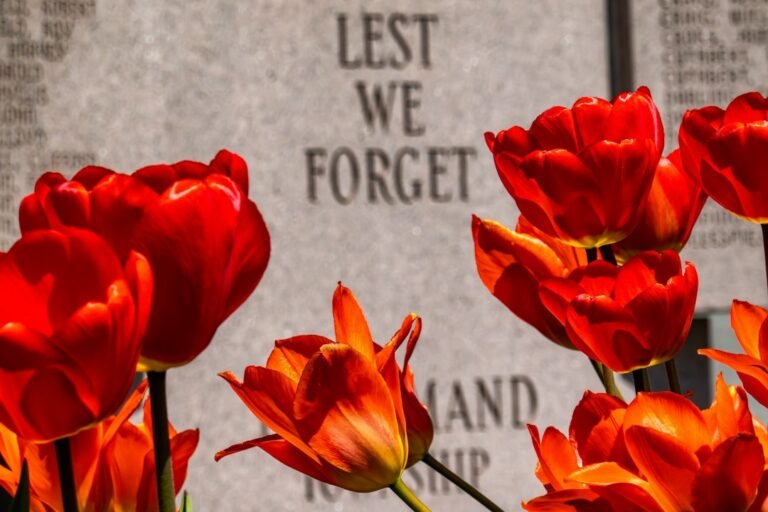
Why Do Cultures Set Aside Days to Remember the Dead?
From Pitru Paksha and Qingming to Día de Muertos and All Souls’ Day, cultures repeatedly create calendar time for the dead. Tradivior will compare how recurring remembrance renews kinship, grief…
Partially Supported
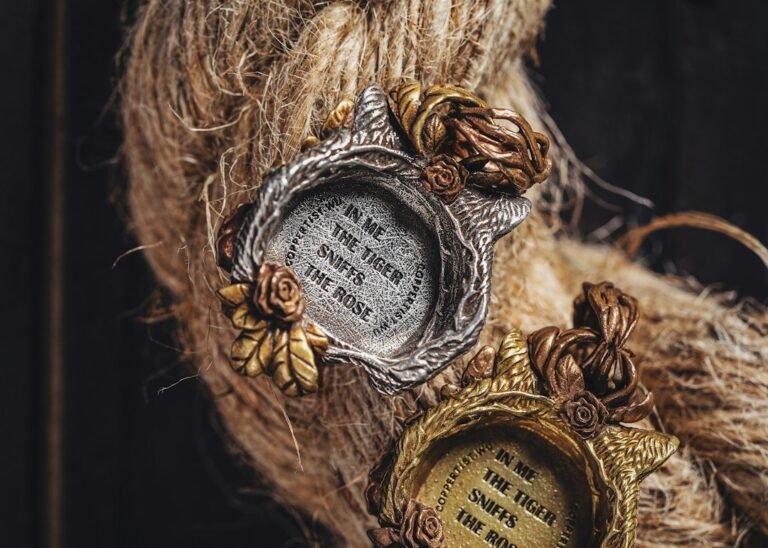
Why Do People Keep Ashes, Relics and Memorial Objects?
Hair, ashes, bones, clothing, photographs and relics allow the dead to remain materially present. Tradivior will examine why objects carry memory so powerfully and how continuing bonds differ from pathological…

Historically Practical
Why Did Cremation Become Central to Hindu Death Ritual?
Cremation has deep roots in many Hindu traditions but varies by community, age, status and circumstance. Tradivior will investigate its historical logic, environmental consequences and modern changes without treating one…
Picked for your curiosity
Enable JavaScript to build a reading profile and see recommendations.