 tradivior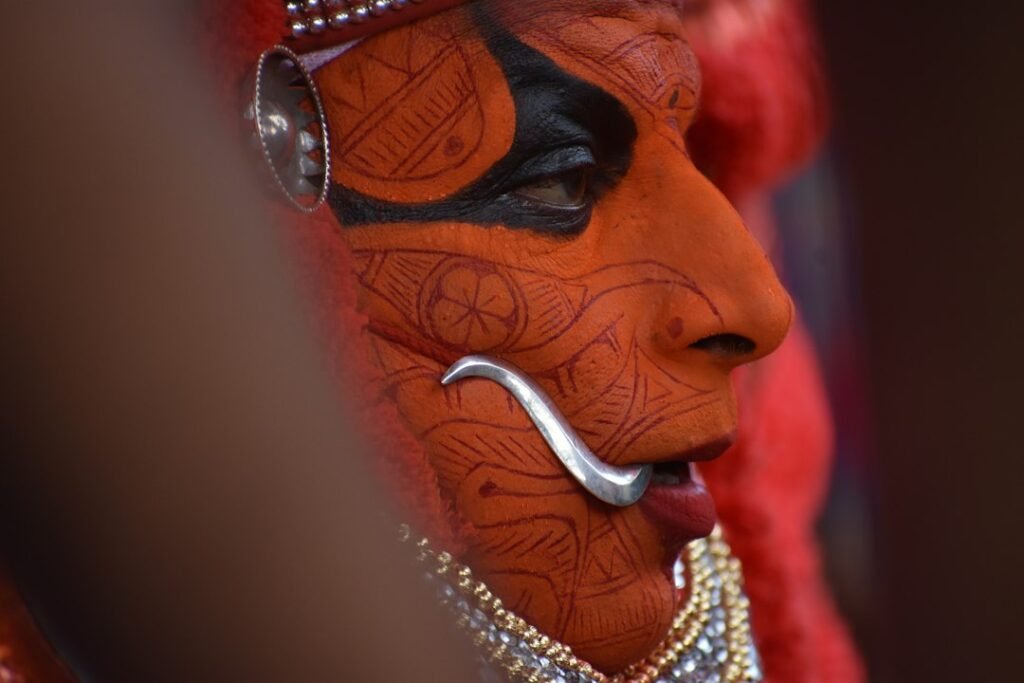
In this investigation
A mark on the forehead can tell a trained observer more than colour alone. It may identify a Vaishnava, Shaiva, Shakta or Smarta tradition; signal participation in worship; mark marital status; show that a ritual has just been completed; or function simply as a familiar everyday sign of Hindu identity.
Modern discussions often collapse several practices into one idea: “the bindi.” Historically, however, tilak, bindi, kumkum, vibhuti, tripundra and urdhvapundra differ in material, shape, religious affiliation and social use.
Popular wellness explanations also claim that the forehead point corresponds to the pineal gland, pituitary gland, acupressure points or a measurable “third eye.” The evidence is much stronger for symbolic, devotional and social functions. Some materials can cool the skin or cause irritation, but there is no robust evidence that ordinary forehead marking regulates endocrine glands through its placement.
“Tilak” is a broad category, not one mark
A tilak can be a dot, vertical line, U-shaped mark, horizontal stripes or other design. It can be made from sandalwood paste, sacred ash, clay, turmeric-derived kumkum, vermilion or other ritual substances.
The form depends on region, temple, sect, occasion and individual practice. A generic claim that “the tilak means X” therefore usually flattens several distinct traditions.
THE FIRST DISTINCTION
Forehead marking is a shared visual strategy. The meaning comes from the specific material, shape, community and ritual context.
Sectarian marks function like wearable religious identifiers
Forehead marks can make affiliation visible immediately. A Vaishnava vertical mark and a Shaiva tripundra communicate different devotional identities.
This function is historically well documented. Scholarship on the Śrīvaiṣṇava tradition shows that forehead marks have served as markers of sectarian belonging from the premodern period into modern disputes between subcommunities.
Śrīvaiṣṇava forehead marks contain internal history
Śrīvaiṣṇava devotees use forms of ūrdhvapuṇḍra, usually vertical marks associated with Vishnu and the tradition’s theology. Later differences in form can distinguish Vaṭakalai and Teṉkalai communities.
The mark therefore carries history inside its geometry. What looks to an outsider like a simple white-and-red design can communicate lineage, doctrine and institutional identity.
Shaiva tripundra uses ash as theology
Shaiva traditions commonly apply three horizontal lines of sacred ash known as tripuṇḍra. The material itself—ash—supports symbolic associations with Shiva, sacrificial fire, impermanence and the eventual reduction of the body to ash.
Later texts and traditions attach multiple symbolic triads to the three lines. These theological explanations vary, which is another warning against insisting on one universal meaning.
Vibhuti is not merely cosmetic ash
Sacred ash may be produced and consecrated according to specific ritual traditions. Its value is therefore not equivalent to soot from any fire.
Ritual origin changes the object’s meaning. The same chemical category can be sacred in one context and meaningless in another.
Ash makes impermanence physically visible
One of the strongest symbolic readings of vibhuti is that material things eventually become ash. Wearing it turns an abstract teaching about impermanence into a substance on the body.
The explanation is philosophical and ritual, not biomedical—and it is meaningful on those terms.
Kumkum and bindi occupy a wider social field
Red forehead marks can be devotional, cosmetic, marital, festive or simply customary. Men and women may receive kumkum after worship. Women may wear a bindi as daily adornment regardless of whether they are married, depending on region and generation.
This flexibility makes “bindi equals married woman” unreliable as a universal rule.
Sindoor and forehead bindi should not be confused
Sindoor applied in the hair parting has a strong marital meaning in many Hindu communities. A dot or decorative bindi on the forehead can have different meanings and may be worn by unmarried women or used mainly as fashion.
The materials can overlap, but placement and social context change the signal.
Forehead marks make invisible religious affiliation visible
Belief itself cannot be seen. A mark allows devotion to enter public space.
This can strengthen group identity, make fellow devotees recognizable and remind the wearer of religious commitments throughout the day.
The body becomes a ritual surface
Many Hindu traditions mark not only the forehead but several points on the body while reciting divine names or mantras.
The practice transforms bodily space into sacred geography. The mark is therefore part of ritual embodiment rather than only social identification.
Why the forehead?
The forehead is highly visible, usually uncovered and near the eyes—the part of the face other people attend to during interaction. A small mark can be recognized at a distance.
This practical visibility is enough to explain why it works well for identity signalling without requiring a hidden physiological target.
Religious traditions also assign symbolic meaning to the space between the brows
Yoga and tantric systems can associate the brow region with ājñā cakra or meditative attention. Devotional traditions may connect the forehead with divine remembrance or sacred presence.
These meanings belong to religious maps of the body. They should not be presented as anatomical discovery of an endocrine control point.
The pineal-gland explanation is anatomically weak
The pineal gland sits deep within the brain, not directly beneath the skin between the eyebrows. Applying paste to the forehead does not mechanically stimulate it.
The gland’s best-established biological role involves melatonin and circadian timing. There is no credible evidence that a forehead tilak changes pineal function through external pressure.
The pituitary claim has the same problem
The pituitary also lies deep inside the skull. A dot of pigment on the skin cannot be assumed to regulate hormones simply because it is roughly aligned with the centre of the face.
Anatomical location alone is not a mechanism.
THE EVIDENCE LIMIT
Religious symbolism around the brow is historically real. Claims that tilak placement directly stimulates the pineal or pituitary gland are not supported by robust physiological evidence.
Sandalwood can produce a real sensory effect
Wet sandalwood paste applied to the forehead can feel cool as moisture evaporates. Aromatic compounds may also contribute to a distinctive sensory experience.
This local cooling is physically plausible. It does not establish claims about “cooling the brain,” balancing hormones or altering consciousness in a clinically meaningful way.
Evaporation explains much of the cooling sensation
Water evaporating from a thin paste absorbs heat from the skin. The mechanism is the same general physics that makes wet skin feel cooler.
The effect is local and temporary rather than evidence for special energy movement through the forehead.
Turmeric-derived preparations have chemical activity—but formulation matters
Turmeric contains curcuminoids with measurable biological properties in laboratory research. Traditional kumkum can be made from turmeric-derived materials.
But a tiny amount used as pigment on intact skin is not equivalent to a clinical curcumin formulation. Laboratory mechanisms should not be used to imply systemic therapeutic benefit from a forehead dot.
Modern bindi adhesives introduce a different exposure
Sticker bindis use adhesives, dyes and synthetic materials that differ from traditional powders or pastes.
These products can cause allergic or irritant dermatitis in susceptible users.
Kumkum dermatitis is clinically documented
A clinical series of forty-six patients with kumkum-induced dermatitis found pigmented contact dermatitis in most cases and allergic contact dermatitis in others. The forehead was the most commonly affected site.
Other dermatology studies in India likewise identify bindi and kumkum among culturally specific cosmetics capable of causing contact dermatitis.
Synthetic dyes and preservatives may be the real problem
Studies have identified allergens including dyes, preservatives and other additives in some commercial kumkum products.
The safety of a traditional category therefore depends on the formulation actually sold, not the historical name printed on the packet.
Lead contamination is another reason product chemistry matters
Research on sindoor—sometimes used on the forehead as well as the hair parting—has found high lead concentrations in some products and documented childhood exposure associated with topical household use.
This should not be generalized to every bindi or tilak. It illustrates the need to distinguish ritual meaning from modern manufacturing quality.
Sacred ash has its own material-safety questions
Properly prepared ritual ash differs from industrial ash or contaminated combustion residue. The source material and preparation conditions determine what chemicals or particles are present.
Religious designation alone cannot certify toxicological purity.
A mark can alter attention through meaning
Applying a mark before prayer can function as a ritual cue. It tells the wearer that ordinary activity is giving way to worship or disciplined conduct.
Psychology recognizes that cues and rituals can shape attention and expectation. This is a credible mechanism even without a special forehead nerve pathway.
Touch itself can make a ritual memorable
A priest or elder placing a tilak creates a tactile moment connected to blessing, initiation or temple participation.
The combination of touch, colour, smell and social context makes the event multisensory and therefore memorable.
Tilak can certify participation
After visiting a temple or completing a puja, the forehead mark visibly shows that a ritual has occurred.
The mark therefore works somewhat like a temporary badge of participation.
Political movements can turn religious marks into public identity
Because forehead marks are visible, they can become entangled with caste, sectarian or political identity.
The meaning of a tilak in a temple may differ from the meaning of the same mark at a political rally.
Modern fashion can detach the bindi from strict ritual meaning
Decorative bindis are used across fashion, film and everyday dress. Colours and shapes may be chosen aesthetically rather than according to religious rules.
This does not erase older meanings. It shows how a symbolic form can move between devotional and secular contexts.
Global adoption raises questions of context
Bindis and forehead marks have appeared in international fashion and music culture. Some South Asians regard this as appreciation; others see appropriation when the religious or cultural context is ignored.
The disagreement itself demonstrates that the object is still socially meaningful rather than merely decorative pigment.
Sectarian detail prevents the idea of one “Hindu tilak”
Different Vaishnava lineages can distinguish themselves from one another through small changes in the same broad vertical-mark tradition. Shaiva and Shakta practices add further diversity.
The forehead therefore operates like a compact religious text: shape and material can encode fine distinctions to those who know how to read them.
The mark can discipline the wearer socially
A visible religious symbol tells others that the wearer belongs to a tradition. That visibility can encourage behaviour consistent with the identity because misconduct reflects on both person and group.
Identity signalling therefore works inward as well as outward.
Removal can be meaningful too
A person may stop wearing a bindi because of widowhood, secularization, workplace norms, personal preference or rejection of a gender convention.
The absence of a marker can become a statement precisely because the mark carries social expectation.
No single scientific theory explains ash, clay, sandalwood and kumkum together
The materials are chemically different. Their shapes differ. Their users differ. Claims that all activate one anatomical point are therefore historically and scientifically suspicious.
The common denominator is not chemistry. It is social visibility and ritual placement.
The forehead is a high-value signalling location
Humans look at faces during interaction. A forehead mark enters the visual field immediately and is difficult to hide without deliberate removal or covering.
This simple communication advantage is powerful enough to explain why many identity systems choose the face.
Ritual meaning does not need biomedical validation
A Shaiva does not need tripundra to lower blood pressure for it to be meaningful. A Vaishnava mark can identify devotion even if it does nothing measurable to endocrine function.
Demanding a hidden medical purpose can actually diminish the sophisticated theological and social purposes the traditions themselves preserve.
What survives scrutiny?
- Hindu forehead markings comprise multiple traditions rather than one universal bindi or tilak practice.
- Vaishnava, Shaiva and other sectarian marks visibly communicate religious identity and lineage.
- Śrīvaiṣṇava forehead marks have documented premodern and modern roles in distinguishing sectarian belonging.
- Shaiva tripundra uses sacred ash with strong theological associations including Shiva and impermanence.
- Kumkum and bindi can be devotional, marital, cosmetic or festive depending on context.
- The forehead is an effective signalling location because it is highly visible during face-to-face interaction.
- Sandalwood paste can create a real local cooling sensation through evaporation, but this does not establish claims about cooling the brain or regulating hormones.
- There is no robust evidence that external forehead marks directly stimulate the pineal or pituitary gland.
- Kumkum and bindi products can cause allergic or pigmented contact dermatitis in some users.
- Material safety depends on actual ingredients; some sindoor products have also contained hazardous lead.
- Ritual cues can influence attention and identity through learned psychological meaning without requiring a special anatomical “third-eye” mechanism.
- The strongest cross-tradition function is visible religious and social communication.
The Tradivior Evidence Profile
Historical Authenticity — Strong. Hindu forehead marking is extensively documented, with identifiable sectarian, devotional, marital and cosmetic traditions.
Original-Purpose Evidence — Strong. Religious identity, devotion, ritual participation, auspiciousness and social signalling are explicit historical functions.
Scientific Mechanism — Limited. Visibility, ritual cueing, local cooling and skin-material interactions are plausible; popular endocrine and neurological claims lack robust mechanisms.
Experimental Evidence — Limited. Dermatological evidence demonstrates possible irritation and allergy, while claimed systemic benefits from forehead placement are not convincingly demonstrated.
Cross-Cultural Evidence — Moderate. Facial and body marking is globally widespread, but tilak, bindi, vibhuti and their sectarian meanings are historically specific to South Asian religious traditions.
Modern Relevance — Strong. Forehead marks remain active devotional, identity and fashion practices while raising contemporary questions about health claims, product safety and cultural context.
The Tradivior Conclusion
Primarily Symbolic/Cultural—with limited material effects. Hindus mark the forehead because the face provides a powerful surface for making devotion, sectarian identity, marital status and ritual participation visible. The history of Vaishnava, Shaiva and other marks strongly supports religious and social functions. Some materials can cool, scent or irritate the skin, but there is no robust evidence that the placement directly activates the pineal gland, pituitary gland or a scientifically demonstrated “third-eye” organ. The tradition survives scrutiny most strongly as embodied religious communication, not as hidden endocrinology.
Continue investigating
- Why Do Married Indian Women Wear Sindoor, Mangalsutra and Other Marriage Markers?
- Why Did Humans Wear Jewellery?
- Why Is Sacred Ash Used in Hindu Traditions?
Sources and further reading
- Akepiyapornchai M. “Marking Identity: The Debate on the Śrīvaiṣṇavas’ Forehead Marks.” Journal of Hindu Studies. 2023;16(2):206–231. doi:10.1093/jhs/hiad015.
- Narayanan V. “The Forehead Marks.” Scholarship and visual documentation of South Asian sectarian marking traditions.
- Hindu textual and sectarian traditions concerning ūrdhvapuṇḍra, tripuṇḍra and sacred ash.
- Nath AK, Thappa DM. “Kumkum-induced dermatitis: an analysis of 46 cases.” Clinical and Experimental Dermatology. 2007;32(4):385–387. PMID: 17425647.
- “Contact Dermatitis Due to Local Cosmetics: A Study from Northern India.” PMID: 31896844.
- “Dermatoses Due to Indian Cultural Practices.” 2015. PMCID: PMC4318059.
- “Sudan I as a cause of pigmented contact dermatitis in kumkum.” Clinical dermatology research. PMID: 3223736.
- Shah MP, et al. “Lead Content of Sindoor, a Hindu Religious Powder and Cosmetic: New Jersey and India, 2014–2015.” American Journal of Public Health. 2017. PMCID: PMC5607663.
Continue exploring
Partially Supported
Why Do Religious Processions Take Sacred Things Into the Street?
Religious processions move sacred presence, symbols and communities through public space. They can expand shared identity through coordinated movement and visibility, but the same public occupation can mark boundaries and…
Primarily Symbolic/Cultural
Why Is Diwali Built Around Light?
Diwali’s lamps are historically and religiously meaningful symbols whose interpretations vary across Hindu, Jain, Sikh and regional traditions. Light makes sacred time visible and transforms homes and streets; modern science…
Primarily Symbolic/Cultural
Why Did Indians Circle Sacred Fire at Weddings?
Sacred fire in Hindu weddings is historically a witness, offering medium and divine presence rather than a hidden biomedical technology. Circumambulation and vows make marriage public, memorable and religiously binding;…

Primarily Symbolic/Cultural
Why Do Religions Regulate Meat?
Religions regulate meat because killing animals, blood, purity, sacrifice and communal identity carry unusually high moral weight. Some rules may have ecological or safety consequences, but Jewish, Islamic, Hindu, Jain,…
Picked for your curiosity
Enable JavaScript to build a reading profile and see recommendations.