 tradivior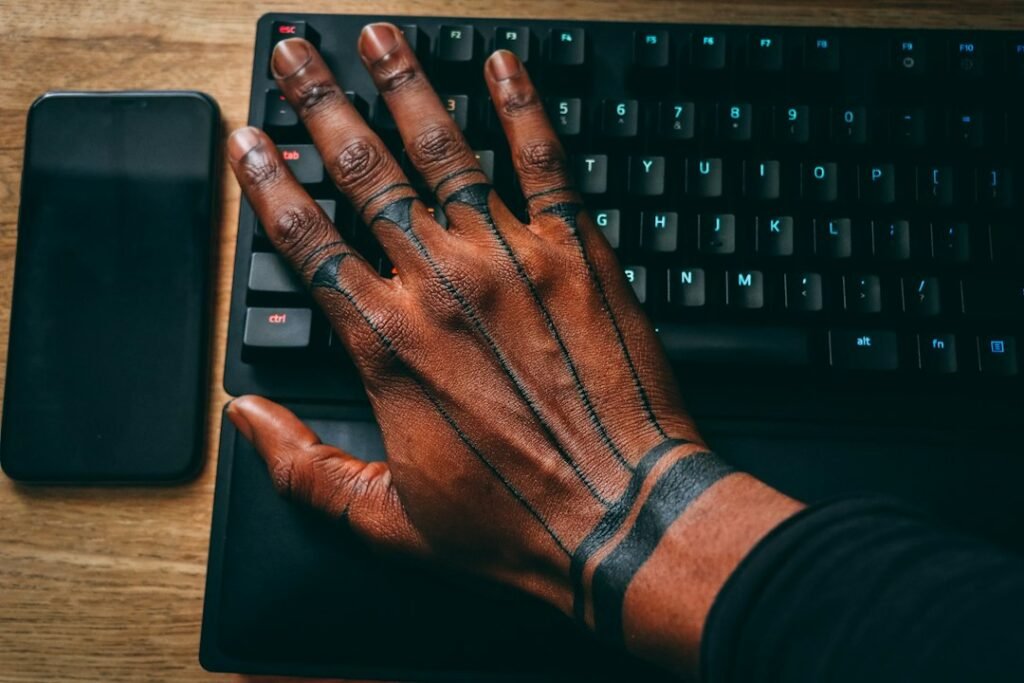
In this investigation
Tattooing turns the body into a permanent social surface. Unlike jewellery or clothing, a tattoo cannot be removed casually at the end of the day. It follows the person into work, ritual, marriage, migration and death. That permanence helps explain why tattooing became one of humanity’s most powerful tools for marking identity.
Archaeological evidence shows that tattooing is thousands of years old, while ethnographic and historical records document it in societies across every inhabited continent. Tattoos have marked rank, lineage, initiation, spirituality, punishment, beauty, military service, enslavement, resistance and personal memory.
Ötzi preserves the oldest currently established tattooed human remains
The Tyrolean Iceman known as Ötzi, who died around 3250 BCE, preserves dozens of tattooed marks on the body. Reassessment of radiocarbon evidence has established his tattoos as the oldest directly preserved tattoos currently known.
His markings are mostly simple lines and crosses rather than elaborate pictorial designs. Their placement has encouraged speculation that they may have had therapeutic or ritual significance, but certainty is impossible.
THE ARCHAEOLOGICAL LIMIT
A preserved tattoo proves that a person was tattooed. It does not automatically tell us why. Meaning must be reconstructed from context, placement, comparison and later traditions.
Tattooing may be much older than preserved skin suggests
Skin rarely survives archaeologically. Tools that may have been used for tattooing are difficult to identify with certainty because sharp implements can have many functions.
The oldest surviving tattooed bodies therefore establish a minimum age, not necessarily the origin of the practice.
Tattooing creates identity that cannot be put down
Anthropologists studying body inscription emphasize that tattooing makes social identity materially persistent. Age, gender, rank, ethnicity or ritual status can be written directly onto skin.
This gives tattoos a different social force from removable ornaments. The body itself becomes the credential.
Initiation is one of tattooing’s most powerful uses
In many traditions, tattooing occurs during a transition: puberty, adulthood, marriage, warrior status, religious initiation or membership in a group.
The pain and permanence make the transformation difficult to fake. Once the mark is completed, the person’s social status has visibly changed.
Pain can make commitment credible
A costly signal is more convincing when it is difficult to acquire casually. Traditional tattooing can require pain, time, healing and sometimes social permission.
Enduring those costs can demonstrate commitment to a community or role.
Polynesian tattoo systems made the body socially readable
Polynesian tattoo traditions are among the most extensively studied. Alfred Gell’s comparative work showed that tattooing could be tied to sacredness, rank, political structure, protection and personhood rather than merely decoration.
Different island societies developed different institutions around tattooing. There was no single “Polynesian tattoo meaning,” even within a related cultural region.
The word tattoo itself entered English through Pacific encounter
European languages adopted the modern word through encounters with Polynesian terms such as tatau. But Europeans did not discover tattooing in the Pacific; body marking had existed in many other regions already.
The vocabulary became global even though the practice had multiple independent histories.
Tattoos can mark lineage and genealogy
In some societies, motifs identify ancestry, clan or family. The mark situates the person within a network of descent.
This can make genealogy visible where written documents are absent or secondary.
Status can be written into the skin
Some tattoo traditions reserve motifs or placements for chiefs, warriors, elders or specialists. Completing a larger tattoo can indicate achievement or social rank.
The body becomes a status record that cannot be borrowed easily.
Tattooing can also mark subordination
States and owners have historically branded or tattooed enslaved people, prisoners, soldiers or criminals. In those contexts, body marking is imposed rather than chosen.
This reverses the meaning of identity: the mark becomes control rather than self-expression.
The difference between chosen and imposed marking is ethically decisive
A tattoo can be empowering when voluntarily chosen and degrading when forced. The physical technique may be similar while the social meaning is opposite.
Agency therefore matters as much as motif.
Protective tattoos are historically widespread
Some traditions use tattoos as amuletic marks intended to protect against spirits, injury, misfortune or illness. Religious symbols may be inscribed on the body for similar reasons.
The historical belief is real. Whether the mark physically prevents the claimed danger is a separate question.
Ötzi’s tattoo placement inspired medical speculation
Some of Ötzi’s marks occur near joints and areas where researchers have identified signs of degeneration. This has led to suggestions that tattooing may have been connected to pain treatment.
The idea is intriguing but not proven. Similarity to later acupuncture points does not establish that the Iceman practised acupuncture or understood a comparable medical system.
Retrospective acupuncture claims require caution
It is easy to map ancient dots onto a modern meridian chart after the fact. Human joints and painful areas are limited in number, so overlap can occur by chance.
The strongest defensible statement is that some marks may have had therapeutic significance. The precise mechanism remains unknown.
Tattooing transforms pain into memory
The tattooing process can make an event memorable because pain, ritual and social attention occur together. A person may remember not only the image but who was present, why it was earned and what transition it represented.
The mark then reactivates that memory repeatedly throughout life.
Permanent marks can strengthen identity through self-perception
People partly understand themselves by observing their own actions and commitments. A visible permanent mark can reinforce the sense that a chosen identity is central.
This is especially powerful when others respond to the tattoo consistently.
Group tattoos create immediate social recognition
Military units, gangs, religious communities, prisoners and activist groups have all used tattoos to mark belonging.
The signal can create trust among insiders and suspicion among outsiders.
THE SOCIAL MECHANISM
Tattoos work as identity signals because they are visible, durable and costly to acquire or remove. That makes group claims more credible than a temporary costume.
Tattooing can also resist imposed identity
Modern people often tattoo bodies to reclaim autonomy after illness, trauma, social marginalization or unwanted bodily change.
A mark once used to impose identity can therefore become a tool for self-definition.
Colonial authorities often treated Indigenous tattooing as backward
Missionaries and colonial governments sometimes suppressed tattoo traditions as pagan, uncivilized or unhygienic.
That suppression disrupted not only decoration but systems of genealogy, rank and cultural memory.
Revival movements can turn tattooing into cultural reclamation
Indigenous communities in several regions have revived tattoo traditions as part of language, heritage and identity renewal.
In such contexts, tattooing becomes an anti-colonial act as well as personal adornment.
Modern tattooing individualizes a practice once regulated by community
Traditional systems often specify who may receive a tattoo, when, where and in what design. Contemporary commercial tattoo culture often gives individuals far greater freedom.
The technology persists while authority over the design shifts from community to person.
Modern tattoos still create social categories
Even individualized tattoos influence how others perceive professionalism, rebellion, sexuality or risk. These stereotypes vary by generation and culture.
Tattooing never becomes purely private because skin remains publicly visible.
The medical risk begins with the fact that tattooing breaks the skin
Tattooing introduces pigment through repeated skin puncture. Any such procedure creates an opportunity for bacterial infection if instruments, ink or aftercare are contaminated.
Systematic reviews identify poor hygiene and contaminated inks as important risk factors.
Modern sterile technique changes risk dramatically
Single-use needles, proper disinfection, regulated inks and evidence-based wound care make contemporary professional tattooing safer than uncontrolled procedures.
Traditional practice should not be romanticized if instruments are reused without sterilization.
Pigments are not biologically inert by definition
Tattoo inks contain colourants, carriers and contaminants that vary by formulation. Allergic reactions and inflammatory responses can occur.
Safety therefore depends partly on regulation and composition, not only on technique.
Removal reveals the true cost of permanence
Laser removal can require multiple sessions, cost more than the original tattoo and still leave pigment or scarring.
This difficulty is precisely why tattoos function so well as commitment signals.
Regret does not invalidate the institution
Some people regret tattoos as identity changes. Others become more attached to them over time.
Permanence is powerful because future selves cannot revise the body as easily as they can change clothes.
Memorial tattoos turn grief into permanent embodiment
Names, dates, portraits and symbols can keep the dead visibly present on the survivor’s body.
The practice resembles mourning jewellery but goes further because the memorial cannot be misplaced.
Medical tattooing shows the technology can be separated from symbolism
Tattooing is also used clinically to mark radiotherapy fields, recreate areola pigmentation or camouflage scars.
This proves that the technique itself is neutral; cultural meaning depends on why and how it is used.
Cosmetic tattooing blurs beauty and permanence
Microblading and permanent makeup use tattoo-like techniques to simulate eyebrows, eyeliner or lip colour.
These modern forms echo the ancient impulse to make identity and beauty durable.
Tattoo motifs do not have universal meanings
A spiral, animal or geometric line can mean very different things in different traditions.
Internet lists assigning one ancient meaning to every symbol often flatten local history.
Cultural appropriation becomes an issue when sacred marks are detached from authority
Some tattoo motifs are community-specific, earned or restricted. Copying them for fashion can conflict with the source community’s understanding of ownership and status.
The fact that a design is visible does not mean it is socially unrestricted.
Tattooing persists because the body is the most intimate identity medium
Clothing can be removed and objects can be lost. Tattooing makes identity travel with the person.
That permanence gives body marking unusual power for belonging, memory and self-definition.
What survives scrutiny?
- Tattooing is ancient and globally widespread, with Ötzi preserving the oldest currently established tattooed human remains.
- Because skin rarely survives, tattooing may be older than the direct archaeological record.
- Tattoos can mark initiation, rank, lineage, gender, occupation, religion and group membership.
- Pain and permanence make tattoos credible costly signals of commitment.
- Polynesian traditions show how tattooing can participate in personhood, sacredness and political structure.
- Tattoos have also been imposed on enslaved people, prisoners and marginalized groups, making agency ethically decisive.
- Protective and therapeutic tattoo traditions are historically real, but specific biomedical mechanisms require separate evidence.
- Claims linking Ötzi directly to acupuncture remain speculative.
- Modern tattoos can strengthen identity, memorialize relationships and reclaim stigmatized bodies.
- Breaking the skin creates genuine infection and pigment-related risks when hygiene or materials are poor.
- The strongest cross-cultural explanation is permanent social signalling combined with culturally specific meanings.
The Tradivior Evidence Profile
Historical Authenticity — Strong. Tattooing is directly documented archaeologically and historically across multiple civilizations and Indigenous traditions.
Original-Purpose Evidence — Strong. Identity, initiation, status, protection, punishment, devotion and memory are all documented purposes, though no single purpose is universal.
Scientific Mechanism — Strong. Costly signalling, social identity, memory and visible group marking provide strong explanatory mechanisms.
Experimental Evidence — Moderate. Social-psychological mechanisms are well supported generally, while specific ancient tattoo meanings are reconstructed primarily from archaeology and ethnography.
Cross-Cultural Evidence — Strong. Tattooing appears independently across many regions and social systems.
Modern Relevance — Strong. Tattooing remains globally important in identity, memorial practice, fashion, medicine and cultural revival.
The Tradivior Conclusion
Evidence Supported. Humans tattoo the body because permanence makes skin an unusually powerful medium for identity. Tattoos can mark belonging, initiation, status, devotion, protection or memory, and their pain and durability make those signals difficult to fake. The practice has no single universal meaning, and medically framed interpretations of ancient tattoos remain uncertain. Modern science strongly supports the social logic of permanent body marking while also documenting real infection and pigment risks. Tattooing survives scrutiny as an ancient technology for making identity materially enduring.
Continue investigating
- Why Did Humans Wear Jewellery?
- Why Do Cultures Give Ritual Meaning to Colour?
- Why Did Bangles, Anklets and Nose Rings Become Social Signals in South Asia?
Sources and further reading
- Deter-Wolf A, Robitaille B, Krutak L, Galliot S. “The world’s oldest tattoos.” Journal of Archaeological Science: Reports. 2016;5:19–24.
- Deter-Wolf A, et al. “Chalcolithic Tattooing: Historical and Experimental Evaluation of the Tyrolean Iceman’s Body Markings.” European Journal of Archaeology. 2024.
- Gell A. Wrapping in Images: Tattooing in Polynesia. Oxford University Press; 1993.
- Schildkrout E. “Inscribing the Body.” Annual Review of Anthropology. 2004;33:319–344.
- Smithsonian Institution. “Ancient Ink: Iceman Ötzi Has the World’s Oldest Tattoos.”
- “The Risk of Bacterial Infection After Tattooing: A Systematic Review of the Literature.” 2017. PMCID: PMC5290255.
- Anthropological scholarship on tattooing, scarification, identity, colonial suppression and Indigenous revival.
Continue exploring
Why Do People Keep Ashes, Relics and Memorial Objects?
Hair, ashes, bones, clothing, photographs and relics allow the dead to remain materially present. Tradivior will examine why objects carry memory so powerfully and how continuing bonds differ from pathological…
Why Do Cultures Set Aside Days to Remember the Dead?
From Pitru Paksha and Qingming to Día de Muertos and All Souls’ Day, cultures repeatedly create calendar time for the dead. Tradivior will compare how recurring remembrance renews kinship, grief…
Why Do Cultures Preserve the Dead?
Mummification, embalming, freezing, smoking and desiccation reflect very different beliefs about bodies and afterlives. Tradivior will compare preservation traditions with the chemistry of decomposition and the practical limits of each…

Why Do People Change Names, Clothes or Homes After Marriage?
Marriage often transforms identity through surname changes, new dress, residence, kinship terms or household membership. Tradivior will investigate why marriage needs visible social consequences beyond the ceremony itself.
Picked for your curiosity
Enable JavaScript to build a reading profile and see recommendations.