 tradivior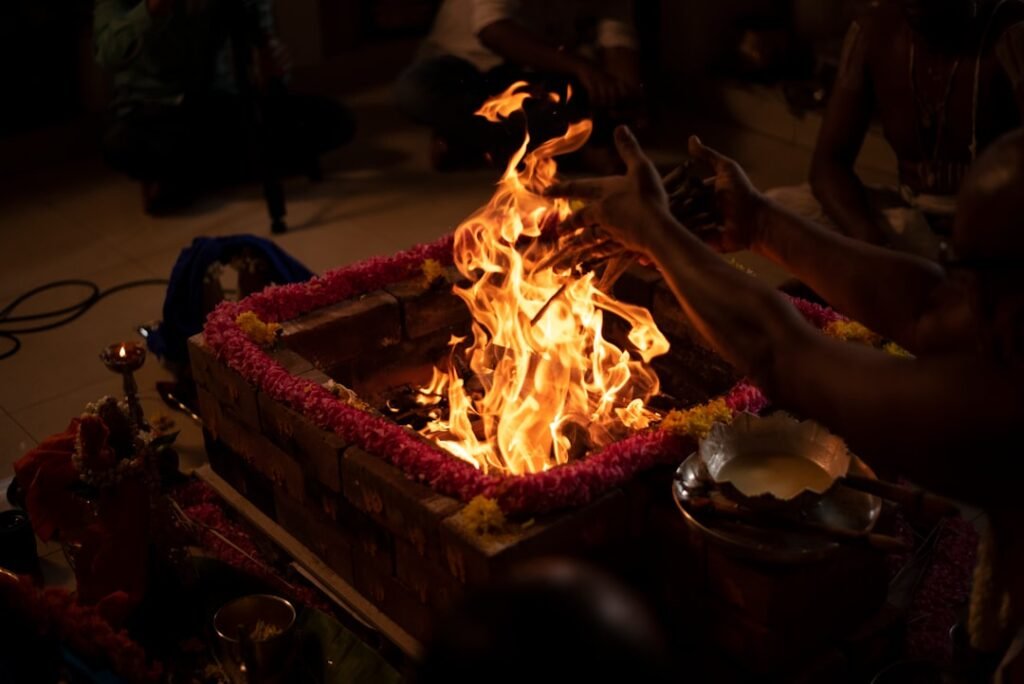
In this investigation
A thin cotton thread worn from shoulder to hip can carry an enormous amount of social meaning. For many Hindu communities, the yajñopavīta or sacred thread marks a person who has undergone upanayana, an initiation traditionally associated with entry into disciplined study, ritual responsibility and the status of the “twice-born.”
Modern explanations sometimes claim that the thread regulates nerves, protects the heart, improves blood flow or stimulates pressure points. Those claims are usually presented as hidden ancient science. The historical record points in a different direction. The thread’s strongest documented functions are educational, ritual and social. It marks eligibility, identity and obligation.
Upanayana came before the modern idea of “wearing a thread”
The sacred thread is best understood as part of the initiation rite of upanayana. Classical ritual texts describe a young initiate being brought to a teacher, instructed in discipline and admitted to Vedic study.
Later tradition treats the investiture with the thread as a central visible element, but the rite itself concerns a change of status: the student enters a new religious and educational role.
THE HISTORICAL CORE
The sacred thread is not primarily a medical device. It is a wearable sign that a person has crossed a ritual threshold.
“Twice-born” refers to ritual rebirth
Classical Hindu legal and ritual traditions often describe Brahmins, Kshatriyas and Vaishyas as dvija, “twice-born.” The first birth is biological; the second is initiation into religious and educational responsibility.
Upanayana therefore reorganizes social identity. The initiate is not simply older. He is now understood to possess a new ritual status.
The ceremony was historically connected to education
Traditional accounts repeatedly link upanayana with the beginning of Vedic study and the disciplined student stage known as brahmacarya. The initiate becomes associated with a teacher, learns recitation and follows rules of conduct.
This connection is important because it explains why the ceremony carried such social weight. Access to sacred learning was not simply personal devotion; it was access to religious knowledge, prestige and ritual authority.
The thread became a visible sign of eligibility
A rite is temporary. Clothing makes the new status visible afterward. The sacred thread converts a one-time initiation into a continuing social signal.
Observers can identify that the wearer belongs to a community in which upanayana has ritual significance. The thread therefore functions like other status markers: robes, insignia, rings or uniforms that make invisible membership publicly legible.
Classical texts did not treat all social groups equally
Dharma literature commonly prescribes upanayana for the three upper varnas—Brahmin, Kshatriya and Vaishya—while excluding Shudras from Vedic initiation and study.
The details vary across texts, periods and communities, but the larger historical pattern is clear: initiation became entangled with social hierarchy.
Access to the thread meant access to privilege
Because the ceremony was tied to Vedic learning and ritual eligibility, exclusion from upanayana had consequences beyond clothing. It could define who was recognized as entitled to study particular texts, perform particular rites or claim high ritual status.
This is why debates about the sacred thread have often been debates about caste power rather than fabric.
B. R. Ambedkar treated denial of upanayana as a key mechanism of exclusion
In Who Were the Shudras?, B. R. Ambedkar argued that denial of upanayana played a central role in the historical degradation of Shudra status. His reconstruction is debated, but his analysis captures an important institutional fact: initiation could regulate access to education and religious rights.
The sacred thread therefore cannot be interpreted only as personal spirituality. It also belongs to the social history of who was authorized to learn and perform.
Gender history is more complicated than a simple “women never had upanayana” claim
Later orthodox practice often restricted formal upanayana to males. Yet historical scholarship notes evidence of women participating in Vedic learning and religious debate in earlier periods, and some authors argue that forms of female initiation existed in early traditions.
The evidence is uneven and should not be turned into the opposite simplification that all girls routinely underwent the same ceremony as boys. The safer historical conclusion is that gender rules changed, became more restrictive in many traditions and were never perfectly uniform.
The thread’s exact form changed historically
The modern sacred thread is typically understood as a loop of cotton strands worn over the left shoulder and across the torso. But the history of the term yajñopavīta and the garment form is complex.
Older ritual contexts use words that can refer more broadly to wearing an upper garment in a particular manner. The familiar thread form became standardized over time rather than appearing fully formed in the earliest layers of tradition.
A wearable marker solves a social-memory problem
Initiation changes status, but communities need ways to remember that change. The thread externalizes the transformation.
Social-signalling theory helps explain why such markers persist. Visible signs reduce uncertainty about identity and expected behaviour. A person does not need to narrate their ritual biography at every encounter.
The thread also reminds the wearer
Symbols do not communicate only outward. A continuously worn object can repeatedly remind the wearer of vows, family expectations or religious duties.
This psychological function does not require a special nerve pathway. Memory and identity can be reinforced simply because the object remains physically present.
Daily ritual makes the symbol active rather than decorative
In many traditions, the thread is not treated as ordinary jewellery. It may be adjusted during ritual, renewed, replaced or handled according to purity rules.
These practices turn the thread into part of a continuing ritual discipline rather than a passive badge.
The Gayatri mantra became closely linked with initiation
Traditional upanayana often includes transmission of the Gayatri mantra to the initiate. The ceremony therefore combines a visible marker with oral knowledge.
This pairing is sociologically powerful: status is marked externally while instruction is transmitted privately through teacher-student relationship.
Different communities interpret the number of strands differently
Modern explanations commonly assign symbolic meanings to the three strands: three debts, three gunas, three deities, body-speech-mind or other triads.
Such interpretations vary by community and teacher. It is risky to present one symbolic scheme as the single ancient meaning of the thread.
Marriage can change how the thread is worn or counted
Some communities add threads or alter usage after marriage, interpreting the additional thread as representing new household responsibilities or the wife.
These variations reinforce the thread’s social function: it can mark not only initiation but changing life-stage obligations.
Sacred-thread practices are not identical across Hindu communities
Different regions, sects and castes vary in timing, ritual sequence, mantra, thread construction and who undergoes the rite.
Some communities strongly emphasize the ceremony; others give it little practical importance. Modern reform movements have also expanded, rejected or reinterpreted it.
Reform movements challenged inherited restrictions
Modern Hindu reformers have debated who should receive upanayana and whether caste should determine religious eligibility. Some movements extended sacred-thread initiation beyond traditional upper-caste boundaries.
These reforms demonstrate that ritual meaning is not frozen. Communities can preserve the symbol while changing the social rules around it.
Other Hindu movements rejected the thread as a caste marker
Medieval and modern devotional traditions sometimes criticized Brahmanical hierarchy and the importance of external status markers. The Vīraśaiva/Lingayat tradition, for example, developed in a context of strong critique of caste privilege.
This internal diversity matters. “Hinduism teaches the sacred thread” is too broad; Hindu traditions have argued about the thread’s authority and social meaning for centuries.
Modern physiological claims are much weaker than the historical evidence
Online explanations sometimes claim the thread crosses a nerve that regulates the heart, improves circulation, controls blood pressure or stimulates acupressure points.
These claims usually lack identifiable clinical evidence. A loose cotton thread resting on the torso does not provide a known physiological stimulus strong enough to explain broad cardiovascular or neurological effects.
THE EVIDENCE LIMIT
There is strong historical evidence for initiation, education and status. There is not comparable evidence for modern claims that the sacred thread functions as a medical device.
The “ear thread” explanation is especially speculative
Some popular accounts claim that looping the thread over the ear during toileting activates nerves that improve bladder or bowel function.
No robust clinical literature establishes this mechanism. The practice may have ritual, practical or purity-related explanations, but assigning a precise neurological benefit without evidence is retrospective science storytelling.
A ritual can be useful without having a biomedical mechanism
The thread structures identity, signals membership and connects the wearer to family, teacher and lineage. Those are real social and psychological effects.
Demanding that the tradition justify itself through hidden anatomy understates what ritual already does.
Identity markers become especially powerful when they are difficult to fake culturally
A thread is physically easy to copy, but correct initiation, mantra, etiquette and community recognition are harder to reproduce. The marker therefore works because it is embedded in a social system.
This is similar to uniforms or academic regalia: fabric gains authority from institutions that agree what it means.
The sacred thread can signal both belonging and exclusion
For insiders, it may express continuity, duty and sacred learning. For historically excluded communities, it can symbolize caste privilege.
Both experiences are historically meaningful. An evidence-led account should not erase either.
Modern urban practice often shifts from function to identity
Many contemporary wearers no longer enter a traditional residential student life after upanayana. Formal education takes place in schools and universities rather than gurukulas.
The ceremony can therefore survive after its original educational institution changes because family and religious identity remain important.
Ritual continuity does not imply institutional continuity
A modern child may receive the sacred thread in a ceremony that references Vedic study while immediately returning to ordinary school life.
This is not necessarily “inauthentic.” Traditions often preserve symbolic forms after the surrounding social system changes.
The thread is better understood as social technology than ancient bioengineering
Visible symbols help societies organize belonging, rank and obligation. Initiation creates a before-and-after distinction. The thread makes that distinction portable.
That mechanism is historically supported and sociologically coherent. It does not need speculative claims about nerves or energy channels.
What survives scrutiny?
- The sacred thread is historically tied to upanayana, initiation and entry into a disciplined religious-educational status.
- Classical traditions associate upanayana especially with the three “twice-born” varnas.
- The rite was closely connected with eligibility for Vedic study and ritual participation.
- Because access to initiation regulated access to learning and ritual status, the thread became entangled with caste hierarchy.
- Gender access changed historically and is more complex than claims that women universally did or did not undergo upanayana.
- The familiar modern thread form developed historically rather than representing one unchanged object from the earliest Vedic period.
- The thread functions effectively as a visible social marker of initiation, identity and obligation.
- Different communities assign different symbolic meanings to the strands and ritual handling of the thread.
- Modern claims that the thread regulates nerves, circulation, blood pressure or bodily organs are not supported by strong clinical evidence.
- The strongest explanation is ritual and social rather than biomedical.
The Tradivior Evidence Profile
Historical Authenticity — Strong. Upanayana and sacred-thread traditions are extensively documented in ritual, legal and later Hindu literature.
Original-Purpose Evidence — Strong. Initiation, Vedic study, ritual eligibility, disciplined student life and social status are clearly documented functions.
Scientific Mechanism — Unsupported for biomedical claims. The thread has no demonstrated physiological mechanism matching modern claims about nerves, circulation or organ function. Social-signalling and identity mechanisms are plausible and well established.
Experimental Evidence — Unsupported for health claims. There is no strong clinical evidence that wearing the thread produces the broad health effects often claimed online.
Cross-Cultural Evidence — Moderate. Initiation markers appear widely across cultures, but the yajñopavīta and upanayana are specifically rooted in South Asian Hindu traditions.
Modern Relevance — Strong. The practice remains important for religious identity, family continuity and debates over caste, gender and ritual eligibility.
The Tradivior Conclusion
Primarily Symbolic/Cultural and Historically Practical. The sacred thread makes sense historically as a visible sign of initiation into education, discipline, ritual privilege and social identity. It helped communities mark who had undergone upanayana and who was recognized as eligible for particular religious roles. That same function also tied the practice to caste and gender exclusion. Modern physiological explanations about nerves, pressure points or blood flow are not credibly supported. The thread survives scrutiny as a powerful initiation and identity marker—not as demonstrated ancient medical technology.
Continue investigating
- Why Do Humans Organize Themselves Into Castes, Clans and Lineages?
- Why Do Hindus Mark the Forehead With Tilak, Bindi or Vibhuti?
- Why Do Married Indian Women Wear Sindoor, Mangalsutra and Other Marriage Markers?
Sources and further reading
- Prasad RC. The Upanayana: The Hindu Ceremonies of the Sacred Thread. Motilal Banarsidass; 1997.
- Altekar AS. Education in Ancient India. Revised editions.
- Classical Gṛhya Sūtra and Dharmaśāstra traditions on upanayana, brahmacarya and eligibility for Vedic study.
- Ambedkar BR. Who Were the Shudras? 1946, especially arguments concerning upanayana and social exclusion.
- Hancock M. Learning Femininity in Colonial India, 1820–1932. Manchester University Press; discussion of historical female learning and initiation traditions.
- Historical scholarship on Vedic education, ritual initiation, caste and changes in sacred-thread practice.
- There is no robust clinical literature supporting popular claims that the sacred thread regulates nerves, cardiovascular function or bowel/bladder physiology.
Continue exploring

Partially Supported
Why Is the Ganga Sacred?
The Ganga is river, goddess, pilgrimage route, purifier and national symbol. Tradivior will trace how these layers developed and evaluate modern claims about unusual self-purifying properties without confusing microbial findings…
Partially Supported
Why Do People Burn Incense?
Incense makes ritual visible through smoke and scent, but combustion also creates indoor pollutants. Tradivior will investigate why aromatic smoke became sacred and weigh sensory, antimicrobial and air-quality evidence carefully.
Partially Supported
Why Do Religions Purify With Water?
Water can wash dirt, cool the body and symbolize moral renewal, making it a recurring medium of purification across religions. Tradivior will compare ritual washing while separating hygiene effects from…
Partially Supported
Why Do Hindus Bathe Before Worship?
Bathing before worship connects bodily preparation with ritual purity in many Hindu traditions. Tradivior will trace when and why this expectation developed and distinguish sacred cleanliness from modern germ theory.
Picked for your curiosity
Enable JavaScript to build a reading profile and see recommendations.