 tradivior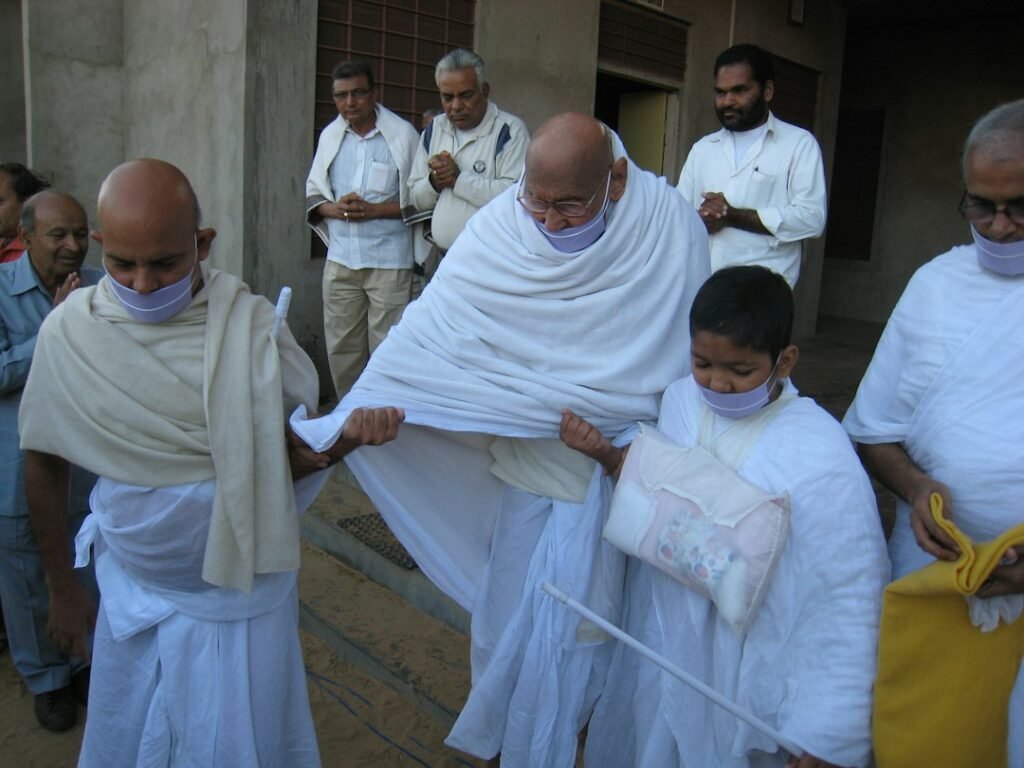
In this investigation
Grief is private, but mourning is social. A bereaved person may feel loss internally, yet communities often require that loss to become visible through clothing, colour, jewellery, hairstyle or restricted ornament.
This is why mourning colours differ so sharply. Black became the dominant mourning colour in much of Europe. White carries mourning meaning in many South Asian and East Asian traditions. Other societies use undyed cloth, rough textiles, purple, blue or combinations that change as mourning progresses.
The diversity tells us something important: no wavelength is biologically programmed to mean grief everywhere. Mourning colour works because a community agrees what it signifies.
Mourning clothes make grief publicly legible
Death changes social expectations. A mourner may withdraw from celebration, work differently, receive visitors or avoid particular rituals.
Visible mourning clothing tells others that the person is in a transitional state. It can invite sympathy, explain changed behaviour and reduce the need to repeatedly announce the death.
THE SOCIAL FUNCTION
Mourning dress does not merely express sadness. It communicates role, obligation and temporary social status.
Black mourning in Europe was historically constructed
Black had associations with death and solemnity in medieval and early modern Europe, but the highly regulated system of mourning dress familiar from the nineteenth century developed historically.
By the Victorian period, black mourning reached extraordinary levels of formalization. The Metropolitan Museum of Art notes that people might wear prescribed black clothing for months or years depending on relationship to the deceased and stage of mourning.
This was not simply “sad people naturally choose black.” It was a social code.
Queen Victoria helped turn mourning into a public standard
After Prince Albert’s death in 1861, Queen Victoria remained in mourning dress for the rest of her life. Her prolonged black attire became one of the defining images of Victorian bereavement.
Elite behaviour influenced wider norms. Mourning stores, specialized textiles, jewellery and etiquette manuals turned grief into a visible consumer system.
Mourning had stages, not just one colour
Victorian mourning codes distinguished full mourning from later stages. Deep black crape might dominate early mourning, while gray, mauve, white or purple could appear during half mourning.
The changing palette marked progress through a socially recognized timeline of bereavement.
Black could signal wealth as well as sorrow
Producing deep, stable black fabric was historically difficult and expensive. Fine black therefore carried associations with quality and status as well as grief.
A family’s ability to purchase appropriate mourning clothing could display respectability and economic means.
South Asian white mourning follows a different symbolic logic
In many Hindu communities, mourners traditionally wear white or simple undyed clothing rather than black.
White can signify simplicity, renunciation, removal of ornament and separation from ordinary festive life. Its meaning emerges partly from contrast: weddings and festivals may use bright colours, while mourning suppresses decoration.
Widowhood historically made mourning a long-term identity
In some South Asian communities, widows historically faced permanent or long-term restrictions on colour, jewellery, hairstyle and diet.
These practices made bereavement visible but also enforced gender hierarchy. A widow’s body could become a continuing public sign of her husband’s death long after the immediate mourning period.
Mourning rules have rarely burdened men and women equally
Victorian mourning dress was especially elaborate for women, and many South Asian widowhood rules also targeted women more strongly than widowers.
This reveals an important social function beyond grief: mourning dress can regulate gendered ideas of fidelity, sexuality and respectability.
White mourning also has deep roots in Chinese traditions
Chinese funerary practice has long associated mourning with white, hemp and rough or plain clothing. Historical accounts describe close relatives wearing white or undyed mourning garments.
Modern Chinese history also shows mixtures of older white mourning and newer dark Western-style funeral clothing, especially in urban and state ceremonies.
White can mean sorrow in one context and joy in another
Cross-cultural colour research repeatedly shows why context matters. White can be associated with purity and positive emotion while also serving as a ritual mourning colour.
The apparent contradiction disappears once colour is treated as a learned symbolic system rather than a universal emotional code.
Mourning clothing creates temporary social exemptions
A visible mourner may be excused from social obligations, celebration or normal dress expectations. Others may approach more gently or offer assistance.
Clothing therefore helps coordinate behaviour between the bereaved person and the surrounding community.
Social support matters after bereavement
Modern grief research shows that social connection and perceived reactions from others can influence bereavement adjustment. A sense of social disconnection is associated with greater psychological distress.
Mourning dress does not itself treat grief, but it can function as a social signal that makes support easier to mobilize.
THE MODERN BRIDGE
Psychology supports the importance of social recognition and connection during bereavement. It does not show that any particular colour is biologically therapeutic.
Clothing can protect mourners from repeated explanation
Without a visible signal, a bereaved person may repeatedly have to tell others what happened. A recognized mourning code communicates the information silently.
This can reduce social awkwardness and establish expectations before conversation begins.
The same signal can become restrictive
Once mourning is standardized, communities may police whether grief looks correct. A mourner who wears bright clothing too soon may be judged as disrespectful.
The system therefore supports social recognition while limiting individual freedom.
Mourning can become a performance of family honour
Elaborate mourning demonstrates that the deceased mattered and that the family respects social norms.
In Victorian society, expensive mourning dress could communicate virtue and class. In other traditions, austerity rather than expense communicates devotion.
Opposite clothing strategies can express the same moral message
One society may honour the dead through expensive black fabric. Another may honour the dead through plain white cloth stripped of ornament.
The visible strategies are opposite, but both say: ordinary life has been interrupted.
Mourning colour often works by contrast with festive colour
A mourning palette gains meaning from what people do not wear. Bright jewellery, wedding red, celebratory embroidery or luxurious fabrics may be temporarily forbidden.
Absence becomes part of the signal.
Jewellery removal can matter as much as clothing colour
In some South Asian widowhood traditions, removing bangles, sindoor or marital jewellery publicly marks the transition from wife to widow.
Mourning therefore changes the entire adornment system, not merely the colour of the sari.
Hair can become part of mourning dress
Some cultures cut, shave, loosen or cover hair after a death. These practices alter personal appearance in ways that are difficult to ignore.
The principle is the same as colour: the mourner becomes visibly different from ordinary social presentation.
Industrialization created a mourning market
Nineteenth-century European mourning became commercialized through specialized shops, fabrics, jewellery and stationery.
This demonstrates that ritual can become an industry without losing emotional meaning.
Commercialization can also intensify social pressure
When “proper” mourning requires specific clothing, poorer families may feel compelled to spend money they cannot afford.
Traditions that visibly express grief can therefore create economic burdens.
Modern urban life has weakened many formal mourning codes
In many societies today, mourners wear dark or subdued clothing mainly for the funeral rather than for extended periods.
Individual preference has replaced some formal regulation, though religious and family traditions remain strong in many communities.
Globalization produces hybrid funeral dress
A modern funeral may combine Western dark suits with white flowers, traditional garments or religious symbols.
This is not necessarily cultural confusion. It reflects multiple mourning systems operating at once.
No evidence shows black or white is inherently better for grief
Colour-emotion research finds broad associations between darkness and negative affect, but ritual mourning is not a colour-therapy intervention.
There is no credible evidence that black biologically processes grief better than white or vice versa.
The value lies in shared recognition
A colour works when the surrounding community knows what it means. That shared knowledge coordinates sympathy, expectations and role.
The psychological effect therefore comes primarily from social interpretation rather than wavelength alone.
What survives scrutiny?
- Mourning dress is historically widespread but does not use one universal colour.
- Black mourning in Europe became especially formalized during the nineteenth century.
- Victorian mourning used staged changes in colour and fabric to mark progress through bereavement.
- White and undyed clothing have strong mourning associations in many South Asian and Chinese traditions.
- Mourning clothing communicates social status and role as much as internal emotion.
- Visible mourning can help others recognize bereavement and adjust expectations.
- Formal mourning rules can also create gender inequality, economic pressure and social policing.
- Colour meaning depends strongly on cultural context rather than one universal psychological code.
- Modern grief research supports the importance of social connection, not any specific therapeutic mourning colour.
- The strongest explanation is public communication of transition, loss and social obligation.
The Tradivior Evidence Profile
Historical Authenticity — Strong. Mourning clothing systems are extensively documented across European, South Asian, East Asian and other societies.
Original-Purpose Evidence — Strong. Grief, respect, status transition, social visibility and ritual discipline are well documented functions.
Scientific Mechanism — Moderate. Social signalling, norm recognition and support mobilization provide plausible psychological mechanisms, while colour itself has no demonstrated grief-specific therapeutic effect.
Experimental Evidence — Limited. Bereavement research supports social connection and recognition broadly, but specific mourning-colour systems are historically rather than experimentally validated.
Cross-Cultural Evidence — Strong. Mourning attire appears widely, while colour and duration vary substantially.
Modern Relevance — Strong. Funeral dress, widowhood markers and mourning etiquette remain important in many communities even as formal codes weaken.
The Tradivior Conclusion
Primarily Symbolic/Cultural. Mourning clothes change colour across cultures because their main function is not biological mood regulation. They make grief publicly recognizable and tell others that the wearer occupies a temporary or permanent bereavement role. Black, white and other mourning colours work because communities share their meanings. The strongest modern bridge is social rather than physiological: visible mourning can help organize support and expectations, while rigid dress codes can also burden or constrain the bereaved.
Continue investigating
- Why Do Cultures Give Ritual Meaning to Colour?
- Why Do People Share Meals After Death and Funerals?
- Why Do Married Indian Women Wear Sindoor, Mangalsutra and Other Marriage Markers?
Sources and further reading
- The Metropolitan Museum of Art. Death Becomes Her: A Century of Mourning Attire. Costume Institute exhibition and collection scholarship.
- Metropolitan Museum of Art collection records for British and American mourning dress, including garments associated with Queen Victoria.
- Mitchell RN. “Death Becomes Her: On the Progressive Potential of Victorian Mourning.” Victorian Literature and Culture. 2013.
- Schor E. Bearing the Dead: The British Culture of Mourning from the Enlightenment to Victoria. Princeton University Press; 1994.
- Historical scholarship on Chinese white/hemp mourning garments and modern funerary reform.
- “The Masking of Mourning: Social Disconnection After Bereavement and Its Role in Psychological Distress.” 2020. PMID: 32550046.
- Anthropological and historical scholarship on Hindu mourning, widowhood, white clothing and removal of marriage ornaments.
Continue exploring

Partially Supported
Why Is the Ganga Sacred?
The Ganga is river, goddess, pilgrimage route, purifier and national symbol. Tradivior will trace how these layers developed and evaluate modern claims about unusual self-purifying properties without confusing microbial findings…
Why Do People Keep Ashes, Relics and Memorial Objects?
Hair, ashes, bones, clothing, photographs and relics allow the dead to remain materially present. Tradivior will examine why objects carry memory so powerfully and how continuing bonds differ from pathological…
Why Do Cultures Set Aside Days to Remember the Dead?
From Pitru Paksha and Qingming to Día de Muertos and All Souls’ Day, cultures repeatedly create calendar time for the dead. Tradivior will compare how recurring remembrance renews kinship, grief…
Why Do Cultures Preserve the Dead?
Mummification, embalming, freezing, smoking and desiccation reflect very different beliefs about bodies and afterlives. Tradivior will compare preservation traditions with the chemistry of decomposition and the practical limits of each…
Picked for your curiosity
Enable JavaScript to build a reading profile and see recommendations.