 tradivior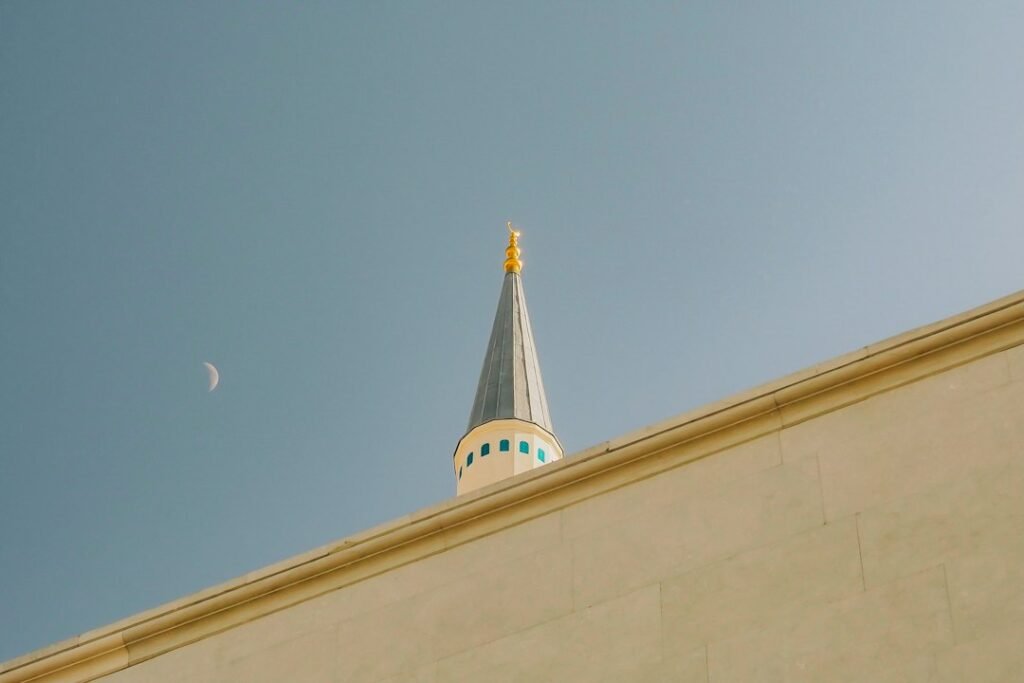
In this investigation
Across civilizations, sacred buildings often rise above ordinary roofs. Temple towers, church spires, minarets, pagodas, stupas and monumental gateways pull the eye upward and make religious institutions visible across cities and landscapes.
It is tempting to explain this with one universal idea: humans build upward because heaven is above. That is part of the story in some traditions, but not enough. Verticality also communicates power, marks location, organizes urban space, increases visibility and creates an experience of scale that can evoke awe.
“Up” is a powerful human metaphor
Languages repeatedly connect height with power and status: high office, higher authority, upper class, exalted ruler. Psychological experiments support this association.
Studies by Thomas Schubert and others found that people process powerful concepts more easily when they appear higher in visual space. Vertical position therefore participates in how humans mentally represent power.
THE PERCEPTUAL BRIDGE
Height can communicate power before any religious symbolism is added. Sacred architecture builds on a spatial metaphor humans already use socially.
Vertical buildings dominate the horizon
A tall structure can be seen from farther away than a low one. Before modern maps and GPS, towers helped people orient themselves in towns and landscapes.
A temple tower, church steeple or minaret therefore announces where the sacred institution is located even to someone outside its walls.
Visibility turns architecture into public authority
A building that dominates the skyline tells inhabitants that the institution behind it matters. Height converts wealth and labour into permanent visual presence.
Religious and political authority often overlap, so monumental verticality can express both sacred importance and the power of patrons who funded construction.
Temple towers make the hidden sanctum visible
In Hindu temple architecture, the deity’s inner chamber may be small and invisible from outside. The superstructure above it marks that sacred centre externally.
The vertical form therefore does not simply “reach heaven.” It tells the surrounding world where the most sacred interior lies.
Church spires performed a similar urban function
Medieval and early modern European church towers and spires often rose above dense settlements. Bells extended the church’s presence acoustically while towers extended it visually.
The building became both landmark and institution.
Minarets combine visibility with sound
Minarets became prominent features of mosque architecture in many Islamic regions. Historically they could provide elevated points associated with the call to prayer while also marking the mosque across the urban landscape.
Recent architectural scholarship on Anatolia shows that monumental minarets helped transform mosque architecture from a relatively horizontal urban presence into a more vertically projected form that made religious and political authority visible across the city.
Not every mosque historically had a monumental minaret
Like temple towers and church spires, minarets have histories. They developed differently across regions and periods.
This matters because vertical sacred forms should not be treated as timeless necessities of each religion.
Pagodas use vertical repetition differently
East Asian pagodas developed from the Buddhist stupa tradition but became multi-storeyed towers in many regions. Their vertical silhouette marks sacred presence while also adapting to local timber architecture.
The form is therefore both religious inheritance and regional architectural transformation.
Height can produce awe through vastness
Modern psychology defines awe partly through perceived vastness and the need to adjust existing mental frameworks. Monumental architecture is one of the classic human-made sources of that experience.
Looking upward inside a cathedral or standing beneath a tall temple gateway can make the individual feel physically small relative to the structure.
Awe is not simply “feeling good”
Awe can be positive, threatening or mixed. Research distinguishes beautiful awe from threat-based awe.
Sacred architecture may therefore evoke reverence partly because it combines attraction with overwhelming scale.
THE PSYCHOLOGY
Large scale and verticality can influence perceived power, abstraction and awe. These measurable effects support architectural impact without proving that height connects a building to a supernatural energy source.
Verticality can shift thinking toward abstraction
Experiments on vertical position find that being physically or perceptually higher can encourage more abstract construal under some conditions.
This offers a plausible modern mechanism by which elevated spaces or upward gaze might feel mentally different, though it would be a mistake to claim ancient builders designed towers from experimental psychology.
Upward gaze changes body posture
Looking at a tall building requires head and eye movement. The viewer physically reorients toward the architecture.
This embodied response can intensify the sense that the building exceeds ordinary human scale.
Vertical sacred architecture can organize approach
A tower visible from a distance creates anticipation before arrival. Pilgrims may see it long before reaching the entrance.
The building begins shaping experience while the visitor is still moving through the surrounding city or landscape.
Mountains provide a natural model of sacred height
Many religious traditions treat mountains as divine dwellings, cosmic centres or places of revelation. Architectural verticality can echo the same association between height and transcendence.
Temple towers are sometimes interpreted as mountains, while stepped monuments and pyramids can similarly create artificial sacred elevations.
But not all sacred architecture reaches upward
Caves, low shrines, underground sanctuaries and horizontal mosque courtyards demonstrate that sacredness does not require height.
This is an important corrective. Verticality is one recurring strategy, not a universal law of religion.
Engineering limits shaped what symbolic height was possible
Builders could only express vertical ambition using available materials and structural knowledge. Stone, brick and timber impose different constraints.
The history of sacred height is therefore also a history of engineering.
Gothic architecture turned structure into vertical drama
Pointed arches, rib vaults and flying buttresses allowed Gothic cathedrals to create unusually tall and luminous interiors.
The engineering system supported a theological and emotional architectural language in which height and light became central to experience.
Indian temple towers solve verticality differently
Śikharas and vimānas typically rise as dense masonry masses rather than skeletal Gothic structures. Their vertical effect comes from profile, repetition and sculptural accumulation.
Different engineering produces different symbolic height.
Domes create verticality inside even when exterior height is moderate
A dome draws the eye upward from within and creates an expanded overhead volume.
Sacred verticality therefore is not only about skyline height. Interior geometry can create the experience even when a building remains relatively low externally.
Height can make sound travel
Bell towers and minarets elevate sound sources above surrounding obstacles. Historically this increased the reach of bells or calls across dense settlements.
This is a straightforward practical reason for verticality that operates alongside symbolism.
Tall structures also function as timekeepers
Church bells, calls to prayer and visible towers structure daily time for people beyond the immediate sacred compound.
The tower therefore projects institutional rhythm across space.
Political rulers benefit from sacred visibility
When rulers fund monumental sacred structures, the visible building advertises their patronage.
Height can therefore make religious legitimacy inseparable from political authority.
Competition can drive skylines upward
Neighbouring rulers, religious institutions or cities may compete through larger towers and more elaborate monuments.
Monumental height is not always a pure expression of theology; it can also be a status contest.
Visibility changes when cities modernize
A cathedral or temple tower that once dominated a town may now be surrounded by apartment blocks and skyscrapers.
The sacred building’s symbolic height can persist even after its literal dominance disappears.
Modern skyscrapers borrow some of the same power language
Corporate headquarters and state monuments also use height to project importance. Vertical symbolism therefore extends beyond religion.
This reinforces the idea that “power is up” is a broad cultural-cognitive metaphor, not exclusively sacred.
Awe can strengthen collective identity
Recent psychological research suggests awe can increase feelings of connection and identity fusion under some conditions.
A vast sacred building experienced together with a congregation may therefore reinforce group belonging as well as individual reverence.
The building’s difficulty to construct also matters
A monument requiring enormous labour demonstrates commitment. Communities and patrons invest resources that could have been used elsewhere.
The cost itself signals the institution’s importance.
Sacred height can be read as sacrifice in material form
Generations may contribute labour, taxes or donations to a building they will never see completed.
This gives the monument temporal as well as spatial scale.
Tall structures create safety problems too
Lightning, earthquakes, wind and structural instability create real engineering risks. Historic towers have collapsed, burned or been rebuilt.
The survival of famous examples should not hide the failures.
Vertical form does not prove ancient anti-gravity or energy technology
Popular pseudohistorical explanations sometimes treat monumental height as evidence that ancient societies possessed lost lifting technologies or used resonance to move stone.
Extraordinary engineering deserves serious explanation, but archaeological evidence for quarrying, scaffolding, ramps, cranes, labour organization and incremental construction is far stronger than speculative energy theories.
Psychological effects should not be retrofitted into historical intent
Modern experiments show that verticality influences power judgments and that vastness can evoke awe. Those findings help explain why tall sacred buildings remain effective.
They do not prove medieval builders consciously designed according to modern cognitive science.
Different religions use height for different theological reasons
Christian spires, Islamic minarets, Hindu temple towers and Buddhist pagodas should not be collapsed into one universal symbolism.
They may share perceptual effects while belonging to distinct religious histories.
What survives scrutiny?
- Sacred verticality appears across many civilizations but is not universal.
- Height increases visibility and allows sacred institutions to dominate skylines and landscapes.
- Verticality has measurable psychological associations with power and abstract status.
- Large scale can evoke awe through perceived vastness.
- Temple towers can mark hidden sanctums, while church towers and minarets can combine visual presence with sound projection.
- Religious height also expresses patronage, political authority and competition.
- Engineering materials and structural knowledge constrain the forms sacred height can take.
- Different traditions developed different vertical architectures rather than one shared blueprint.
- Modern psychology helps explain why height affects perception but does not prove ancient builders used scientific theories of cognition.
- Claims that vertical sacred buildings access unique cosmic energy or require lost technology are unsupported by strong evidence.
The Tradivior Evidence Profile
Historical Authenticity — Strong. Vertical sacred forms are extensively documented in Hindu, Buddhist, Christian, Islamic and other architectural traditions.
Original-Purpose Evidence — Strong. Visibility, sacred marking, sound projection, patronage, authority and theological symbolism are well-supported historical functions.
Scientific Mechanism — Moderate to Strong. Visibility, vertical attention, embodied metaphors of power and awe responses to vastness provide plausible modern mechanisms.
Experimental Evidence — Moderate. Psychological studies support associations between verticality, power, abstraction and awe, though direct experiments on historical sacred buildings are limited.
Cross-Cultural Evidence — Strong. Vertical sacred architecture appears widely but takes different forms and meanings across traditions.
Modern Relevance — Strong. Height remains central to religious landmarks, political monuments, corporate architecture and urban identity.
The Tradivior Conclusion
Evidence Supported. Sacred buildings reach upward because verticality solves several problems at once: it makes institutions visible, marks sacred centres, projects sound and authority, and creates experiences of scale that can evoke awe. Modern psychology supports the association of “up” with power and vastness with awe, while history shows that rulers and religious institutions repeatedly used height to make presence public. The recurring pattern does not point to one universal cosmic-energy technology; it reflects a powerful convergence of perception, symbolism, engineering and social authority.
Continue investigating
- Why Were Indian Temples Designed the Way They Were?
- Why Do Mosques Use Courtyards, Domes and Minarets?
- Why Did Churches Develop Naves, Apses and Bell Towers?
Sources and further reading
- Keltner D, Haidt J. “Approaching awe, a moral, spiritual, and aesthetic emotion.” Cognition and Emotion. 2003;17(2):297–314. PMID: 29715721.
- Schubert TW. “Your highness: vertical positions as perceptual symbols of power.” Journal of Personality and Social Psychology. 2005;89(1):1–21. PMID: 16060739.
- Hall JA, Coats EJ, Smith LeBeau L. “Nonverbal behavior and the vertical dimension of social relations: a meta-analysis.” Psychological Bulletin. 2005;131(6):898–924. PMID: 16351328.
- Slepian ML, Masicampo EJ, Ambady N. “Cognition from on high and down low: Verticality and construal level.” 2015. PMID: 25603367.
- Research on awe, vastness and stress, including experimental and naturalistic studies. PMID: 33764120.
- McClary RP. Rum Seljuq Architecture, 1170–1220. Cambridge University Press; chapter on the Great Mosque Minaret in Sivas and urban verticality.
- Architectural-historical scholarship on Hindu temple towers, Gothic cathedrals, Islamic minarets and Buddhist pagodas.
Continue exploring

Partially Supported
Why Is the Ganga Sacred?
The Ganga is river, goddess, pilgrimage route, purifier and national symbol. Tradivior will trace how these layers developed and evaluate modern claims about unusual self-purifying properties without confusing microbial findings…

Partially Supported
Why Do People Keep Ashes, Relics and Memorial Objects?
Hair, ashes, bones, clothing, photographs and relics allow the dead to remain materially present. Tradivior will examine why objects carry memory so powerfully and how continuing bonds differ from pathological…

Evidence Supported
Why Do Cultures Set Aside Days to Remember the Dead?
From Pitru Paksha and Qingming to Día de Muertos and All Souls’ Day, cultures repeatedly create calendar time for the dead. Tradivior will compare how recurring remembrance renews kinship, grief…

Historically Practical
Why Did Cremation Become Central to Hindu Death Ritual?
Cremation has deep roots in many Hindu traditions but varies by community, age, status and circumstance. Tradivior will investigate its historical logic, environmental consequences and modern changes without treating one…
Picked for your curiosity
Enable JavaScript to build a reading profile and see recommendations.