 tradivior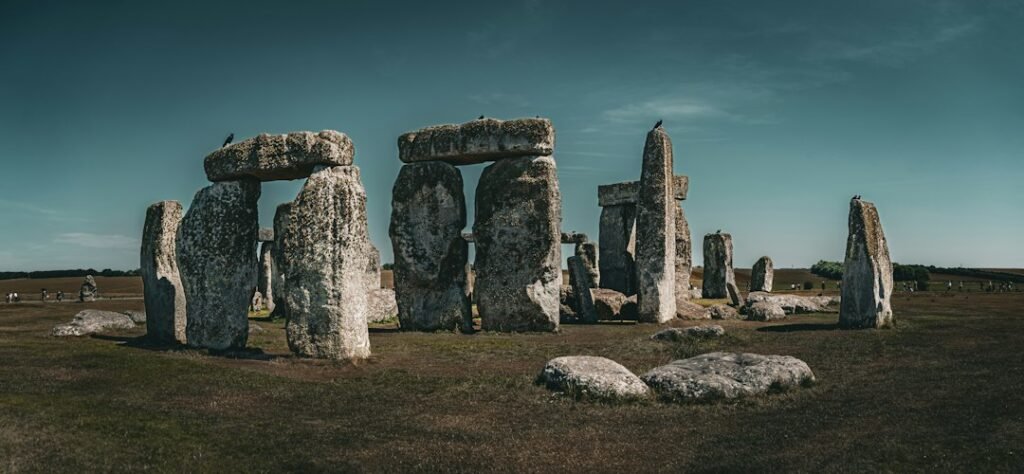
In this investigation
Ancient monuments often seem to “come alive” when sunlight enters a chamber, a shadow crosses a stair or the rising Sun appears between stones. These effects are so visually persuasive that it is easy to assume they must all have been designed as astronomical instruments.
Sometimes that assumption is well supported. At Newgrange, winter-solstice sunlight penetrates a deliberately constructed roof-box and passage. At Stonehenge, the principal axis aligns with the solstitial sunrise and sunset. At Chankillo in Peru, a sequence of towers functioned with observation points as a solar calendar spanning the year.
But archaeoastronomy has also taught an important methodological lesson: if enough walls, doorways and horizon points are available, some will align with important celestial events by chance. The task is not to admire an alignment; it is to demonstrate intentionality.
Solstices are easier to observe than equinoxes
The Sun does not rise at the same point on the horizon all year. Its rising and setting positions move gradually north and south, reaching extreme limits at the solstices.
Those turning points are visually distinctive because the Sun appears to stop moving along the horizon and reverse direction. The word “solstice” itself reflects this apparent standstill.
The equinox is conceptually different. It occurs when the Sun crosses the celestial equator and day and night are roughly equal. The horizon position is not marked by an obvious “turning point” in the same way.
THE OBSERVATIONAL DIFFERENCE
Solstices create visible horizon extremes. Equinoxes are midpoints that usually require a more abstract calendar concept to identify precisely.
Stonehenge provides unusually strong solstitial evidence
English Heritage describes the main Stonehenge axis as deliberately aligned with the movements of the Sun. Around midsummer, sunrise appears toward the Heel Stone direction; at midwinter, sunset would have been framed by the tallest trilithon.
Laser survey adds weight to the interpretation: stones framing the solstice axis were among the most carefully shaped. The nearby Avenue and other monuments in the landscape also relate to the same broad solar axis.
At Stonehenge, equinox claims are much weaker
Modern visitors gather at Stonehenge for spring and autumn equinoxes, but English Heritage explicitly notes that there is no evidence the prehistoric builders marked those midpoints.
This contrast is important. A site can have genuine astronomical alignment without validating every modern celestial interpretation attached to it.
Newgrange turns winter-solstice dawn into architecture
The passage tomb at Newgrange in Ireland was built around 3200 BCE. Its entrance faces southeast, and a special opening above the doorway—the roof-box—admits the rising Sun around the winter solstice.
On clear mornings, the light travels along the passage and illuminates the inner chamber for minutes. Modern high-resolution documentation commissioned by Ireland’s heritage authorities confirms the geometry and argues strongly that the effect is intentional rather than accidental.
The roof-box matters because it reduces the chance explanation
A doorway can point in many directions for practical reasons. A specialized opening positioned to send a narrow beam toward the chamber at a particular seasonal sunrise is harder to dismiss as coincidence.
Intentionality becomes stronger when architectural features, sightline, illumination effect and archaeological context all converge.
Newgrange also connects solar alignment with burial
The monument is a passage tomb, not simply an observatory. Human remains, mortuary architecture and the solar illumination therefore belong to one ritual landscape.
Modern interpretations often connect the returning midwinter Sun with renewal, rebirth or the dead. Such interpretations are plausible, but symbolism is harder to prove than the alignment itself. The geometry is strong evidence; the exact theology remains inferential.
Chankillo shows how architecture can record more than one date
The Chankillo complex on the north-central coast of Peru includes thirteen towers arranged along a ridge and observation points from which sunrise or sunset could be tracked across the sequence.
UNESCO describes the site as a calendrical instrument that used the Sun to define dates through the seasonal year. Rather than marking only one dramatic solstice, the tower sequence allowed observers to follow solar movement across many dates.
This is closer to a true solar calendar
At Chankillo, the changing solar position can be read against multiple architectural markers. That differs from a monument with one axis that happens to face a sunrise.
The greater number of organized markers strengthens the interpretation that calendar observation was a core function.
Why would ancient societies care about solstices?
Solstices mark turning points in annual daylight. In temperate latitudes, they are closely related to the seasonal year, even though weather and agricultural events do not always fall exactly on the solstice.
Knowing that the Sun has reached an extreme point helps anchor a calendar. A monument can therefore combine practical seasonal reckoning with ceremonial meaning.
Seasonal certainty matters when calendars organize agriculture
Farmers need to coordinate sowing, harvest, animal management and communal labour. Solar observation helps locate a community within the annual cycle.
Monuments are not necessary for this—people can observe horizon positions directly—but architecture can stabilize and publicize the observation.
A monument turns astronomical knowledge into public authority
If a priest, ruler or specialist controls a structure that marks seasonal events, astronomical knowledge becomes institutionally visible.
The monument can legitimize authority by showing that social order is synchronized with cosmic order.
Architecture can make a celestial event emotionally dramatic
Watching a sunrise on an open horizon is impressive. Watching a shaft of light penetrate a dark tomb after days of winter darkness is a different experience.
Buildings can stage astronomy. They frame light, restrict viewpoint and turn a predictable event into ritual theatre.
THE STRONGEST CASE
Intentional astronomical design is most convincing when geometry, architecture, horizon, repeated observation and archaeological context all support the same interpretation.
Archaeoastronomy must guard against “alignment hunting”
A large monument can contain dozens of walls, entrances, corners and sightlines. If a researcher is free to choose any feature and any astronomical target, apparent alignments become easy to find.
Good archaeoastronomy therefore defines candidate lines, measures horizon altitude, reconstructs ancient sky positions and asks whether the pattern exceeds what chance would produce.
Statistics matter because monuments offer many possible directions
Surveys of prehistoric stone alignments have sometimes found statistically meaningful clustering around celestial targets. Other re-surveys have rejected earlier claims once stricter criteria and simulations were applied.
The field matured partly by learning that visual plausibility is not enough.
The local horizon must be reconstructed
The Sun’s apparent rising position depends on latitude and on the altitude of hills or mountains along the horizon. A structure does not align with a theoretical compass bearing in isolation.
Researchers therefore need topography, site geometry and atmospheric considerations to estimate what ancient observers actually saw.
Precession matters more for stars than for the Sun
Earth’s rotational axis slowly precesses, changing stellar positions over millennia. Claims about alignments to stars must therefore reconstruct the ancient sky rather than use today’s positions.
Solar solstice declinations change much more slowly and predictably, making solar alignments easier to test over archaeological timescales.
Not every east-facing temple is an equinox observatory
East has broad symbolic importance because sunrise occurs in the eastern half of the horizon. A building can face generally east for ritual reasons without being designed to mark the exact equinox sunrise.
This distinction is especially important in Mesoamerica, where researchers have documented many meaningful solar orientations but also criticized widespread unsupported claims about equinox targeting.
Mesoamerican “equinox alignments” are often overstated
Archaeoastronomer Ivan Šprajc has shown that many Mesoamerican ceremonial structures do have astronomical orientations, often linked to sunrise or sunset dates relevant to observational calendars and agriculture.
But he argues that the popular idea that equinoxes were a dominant target is poorly supported. Some dates fall near modern equinoxes without demonstrating that the builders conceptualized the equinox in the modern astronomical sense.
The famous serpent shadow at Chichén Itzá deserves caution
At El Castillo, triangular shadows appear on the staircase balustrade around the equinox season and seem to connect with a carved serpent head. The phenomenon attracts large modern crowds.
Yet the interpretation that the Maya deliberately designed an exact equinox “descent of Kukulcán” is debated. The effect occurs across multiple days, the modern interpretation is relatively recent, and comparable serpent architecture does not always produce the same alignment.
The visual effect is real. The intended ancient meaning is less secure.
Equinox is a modern temptation because it feels mathematically perfect
Modern people know the year as four neat astronomical markers: two solstices and two equinoxes. It is natural to project that symmetrical scheme backward.
Prehistoric societies may instead have emphasized local seasonal dates—first rains, crop cycles, animal migrations or intervals counted from solstices—that do not match our preferred quarterly calendar.
Seasonal dates need not be solstices or equinoxes to be astronomical
A building might target sunrise sixty days before a solstice because that date mattered agriculturally. Repeated orientations toward the same offset date can still constitute an observational calendar.
Archaeoastronomy becomes more accurate when it lets ancient calendars emerge from the evidence rather than forcing modern calendar categories onto them.
Alignment does not prove a monument was only an observatory
Stonehenge was also a place of burial and ceremony. Newgrange was a tomb. Chankillo included ceremonial and administrative architecture.
Modern categories such as “temple,” “calendar” and “observatory” may divide functions that ancient builders experienced together.
A monument can be both precise and symbolic
Accurate alignment does not imply purely scientific purpose. The precision may have served ritual drama.
Likewise, religious symbolism does not imply inaccurate astronomy. Ancient societies could observe the sky carefully because ritual demanded precision.
Monumental astronomy requires social coordination
Moving stone, organizing labour and preserving an alignment across generations requires institutions. Monument building therefore reveals not only astronomical knowledge but collective capacity.
The calendar becomes material culture: knowledge literally built into the landscape.
Seasonal gatherings may have reinforced the alignment
If communities repeatedly assembled at midwinter or midsummer, the monument and the gathering would confirm each other. Participants would see the solar event and remember the social event attached to it.
This creates a durable feedback loop between astronomy, ritual and collective memory.
Modern restoration can complicate archaeoastronomical interpretation
Many ancient monuments have collapsed, been rebuilt or heavily restored. Researchers must distinguish original architecture from modern reconstruction.
At Newgrange, for example, aspects of reconstruction have been debated, yet detailed research supports the authenticity of the solar roof-box alignment itself.
Claims should become weaker when the target becomes more elaborate
A solstice sunrise is one clear astronomical event. Claims that a monument encodes dozens of stars, planets, eclipses and mathematical constants are much easier to generate after the fact.
The more flexible the interpretation, the greater the risk of pattern matching.
The best evidence is constrained before the result is known
Researchers strengthen a claim by specifying which architectural feature counts as an axis, what horizon range is relevant and which celestial event is being tested before examining every possible match.
This mirrors good statistical practice more generally: hypotheses are more convincing when they are not invented after seeing the pattern.
Why solstice monuments remain culturally powerful today
Modern visitors gather at Stonehenge and Newgrange because the event still creates a sense of connection across deep time. The same Sun reaches the same horizon position as it did for ancient builders.
This continuity can make archaeoastronomy emotionally compelling even when the exact ancient theology is unknown.
The science does not remove mystery—it narrows it
At the strongest sites, we can say confidently that builders understood seasonal solar motion well enough to align architecture with it.
What we often cannot say with equal confidence is what story they told about the event, which deity they associated with it or what emotions the ceremony was meant to produce.
What survives scrutiny?
- Some ancient monuments have strong evidence of deliberate solar alignment.
- Stonehenge’s principal axis is clearly related to midsummer sunrise and midwinter sunset.
- Newgrange’s roof-box and passage intentionally admit winter-solstice dawn light into the chamber.
- Chankillo functioned as a solar calendrical complex that could track dates across much of the year.
- Solstices are visually easier to identify because they mark extreme sunrise and sunset positions.
- Many popular equinox claims are weaker than solstice claims and may project modern calendar concepts backward.
- Archaeoastronomy must account for horizon altitude, latitude, precession, reconstruction and chance alignments.
- Statistical testing is important when many architectural lines and celestial targets are available.
- Astronomical alignment does not mean a monument functioned only as an observatory; burial, ritual and political functions can coexist.
- Precise astronomy and religious symbolism are compatible rather than mutually exclusive.
- The strongest interpretations combine geometry, archaeological context, repeated patterns and constrained hypotheses.
The Tradivior Evidence Profile
Historical Authenticity — Strong. Deliberate solar alignment is strongly supported at several major sites, although claims vary widely in quality from monument to monument.
Original-Purpose Evidence — Moderate. Seasonal marking, ritual gathering and calendrical observation are well supported in some contexts, while exact symbolic interpretations often remain inferential.
Scientific Mechanism — Strong. Solar rising and setting positions, horizon geometry and seasonal motion are well-understood astronomical phenomena that can be measured accurately.
Experimental Evidence — Strong for geometry; Limited for ancient meaning. Modern survey can test alignments precisely, but experimental science cannot recover undocumented beliefs.
Cross-Cultural Evidence — Strong. Solar-aligned ceremonial architecture appears in multiple historically independent societies.
Modern Relevance — Strong. Archaeoastronomy remains important for understanding ancient calendars, landscape design and the relationship between scientific observation and ritual.
The Tradivior Conclusion
Evidence Supported—with site-by-site caution. Some ancient builders clearly designed monuments around the seasonal motion of the Sun. Stonehenge, Newgrange and Chankillo provide strong but different forms of evidence for intentional solar observation. The mistake is to generalize from those successes and assume every dramatic shadow or east-facing temple encodes a solstice or equinox. Archaeoastronomy survives scrutiny when alignment claims are tested against geometry, archaeology and chance—not when modern observers simply find patterns they hope to see.
Continue investigating
- Why Did Humans Watch the Moon So Closely?
- Why Did Indian Calendars Track Both Sun and Moon?
- Why Do New Year Festivals Cluster Around Seasonal Turning Points?
Sources and further reading
- English Heritage. “Understanding Stonehenge” and “Description of Stonehenge,” summaries of the monument’s solstitial axis and archaeological context.
- World Heritage Ireland. Winter Solstice Phenomenon at Newgrange: Research Report 2024.
- Heritage Ireland. Documentation of winter-solstice illumination at Newgrange.
- UNESCO World Heritage Centre. Statement of Outstanding Universal Value for the Chankillo Solar Observatory and ceremonial centre, Peru.
- Šprajc I. “Equinoctial Sun and Astronomical Alignments in Mesoamerican Architecture: Fiction and Fact.” Ancient Mesoamerica. 2021.
- Ruggles CLN and wider archaeoastronomical literature on statistical testing, horizon astronomy and prehistoric alignments.
- Heggie DC, ed. Archaeoastronomy in the Old World. Cambridge University Press.
- Slayman AL. “Seeing with Maya Eyes.” Archaeology. 1996, discussion of the Chichén Itzá equinox-serpent interpretation and scholarly caution.
Continue exploring
Partially Supported
Why Do People Keep Ashes, Relics and Memorial Objects?
Hair, ashes, bones, clothing, photographs and relics allow the dead to remain materially present. Tradivior will examine why objects carry memory so powerfully and how continuing bonds differ from pathological…

Evidence Supported
Why Do Cultures Set Aside Days to Remember the Dead?
From Pitru Paksha and Qingming to Día de Muertos and All Souls’ Day, cultures repeatedly create calendar time for the dead. Tradivior will compare how recurring remembrance renews kinship, grief…
Historically Practical
Why Do Cultures Preserve the Dead?
Mummification, embalming, freezing, smoking and desiccation reflect very different beliefs about bodies and afterlives. Tradivior will compare preservation traditions with the chemistry of decomposition and the practical limits of each…

Primarily Symbolic/Cultural
Why Do People Change Names, Clothes or Homes After Marriage?
Marriage often transforms identity through surname changes, new dress, residence, kinship terms or household membership. Tradivior will investigate why marriage needs visible social consequences beyond the ceremony itself.
Picked for your curiosity
Enable JavaScript to build a reading profile and see recommendations.