 tradivior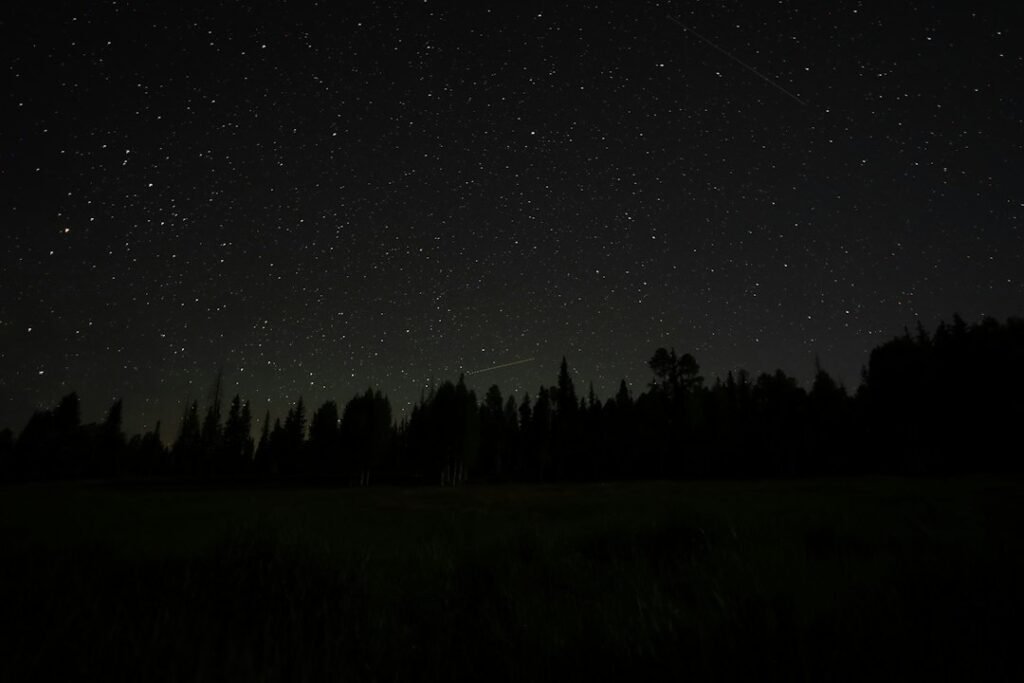
In this investigation
Before printed calendars, weather apps and agricultural extension services, farmers still needed to know when a season was turning. They watched plants, winds, insects, clouds—and the sky.
The Pleiades became one of the most widespread stellar markers in human seasonal knowledge. Greek farmers, Indigenous Australians, Southeast Asian agricultural communities and many others used the cluster, along with Orion and other bright stars, to organize planting, harvesting, travel and ritual.
The useful insight is not that stars control crops. It is that a star’s seasonal reappearance is predictable. If a familiar star group appears just before dawn at roughly the same point in the annual cycle, it becomes a natural calendar marker.
Heliacal rising turns a star into a seasonal clock
A heliacal rising occurs when a star or star group becomes visible just before sunrise after a period when it was hidden in the Sun’s glare.
Because Earth’s orbit around the Sun repeats annually, the event returns at roughly the same seasonal time each year.
THE CORE MECHANISM
The Pleiades do not cause the farming season. Their seasonal appearance can act as a predictable marker for a season that is already approaching.
The Pleiades are unusually useful because they are bright and distinctive
The cluster is compact enough to recognize and bright enough to see without instruments under dark skies.
Its annual disappearance into solar glare and later return creates a memorable before-and-after marker.
Greek farmers used the Pleiades as an agricultural timetable
Hesiod’s Works and Days, written in archaic Greece, links the Pleiades with agricultural tasks. Their rising and setting helped frame times for harvest and ploughing.
This is one of the clearest early written examples of stellar agriculture: the stars provide a calendar cue rather than a causal force acting on grain.
Southeast Asian communities used similar sky calendars
Ethnographic research across the Indo-Malay region documents agricultural calendars tied to the heliacal appearance of the Pleiades and Orion.
Among Iban communities, for example, stellar observations have historically helped adjust lunar agricultural calendars to the seasonal year. The reappearance of the Pleiades near dawn could signal the relevant agricultural period.
Kedayan farmers in Borneo linked the Pleiades to paddy preparation
A modern ethnographic study of the Kedayan ecological calendar records the rising of the Pleiades around dawn as a marker for the onset of paddy season.
The community does not rely on stars alone. Plant flowering, bird calls, winds and rainfall patterns are also incorporated. This multi-cue system is important because ecological seasons are never generated by one signal.
Australian Indigenous calendars integrate stars with food and animal cycles
CSIRO’s Indigenous seasonal-calendar work documents systems in which stars, plants, animals, weather, water and fire are read together.
Research on Aboriginal astronomy records the Pleiades as seasonal markers in several communities. The appearance of the cluster can be associated with the availability of particular foods or changes in animal behaviour.
The star is useful because the ecosystem is seasonal
Plants flower, fish migrate, insects emerge and rainfall patterns shift according to seasonal environmental conditions.
If a celestial event recurs at roughly the same time, people can use it as a stable reference even when local weather varies from day to day.
Stars can be more reliable than one day’s weather
A hot day can arrive early or late. A thunderstorm may fail. But the annual apparent motion of the stars follows astronomical geometry.
This makes stellar cues particularly valuable as long-term seasonal markers. They tell a community where it is in the year, not what tomorrow’s weather must be.
This distinction separates calendar knowledge from weather prediction
“The Pleiades have returned, so the planting season is approaching” is a calendrical statement.
“The Pleiades will cause rain next Tuesday” is a different and much stronger causal claim. Traditional systems can contain both kinds of statements, but science should not treat them as equivalent.
THE EVIDENCE DISTINCTION
Seasonal correlation can be highly reliable even when the proposed causal explanation is wrong.
Latitude changes which stars work as useful markers
A star’s rising position and visibility depend on latitude. The Pleiades may be useful over a wide range, but not every asterism works everywhere.
Local horizon shape, atmospheric clarity and seasonal cloud cover also affect observations.
The same star can mark different activities in different places
A stellar appearance may coincide with harvest in one ecological zone, planting in another and animal migration in a third.
This is why “the traditional meaning of the Pleiades” cannot be universalized across cultures.
Seasonal sky knowledge is highly local
CSIRO emphasizes that Indigenous seasonal calendars differ among language groups because each developed in a particular ecological setting.
That local specificity is not a weakness. It is precisely what makes the knowledge useful.
Farmers rarely relied on the stars alone
Traditional ecological calendars usually combine several indicators. A star may mark the broad season, while flowering plants, soil moisture, insect behaviour or wind determine whether a particular task should begin.
Multi-cue systems reduce the risk of acting on one misleading signal.
This resembles modern ecological forecasting more than astrology
The useful part of the system is observational correlation: when this repeatable sky event occurs, these ecological changes are usually near.
No claim about personality or fate is required.
Precession slowly changes stellar calendars over centuries
Earth’s rotational axis precesses over roughly 26,000 years. This gradually changes the date on which a star has its heliacal rising relative to the seasonal year.
Over a few generations the shift may be small, but over millennia it becomes important for interpreting ancient astronomical traditions.
Climate change can break an old correlation even when the astronomy stays stable
The star still appears when orbital geometry says it should. Rainfall, flowering and animal behaviour may shift under climate change.
A traditional seasonal rule can therefore lose predictive value if the ecological event moves relative to the astronomical marker.
This makes traditional calendars useful records of environmental change
When elders report that a plant now flowers before or after the star cue that once matched it, the mismatch itself becomes evidence of ecological change.
Traditional knowledge can therefore help document shifting seasonality.
Orion often appears alongside the Pleiades in seasonal systems
Orion is another conspicuous asterism whose seasonal appearance is easy to recognize. Several Southeast Asian and Indigenous traditions use both Orion and the Pleiades as calendar markers.
The two patterns can provide multiple checkpoints within the annual cycle.
Bright stars can divide the year into practical intervals
Sirius, Aldebaran, Antares and other bright stars have served similar functions in different regions.
The logic is general: choose a visible celestial event that repeats annually and associate it with a recurring seasonal task.
Ancient Egypt offers another classic example
The heliacal rising of Sirius became associated with the Nile flood season and Egyptian calendrical tradition.
Again, the star did not cause the Nile to flood. Its appearance was useful because both events recurred in a relatively stable seasonal relationship.
A celestial calendar can coordinate an entire community
Once a star signal is widely recognized, it can synchronize planting, clearing, hunting or ceremony without written calendars.
The sky becomes public infrastructure.
Specialists can emerge when the system becomes complex
Some societies have designated calendar keepers, ritual specialists or elders responsible for observing celestial and ecological indicators.
Their role is not merely mystical. They aggregate observations and announce socially important transitions.
Knowledge transmission often occurs through story rather than tables
Stories linking star figures to animals, ancestors or seasonal events can encode when a constellation appears and what happens on the land at that time.
Myth can therefore serve as a mnemonic system without being reducible to a scientific textbook.
A myth can preserve useful observation without preserving its causal mechanism
If a story says the Seven Sisters “bring” particular foods, the ecological observation may be that those foods become available when the Pleiades return.
Modern interpretation should respect the narrative while distinguishing correlation from physical causation.
Modern light pollution weakens stellar calendars
Urban skyglow makes faint stars difficult or impossible to see. Even bright clusters lose visual prominence.
This removes an environmental cue that was once available to almost everyone.
Cloud and monsoon can also limit observation
A star calendar works best when the relevant rising or setting can actually be seen. Seasonal cloud cover can obscure the event.
Communities therefore often preserve redundant terrestrial cues rather than relying on a single celestial observation.
Stellar calendars do not prove ancient people predicted weather from starlight
Some modern retellings turn seasonal star knowledge into claims that ancient farmers could forecast rainfall years in advance from the brightness or spacing of stars.
Such claims require independent evidence. The well-supported function is seasonal timing, not unlimited meteorological prediction.
What survives scrutiny?
- The Pleiades and other conspicuous star groups have been used as seasonal calendar markers in many societies.
- Heliacal rising returns at a predictable point in the annual cycle and can therefore signal the approach of recurring seasonal activities.
- Greek agricultural texts explicitly connect the Pleiades with farming schedules.
- Indo-Malay agricultural calendars use the Pleiades and Orion to organize planting and other tasks.
- Australian Indigenous seasonal knowledge integrates stars with plants, animals, weather, fire and food availability.
- The stars do not cause monsoons, flowering or harvests; they function primarily as recurring time markers.
- Local latitude, horizon, cloud and ecology determine which stellar cues are useful.
- Traditional seasonal systems commonly use multiple cues rather than relying on astronomy alone.
- Precession and climate change can gradually break old relationships between stellar markers and ecological events.
- Stories and myths can preserve observational knowledge while expressing it in cultural rather than scientific language.
The Tradivior Evidence Profile
Historical Authenticity — Strong. Stellar agricultural and seasonal calendars are documented historically and ethnographically across multiple regions.
Original-Purpose Evidence — Strong. Planting, harvest, travel, hunting and seasonal coordination are directly documented uses.
Scientific Mechanism — Strong. Heliacal risings and seasonal stellar visibility are predictable consequences of Earth’s orbit and observer latitude.
Experimental Evidence — Strong for astronomy; Moderate for local ecological predictive value. Stellar timing is precise, while its usefulness for a given ecological event depends on local correlation.
Cross-Cultural Evidence — Strong. Pleiades, Orion, Sirius and other stellar markers appear in independent seasonal-calendar traditions.
Modern Relevance — Strong. Traditional seasonal calendars remain valuable for ecological knowledge, cultural continuity and tracking climate-driven shifts in seasonality.
The Tradivior Conclusion
Evidence Supported. Farmers and other land-based communities read the Pleiades and other stars because seasonal star appearances are predictable. Heliacal risings provide reliable annual markers that can coordinate planting, harvesting, hunting and travel when they are calibrated to local ecology. The stars do not cause the monsoon or make crops grow; they function as celestial calendar cues. The tradition survives scrutiny as practical observational astronomy embedded in ecological knowledge.
Continue investigating
- Why Did Traditional Farmers Read Birds, Insects and Plants as Weather Signs?
- Why Did the Monsoon Shape Calendars and Rituals in South Asia?
- Why Did Harvest Calendars Become Religious Calendars?
Sources and further reading
- Hesiod. Works and Days, agricultural timing associated with the Pleiades and other stellar events.
- Ammarell G. “Sky Calendars of the Indo-Malay Archipelago.” Historical astronomy proceedings.
- “The fading popularity of a local ecological calendar from Brunei Darussalam, Borneo.” 2022. PMCID: PMC9013451.
- CSIRO. Indigenous Seasonal Calendars project and community-specific seasonal knowledge resources.
- Norris RP. “Dawes Review 5: Australian Aboriginal Astronomy and Navigation.” Publications of the Astronomical Society of Australia.
- Ethnographic and archaeoastronomical literature on heliacal risings, agricultural calendars and stellar seasonal markers.
Continue exploring
Why Do People Keep Ashes, Relics and Memorial Objects?
Hair, ashes, bones, clothing, photographs and relics allow the dead to remain materially present. Tradivior will examine why objects carry memory so powerfully and how continuing bonds differ from pathological…
Why Do Cultures Set Aside Days to Remember the Dead?
From Pitru Paksha and Qingming to Día de Muertos and All Souls’ Day, cultures repeatedly create calendar time for the dead. Tradivior will compare how recurring remembrance renews kinship, grief…
Why Do Cultures Preserve the Dead?
Mummification, embalming, freezing, smoking and desiccation reflect very different beliefs about bodies and afterlives. Tradivior will compare preservation traditions with the chemistry of decomposition and the practical limits of each…

Why Do People Change Names, Clothes or Homes After Marriage?
Marriage often transforms identity through surname changes, new dress, residence, kinship terms or household membership. Tradivior will investigate why marriage needs visible social consequences beyond the ceremony itself.
Picked for your curiosity
Enable JavaScript to build a reading profile and see recommendations.