 tradivior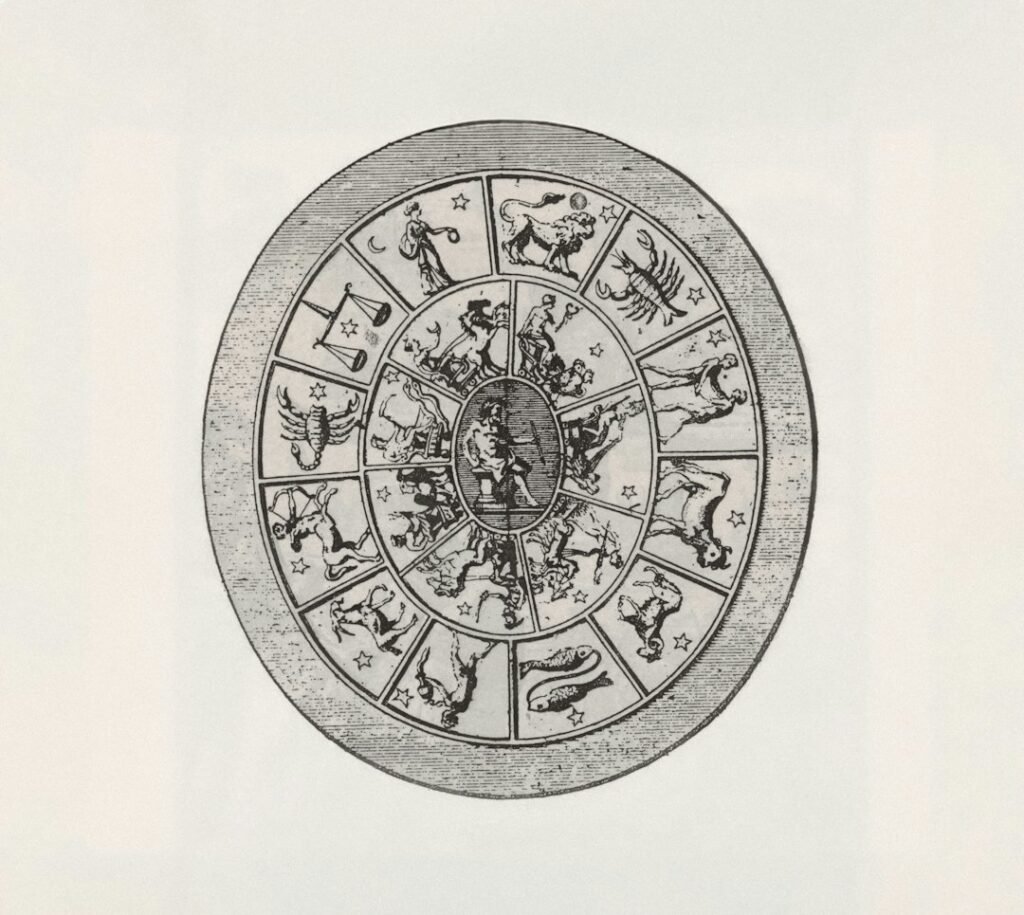
In this investigation
Astrology became influential because it offered something most ancient knowledge systems desperately wanted: a way to connect the visible order of the sky with the uncertainty of human life. Planets moved predictably. Eclipses could be observed. Seasons returned. Kings rose and fell. Illness, war, marriage and death seemed far less predictable. Astrology promised to connect the two.
That promise was intellectually powerful even though modern controlled testing does not support astrological claims about personality or fate. To understand astrology historically, Tradivior has to separate three things that are often collapsed today: careful astronomy, symbolic interpretation and causal prediction.
The sky was one of humanity’s first calendars
Long before modern astronomy, people tracked the Sun, Moon, planets and stars because celestial cycles helped organize agriculture, ritual, travel and political time. Regular sky patterns were genuinely useful.
That practical success created an important psychological bridge: if celestial observation could predict seasons and eclipses, perhaps it could also predict human events.
Mesopotamia made celestial omens systematic
In ancient Mesopotamia, celestial events were recorded and interpreted as omens affecting kings and states. Planetary appearances, eclipses and unusual phenomena were linked with possible political or environmental outcomes.
This was not yet identical to the personal horoscope familiar today. Early omen astrology was strongly concerned with rulers, kingdoms and collective fate.
Hellenistic astrology changed the scale
In the Hellenistic world, Babylonian astronomical traditions interacted with Greek mathematical astronomy, Egyptian religion and broader Mediterranean ideas. The result was a more individualized form of astrology based on birth charts, zodiac signs, planetary positions and houses.
A 1947 historical note in Nature summarized a long-standing scholarly position: while Mesopotamia supplied important precedents, the highly organized horoscope-based system properly associated with astrology matured in the Hellenistic period.
The horoscope was an information technology
A natal chart converts the sky at a particular moment into a symbolic map. That map can then be interpreted as personality, destiny, compatibility, illness or opportunity.
Its power came partly from compression. A vast and changing sky became a structured diagram that specialists could calculate, preserve, compare and interpret.
Astrology travelled because knowledge travelled
Astrological ideas moved across languages and empires. Greek works entered Syriac, Persian and Arabic intellectual worlds. Islamic scholars preserved, criticized and extended astronomical and astrological literature. Sanskrit authors likewise incorporated and transformed foreign techniques within Indian traditions.
This history makes astrology a striking example of intellectual globalization long before the modern era.
Indian jyotisha combined calculation and prediction
Indian traditions of jyotisha included both astronomical calculation and prognostication. Oxford Bibliographies distinguishes ganita, approximately corresponding to mathematical astronomy, from phalita, predictive astrology.
Within predictive astrology, natal astrology (jataka), electional astrology (muhurta) and horary methods developed into sophisticated fields. Historical scholarship also shows that important components of Indian horoscope astrology were shaped through contact with Hellenistic traditions, while India already possessed earlier astral lore and calendrical observation.
Astrology became embedded in institutions
Astrologers did not operate only as private fortune tellers. In many societies they advised rulers, selected ritual times, interpreted omens, prepared calendars and participated in medical or political decision-making.
Varahamihira, active in the sixth century, is one of the clearest South Asian examples of the fusion of astronomy, astrology, ritual and kingship.
Why rulers found astrology attractive
Political leaders face uncertain threats: war, succession, famine, disease, rebellion and weather. Astrology offered a framework that transformed uncertainty into interpretable signs.
Even an inaccurate prediction system can remain institutionally useful if it provides procedure, justifies timing, distributes responsibility or makes uncertain decisions appear ordered.
Astrology and astronomy were historically intertwined
It is misleading to project today’s boundary between science and astrology directly onto antiquity. Many observers who calculated planetary motion also accepted astrological assumptions.
Accurate astronomical calculation could therefore coexist with unsupported astrological interpretation. The success of the calculation does not validate the prediction built on top of it.
Why astrology feels personally accurate
Psychology offers several mechanisms that can make generalized interpretations feel precise. People tend to recognize statements that fit them, reinterpret vague descriptions in light of personal experience and remember apparent hits more vividly than misses.
Confirmation bias, selective memory and the tendency to accept broad personality descriptions can all strengthen belief without deliberate deception.
The Barnum effect matters—but does not explain everything
Broad statements such as “you value independence but sometimes seek reassurance” can feel highly personal while applying to many people. This is often called the Barnum or Forer effect.
Yet astrology’s persistence cannot be reduced to this one mechanism. Family tradition, ritual timing, identity, social networks and cultural authority also sustain it.
What happens under controlled testing?
The key scientific question is not whether people find astrology meaningful. It is whether astrologers can produce accurate, replicable predictions beyond chance under controlled conditions.
One of the best-known tests was Shawn Carlson’s 1985 double-blind study in Nature. Astrologers were asked to match natal charts with validated personality profiles under controlled conditions. The results did not support the claimed astrological accuracy.
Failed prediction does not erase cultural significance
Astrology can be scientifically unsupported as a causal predictive system and still be historically important. It shaped calendars, literature, kingship, medicine, ritual, art and everyday decision-making.
Tradivior’s task is not to choose between ridicule and validation. It is to distinguish cultural influence from empirical performance.
Why astrology survives modern astronomy
Modern astronomy removed the scientific necessity for astrology, but not the human demand astrology serves. People still want narratives about timing, identity, uncertainty and future risk.
Astrology provides a symbolic language in which chance events become interpretable. For many users, that function matters more than laboratory prediction.
Digital astrology made an old system scalable
Computer calculation and smartphone apps now generate charts instantly. What once required specialist tables can be automated in seconds.
This has widened participation while creating a paradox: modern computing makes astrological calculation more precise even though greater calculation precision does not solve the absence of validated predictive mechanisms.
Does planetary gravity explain astrology?
Popular scientific-sounding explanations sometimes appeal to gravity, electromagnetism or unknown cosmic radiation. No established mechanism links planetary configurations at birth with the detailed personality and life outcomes claimed by astrology.
Invoking a measurable force is not enough. A valid mechanism must explain why the effect has the claimed direction, magnitude and specificity, and it must survive experimental testing.
What about lunar or seasonal effects?
Some celestial cycles genuinely affect Earth. Daylight changes circadian rhythms. Seasons change ecology. The Moon drives tides.
Those real effects do not validate zodiacal personality categories or horoscope predictions. Each claim has to be tested independently rather than borrowing credibility from unrelated astronomy.
Why astrology can still affect outcomes indirectly
A prediction can change behaviour even if the planets did not cause the predicted event. Someone told that a day is favourable may act with more confidence; someone warned of danger may avoid risk.
This is a social or psychological pathway, not evidence of celestial causation. Belief itself can alter decisions.
What survives scrutiny?
- Astrology has deep historical roots across Mesopotamian, Hellenistic, Indian, Islamic and other intellectual traditions.
- Precise astronomical observation and calculation contributed to astrology’s authority.
- The historical success of astronomy does not validate astrological prediction.
- Horoscopic astrology was strongly shaped in the Hellenistic world and later travelled across cultures.
- Indian jyotisha includes both mathematical astronomy and predictive astrology.
- Astrology served political, ritual, medical and personal functions far beyond entertainment.
- Controlled tests have not established reliable astrological personality prediction.
- Psychological and social mechanisms help explain perceived accuracy and persistence.
The Tradivior Evidence Profile
Historical Authenticity — Strong. Astrology is extensively documented across ancient and medieval civilizations.
Original-Purpose Evidence — Strong. Prediction, omen interpretation, political advice, ritual timing and personality analysis are historically explicit purposes.
Scientific Mechanism — Weak. No established physical mechanism explains natal-chart personality or fate claims.
Experimental Evidence — Weak. Controlled testing has not demonstrated consistent predictive performance beyond chance.
Cross-Cultural Evidence — Strong. Astrological systems developed, travelled and transformed across multiple civilizations.
Modern Relevance — Strong. Astrology remains culturally influential and is amplified by digital media.
The Tradivior Conclusion
Astrology became influential because it transformed uncertainty into order. It attached personal and political meaning to the most regular system ancient people could observe: the sky.
Its historical importance is undeniable. Its scientific predictive claims are not comparably supported. The strongest interpretation preserves that distinction: astronomy supplied real observational power, astrology supplied a symbolic and predictive framework, and human psychology and institutions helped that framework survive even when controlled tests failed to confirm its causal claims.
Sources & further reading
- Gansten M. “Astrology.” Oxford Bibliographies in Hinduism. Oxford University Press, 2014.
- Carlson S. “A double-blind test of astrology.” Nature. 1985;318:419–425.
- “Astrology in the Hellenistic Age.” Nature. 1947;159:92.
- Geslani M. Rites of the God-King: Santi and Ritual Change in Early Hinduism. Oxford University Press, 2018.
Continue exploring

Partially Supported
Why Is the Ganga Sacred?
The Ganga is river, goddess, pilgrimage route, purifier and national symbol. Tradivior will trace how these layers developed and evaluate modern claims about unusual self-purifying properties without confusing microbial findings…

Partially Supported
Why Do People Keep Ashes, Relics and Memorial Objects?
Hair, ashes, bones, clothing, photographs and relics allow the dead to remain materially present. Tradivior will examine why objects carry memory so powerfully and how continuing bonds differ from pathological…

Evidence Supported
Why Do Cultures Set Aside Days to Remember the Dead?
From Pitru Paksha and Qingming to Día de Muertos and All Souls’ Day, cultures repeatedly create calendar time for the dead. Tradivior will compare how recurring remembrance renews kinship, grief…

Historically Practical
Why Do Cultures Preserve the Dead?
Mummification, embalming, freezing, smoking and desiccation reflect very different beliefs about bodies and afterlives. Tradivior will compare preservation traditions with the chemistry of decomposition and the practical limits of each…
Picked for your curiosity
Enable JavaScript to build a reading profile and see recommendations.