 tradivior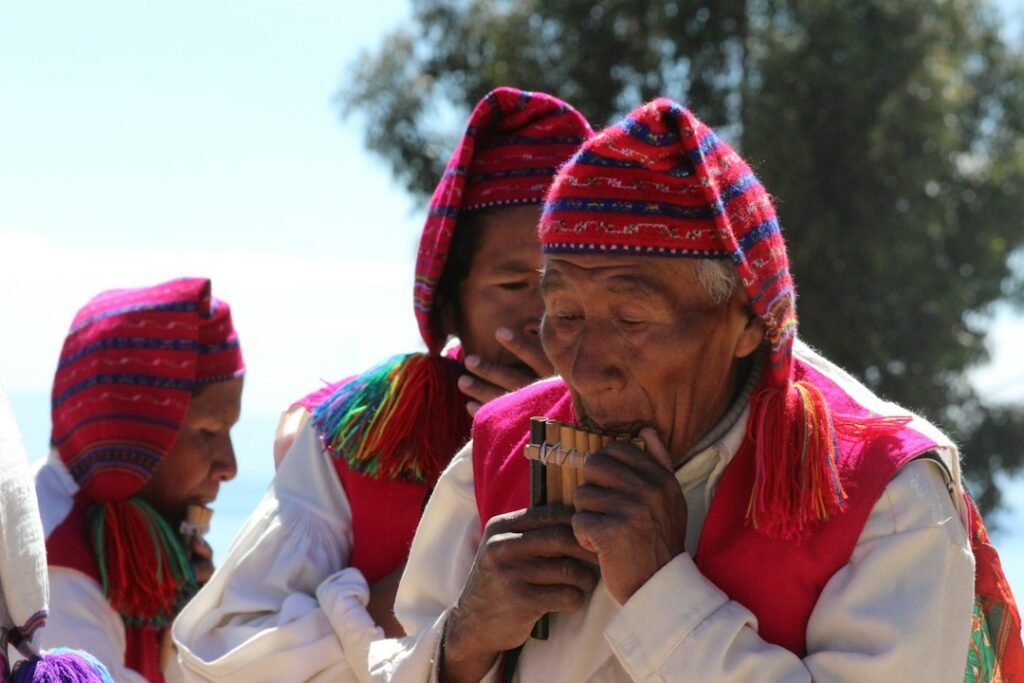
In this investigation
Oral traditions use rhythm and melody because memory works better when information has structure. A story, genealogy, prayer or law set into patterned language gains timing cues, predictable phrases and sound-based anchors that make recall easier.
Music does not make memory infallible. Oral traditions preserve some features precisely while allowing others to vary. The important point is that rhythm and melody create tools for remembering.
Human memory prefers patterned material
Random sequences are difficult to retain. Repetition, rhyme, meter and melody divide material into meaningful chunks.
Each pattern creates expectations that help a performer anticipate what comes next.
Rhythm supplies a temporal scaffold
A metrical line tells the speaker how many beats or syllabic units should fit. If something is omitted, the rhythm can feel wrong.
Meter therefore acts as a low-tech error detector.
Melody adds another retrieval route
When words are tied to a tune, recalling the melody can cue the text. This is why people often remember songs from childhood more easily than prose learned at the same age.
Formulaic phrases reduce memory load
Epic oral traditions use repeated epithets, stock scenes and conventional phrases. These formulas help performers compose and recall long narratives in real time.
Oral transmission can be both stable and flexible
Some traditions demand near-verbatim preservation; others preserve plot, genealogy or ritual sequence while allowing wording to change.
“Oral tradition” is therefore not one memory system.
Music supports group correction
When many participants know a song, an individual error becomes audible. The group itself acts as a memory check.
Collective performance can therefore stabilize material across generations.
Emotion strengthens retention
Emotionally significant events are often remembered better than neutral ones. Music can intensify emotional salience, making ceremonial texts more memorable.
Movement can add another cue
Dance, gesture or ritual action can be linked to particular lines. The body becomes part of the memory system.
Why genealogies are often sung or chanted
Long name sequences are difficult to remember as isolated lists. Meter and repeated melodic contours turn them into patterned chains.
Genealogical specialists can therefore preserve political and kinship information without writing.
What writing changes
Writing externalizes memory. Once a text can be stored on a page, exact recall becomes less necessary for ordinary users.
But oral performance often survives because it carries identity, authority and social participation that a document cannot replace.
Can oral tradition preserve history accurately?
Sometimes, but the answer depends on what is being preserved and how. Names, ritual formulas and memorable events may persist while chronology or causal explanation changes.
Historians therefore compare oral traditions with archaeology, documents and independent evidence rather than treating them as either perfect records or useless myths.
What survives scrutiny?
- Rhythm, meter and melody provide powerful retrieval cues.
- Formulaic language reduces memory load and supports performance.
- Group performance can correct individual mistakes.
- Emotion and movement add additional memory cues.
- Oral traditions vary from near-verbatim preservation to flexible recomposition.
- Historical claims from oral tradition still require independent corroboration.
The Tradivior Evidence Profile
Historical Authenticity — Strong. Musical and metrical oral transmission is documented globally.
Original-Purpose Evidence — Strong. Preservation, performance, identity and teaching are explicit functions.
Scientific Mechanism — Strong. Chunking, cueing, repetition and multimodal memory are well established.
Experimental Evidence — Strong. Memory research supports advantages of structured and musical encoding.
Cross-Cultural Evidence — Strong. Epic, genealogical, ritual and song traditions use comparable mnemonic devices worldwide.
Modern Relevance — Strong. Oral transmission remains important in education, worship and heritage.
The Tradivior Conclusion
Oral traditions use rhythm and melody because patterned sound turns memory into a system rather than a heroic individual effort.
The mechanism is ordinary cognition used with extraordinary discipline: meter flags errors, melody cues words, repetition stabilizes sequence and communities correct one another.
Sources & further reading
- Lord AB. The Singer of Tales.
- Rubin DC. Memory in Oral Traditions.
- Cognitive research on music, chunking and verbal recall.
Continue exploring
Evidence Supported
Why Do Cultures Set Aside Days to Remember the Dead?
From Pitru Paksha and Qingming to Día de Muertos and All Souls’ Day, cultures repeatedly create calendar time for the dead. Tradivior will compare how recurring remembrance renews kinship, grief…
Partially Supported
Why Do People Keep Ashes, Relics and Memorial Objects?
Hair, ashes, bones, clothing, photographs and relics allow the dead to remain materially present. Tradivior will examine why objects carry memory so powerfully and how continuing bonds differ from pathological…
Historically Practical
Why Do Cultures Preserve the Dead?
Mummification, embalming, freezing, smoking and desiccation reflect very different beliefs about bodies and afterlives. Tradivior will compare preservation traditions with the chemistry of decomposition and the practical limits of each…

Primarily Symbolic/Cultural
Why Do People Change Names, Clothes or Homes After Marriage?
Marriage often transforms identity through surname changes, new dress, residence, kinship terms or household membership. Tradivior will investigate why marriage needs visible social consequences beyond the ceremony itself.
Picked for your curiosity
Enable JavaScript to build a reading profile and see recommendations.