 tradivior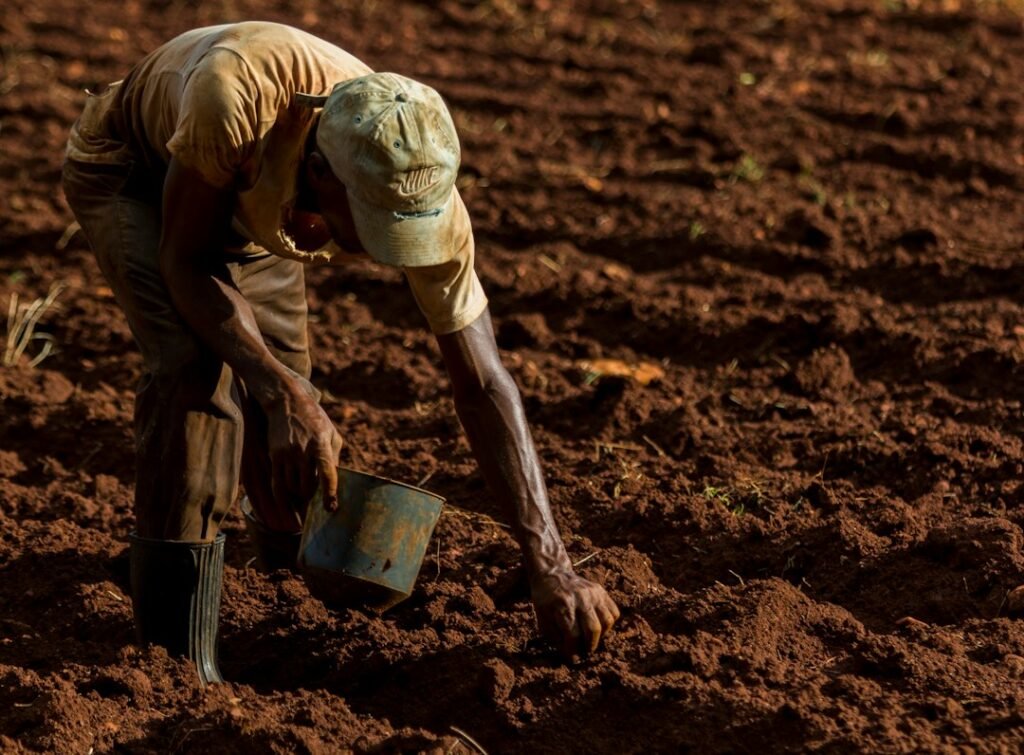
In this investigation
Farmers saved and selected seeds because agriculture depends on reproducing plants with useful traits from one generation to the next. Long before genetics was formalized, farmers noticed that seeds from certain plants produced desirable harvests and preferentially kept them.
This cumulative selection created much of the crop diversity humanity inherited.
Saving seed is the reproductive foundation of farming
For many crops, farmers can reserve a portion of harvest as planting material for the next season.
This reduces dependence on external seed supply and preserves locally adapted varieties.
Selection changes populations
If farmers repeatedly choose seed from plants with preferred traits, those traits can become more common when they are heritable.
This is artificial selection even without knowledge of genes.
Domestication began through repeated selection
Wild plants were transformed over generations for traits such as larger seeds, reduced shattering, altered dormancy and harvestability.
Domestication was usually gradual rather than one deliberate invention.
Farmers select for more than yield
Taste, storage, cooking quality, drought tolerance, color, ritual value, straw quality and harvest timing can all matter.
Modern breeding focused only on yield can miss these local priorities.
Local seed populations retain diversity
Traditional landraces are often genetically heterogeneous compared with highly uniform modern varieties.
This diversity can provide resilience to variable conditions, though it may also produce less uniform harvests.
Seed exchange spreads adaptation
Farmers trade and gift seeds across families and villages. This moves genes as well as social obligations.
Seed networks therefore combine biology and culture.
Selection is not automatically optimal
Farmers work with limited information and changing environments. A trait useful one year may be harmful another year.
Traditional selection is adaptive practice, not infallible evolutionary engineering.
Modern breeding accelerated selection
Genetics, controlled crosses, statistical trials and molecular tools allow breeders to target traits more systematically.
Modern varieties can dramatically increase yield or resistance.
Uniformity creates tradeoffs
Highly uniform crops can simplify farming and markets but may reduce within-field genetic diversity.
Conservation therefore often preserves both improved varieties and traditional germplasm.
Seed banks complement farm conservation
Gene banks store seeds under controlled conditions, while in-situ conservation keeps varieties evolving under real farming environments.
Both approaches are valuable.
Climate change renews interest in landraces
Traditional varieties may contain traits useful for heat, drought, salinity or local disease pressures.
Claims should still be tested in field trials rather than romanticized.
Seed sovereignty adds a political layer
Modern debates concern patents, hybrid seed, farmer rights, corporate concentration and access to germplasm.
The biology of seed saving therefore intersects with law and economics.
What survives scrutiny?
- Farmer seed selection is a genuine form of artificial selection.
- Repeated selection contributed fundamentally to crop domestication and diversification.
- Traditional landraces can preserve useful genetic diversity.
- Farmer priorities include cultural and culinary traits as well as yield.
- Traditional selection is valuable but not infallible.
- Modern breeding and farmer-managed diversity are complementary rather than mutually exclusive.
The Tradivior Evidence Profile
Historical Authenticity — Strong. Archaeobotany and ethnography document seed saving and selection across farming societies.
Original-Purpose Evidence — Strong. Reproduction, adaptation and preferred crop traits are explicit.
Scientific Mechanism — Strong. Heredity and selection directly explain population change.
Experimental Evidence — Strong. Plant breeding and evolutionary genetics demonstrate the mechanism.
Cross-Cultural Evidence — Strong. Farmer selection is globally recurrent.
Modern Relevance — Strong. Crop diversity and climate adaptation depend on germplasm conservation.
The Tradivior Conclusion
Farmers saved and selected seeds because every harvest was also a breeding decision.
Generations of choices reshaped wild plants into crops and created locally adapted diversity. Modern genetics explains why the method works; it does not replace the accumulated expertise that supplied much of the material modern breeding still uses.
Sources & further reading
- FAO resources on plant genetic resources and farmer seed systems.
- Archaeobotanical research on crop domestication.
- Plant-breeding literature on landraces, selection and genetic diversity.
Continue exploring

Evidence Supported
Why Do Cultures Set Aside Days to Remember the Dead?
From Pitru Paksha and Qingming to Día de Muertos and All Souls’ Day, cultures repeatedly create calendar time for the dead. Tradivior will compare how recurring remembrance renews kinship, grief…
Partially Supported
Why Do People Keep Ashes, Relics and Memorial Objects?
Hair, ashes, bones, clothing, photographs and relics allow the dead to remain materially present. Tradivior will examine why objects carry memory so powerfully and how continuing bonds differ from pathological…

Historically Practical
Why Do Cultures Preserve the Dead?
Mummification, embalming, freezing, smoking and desiccation reflect very different beliefs about bodies and afterlives. Tradivior will compare preservation traditions with the chemistry of decomposition and the practical limits of each…

Primarily Symbolic/Cultural
Why Do People Change Names, Clothes or Homes After Marriage?
Marriage often transforms identity through surname changes, new dress, residence, kinship terms or household membership. Tradivior will investigate why marriage needs visible social consequences beyond the ceremony itself.
Picked for your curiosity
Enable JavaScript to build a reading profile and see recommendations.