 tradivior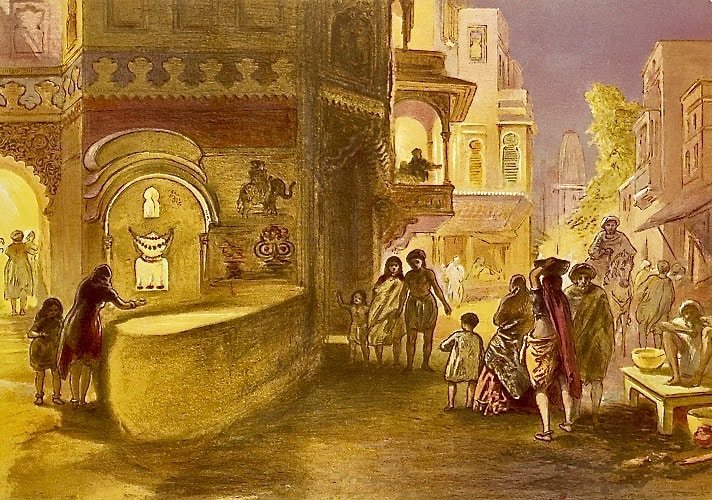
In this investigation
Diwali is called a festival of lights, but the light does not tell only one story. Across India and the diaspora, lamps may be connected with Lakshmi, Rama’s return to Ayodhya, Krishna traditions, Kali worship, prosperity, household renewal or regional new-year cycles. Jains and Sikhs also mark the period through their own histories and meanings.
This diversity matters. The diya is powerful partly because light is an unusually flexible symbol: it can represent presence, knowledge, prosperity, victory, welcome and the defeat of darkness without requiring one uniform theology.
Light makes sacred time visible
A calendar date is abstract. Rows of lamps on thresholds, windows and streets turn it into an environment. Anyone entering the neighbourhood can see that ordinary time has changed.
This is one reason light works so well in public ritual: it transforms space immediately and collectively.
THE RECORD
Diwali is not one uniform myth or rite. Lamps are layered into different devotional, household and regional traditions, which makes a single hidden scientific explanation historically implausible.
Why the household matters
Cleaning, decorating entrances, preparing sweets, buying or making lamps and arranging worship turn the home itself into ritual space. The preparation can be as important socially as the evening illumination.
Household labour coordinates family members around a shared deadline and renews objects and spaces before guests arrive.
Lakshmi and welcome
In many Hindu households, Diwali worship centres on Lakshmi and prosperity. Lamps, cleanliness and open, decorated thresholds can be understood as forms of welcome within that devotional frame.
This meaning is religious. It should not be translated into claims that lamp smoke or flame scientifically attracts wealth or sterilizes a house.
THE EVIDENCE
Light strongly affects visual attention, atmosphere and collective perception. Those psychological facts help explain ritual effectiveness, but they do not replace Diwali’s religious meanings or validate biomedical claims about diyas.
Rama is important—but not everywhere in the same way
North Indian narratives commonly connect Diwali with Rama’s return to Ayodhya after exile and the defeat of Ravana. Other regions emphasize different deities and stories.
Treating Rama’s return as the single historical origin of every Diwali practice collapses a diverse festival into one regional theology.
Jain and Sikh meanings widen the picture
Jain traditions connect the period with Mahavira’s liberation, while Sikh commemorations include Bandi Chhor Divas. These observances are not simply alternate versions of one Hindu story.
The shared timing illustrates how festivals can become layered public seasons used by distinct communities for different memories.
Why small flames are emotionally effective
A dark environment makes each flame visually salient. Hundreds or thousands of lamps create repetition, pattern and collective participation. Lighting a lamp is also simple enough for children and elders to perform.
The result combines personal action with public spectacle.
Preparation can renew social ties
Gift exchange, sweets, visits and shared decoration create repeated contact between relatives, neighbours and businesses. The festival is therefore a social system as well as a religious event.
These exchanges can reinforce networks without needing a special neurological claim.
Fireworks are historically later than lamps
Modern Diwali is often visually dominated by fireworks, but pyrotechnics and their mass availability belong to later historical layers than the lamp tradition.
This matters because modern air-pollution debates concern a practice that can be modified without erasing the festival’s much older light symbolism.
Air pollution is a real modern concern
Fireworks can sharply increase particulate pollution and noise. Oil lamps also generate some combustion products, though exposure depends on fuel, number, ventilation and duration.
Respecting Diwali does not require denying environmental harm. Cleaner celebration can preserve symbolic light while reducing unnecessary smoke and noise.
Electric lights change the material but not necessarily the symbol
String lights and LEDs can extend illumination safely and efficiently. For some families, the oil diya remains religiously important; for others, electric decoration carries much of the public visual function.
Tradition therefore adapts by separating symbolic core from material technology.
The name itself preserves the central image
The modern word Diwali is related to dipavali or deepavali, commonly understood as a row or garland of lamps. That linguistic connection matters because it places illumination at the centre of the festival’s remembered identity rather than treating lamps as a decorative afterthought. Earthen oil lamps are simple objects, but arranged in rows they transform a household, temple, market or street into a shared visual field.
Historical references do not reveal one moment when somebody “invented” Diwali. Instead they show a cluster of observances accumulating around a season. Puranic texts differ about the exact ritual sequence and the day on which particular lamps should be lit. Early-medieval and later literature records illumination alongside stories of Yama, Lakshmi, Bali, Narakasura and other figures. The variation is evidence of development, not evidence that one community’s tradition is false.
Diwali is better understood as a festival complex than a single story
Popular retellings often search for one origin: Rama returning to Ayodhya, Krishna defeating Narakasura, Lakshmi entering the home, King Bali returning, or another sacred event. These narratives are important within the communities that tell them, but the historical record is more plural. North Indian practice may foreground Rama, parts of southern India emphasize Naraka Chaturdashi, Bengal and neighbouring regions may centre Kali Puja, and mercantile communities often give special weight to Lakshmi and the renewal of accounts.
This diversity explains why light is so effective as the festival’s common grammar. A flame does not require every participant to tell the same theological story. It can signify victory, auspiciousness, knowledge, prosperity, remembrance, invitation or sacred presence. The shared act survives even when the explanation around it changes.
The lunar timing amplifies what a small lamp can do
The principal Diwali night falls around the dark phase of the lunar month, when natural nighttime illumination is low. Against that background, a small oil flame becomes unusually visible. Rows of lamps create contrast, rhythm and repetition; a single household’s act becomes legible across an entire neighbourhood.
It is tempting to convert this into a physiological theory about circadian rhythms or seasonal light therapy. The evidence does not require that leap. Visual contrast alone explains why lamps are dramatically effective on a dark night. The ritual works at the level of perception and social coordination: participants can see that the community has entered festival time.
Cleaning and lighting turn the house into ritual space
In many households the festival begins long before the first lamp is lit. Rooms are cleaned, thresholds decorated, damaged items replaced, sweets prepared and entrances made presentable. These actions are frequently linked to welcoming Lakshmi or making the household auspicious, but they also have an observable social effect: family members coordinate around a common deadline and make the home ready for worship and visitors.
The practical benefits of cleaning should not be exaggerated into a claim that Diwali was designed as an ancient public-health campaign. Cleaning can improve the physical environment, but the historical meanings involve auspiciousness, hospitality, renewal and sacred welcome. Practical and symbolic effects can coexist without one secretly causing the other.
For merchants, light also marks renewal and prosperity
Diwali has long had strong mercantile associations in parts of India. Business communities may worship Lakshmi, open or ritually renew account books and treat the period as an auspicious financial beginning. Modern institutions preserve traces of that relationship in practices such as muhurat trading.
This commercial layer shows how festivals can bind cosmology to ordinary economic life. Wealth is not represented only as money; it is made visible through a clean shop, a lit entrance, gifts, sweets, new purchases and balanced accounts. The light therefore belongs simultaneously to religious symbolism and to the social performance of renewal.
Jain Diwali gives light a distinct theological meaning
Jain tradition connects Diwali with Mahavira’s nirvana. A traditional account states that after the spiritual teacher’s passing, rulers instituted material illumination because the spiritual light had departed. Whether read devotionally or historically, the account demonstrates that Jain use of lamps cannot simply be treated as a borrowed footnote to a single Hindu origin story.
The same physical act—lighting lamps—can therefore encode a different religious memory. This is one reason Tradivior should resist explanations that ask what Diwali “really” means as though only one answer can be authentic. Shared ritual technologies can be reinterpreted by neighbouring traditions over centuries.
Bandi Chhor is connected by calendar and public light, but it has its own history
Sikh communities commemorate Bandi Chhor Divas around the same period, remembering Guru Hargobind’s release from imprisonment in the seventeenth century. The celebration often coincides publicly with Diwali, and illumination at gurdwaras can make the visual overlap striking.
But coincidence and shared festive material do not erase distinct memory. Treating Bandi Chhor merely as a Sikh “version of Diwali” would flatten the historical event being commemorated. The better description is that several South Asian traditions occupy the same seasonal public landscape while carrying different narratives into it.
Fireworks are spectacular, but they are not the ancient core of the festival
Contemporary images of Diwali often foreground firecrackers so strongly that they can appear inseparable from the festival. Historically, however, pyrotechnics belong to a later technological layer than earthen lamps and textual traditions of illumination. This distinction matters because it allows environmental reform without implying that the festival itself must disappear.
The scientific evidence on modern firework pollution is strong. Studies across Indian cities repeatedly measure short-lived but substantial rises in particulate matter, combustion products, metals and noise around Diwali. A 2026 study in Agartala found significant increases in multiple pollutants during the festival period, while another 2026 multicity analysis across the Indo-Gangetic Basin found severe short-term air-quality deterioration associated with fireworks and stagnant meteorological conditions.
Cleaner celebration can preserve the symbolic core
If the oldest and most durable element is illumination, then the tradition is unusually adaptable. A household can retain a small number of ritual diyas while using efficient electric lighting for broader decoration. Communities can reduce or eliminate fireworks, shorten display periods, choose quieter public celebrations or shift emphasis toward lamps, food, gifts, music and gathering.
This is not a modern rejection of tradition. It is an example of how living traditions change materials while preserving meanings. Oil, wax, electricity and projected light are different technologies, but all can perform the central social task of making the festival visible.
The scientific explanation is strongest when it stays modest
Light affects human perception and can carry powerful emotional associations, but Diwali does not need a speculative neurochemical story to be meaningful. The strongest explanation is cultural and historical. Illumination creates contrast against darkness, makes participation publicly visible, beautifies space, provides a medium for welcome and prosperity, and supports multiple religious memories.
That conclusion is more evidence-led than saying ancient Indians designed Diwali to manipulate melatonin, disinfect the air or produce a specific psychological state. Such claims confuse what modern science can measure with what historical people demonstrably intended. Diwali’s light is powerful precisely because symbolism, sensory experience and social coordination already explain so much.
The diya works because a small flame is visually disproportionate in darkness
Human vision is highly sensitive to contrast. On a dark evening, even a small lamp becomes a focal point, while hundreds of lamps create pattern, repetition and collective atmosphere.
This perceptual effect helps explain why light is such an effective festival medium. It does not establish any hidden medicinal property of the flame.
Household lighting turns private devotion into neighbourhood visibility
A single lamp inside a shrine can remain private; rows of lamps on thresholds and balconies announce participation publicly. Homes become part of one larger visual field.
This is how Diwali can create collective identity without requiring everyone to gather in one central place.
Cleaner light does not erase the symbolic core
LEDs, enclosed lamps and reduced-firework celebrations can preserve illumination, colour and shared timing while lowering fire and air-pollution risk.
The adaptability of the light symbol is one reason the festival can modernize without losing its recognizability.
Light works because it transforms shared space immediately
A single lamp is small; thousands of lamps change a street, neighbourhood or skyline. Illumination therefore lets individual household acts become a collective visual statement.
This scaling effect helps explain why the diya remains powerful even when electric lighting supplements it.
The strongest modern adaptation separates light from smoke
Diwali’s symbolic centre does not require heavy firework pollution. Lamps, LEDs, rangoli, prayer, food and visiting preserve much of the festival’s social and religious structure.
Environmental reform can therefore remove a harmful material layer without erasing the older symbolism of illumination.
Light also extends celebration into the public evening
Illuminated thresholds and streets make homes visible to neighbours and visitors after dark, turning private worship into shared ambience.
The result is a collective landscape of participation rather than a hidden household rite.
What survives scrutiny?
- Light is historically central to Diwali but carries different meanings across regions and traditions.
- Diwali should not be reduced to one universal origin story.
- Lamps transform homes and streets, making sacred time publicly visible.
- Cleaning, decoration, gifts and sweets reinforce household and community participation.
- Modern psychology can explain attention and atmosphere but not replace sacred meaning.
- There is no established biomedical reason that diyas are necessary for health.
- Fireworks are a later layer and create genuine air-pollution and noise concerns.
- Cleaner forms of illumination can preserve much of the festival’s symbolic function.
The Tradivior Evidence Profile
Historical Authenticity — Strong. Lamps and illumination are deeply embedded in Diwali traditions.
Original-Purpose Evidence — Strong. Worship, welcome, auspiciousness, remembrance and visible celebration are directly documented meanings.
Scientific Mechanism — Limited. Light affects attention and atmosphere, but biomedical interpretations are unsupported.
Experimental Evidence — Limited. General ritual and light-perception research cannot validate the festival’s theological claims.
Cross-Cultural Evidence — Moderate. Festivals of light exist elsewhere, but Diwali’s layered South Asian meanings are distinctive.
Modern Relevance — Strong. The festival remains culturally central and can adapt toward lower-pollution forms.
The Tradivior Conclusion
Primarily Symbolic/Cultural. Diwali is built around light because illumination is a powerful religious and social symbol that makes sacred time visible, welcomes prosperity or divinity in many traditions, and transforms private homes into a collective landscape. Modern science can explain why light captures attention and why shared preparation builds connection. It does not reveal a hidden medical purpose. The festival’s strength lies in symbolic flexibility—and that allows harmful modern additions such as excessive fireworks to change without extinguishing Diwali itself.
Continue investigating
Sources & further reading
- Baruah S. “The Festival of Lights in Various Religious and Literary Texts of South Asia.” Sahapedia.
- Baruah S. “Diwali: Origins and the Evolution of the Festival of Lights.” Sahapedia.
- Encyclopedia of Religion. “Divali.”
- Encyclopedia of Religion. “Mahavira.”
- Encyclopedia of Religion. “Sikhism,” section on Bandi Chhor.
- Kaur P, Guha A, Pipal AS. “Air pollutants and their health risk assessment during Diwali fireworks in Agartala, Northeast India: A case study.” Environmental Monitoring and Assessment. 2026;198(2):152. doi:10.1007/s10661-026-14982-2.
- “Firecracker-induced air pollution and health burden during Diwali: ground and satellite assessment across 14 cities of the Indo-Gangetic Basin.” 2026. PMID 42336951.
- Beig G, et al. “Evaluating population exposure to environmental pollutants during Deepavali fireworks displays using air quality measurements of the SAFAR network.” Chemosphere. 2013;92(1):116–124. doi:10.1016/j.chemosphere.2013.02.043.
Continue exploring
Partially Supported
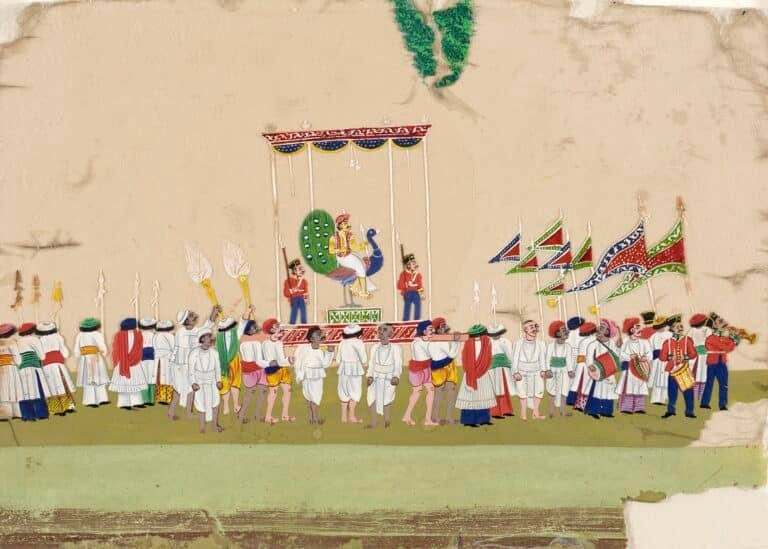
Why Do Religious Processions Take Sacred Things Into the Street?
Religious processions move sacred presence, symbols and communities through public space. They can expand shared identity through coordinated movement and visibility, but the same public occupation can mark boundaries and…
Partially Supported
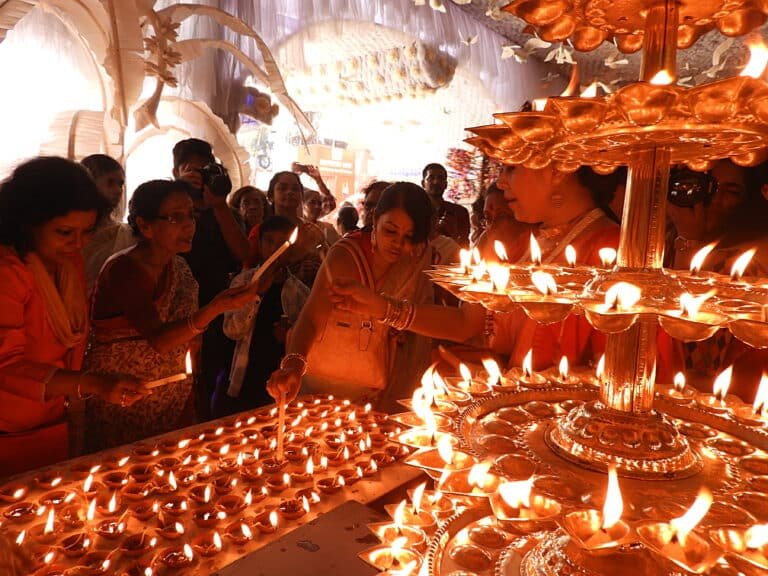
Why Do Festivals Bring Entire Communities Together?
Festivals concentrate shared time, symbols, music, food and synchronized action, making community membership unusually visible. Research links co-participation and synchrony with stronger social ties, but cohesion can be inward-facing and…
Primarily Symbolic/Cultural
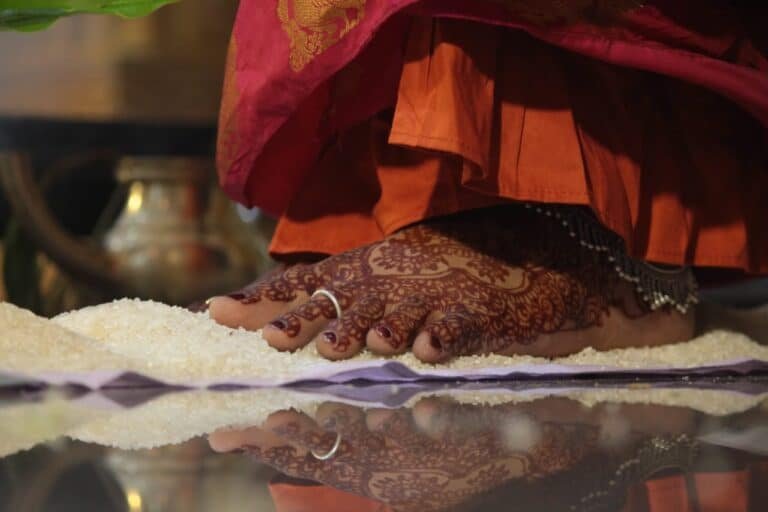
Why Did Indians Circle Sacred Fire at Weddings?
Sacred fire in Hindu weddings is historically a witness, offering medium and divine presence rather than a hidden biomedical technology. Circumambulation and vows make marriage public, memorable and religiously binding;…

Primarily Symbolic/Cultural
Why Do Religions Regulate Meat?
Religions regulate meat because killing animals, blood, purity, sacrifice and communal identity carry unusually high moral weight. Some rules may have ecological or safety consequences, but Jewish, Islamic, Hindu, Jain,…
Picked for your curiosity
Enable JavaScript to build a reading profile and see recommendations.