 tradivior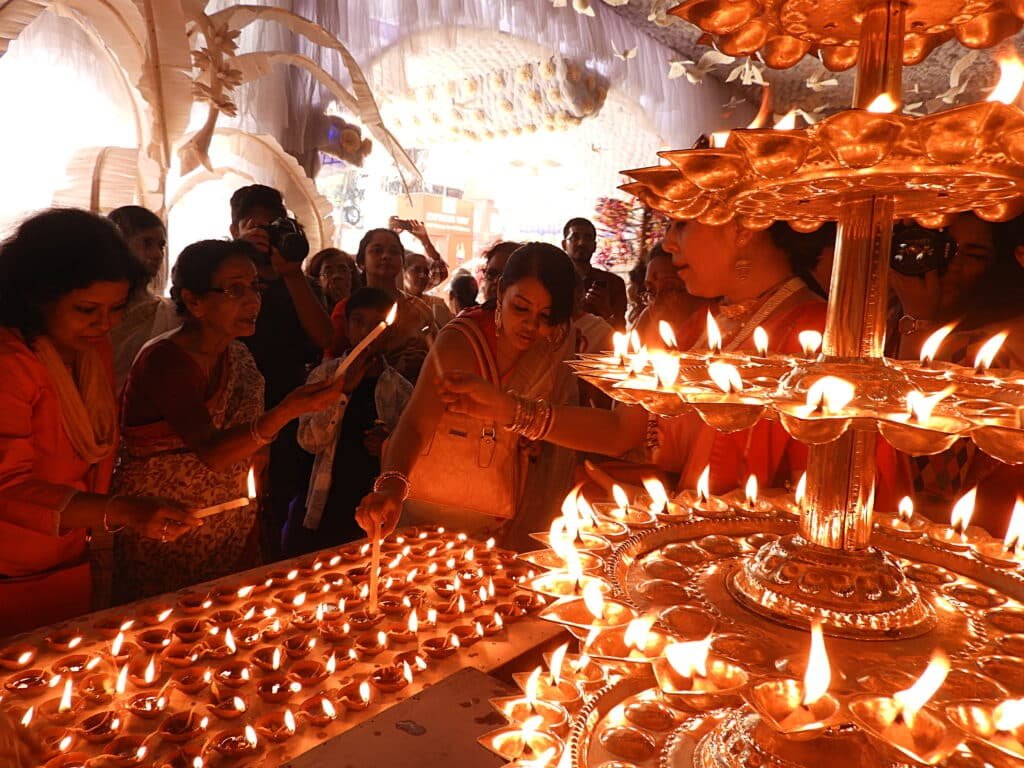
In this investigation
A festival does something ordinary life rarely does: it makes many people stop at the same time. Work schedules change, streets fill, foods appear, music repeats, clothing shifts and private belief becomes public activity. The calendar synchronizes a community before any drumbeat does.
That concentration of attention helps explain why societies repeatedly invest labour and money in festivals. They create shared memory, renew identity and strengthen relationships. Yet cohesion is not automatically universal: a festival can unite insiders while excluding outsiders, and large gatherings can produce crowd hazards or political conflict.
The calendar creates collective time
A recurring festival marks the year. People remember childhood through it, plan travel around it and know others are doing the same.
This shared temporal structure can bind dispersed people to a common cycle even when they rarely meet otherwise.
THE RECORD
Festivals recur because they combine sacred or civic meaning with social coordination. Their value is not only what is believed, but what thousands of people do together at a predictable time.
Synchrony can strengthen affiliation
Dancing, chanting, marching, singing and clapping align bodies in time. A substantial experimental literature links synchrony with affiliation and cooperation under some conditions.
A broader review of ritualistic synchrony also warns that the effect is not purely prosocial: strong in-group coordination can sometimes increase conformity or intergroup hostility.
THE EVIDENCE
Research supports links between collective ritual, synchrony and social cohesion. A South Indian village study found co-participation in Hindu ritual associated with denser supportive relationships. These effects are contextual rather than automatically universal.
Shared emotion becomes a social resource
Music, spectacle, prayer and crowd attention can produce emotional synchrony. Recent longitudinal research on costly rituals found emotional synchronization predicted social identification and cohesion months later.
Festivals create many of the same ingredients without necessarily requiring costly ordeal.
Food turns belonging into hospitality
Festival foods are often seasonal, ritualized and shared. Cooking and giving food distributes labour and creates repeated exchanges between households.
A festival meal can therefore reinforce networks at the same time it celebrates a sacred story.
Festivals teach history through repetition
Stories enacted every year are easier to remember than stories encountered once. Children learn symbols through participation before they understand formal doctrine.
Ritual repetition becomes a form of cultural education.
Public decoration changes space
Lights, flags, temporary shrines, stages and processions transform streets into marked territory. This can create pride and visibility for a community.
It can also create disputes over noise, routes, access and ownership of public space.
Economic exchange is part of the festival system
Markets, crafts, travel, gifts, tourism and seasonal employment can all intensify around festivals. Communities may redistribute resources through charity or spend heavily on display.
The same event can generate livelihood and debt.
Cohesion can have boundaries
A strong “we” can imply a “they.” Ritual cohesion may strengthen support among participants while making nonparticipants feel excluded.
Research on synchrony emphasizes this trade-off: cohesion is not identical to universal tolerance.
Crowd safety is a modern systems problem
Large pilgrimages and festivals can create crushing, fire, traffic and heat risks. Social identification can sometimes improve cooperative crowd behaviour, but infrastructure and professional crowd management remain essential.
Religious meaning does not substitute for engineering.
Festivals survive secularization by changing meaning
Some participants attend primarily for worship, others for family, food, music or heritage. A festival can therefore remain durable even as belief intensity varies.
This layered participation helps traditions adapt.
A festival synchronizes people before they ever meet
The power of a festival begins with the calendar. A recurring date tells thousands or millions of people to prepare at roughly the same time. Families clean, travel, shop, fast, cook, decorate or save money in anticipation. Even before the central event begins, behaviour has been synchronized across households that may never directly interact.
This shared timing produces something ordinary gatherings cannot easily replicate: expectation. People remember previous years, anticipate who will return home and know that distant relatives or co-believers are entering the same ritual season. The calendar therefore creates a distributed community before the crowd becomes physically visible.
Collective emotion can reinforce identity
Classical sociology described intense shared feeling in ritual gatherings as “collective effervescence.” Modern research approaches the same phenomenon with more specific mechanisms: emotional contagion, synchronous movement, shared attention, music, chanting and common symbols. Experimental and field studies generally support the idea that coordinated activity can increase feelings of affiliation and, in some settings, cooperation.
Festivals combine several of these mechanisms at once. A participant may sing with others, watch the same spectacle, eat the same symbolic food and hear a familiar story repeated in a large crowd. The effect does not require a mysterious group mind. Human attention and emotion are strongly influenced by what nearby people are doing.
Ritual labour creates networks before ritual spectacle creates emotion
Much of a festival is built out of work that visitors never notice. Someone raises money, cooks, decorates, arranges transport, cleans public space, rehearses music, manages queues or distributes food. Those tasks require repeated cooperation among people who may otherwise interact only occasionally.
This is one reason festival cohesion should not be explained only through emotion on the main day. Social bonds can be strengthened during weeks of preparation because participants solve practical problems together. Field research on collective ritual in South India has linked ritual participation with social support networks, suggesting that ritual organization can be embedded in everyday cooperation rather than operating only as spectacle.
Festival food turns memory into something sensory
Special foods are unusually effective carriers of tradition because smell and taste are learned through repetition. A sweet, bread, stew or seasonal ingredient can become associated with one festival so strongly that encountering it years later recalls a household, a relative or a childhood place.
Food also turns belonging into exchange. Families send dishes to neighbours, hosts feed visitors, religious institutions serve communal meals and markets fill with seasonal ingredients. These transactions create obligations and opportunities for generosity. The mechanism is social rather than magical: repeated giving keeps relationships active.
Festivals are annual schools of cultural memory
Children often participate in a festival before they can explain its theology or history. They learn that particular clothes are worn, certain songs are sung, one story is dramatized and particular relatives are visited. Meaning is acquired through embodied repetition rather than through formal instruction alone.
This makes festivals unusually durable educational systems. A story heard once can be forgotten; a story enacted every year becomes attached to place, food, music and family routine. Archaeological approaches to ritual similarly emphasize that ritual is a material practice, not merely a spoken belief. People remember through doing.
Public festivals make community identity visible
Lights, banners, temporary architecture, stages, processions and clothing alter the ordinary appearance of a town. This visibility can give participants a sense that their community has a legitimate place in public life. Multicultural festivals in modern societies often perform exactly this function by presenting heritage publicly and inviting wider participation.
Yet visibility also has politics. Research on urban festivals and funeral rituals shows that public celebrations can become claims about who belongs, who owns cultural space and whose history represents the city. A festival that feels inclusive from inside may feel exclusionary to people who are absent from its symbols or displaced by its use of public space.
A strong “we” can sharpen the boundary around “they”
Synchrony and shared emotion are often discussed as though they simply make people kinder. The evidence is more complicated. Bonding usually operates toward a group. Stronger identification can increase generosity toward fellow members while leaving outsiders unaffected or even intensifying rivalry.
This is why a festival can produce both solidarity and conflict. Symbols that reassure one group can appear territorial to another. Noise, processional routes, holiday closures and competition for public funding can become political. Tradivior should therefore treat cohesion as a mechanism with boundaries, not as an automatic universal good.
Festivals temporarily reorganize local economies
Travel, gifts, clothing, food, craft production, transport and entertainment often surge around major festivals. Temporary jobs appear; small vendors gain customers; artisans receive seasonal demand; families redistribute savings through gifts and hospitality. Religious charity may also increase.
The economic effect is not uniformly positive. Competitive spending can create debt, tourism can price residents out of central spaces and large events can impose cleanup or security costs on the public. The same festival that supports one livelihood may burden another household. Economic impact should therefore be assessed rather than romanticized.
Mass gatherings require modern safety systems
Festivals can bring very large numbers of people into streets, pilgrimage sites or temporary venues. Crowd density, heat, weather, traffic, fire, sanitation and medical access become engineering problems at scale. Sacred purpose does not change the physical limits of a narrow bridge, gate or road.
Modern crowd research also suggests that people in strongly identified crowds can behave cooperatively and help strangers they perceive as fellow group members. That is useful for emergency planning, but it cannot replace infrastructure. Safe festivals require route design, capacity monitoring, communication and contingency planning alongside community participation.
Festivals can remain meaningful even as belief changes
A modern festival crowd may contain devout worshippers, cultural participants, tourists, relatives returning home, vendors and people who mainly enjoy food or music. This diversity does not necessarily weaken the festival. It can make the institution resilient because different participants find different reasons to continue it.
Traditions survive by carrying several layers at once: theology, family obligation, heritage, entertainment, memory, economy and public identity. The festival may therefore persist through secularization or migration because participation still renews social relationships even when individual belief becomes more varied.
Festivals do something ordinary life rarely can: synchronize an entire community
Daily life fragments people by occupation, household, age, class and schedule. A festival temporarily reverses that fragmentation. Shops close or change hours, relatives travel, streets are decorated, foods appear seasonally, music becomes public, religious spaces fill and people who normally live separate routines orient themselves toward the same date and symbols.
This is one reason recurring festivals can feel larger than entertainment. They create shared time. The event says that this day is not interchangeable with the one before it or after it. A community that repeatedly marks the same moment builds a collective calendar, and the calendar becomes part of identity.
Collective effervescence is more than a poetic metaphor
Émile Durkheim used the phrase “collective effervescence” for the heightened emotion that can emerge when people gather around shared symbols and actions. For decades the idea was theoretically influential but difficult to test. More recent research has begun measuring the processes behind it: shared attention, emotional synchrony, coordinated movement, identity fusion and feelings of unity.
A 2015 series of studies on collective gatherings found that participation could strengthen collective identity, social integration, efficacy and positive affect. A 2025 study of the Carnaval de Negros y Blancos in Colombia similarly examined perceived synchrony, awe and self-transcendence among festival participants. The modern evidence does not prove Durkheim was universally correct, but it does support the idea that large collective events can generate measurable changes in how people experience themselves in relation to a group.
Moving together can change how people relate to one another
Marching, dancing, clapping, chanting and singing align bodies in time. Laboratory and field studies repeatedly find that such synchrony can increase affiliation, perceived unity and cooperative behaviour under some conditions. In a field experiment comparing nine ritual types, synchronous movement was associated with stronger prosocial attitudes, while rituals judged to be sacred were linked with larger public-goods contributions.
Experimental work also shows that synchrony and physiological arousal can each increase clustering and cooperation in large groups. The key point is not that synchronized movement mechanically makes people virtuous. The effect depends on shared attention, interpretation and social context. Synchrony is a tool for strengthening groupness; what the group then does with that cohesion is a separate question.
Shared emotion can spread beyond active performers
Ritual effects are not limited to the people dancing, carrying objects or performing dramatic acts. A study of a Spanish fire-walking ritual found synchronized patterns of physiological arousal between fire-walkers and related spectators even though the spectators were not performing the same bodily actions. Emotional participation can therefore travel through attention, relationship and shared meaning.
This helps explain why spectatorship is often central to festivals rather than secondary. Watching a procession, concert, ritual dance or ceremonial lighting can still locate a person inside the event. The crowd is not merely an audience in the modern entertainment sense; it can be part of the ritual system.
Sacred meaning can amplify the effects of participation
The same movement can feel very different when participants believe it connects them to ancestors, deities, history or moral obligation. Research on naturally occurring rituals supports the idea that top-down beliefs shape what participation means. A 2024 field study of Japan’s Bon dance, for example, examined how ancestor beliefs interacted with active participation, observation and social-cohesion outcomes.
This is another reason not to reduce festivals to exercise, music or crowd psychology. Those elements matter, but participants may experience them inside a sacred or historical frame. A dance performed “for ancestors” is socially different from the same movement performed as a neutral coordination task, even if the bodies move identically.
Festivals transmit culture by making children participants before they are theorists
Children often learn a festival through smell, sound, clothing, food, colour and repetition long before they understand doctrine or history. They help prepare sweets, watch elders perform rituals, memorize songs, receive gifts, decorate homes and accompany family members to public events. Cultural knowledge is therefore transmitted through participation rather than formal instruction alone.
This makes festivals unusually effective memory systems. A story repeated annually is tied to sensory cues and social relationships. The festival does not merely tell a child “this happened” or “we believe this”; it allows the child to experience what the community does when the story returns.
Special food turns the calendar into taste and smell
Festival foods are often deliberately unavailable, rare or socially marked outside the festival period. That restriction increases their mnemonic power. A sweet, bread, drink or savoury dish can become an edible timestamp. One bite can recall a household, an ancestor, a childhood ritual or an entire season.
The social function is equally important. Preparing large quantities of food redistributes labour through kin networks, while gifting food creates chains of reciprocity. Charity meals and public feeding can extend the festival beyond family to strangers. The scientific story here is not hidden nutrition; it is that food is an unusually effective medium for hospitality, memory and exchange.
Temporary transformation of public space makes identity visible
Lights, banners, rangoli, flags, processional routes, temporary shrines, stages, markets and public art transform ordinary streets into ceremonial territory. A community that may be dispersed or socially invisible during ordinary weeks becomes physically present in public space.
This can strengthen pride and belonging, but it can also generate conflict. Noise, traffic, road closures, religious symbolism and control of public space can produce disputes with neighbours or rival groups. Festival visibility is socially powerful precisely because space is never neutral.
Festival economies can redistribute wealth—or intensify inequality
Festivals stimulate transport, hospitality, food production, crafts, music, temporary work and retail. They can create important seasonal income for small vendors and artisans. Gift exchange and charity can also move resources through households and institutions.
Yet the same pressure to participate can become expensive. Clothing, travel, gifts, decorations and hosting obligations may strain poorer households. Commercial sponsorship can shift the balance from communal participation toward spectacle and consumption. A festival can therefore strengthen a local economy while also magnifying class differences in who can display generosity or prestige.
Cohesion is not the same as universal inclusion
A festival may increase trust and generosity among participants while sharpening the boundary between participants and outsiders. Social psychology distinguishes between prosociality within a group and prosociality toward everyone. Some synchrony studies find that cooperative effects can extend beyond immediate co-performers, but this is not guaranteed.
The moral consequence depends on the identity being activated. “We are one village” can expand solidarity locally; “we are the true believers and they are not” can intensify exclusion. Tradivior should therefore avoid treating social cohesion as automatically good. Strong groups can care for members and still behave badly toward non-members.
Crowd intensity produces both emotional power and physical risk
The same density that makes a festival feel extraordinary can create danger. Crowd crushing, fire, heat exposure, traffic congestion and structural failure are not symbolic risks. They require engineering, communication, emergency planning and realistic capacity limits.
Social identification can sometimes improve orderly cooperation in crowds, but it cannot compensate for unsafe infrastructure. Religious meaning, enthusiasm and familiarity with a festival should never be used as substitutes for modern crowd-safety systems. Here the correct modern adaptation is not to remove collective gathering, but to design it better.
Festivals can survive even when belief weakens
Many modern participants attend festivals for layered reasons. One person may come for worship, another for family, another for food, music, nostalgia, heritage or tourism. These motives are not mutually exclusive. A person can enjoy a secular social dimension while still respecting the event’s sacred origin.
This layered participation helps explain why some festivals remain robust through modernization. Their survival does not necessarily show unchanged belief. It may show that the institution has accumulated several functions—religious, familial, economic, aesthetic and civic—so that weakening one layer does not eliminate the whole event.
Diaspora communities use festivals to recreate place at a distance
For migrants, festivals can compress geography. A rented hall, public square or temple complex can temporarily reproduce foods, languages, music and ritual sequences associated with a homeland. Children born abroad encounter a concentrated version of cultural life they may not experience daily.
This makes festivals important vehicles of identity under migration. At the same time, diaspora celebrations often evolve, simplify or combine regional traditions because participants come from diverse backgrounds. What looks like preservation may actually be creative reconstruction.
The strongest evidence supports mechanisms, not a single universal purpose
Modern research supports several plausible mechanisms: synchrony can increase affiliation, shared emotion can strengthen identity, recurring calendars can organize memory, food exchange can reinforce networks and public gatherings can renew social ties. A 2026 study on costly rituals further reported that emotional synchrony predicted social-cohesion effects after demanding collective events.
None of this proves that ancient communities consciously designed festivals as social-engineering technologies. Historical communities usually explained festivals through gods, ancestors, seasons, myths, victories, harvests or sacred obligations. The modern mechanism may help explain why the institution persists, but it should not replace the original meaning.
Festivals synchronize people before they synchronize bodies
The calendar itself is a coordination technology. A date tells dispersed households when to travel, cook, decorate, fast, worship or gather. People can participate in the same festival without knowing one another personally.
This long-range temporal coordination may be one of the most important social functions of recurring festivals.
Shared movement intensifies an already shared calendar
Dancing, chanting, clapping, marching and singing align bodies after the calendar has already aligned time. Experimental research suggests synchronized action can increase affiliation and cooperation in some settings.
The effect is not uniquely religious and should not be romanticized: synchrony can strengthen in-group identity without improving attitudes toward outsiders.
Festivals turn memory into recurring performance
A story heard once can be forgotten. A story enacted annually through food, dress, music and ritual becomes attached to sensory memory and family routine.
Children often learn the sequence of a festival before they can explain its theology. Repetition turns cultural history into embodied knowledge.
Food exchange creates reciprocal obligations
Sweets, meals, gifts and charity move between households during festivals. These exchanges reinforce relationships and create expectations of reciprocity that can persist beyond the event.
The social value can be substantial even when the food itself has no special health benefit.
Public decoration converts ordinary space into collective space
Lights, flags, flowers, temporary stages and processions mark streets and homes as part of the festival. The visual transformation tells participants that ordinary routines have been suspended.
This can create pride and belonging while also raising questions about noise, access, competing religious claims and use of public space.
Economic effects are part of the institution
Festivals generate seasonal work for craftspeople, transport workers, food sellers, musicians, decorators and tourism businesses. They can also create pressure to spend on gifts, clothing and display.
Economic benefit and financial burden can therefore coexist inside the same festival economy.
Crowd psychology does not replace crowd engineering
Shared identity can sometimes help crowds cooperate, but dense gatherings still obey physical constraints. Narrow exits, sudden surges, heat, fire and blocked emergency access can produce catastrophic risk.
Professional planning, capacity limits and communication are essential regardless of sacred significance.
Festivals can include and exclude at the same time
A festival may strengthen bonds among participants while making nonparticipants more aware of difference. Public celebration can therefore build solidarity and sharpen boundaries simultaneously.
That dual effect is more realistic than describing festivals as automatically harmonious community-building events.
Secularization changes motives more easily than behaviour
Some people attend a festival for worship, others for family, food, heritage, music or nostalgia. Participation can remain high even when theological commitment varies.
This flexibility helps explain why festivals can survive major changes in belief and migration.
Diaspora communities use festivals to compress cultural geography
For migrants, an annual festival can recreate foods, language, dress and social networks that are otherwise dispersed through the year. A community centre or city street temporarily becomes a concentrated cultural space.
The festival therefore maintains identity across distance as well as across generations.
The strongest scientific claim is social coordination
Research supports plausible mechanisms through synchrony, emotional convergence, repeated interaction and shared identity. Those effects explain why festivals can strengthen communities without proving every sacred claim attached to them.
The institution survives because it combines meaning, timing, sensory intensity and social exchange in one recurring event.
Festivals create temporary dense social networks
People who usually interact only occasionally may cook, decorate, rehearse, travel and worship together for days. That concentrated contact creates many opportunities for weak social ties to become useful relationships.
Field research in rural South India found co-participation in collective ritual associated with denser supportive relationships, especially for recurrent low-arousal worship. citeturn102141search7
Shared preparation can matter as much as the main event
Building stages, cooking, cleaning, collecting donations and organizing transport require cooperation before anyone begins the formal ritual.
Those practical tasks can strengthen networks because participants solve real problems together rather than merely standing in the same crowd.
Festivals synchronize memory across generations
Children repeatedly encounter the same songs, foods, stories and symbols each year. Repetition makes cultural memory easier to transmit even when formal instruction is limited.
Annual recurrence turns history into something embodied rather than merely read.
Collective emotion can strengthen identity
Music, procession, chanting and spectacle align attention and emotion. Recent research on costly rituals has found emotional synchronization predicts stronger social identification and cohesion after shared ritual experiences. citeturn102141search8
The mechanism is plausible for festivals too, while the direction of cohesion depends on how inclusively the group defines itself.
Cohesion can create boundaries at the same time
A festival can strengthen solidarity among participants while making outsiders feel excluded or threatening. Group identity is not automatically universal tolerance.
The healthiest public festivals pair strong internal meaning with clear norms against harassment, exclusion and intergroup provocation.
What survives scrutiny?
- Festivals synchronize communities in time and concentrate shared symbols and activities.
- Collective ritual participation is associated with stronger support ties in some field studies.
- Synchronous movement and shared emotion can strengthen affiliation and identity.
- Festival food, gifts and labour reinforce reciprocal networks.
- Repetition transmits stories and identity across generations.
- Cohesion can be inward-facing and may coexist with exclusion or conflict.
- Large gatherings require crowd-safety infrastructure regardless of sacred purpose.
- Festivals can generate both economic opportunity and financial burden.
The Tradivior Evidence Profile
Historical Authenticity — Strong. Recurring collective festivals are a major feature of societies worldwide.
Original-Purpose Evidence — Strong. Worship, commemoration, seasonal transition, identity and social gathering are explicit purposes.
Scientific Mechanism — Moderate. Synchrony, emotional convergence and network reinforcement provide plausible social mechanisms.
Experimental Evidence — Moderate. Experimental and field evidence supports some cohesion effects, though festivals as whole systems are not easily randomized.
Cross-Cultural Evidence — Strong. Festivals are nearly universal in form if not content.
Modern Relevance — Strong. Festivals remain major vehicles for identity, social networks, local economies and heritage.
The Tradivior Conclusion
Partially Supported. Festivals can genuinely strengthen community by synchronizing time, emotion, movement, food and social exchange. Field and experimental evidence supports parts of that mechanism. But cohesion is not automatically benign or universal: strong festivals can also mark boundaries, create pressure and generate crowd risk. Their enduring power comes from making belonging visible and repeatable, not from a single biological effect.
Continue investigating
Sources & further reading
- Fischer R, Callander R, Reddish P, Bulbulia J. “How do rituals affect cooperation? An experimental field study comparing nine ritual types.” Human Nature. 2013;24(2):115–125. doi:10.1007/s12110-013-9167-y.
- Jackson JC, et al. “Synchrony and Physiological Arousal Increase Cohesion and Cooperation in Large Naturalistic Groups.” Scientific Reports. 2018;8:127. doi:10.1038/s41598-017-18023-4.
- Konvalinka I, et al. “Synchronized arousal between performers and related spectators in a fire-walking ritual.” PNAS. 2011;108(20):8514–8519. doi:10.1073/pnas.1016955108.
- Páez D, et al. “Psychosocial effects of perceived emotional synchrony in collective gatherings.” Journal of Personality and Social Psychology. 2015;108(5):711–729. doi:10.1037/pspi0000014.
- Irving B, Kavanagh C, Fischer R, Yuki M. “Dance for the dead: The role of top-down beliefs for social cohesion and anxiety management in naturally occurring collective rituals.” PLOS ONE. 2024;19:e0291655.
- Rincón-Unigarro C, et al. “Ritual’s collective effervescence, awe, and social identity: psychosocial effects of the Pasto carnival.” Frontiers in Psychology. 2025.
- Bouchat P, et al. “Emotional synchrony predicts social cohesion effects following costly rituals.” British Journal of Social Psychology. 2026;65(2):e70064. doi:10.1111/bjso.70064.
- Swenson E. “The Archaeology of Ritual.” Annual Review of Anthropology. 2015;44:329–345.
- Whitehouse H, Lanman JA, et al. “Ritual and Religion as Social Technologies of Cooperation.” In: Culture, Mind, and Brain. Cambridge University Press; 2020.
- Nnabuihe OE. “Frontiers of belonging and politics of identity: the materiality of funeral rituals and festivals in Nigeria’s urban space.” Africa. 2023;93(3):331–350. doi:10.1017/S0001972023000530.
- Power EA. “Collective ritual and social support networks in rural South India.” Proceedings of the Royal Society B. 2018;285:20180023.
- Jackson JC, et al. “The cultural evolutionary trade-off of ritualistic synchrony.” Philosophical Transactions of the Royal Society B. 2020.
- Bouchat P, et al. “Emotional synchrony predicts social cohesion effects following costly rituals.” British Journal of Social Psychology. 2026.
- Turner V. The Ritual Process.
Continue exploring
Partially Supported
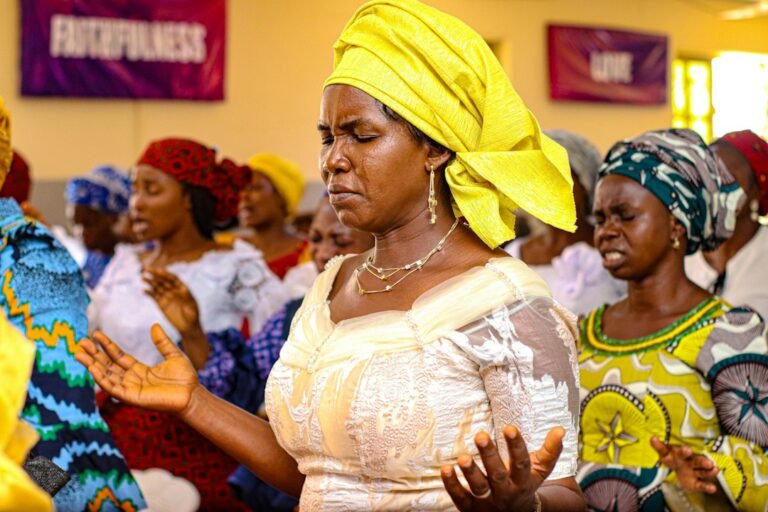
Why Do Humans Repeat Rituals?
Rituals repeat because fixed sequences create predictability, memory, identity and coordination. Experiments suggest ritualized repetition can regulate anxiety and social connection, while mantra repetition shows small benefits for psychological distress;…
Primarily Symbolic/Cultural
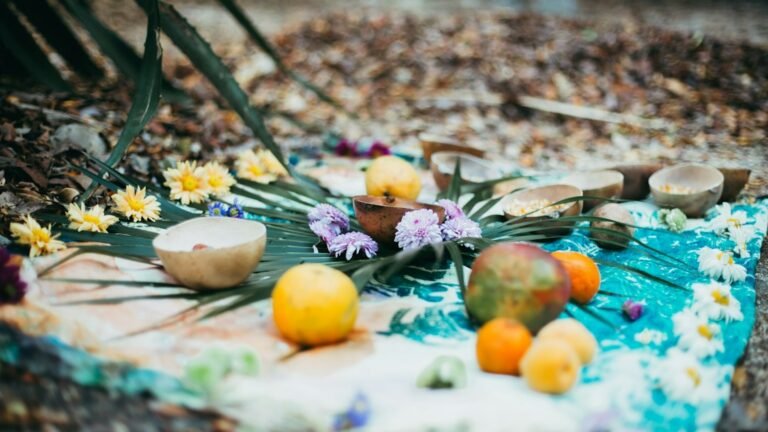
Why Do Humans Make Offerings to the Sacred?
Offerings make relationships with gods, ancestors and sacred powers materially visible. Gifts can express reciprocity, devotion, gratitude, sacrifice and group commitment; costly-signalling models illuminate some public effects but cannot substitute…
Primarily Symbolic/Cultural
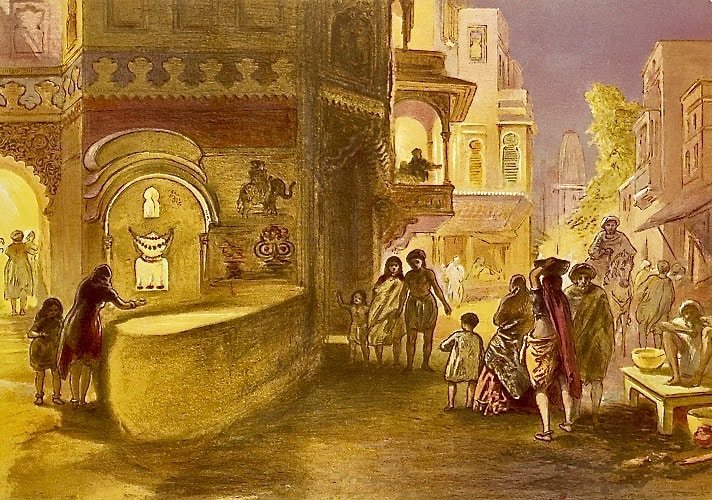
Why Is Diwali Built Around Light?
Diwali’s lamps are historically and religiously meaningful symbols whose interpretations vary across Hindu, Jain, Sikh and regional traditions. Light makes sacred time visible and transforms homes and streets; modern science…
Primarily Symbolic/Cultural
Why Do Humans Hold Funerals?
Funerals transform death from a private loss into a publicly recognized social transition. Archaeology shows deep roots for mortuary ritual, while anthropology and grief research support roles in social support,…
Picked for your curiosity
Enable JavaScript to build a reading profile and see recommendations.