Colonial
Explore by topic, region and evidence
Investigations into traditions transformed, documented or contested under colonial rule and colonial-era institutions.
-
Why Is the Cow Sacred in India?
The sacred cow developed through layers of cattle economics, ahiṃsā, dairy and ritual, Krishna devotion and later cow-protection politics. No single ecological or theological theory explains the full history.
-
Why Were Sacred Groves Protected in India?
India’s sacred groves can preserve biodiversity because religious taboos and customary institutions restrict extraction. Ecological benefits are real, but they should not be rewritten as proof of a universal ancient…
-

Why Do Married Indian Women Wear Sindoor, Mangalsutra and Other Marriage Markers?
Sindoor, mangalsutra, thali, bangles and toe rings are regionally varied marriage markers that make marital identity visible. Their strongest meanings are social, ritual and economic; many modern biomedical claims are…
-
Why Do Hindus Mark the Forehead With Tilak, Bindi or Vibhuti?
Tilak, bindi and vibhuti are varied Hindu forehead-marking traditions that communicate sectarian identity, devotion and ritual participation. Some materials affect the skin, but claims of direct pineal or pituitary activation…
-

Why Did Humans Wear Jewellery?
Jewellery is one of humanity’s oldest symbolic technologies. Early shell beads predate agriculture by tens of thousands of years, and later ornaments communicate identity, status, alliance, devotion, wealth and memory.
-
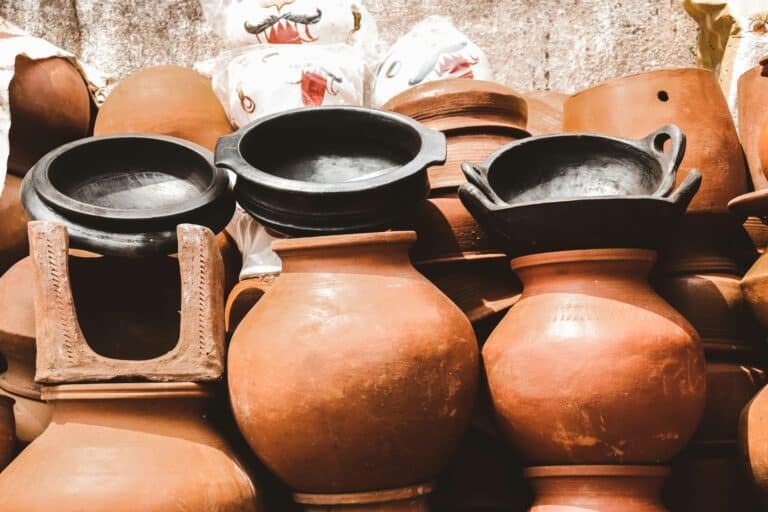
Why Did Indian Kitchens Separate Cooking, Eating and Purity Zones?
Traditional Indian kitchens often separated cooking, eating, water and purity zones for practical, ritual and social reasons. Some boundaries improved household hygiene; others reinforced caste and gender hierarchy.