 tradivior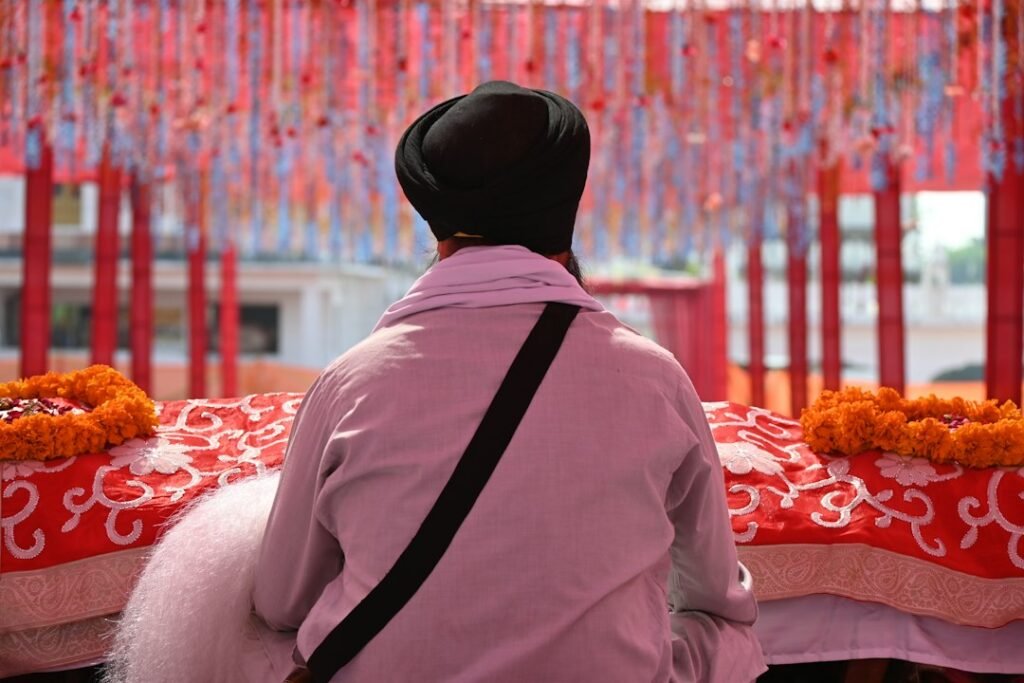
In this investigation
Covering the head in worship appears in religions that disagree about almost everything else. Jewish men wear kippot, many Muslim women wear hijab, Sikh men and women may wear turbans, Christian women historically veiled in worship, and monks, clergy and laypeople in many traditions use distinctive head coverings.
The surface similarity tempts a single explanation: modesty, humility, hygiene, energy conservation or protection of a “crown chakra.” History supports no universal origin. Head covering repeatedly becomes meaningful because the head is visually prominent and because clothing is an efficient way to display reverence, gender, status and group belonging.
The head is socially prominent
Faces and heads dominate human recognition. Covering or uncovering the head therefore changes appearance immediately.
A head covering can mark the transition from ordinary life into ritual space more visibly than many other garments.
THE COMMON FUNCTION
Across traditions, head covering often makes a relationship to authority, modesty, sacred space or community publicly legible. The details are culturally specific.
Judaism turned head covering into visible reverence and identity
Jewish head-covering practices developed historically rather than appearing in one timeless form. The kippah or yarmulke became especially associated with male religious observance in later Jewish tradition.
For many observant Jewish men, covering the head signifies reverence before God and public identification with Jewish religious life.
Kippah style can communicate subgroup identity
Modern Israeli research shows that different styles of kippah correlate with different religious communities. Fabric, colour and knit style can signal Haredi, Dati, traditional or other affiliations.
The head covering therefore works not only as “Jewish” identity but also as a finer social map within Judaism.
Jewish women’s hair covering follows different rules
In Orthodox Jewish communities, married women may cover their hair with scarves, hats or wigs. The practice is connected to modesty and marital status rather than functioning identically to the male kippah.
This difference shows why even within one religion, “covering the head” can contain several distinct traditions.
Islamic veiling combines modesty, devotion and public identity
Muslim women’s head covering exists in many forms, from simple scarves to styles embedded in wider modest dress. Religious interpretation, family tradition, national culture and personal choice all influence practice.
Modern social research finds that women themselves give diverse reasons for veiling: religious commitment, modesty, convenience, fashion, identity and resistance to stereotyping.
The same veil can mean different things to wearer and observer
An observer may read hijab as oppression, conservatism or politics. The wearer may experience it as devotion, autonomy, modesty or belonging.
Religious clothing therefore cannot be interpreted responsibly without asking whose meaning is being described.
Christian women historically covered their heads in worship
Paul’s first letter to the Corinthians contains one of Christianity’s most influential passages on head covering. The text distinguishes men and women during prayer, though scholars continue debating its exact social scope.
Later church writers strongly promoted women’s veiling, linking it with modesty and gender hierarchy.
Christian veiling did not begin in a cultural vacuum
Recent scholarship emphasizes that women were already covering their heads in Mediterranean societies before Christianity became dominant. Status, practicality and fashion shaped veiling alongside religion.
This is another warning against assigning a single theological origin to a widespread clothing practice.
Some Christian communities still maintain head covering
Eastern Christian traditions, Amish and Mennonite communities, and some conservative Protestant groups continue forms of women’s head covering.
Elsewhere, the practice declined sharply while remaining visible in older religious art and clerical dress.
Sikh turbans make religious identity continuously visible
For observant Sikhs, the turban is closely connected to uncut hair and Khalsa identity. It expresses dignity, discipline and community visibility.
Unlike a covering worn only inside a place of worship, the Sikh dastar is commonly carried into everyday public life.
Covering and uncovering can carry opposite meanings
In one tradition, reverence requires covering the head. In another, reverence requires removing a hat before entering sacred space.
This alone disproves any universal physiological explanation. The body is the same; the cultural code changes.
Men uncovering the head became a Western courtesy rule
European etiquette historically developed conventions requiring men to remove hats indoors, before superiors or in certain religious settings.
The act communicates deference precisely because the surrounding culture agrees that uncovering is respectful.
Head coverings create boundaries between sacred and ordinary time
Putting on a prayer scarf, veil or cap can mark entry into ritual. Removing it later can signal return to ordinary activity.
Clothing thereby helps structure attention and behaviour.
Embodied rules can make abstract values easier to remember
“Be modest” or “remember God” are abstract commands. A garment turns them into a repeated physical action.
The body becomes a reminder system.
Visible religious dress can strengthen commitment
When identity is publicly visible, abandoning the associated norm becomes socially and psychologically more consequential.
Religious clothing can therefore reinforce commitment through self-perception and community accountability.
The same visibility can increase discrimination
Research on Sikh and Muslim minorities shows that visible religious dress can expose wearers to stereotyping, harassment and discrimination.
Identity markers therefore create both solidarity and vulnerability.
THE SOCIAL MECHANISM
Head coverings affect social experience because other people can see and interpret them. That mechanism is well supported without requiring hidden physiological effects.
Modesty is not one universal standard
What counts as modest clothing varies dramatically across cultures and periods. Hair may be sexually or socially significant in one setting and ordinary in another.
Religious modesty therefore works through cultural meaning, not through one biological threshold of exposed hair.
Gender often determines who must cover
Many head-covering traditions apply different rules to men and women. Those differences can express distinct theological roles, modesty norms or social hierarchies.
Analysing them requires acknowledging gender power rather than treating all dress rules as neutral.
Covering can be chosen and still exist inside social pressure
Some wearers experience head covering as deeply voluntary and meaningful. Others face family or community coercion. Many navigate both personal commitment and external expectation.
Agency is therefore not captured by the garment alone.
Removing a covering can be equally political
In some societies, state institutions have prohibited religious head coverings. In others, authorities pressure women to wear them.
The conflict is often less about cloth itself than about who controls the body.
Hygiene is not a universal historical explanation
Head coverings can protect hair from dust, sun or occupational contamination. Those are real practical effects.
But traditions that require opposite behaviours—covering in one religion, uncovering in another—cannot all be explained by the same ancient hygiene rule.
Climate matters, but religion transforms climate wear into identity
Scarves and turbans can protect against sun, sand and heat. Similar garments may originate partly in practical clothing traditions.
Once incorporated into religion, however, the garment can remain meaningful even in very different climates.
Claims about conserving spiritual energy are difficult to test
Some modern traditions explain head covering as keeping energy from escaping through the crown or protecting a spiritual centre.
Modern physiology does not identify a measurable form of spiritual energy escaping from the scalp in a way that fabric prevents.
Warmth and pressure have ordinary physiological effects
A covering changes scalp temperature, moisture and tactile sensation. A tight garment may create pressure.
These effects are real but do not establish claims about enhanced cognition or spiritual energy.
Religious dress can create a sense of readiness
Putting on specific clothing before prayer can function like a ritual cue. Repeated association teaches the brain that a certain posture, garment or place signals a shift in attention.
This conditioning mechanism is psychologically plausible and does not require the garment itself to have mystical physical properties.
Uniformity can create equality inside a group
Standard religious dress can reduce visible differences in fashion or class within a ritual setting.
Yet distinctive headwear can simultaneously create a strong boundary between insiders and outsiders.
Head coverings become especially important in minority settings
When almost everyone dresses similarly, a religious covering may feel ordinary. In diaspora, the same garment can become a highly visible assertion of minority identity.
This change in social context can intensify both pride and stigma.
Modern law turns religious dress into a rights question
Schools, workplaces, militaries and courts increasingly confront questions about uniforms, safety and religious accommodation.
These disputes force societies to decide when standardization is genuinely necessary and when diversity can be accommodated.
The same tradition can change without disappearing
Materials, colours and tying styles evolve. Some communities adopt more flexible rules; others strengthen visible identity in response to assimilation.
A living tradition can therefore become more or less visible depending on historical pressure.
What survives scrutiny?
- Religious head covering appears in multiple traditions but does not have one universal origin.
- Jewish kippot, Muslim veiling, Sikh turbans and Christian head coverings have distinct histories and rules.
- Head covering can communicate reverence, modesty, marital status, rank and religious identity.
- Different traditions sometimes require opposite behaviours, showing that cultural convention matters more than one physiological rule.
- Visible religious dress can strengthen identity and community commitment.
- The same visibility can increase discrimination and stereotyping.
- Gender often shapes who covers and why, making power and agency important to interpretation.
- Climate and practicality can influence headwear without fully explaining its religious meaning.
- Claims that cloth prevents spiritual energy from escaping the head lack strong physiological evidence.
- Ritual clothing can plausibly cue attention through habit and conditioning.
- Modern accommodation debates show that head covering remains a living rights and identity issue.
The Tradivior Evidence Profile
Historical Authenticity — Strong. Religious head-covering traditions are well documented across Judaism, Christianity, Islam, Sikhism and other communities.
Original-Purpose Evidence — Strong. Reverence, modesty, identity, marital status, discipline and group belonging are historically supported motives.
Scientific Mechanism — Moderate. Social signalling, identity commitment, conditioning and discrimination provide plausible measurable mechanisms; energy-conservation claims are weak.
Experimental Evidence — Limited to Moderate. Social-science evidence supports identity and stigma effects, while biomedical claims attached to head covering have little support.
Cross-Cultural Evidence — Strong. Head covering is widespread but culturally diverse, making universal explanations inappropriate.
Modern Relevance — Strong. Religious headwear remains central to worship, identity, discrimination and accommodation debates.
The Tradivior Conclusion
Primarily Symbolic/Cultural—with strong social effects. Religions cover the head for different reasons: reverence, modesty, discipline, marital status and group identity. The shared feature is not one hidden biological mechanism but the social power of visible dress. Head coverings shape how wearers understand themselves and how others respond to them, producing both solidarity and discrimination. Claims that fabric conserves a measurable spiritual energy or activates special physiology are not strongly supported. The traditions survive scrutiny as embodied social and religious languages, not as one universal health technology.
Continue investigating
- Why Do Sikhs Keep Uncut Hair and Wear the Turban?
- Why Did Traditional Clothing Evolve Around Climate and Work?
- Why Do Hindus Mark the Forehead With Tilak, Bindi or Vibhuti?
Sources and further reading
- “Veiling and Head-Covering in Late Antiquity: Between Ideology, Aesthetics and Practicality.” Past & Present. 2024;263(1):3–.
- Callon C. “Authority Over Whose Head? Did Paul Instruct Wives or All Women to Cover Their Heads (1 Corinthians 11:2–16)?” Harvard Theological Review. 2024.
- Loewenthal KM, Solaim LS. “Religious Identity, Challenge, and Clothing: Women’s Head and Hair Covering in Islam and Judaism.” Journal of Empirical Theology. 2016;29(2):160–170.
- Kulenović T. “A veil (hijab) as a public symbol of a Muslim woman modern identity.” Collegium Antropologicum. 2006;30(4):713–718.
- Wagner W, et al. “The veil and Muslim women’s identity: Cultural pressures and resistance to stereotyping.” Culture & Psychology. 2012.
- Harel A. “Under the cover of the kippah: on Jewish settlers, performance, and belonging in Israel/Palestine.” Journal of the Royal Anthropological Institute. 2019;25(4):760–777.
- Oxford Handbook and Sikh studies scholarship on turban, Khalsa identity and religious dress.
Continue exploring
Why Do People Keep Ashes, Relics and Memorial Objects?
Hair, ashes, bones, clothing, photographs and relics allow the dead to remain materially present. Tradivior will examine why objects carry memory so powerfully and how continuing bonds differ from pathological…

Why Do Cultures Set Aside Days to Remember the Dead?
From Pitru Paksha and Qingming to Día de Muertos and All Souls’ Day, cultures repeatedly create calendar time for the dead. Tradivior will compare how recurring remembrance renews kinship, grief…
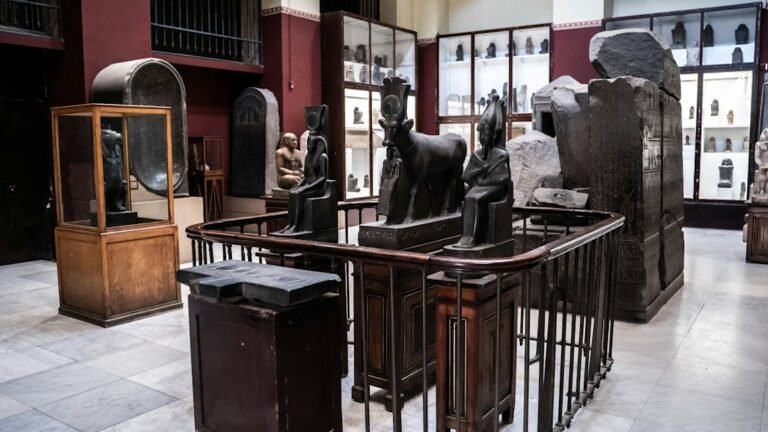
Why Do Cultures Preserve the Dead?
Mummification, embalming, freezing, smoking and desiccation reflect very different beliefs about bodies and afterlives. Tradivior will compare preservation traditions with the chemistry of decomposition and the practical limits of each…

Why Do People Change Names, Clothes or Homes After Marriage?
Marriage often transforms identity through surname changes, new dress, residence, kinship terms or household membership. Tradivior will investigate why marriage needs visible social consequences beyond the ceremony itself.
Picked for your curiosity
Enable JavaScript to build a reading profile and see recommendations.