 tradivior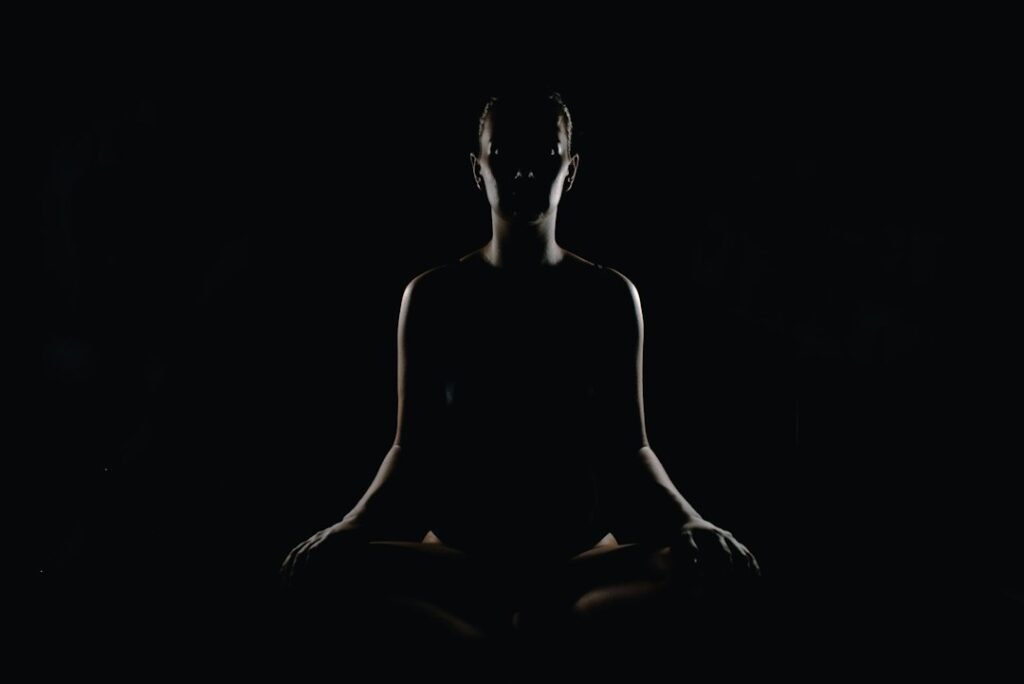
In this investigation
Many contemplative traditions ask people to see what is not physically present. A practitioner may construct a deity in vivid detail, imagine light moving through the body, rehearse a sacred landscape, picture a teacher, reconstruct a scriptural scene or mentally perform an action before doing it.
To a modern observer, these practices can sound either mystical or trivial: mystical if the image is treated as a portal to another reality, trivial if it is dismissed as “just imagination.” Cognitive science supports a more interesting middle position. Mental imagery is not ordinary perception, but it recruits overlapping systems involved in perception, memory, emotion and action. Repeated imagery can therefore change performance and experience without literally creating the imagined event in the external world.
Visualization is historically more than positive thinking
Modern self-help culture often uses visualization to mean picturing success: imagine winning, becoming wealthy or obtaining a desired future. Historical religious visualization is usually more structured. The practitioner is given an object, sequence, iconography, cosmology or ritual role and learns to reproduce it mentally with increasing stability.
The objective may be devotion, concentration, transformation of identity, ritual participation or insight rather than simple motivation. Treating all visualization traditions as ancient versions of a “manifestation” technique erases their actual historical purposes.
THE TRADITION
Historical visualization practices were often highly disciplined mental rituals. Their imagery was culturally specified and embedded in larger systems of meditation, ethics, initiation and theology.
Buddhist traditions developed elaborate deity visualization
Later Mahāyāna and especially tantric Buddhist traditions developed highly structured visualization practices. Practitioners could imagine buddhas, bodhisattvas, deities and maṇḍalas in precise forms, colours, postures and spatial arrangements.
Historical scholarship traces important forms of Buddhist deity visualization before and during the development of tantra. By the sixth and seventh centuries, such practices were already being elaborated into ritual systems in which the practitioner mentally constructed a sacred environment and sometimes identified with the visualized deity.
Śaiva and Hindu tantric systems also made internal construction central
Śaiva and other tantric traditions developed related practices involving deities, mantras, maṇḍalas and subtle-body imagery. Historical work on yoga and tantra shows a gradual movement in some traditions from external ritual toward internalized ritual processes.
This internalization is important. A ritual previously performed with objects, offerings and sacred space could be reconstructed mentally. The mind became a ritual environment. Visualization therefore served not simply to “relax” but to reproduce an entire religious world inside disciplined attention.
Visualization can transform identity inside a ritual system
Some tantric practices do more than picture a deity as an external object. The practitioner may visualize becoming or embodying the deity. The theological meaning varies by tradition, but psychologically the exercise requires sustained manipulation of self-representation.
Modern science can study changes in imagery, attention or body representation. It cannot decide whether a practitioner literally becomes a deity in the metaphysical sense intended by a religious system. Those are different questions.
Christian contemplation also learned to construct sacred scenes mentally
Christian traditions contain their own forms of imaginative contemplation. Medieval and early modern devotional practices encouraged worshippers to place themselves mentally inside biblical scenes, contemplate the Passion, imagine sacred places or attend closely to sensory details of scriptural events.
The Spiritual Exercises associated with Ignatius of Loyola later systematized this kind of imaginative engagement in a particularly influential form. The aim was not entertainment. Mental construction supported prayer, moral reflection and emotional involvement with religious narrative.
Why mental imagery can feel perceptually vivid
Visual imagery is generated without the normal external visual stimulus, but it shares resources with perception. Brain-imaging and behavioural research repeatedly find overlap between systems used when seeing and when imagining, although the two states are not identical.
This explains why a vivid image can alter emotion or bodily readiness. Imagine a frightening animal entering the room and the body may react even though no animal is present. Imagine biting a lemon and salivation may change. Representation can influence physiology because the brain prepares responses to represented situations.
Imagery is not equally vivid for everyone
People vary dramatically in mental imagery. Some report vivid, almost picture-like internal scenes. Others experience weak imagery or aphantasia, in which voluntary visual imagery is minimal or absent.
This variation matters for traditional practices. A visualization method that feels effortless to one practitioner may be frustrating to another. Historical instructions that demand increasingly detailed images may partly function as training rather than assuming everyone begins with the same capacity.
Mental rehearsal can influence motor performance
One of the clearest scientific demonstrations that imagination can affect action comes from motor imagery research. Athletes, musicians and rehabilitation patients mentally rehearse movements without executing them physically.
Systematic reviews find that motor-imagery training can improve aspects of performance compared with no practice, although physical practice is usually stronger when it is possible. A 2023 systematic review and meta-analysis also found evidence that mental imagery can contribute to transfer of motor learning between limbs.
THE SCIENCE
Imagined action is not equivalent to physical action, but rehearsal can prime and train parts of the motor-planning system. This is a real mechanism and does not require claims that thoughts directly alter external reality.
Imagery can change emotional responses
Emotion responds strongly to imagined scenes. Clinical psychology makes deliberate use of this fact. Guided imagery, imagery rescripting and related techniques can help people rehearse coping, modify distressing memories or evoke calming experiences.
The effect is especially understandable when imagery is vivid: the brain is not receiving the external event, but it is constructing enough of the event’s representation to activate associated feelings and predictions.
Religious visualization adds meaning that laboratory imagery does not contain
A laboratory participant asked to imagine a red triangle is not doing the same thing as a Buddhist practitioner visualizing a deity received through initiation. The sensory operation may overlap, but the religious practice includes doctrine, authority, emotion, identity and community.
This is a recurring Tradivior problem: laboratory studies can identify mechanisms without reproducing historical meaning. Evidence that imagery changes attention does not prove why a medieval practitioner visualized a maṇḍala.
Visualization can concentrate attention by giving thought a structured object
Ordinary mind wandering is fluid. Structured visualization imposes constraints: this deity has a particular posture; this colour goes here; this sequence follows that one. The practitioner repeatedly detects missing or unstable details and reconstructs them.
That process plausibly trains sustained attention and working memory. It is cognitively demanding rather than passive daydreaming.
Complex imagery also trains spatial organization
Maṇḍala visualization and other spatial practices require the practitioner to maintain relationships between multiple imagined elements. Mental rotation, spatial memory and viewpoint transformation may all contribute.
Modern cognitive science recognizes these as trainable capacities, but direct evidence from historical religious visualization traditions remains much thinner than evidence from general imagery tasks.
Imagery can alter memory—and can also distort it
Repeated imagination can make an event feel more familiar. That can be useful when rehearsing a skill or future action. It also creates a risk: imagined details can sometimes become confused with remembered details.
This is especially important when spiritual visualization is later reported as memory or vision. A vivid internally generated experience can be psychologically real without establishing that the event occurred externally.
Visualization of a future action can improve preparation without “manifesting” the outcome
Imagining a future performance can clarify sequence, expose uncertainty and reduce the novelty of the task. Athletes use this deliberately. So do public speakers and clinicians rehearsing difficult procedures.
But preparation is not magical causation. Visualizing winning a race may improve readiness; it does not control competitors, weather or chance. Scientific evidence for mental rehearsal should not be converted into claims that thought alone attracts external events.
Process imagery is usually more defensible than fantasy about outcomes
There is an important practical difference between imagining the steps required to perform and simply imagining success. Process imagery rehearses controllable behaviour. Outcome fantasy can create motivation, but it may also produce confidence without preparation.
Traditional visualization often resembles process training more than modern “vision board” culture. The practitioner rehearses a precise ritual or attentional sequence rather than merely wishing for an outcome.
Images can influence the body because anticipation influences the body
Imagining threat can increase arousal. Imagining relaxation can change breathing and muscle tension. Imagining movement can activate motor networks below the threshold of overt motion.
These effects are sometimes described as proof that the body “cannot tell imagination from reality.” That is an exaggeration. The brain clearly distinguishes imagined from perceived events in many respects. The better statement is that imagined events can recruit some of the same predictive and response systems as perceived events.
Visualization becomes risky when imagery is mistaken for evidence
A vivid internal scene can feel authoritative. In religious settings it may be interpreted as revelation. In therapy it may be confused with recovered memory. In self-help culture it may be treated as proof that an outcome is destined.
Vividness is evidence of vividness, not automatically of external truth. Responsible practice needs a boundary between phenomenology—what was experienced—and factual claims about what happened outside the mind.
Repeated imagery can reshape emotional meaning
One reason visualization persists is that imagination allows a person to encounter an emotionally significant scene repeatedly under controlled conditions. A deity can be approached, a feared situation rehearsed, a sacred narrative revisited or a desired moral identity embodied.
The repetition may gradually change associations. In psychological terms this can resemble rehearsal, reappraisal or exposure. In religious terms it may be devotion, purification or transformation. The mechanism and the meaning can coexist without being identical.
The strongest traditions make imagery disciplined rather than arbitrary
Historical visualization systems usually specify what to imagine and in what order. The practitioner’s freedom is constrained by text, teacher, iconography or ritual lineage.
That constraint may be one reason the practice trains attention more effectively than ordinary fantasy. The task has error conditions: an omitted element, unstable image or broken sequence can be noticed and corrected.
What survives scrutiny?
- Deliberate visualization is historically well established in Buddhist, Hindu/Śaiva and Christian contemplative traditions.
- Tantric Buddhist and Śaiva practices developed elaborate internal deity, maṇḍala and subtle-body visualizations.
- Historical religious visualization served devotion, concentration, ritual internalization and transformation of identity—not merely positive thinking.
- Mental imagery shares some functional resources with perception while remaining distinguishable from external perception.
- Motor-imagery research shows that mental rehearsal can improve performance under some conditions.
- Imagery can evoke and modify emotional responses and is used in modern clinical techniques.
- People differ substantially in imagery vividness, so visualization practices will not work identically for everyone.
- Repeated imagination can influence memory and familiarity, which is both useful and a source of possible distortion.
- Scientific evidence for mental rehearsal does not support claims that visualization alone “manifests” external events.
- Vivid imagery can be psychologically powerful without proving metaphysical claims attached to it.
The Tradivior Evidence Profile
Historical Authenticity — Strong. Structured visualization is well documented in later Buddhist, Śaiva/Tantric and Christian contemplative traditions.
Original-Purpose Evidence — Strong. Devotion, deity identification, ritual internalization, concentration, prayer and spiritual transformation are explicit historical purposes.
Scientific Mechanism — Strong. Mental imagery recruits perceptual, emotional and motor-planning systems and can influence attention, rehearsal and response preparation.
Experimental Evidence — Moderate to Strong. General imagery and motor-rehearsal research is substantial, while direct controlled research on historically specific religious visualization practices is more limited.
Cross-Cultural Evidence — Strong. Deliberate sacred imagery appears in multiple distinct traditions, although the theological meaning and techniques differ.
Modern Relevance — Strong. Visualization remains useful in performance, rehabilitation, psychotherapy, meditation and religious practice when claims are kept proportional to evidence.
The Tradivior Conclusion
Evidence Supported—with clear limits. Deliberate mental imagery is not an empty practice. Modern evidence shows that imagination can affect attention, emotion, motor preparation and rehearsal because imagined events recruit some of the same systems used in perception and action. This provides a credible mechanism for why visualization can become a powerful contemplative and training tool. But the evidence supports internal cognitive effects, not the stronger claim that imagining an external outcome makes the universe produce it. Historical traditions used visualization as disciplined mental practice; modern “manifestation” claims should not be retroactively projected onto them.
Continue investigating
- Why Did Yogic Traditions Practice Trataka Candle Gazing?
- Why Do Humans Meditate?
- Why Do Traditions Treat Dreams as Messages?
Sources and further reading
- Samuel G. The Origins of Yoga and Tantra: Indic Religions to the Thirteenth Century. Cambridge University Press; 2008.
- Samuel G. “Tantra and the State.” In: The Origins of Yoga and Tantra. Cambridge University Press.
- Historical scholarship on Buddhist deity visualization, maṇḍala practice and later Mahāyāna/Tantric meditation.
- Ignatius of Loyola. Spiritual Exercises, especially practices involving composition of place and imaginative contemplation.
- Carnero-Diaz A, Pecci J, Calvo-Lluch Á, Camacho-Lazarraga P. “Use your imagination for better performance. Effects of analogy instruction in motor skills: A systematic review and meta-analysis.” Psychology of Sport and Exercise. 2025;76:102766. PMID: 39419241.
- “Bilateral transfer of motor performance as a function of motor imagery training: a systematic review and meta-analysis.” 2023. PMID: 37333595.
- Research literature on motor imagery, mental practice and neural overlap between imagined and executed action.
- Clinical literature on guided imagery and imagery rescripting for emotion regulation and psychological treatment.
- Research on aphantasia and individual differences in voluntary visual imagery.
Continue exploring
Partially Supported
Why Do Religious Processions Take Sacred Things Into the Street?
Religious processions move sacred presence, symbols and communities through public space. They can expand shared identity through coordinated movement and visibility, but the same public occupation can mark boundaries and…
Primarily Symbolic/Cultural
Why Is Diwali Built Around Light?
Diwali’s lamps are historically and religiously meaningful symbols whose interpretations vary across Hindu, Jain, Sikh and regional traditions. Light makes sacred time visible and transforms homes and streets; modern science…

Primarily Symbolic/Cultural
Why Did Indians Circle Sacred Fire at Weddings?
Sacred fire in Hindu weddings is historically a witness, offering medium and divine presence rather than a hidden biomedical technology. Circumambulation and vows make marriage public, memorable and religiously binding;…

Primarily Symbolic/Cultural
Why Do Religions Regulate Meat?
Religions regulate meat because killing animals, blood, purity, sacrifice and communal identity carry unusually high moral weight. Some rules may have ecological or safety consequences, but Jewish, Islamic, Hindu, Jain,…
Picked for your curiosity
Enable JavaScript to build a reading profile and see recommendations.