 tradivior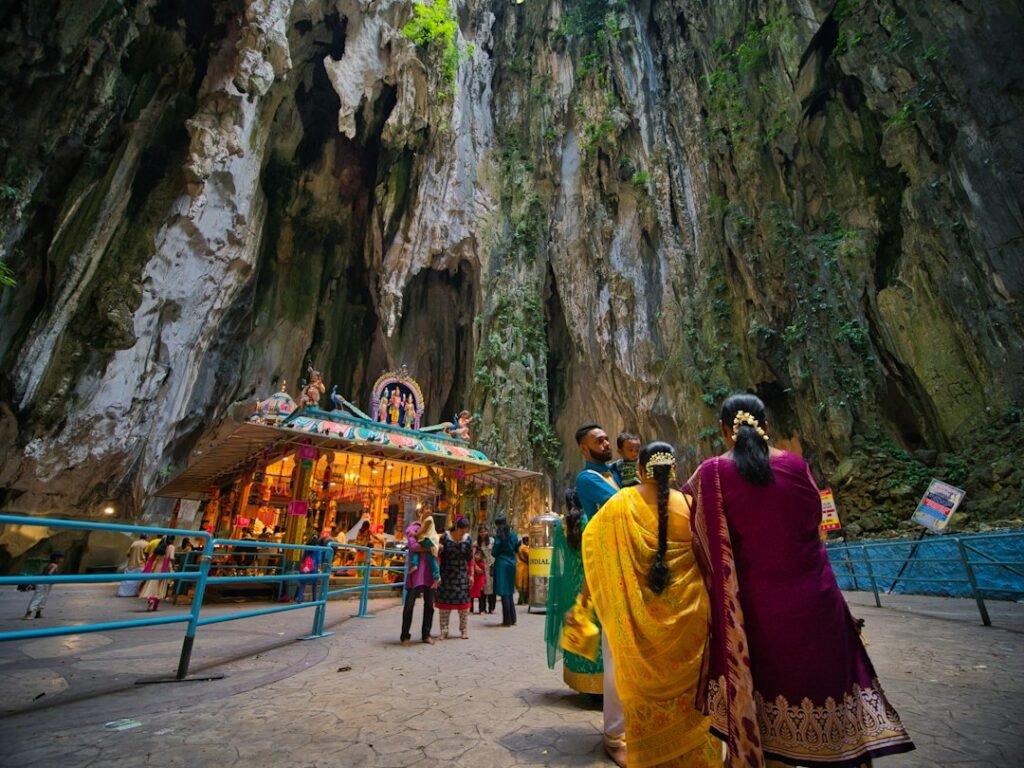
In this investigation
Caves become sacred because they radically alter ordinary human experience. They are dark, enclosed, acoustically strange, geologically ancient and often difficult to enter. Across cultures they have served as shrines, burial places, monastic retreats, pilgrimage destinations, places of initiation and imagined entrances to other worlds.
But caves do not have one universal religious meaning. The same environmental qualities can support very different interpretations in Buddhist, Hindu, Christian, Mesoamerican and other traditions.
Darkness creates separation from ordinary space
Moving from daylight into a cave changes vision immediately. Objects become harder to identify, distances become uncertain and artificial light becomes necessary.
Archaeologists increasingly treat this sensory transition as part of ritual meaning rather than assuming caves were simply convenient shelters.
Deep caves were often ritual rather than domestic spaces
Modern cave archaeology has challenged the stereotype that humans primarily used deep caves as habitation. Many deeply situated cave contexts instead contain evidence of offerings, art, burial, pilgrimage or ritual activity.
Holley Moyes and other cave archaeologists emphasize that ritual use is documented across regions and periods, from prehistoric Europe to Mesoamerica and modern religious traditions.
Caves can represent an underworld
Because caves open downward or inward into the earth, many societies interpret them as portals to ancestors, deities or underworld realms.
Mesoamerican archaeology provides especially strong evidence for this pattern. Caves were linked with rain, fertility, emergence and supernatural powers, and some continued as pilgrimage sites into recent periods.
Enclosure can intensify ritual attention
A cave reduces the visual horizon and isolates participants from everyday surroundings. That sensory restriction can focus attention on sound, flame, movement and bodily proximity.
This is a plausible psychological effect, but it should not be mistaken for proof that caves were intentionally selected to engineer altered states.
Acoustics can make caves feel animate
Hard stone surfaces create reverberation and echoes. A voice may return from directions that are difficult to localize, and drums or chants can feel unusually powerful.
Such effects may reinforce religious interpretation, but acoustic drama is not evidence for hidden frequency technology.
Temperature stability is real
Deep cave temperatures change more slowly than outdoor temperatures. This can make caves cooler in summer and warmer than outside during cold nights.
Thermal stability helps explain why caves can support retreat or storage, but sacred use cannot be reduced to temperature alone.
Caves support ascetic withdrawal
Hindu, Buddhist and Christian traditions all include cave retreats associated with prayer, meditation, solitude or monastic discipline.
The appeal is partly practical: caves offer seclusion. The meaning is also symbolic: entering the earth and leaving society behind can become part of the discipline itself.
Burial deepens sacredness
Caves can hold human remains for long periods. Once ancestors or revered individuals are buried there, the space may become a place of memory and ritual return.
This can transform a natural formation into a socially inherited sacred site.
Why ritual evidence must be interpreted carefully
Soot, broken pottery, pigments, bones and unusual deposits can indicate ritual activity, but none is automatically religious. Archaeologists compare placement, repetition, access, ethnographic parallels and context.
The modern field has become more cautious precisely because earlier interpretations often forced either domestic or mystical explanations onto ambiguous evidence.
What survives scrutiny?
- Caves have served ritual functions across many regions and historical periods.
- Darkness, enclosure and unusual acoustics clearly change sensory experience.
- Many traditions interpret caves as underworlds, wombs, ancestral places or retreats.
- Seclusion makes caves useful for ascetic and monastic practice.
- Thermal stability is real but does not explain sacredness by itself.
- Ritual use must be established archaeologically rather than assumed.
- No universal cave symbolism is required to explain cross-cultural recurrence.
The Tradivior Evidence Profile
Historical Authenticity — Strong. Ritual cave use is extensively documented archaeologically and ethnographically across multiple regions.
Original-Purpose Evidence — Strong. Burial, pilgrimage, retreat, offerings and underworld symbolism are directly attested in many traditions.
Scientific Mechanism — Moderate. Darkness, sensory restriction, reverberation, thermal stability and isolation have measurable effects on perception and comfort.
Experimental Evidence — Limited to Moderate. Sensory and acoustic effects are measurable, but ritual origins remain culturally specific.
Cross-Cultural Evidence — Strong. Sacred cave traditions recur widely without one common theology.
Modern Relevance — Strong. Many cave shrines, monasteries and pilgrimage sites remain active, while conservation must balance ritual use and fragile geology.
The Tradivior Conclusion
Caves become sacred when geology changes ordinary experience strongly enough to support religious interpretation. Darkness, depth, echo and enclosure can make a place feel separated from the everyday world.
The strongest explanation is cultural rather than mystical: humans repeatedly transform unusual natural spaces into portals, retreats, tombs and shrines. The environmental effects are real, while the meanings built around them remain tradition-specific.
Sources and further reading
- Moyes H, ed. Sacred Darkness: A Global Perspective on the Ritual Use of Caves. University Press of Colorado.
- Healy PF. The Anthropology of Mesoamerican Caves. Reviews in Anthropology. 2007.
- Brady JE, Prufer KM, eds. In the Maw of the Earth Monster: Mesoamerican Ritual Cave Use. University of Texas Press.
- Research collected in the Religions special issue Exploring Sacred Caves: Ritual Practice, Myth and World Views.
Continue exploring

Partially Supported
Why Is the Ganga Sacred?
The Ganga is river, goddess, pilgrimage route, purifier and national symbol. Tradivior will trace how these layers developed and evaluate modern claims about unusual self-purifying properties without confusing microbial findings…
Partially Supported
Why Do People Keep Ashes, Relics and Memorial Objects?
Hair, ashes, bones, clothing, photographs and relics allow the dead to remain materially present. Tradivior will examine why objects carry memory so powerfully and how continuing bonds differ from pathological…

Evidence Supported
Why Do Cultures Set Aside Days to Remember the Dead?
From Pitru Paksha and Qingming to Día de Muertos and All Souls’ Day, cultures repeatedly create calendar time for the dead. Tradivior will compare how recurring remembrance renews kinship, grief…

Historically Practical
Why Did Cremation Become Central to Hindu Death Ritual?
Cremation has deep roots in many Hindu traditions but varies by community, age, status and circumstance. Tradivior will investigate its historical logic, environmental consequences and modern changes without treating one…
Picked for your curiosity
Enable JavaScript to build a reading profile and see recommendations.