 tradivior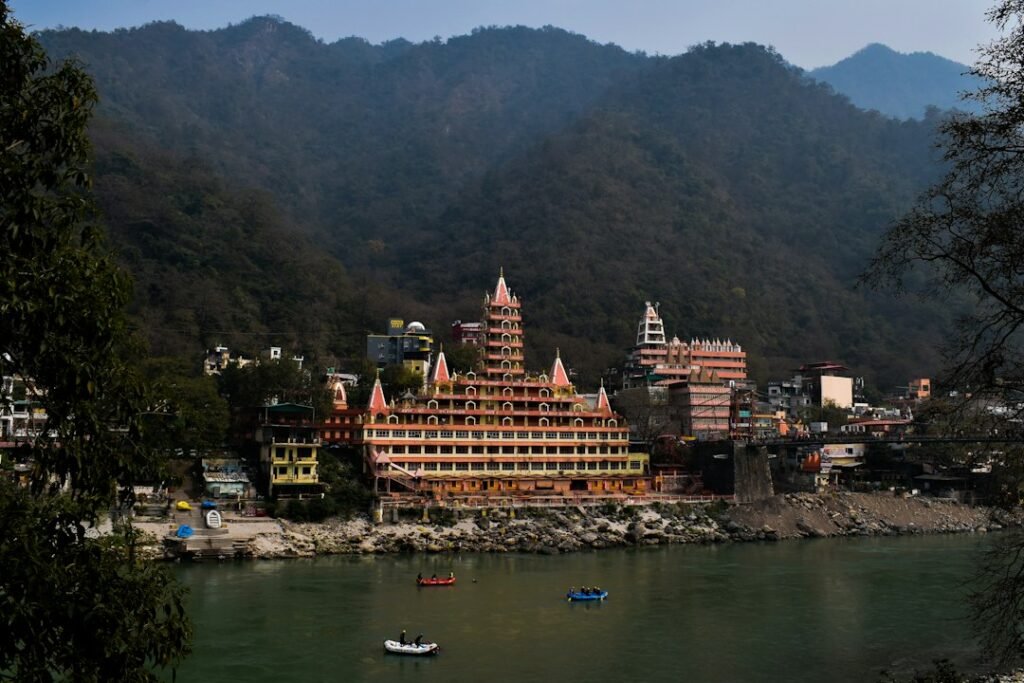
In this investigation
Mountains become holy because height, remoteness, visibility and effort make them unusually powerful places for religious imagination. A peak can dominate an entire region, disappear into cloud, feed rivers, control weather and require physical effort to approach. Those features repeatedly turn mountains into abodes of gods, ancestors, spirits, revelation and pilgrimage.
The pattern is global, but the meanings are not identical. Kailash, Fuji, Sinai, Olympus, Khangchendzonga and Burkhan Khaldun belong to very different religious worlds.
Height creates separation
Mountains physically separate people from ordinary settlement. The climb leaves farms, markets and houses below. That transition can turn geography into ritual: ascent becomes a movement from ordinary space toward sacred space.
The symbolic association between “up” and divine power is widespread, but it is not enough by itself to explain any particular mountain tradition.
Visibility turns peaks into regional anchors
A prominent mountain can be seen from far away. It orients travel, weather observation, storytelling and territorial identity.
Because the same peak is visible to many communities, it can become a shared reference point even before formal pilgrimage develops.
Mountains produce water
Snow, glaciers and high rainfall feed rivers and springs. Communities downstream may therefore experience a mountain as the source of life-giving water.
This ecological role can reinforce sacred meaning, but it should not be treated as the universal origin of mountain worship.
Remoteness supports asceticism
Monks, hermits and ascetics repeatedly seek mountains because they offer distance from ordinary social life. Isolation reduces distraction, makes discipline visible and can intensify the sense of undertaking something difficult.
Mountain monasteries and retreats therefore combine environmental seclusion with cultural ideals of renunciation.
Pilgrimage turns effort into meaning
Climbing or walking around a sacred mountain costs time and energy. The difficulty can make devotion tangible.
Mount Fuji’s pilgrimage traditions, for example, linked ascent with purification and spiritual training. UNESCO describes a long history of worship routes, shrines and ascetic practices associated with the mountain.
Sacred mountains can organize whole landscapes
At Khangchendzonga in Sikkim, the mountain is not an isolated sacred object. Lakes, valleys, caves and rivers form part of a wider religious landscape shared through Lepcha and Buddhist traditions.
UNESCO describes the region as a layered sacred landscape central to Sikkimese identity.
Mountains can also support political identity
Burkhan Khaldun in Mongolia shows how mountain worship can become connected with state formation and historical memory. UNESCO links the mountain with Chinggis Khan and with the formalization of sacred-mountain traditions in Mongol political life.
Sacred geography can therefore reinforce collective identity as well as personal devotion.
Awe is a plausible psychological mechanism
Psychological research on awe finds that vast stimuli can make people feel small relative to something larger than themselves. High peaks, enormous cliffs and panoramic views are ideal triggers for that response.
This helps explain why mountains are emotionally powerful, but it does not prove that mountain worship began because of a universal “awe circuit.”
Altitude also changes the body
High altitude can produce breathlessness, fatigue, dizziness and altered sleep. These bodily changes can make pilgrimage feel intense.
But physiological stress should not be romanticized as spiritual enhancement. At significant altitude it can become dangerous, especially for unacclimatized visitors.
Why mountains become places of revelation
Religious traditions often place encounters with gods, prophets or spirits on mountains because the setting is already separated from ordinary life. The landscape makes a narrative of revelation spatially convincing.
Once such a story is established, later pilgrimage reinforces the mountain’s sacred status across generations.
What survives scrutiny?
- Sacred mountains occur across many unrelated cultures.
- Height, visibility, remoteness and water-source functions make mountains distinctive landscape features.
- Pilgrimage transforms physical effort into religious practice.
- Mountains can support asceticism, territorial identity and political memory.
- Awe offers a plausible psychological mechanism for emotional intensity.
- Altitude stress is real but should not be treated as proof of spiritual benefit.
- There is no need to posit one universal hidden-energy explanation for mountain sacredness.
The Tradivior Evidence Profile
Historical Authenticity — Strong. Sacred mountain traditions are well documented across Asia, Europe, Africa and the Americas.
Original-Purpose Evidence — Strong. Divine presence, revelation, ancestry, pilgrimage, asceticism and territorial identity are explicitly attested.
Scientific Mechanism — Moderate. Awe, effort, remoteness, visual dominance and ecological dependence plausibly reinforce sacred meaning.
Experimental Evidence — Moderate. Awe and landscape psychology are experimentally studied, while ancient religious origins remain historically specific.
Cross-Cultural Evidence — Strong. The recurrence is global, though each tradition has distinct theology and history.
Modern Relevance — Strong. Sacred mountains remain pilgrimage destinations, heritage landscapes and conservation areas.
The Tradivior Conclusion
Mountains become holy because they turn ordinary differences of scale into lived experience. They are high, visible, difficult, remote and often ecologically important.
Those features do not create one universal religion of mountains. They create a powerful stage on which different societies build very different sacred stories. The strongest explanation combines landscape, effort, memory, politics and theology rather than reducing mountain worship to either ecology or psychology alone.
Sources and further reading
- UNESCO World Heritage Centre: Fujisan, sacred place and source of artistic inspiration.
- UNESCO World Heritage Centre: Sacred Sites and Pilgrimage Routes in the Kii Mountain Range.
- UNESCO World Heritage Centre: Khangchendzonga National Park.
- UNESCO World Heritage Centre: Great Burkhan Khaldun Mountain and its surrounding sacred landscape.
Continue exploring
Partially Supported
Why Is the Ganga Sacred?
The Ganga is river, goddess, pilgrimage route, purifier and national symbol. Tradivior will trace how these layers developed and evaluate modern claims about unusual self-purifying properties without confusing microbial findings…

Partially Supported
Why Do People Keep Ashes, Relics and Memorial Objects?
Hair, ashes, bones, clothing, photographs and relics allow the dead to remain materially present. Tradivior will examine why objects carry memory so powerfully and how continuing bonds differ from pathological…

Evidence Supported
Why Do Cultures Set Aside Days to Remember the Dead?
From Pitru Paksha and Qingming to Día de Muertos and All Souls’ Day, cultures repeatedly create calendar time for the dead. Tradivior will compare how recurring remembrance renews kinship, grief…
Historically Practical
Why Did Cremation Become Central to Hindu Death Ritual?
Cremation has deep roots in many Hindu traditions but varies by community, age, status and circumstance. Tradivior will investigate its historical logic, environmental consequences and modern changes without treating one…
Picked for your curiosity
Enable JavaScript to build a reading profile and see recommendations.