 tradivior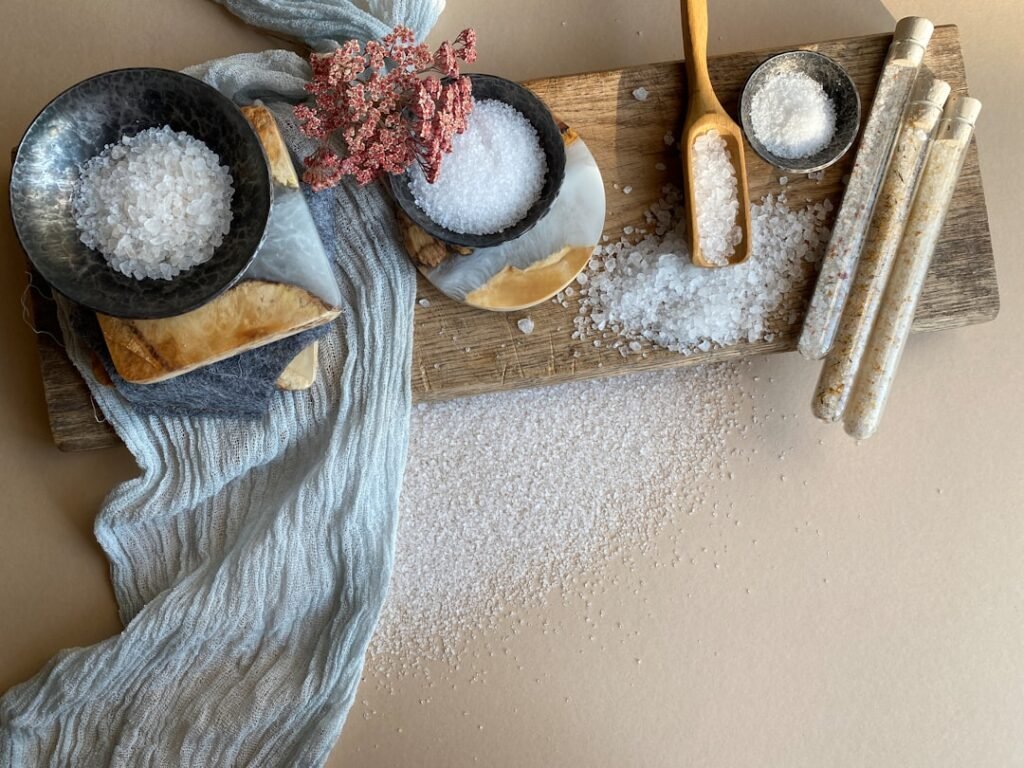
In this investigation
People use salt for protection and purification because salt visibly preserves food, inhibits many microbes at sufficient concentration and has long been a valuable substance. Those physical properties made it an unusually plausible material for symbolic purity and protection.
But scattering a pinch of salt around a room is not equivalent to food preservation or laboratory disinfection. The concentration and context matter.
Salt was historically valuable
Before industrial production, reliable salt supplies mattered for diet and food storage. Trade routes, taxes and political power grew around it.
A substance essential to survival naturally acquired symbolic weight.
Salt preserves by changing water availability
High salt concentrations reduce water activity and create osmotic stress for many microorganisms.
This is why salting can preserve meat, fish and vegetables when used correctly.
Preservation may have encouraged purity symbolism
A material that prevents decay can easily become associated with incorruption, cleansing or protection.
This is a plausible cultural pathway, though each tradition has its own history.
Salt appears in religious covenants and offerings
Jewish, Christian, Hindu, Shinto and many folk traditions give salt ritual roles ranging from offerings to purification and boundary marking.
The meanings are not interchangeable.
Shinto uses salt visibly
Salt is used in purification contexts in Japan, including ritual scattering and sumo-related practice.
The action is symbolic and ceremonial, not a validated method for sterilizing public space.
South Asian households use salt in protective rites
Salt may be combined with chilies, mustard seeds or other materials in rituals intended to remove nazar or harmful influence.
Such practices belong to cultural systems of protection rather than modern microbiology.
Does dry salt kill germs on surfaces?
Not reliably at ordinary household ritual amounts. Microbial inhibition depends on concentration, moisture, organism and contact conditions.
Salt should not replace soap, disinfectants or safe food handling.
Salt can also damage materials and ecosystems
High salt exposure corrodes metals, damages stone, harms plants and can contaminate soil or water.
“Purifying” in one cultural context does not mean environmentally harmless.
Why thresholds attract salt rituals
Doors, windows and property edges are boundaries. Placing salt there makes an invisible protective boundary materially visible.
The social logic resembles other protective markings around entrances.
What survives scrutiny?
- Salt has real preservative effects at sufficient concentration.
- Its historical value and anti-decay properties plausibly contributed to purity symbolism.
- Ritual salt use occurs across multiple traditions.
- Small ritual quantities do not sterilize rooms or guarantee protection from disease.
- Boundary rituals can reduce anxiety and signal cultural identity.
- Excess salt can damage materials and environments.
The Tradivior Evidence Profile
Historical Authenticity — Strong. Ritual salt use is widely documented.
Original-Purpose Evidence — Strong. Purification, offering, preservation symbolism and protection are explicit.
Scientific Mechanism — Strong for food preservation and osmotic effects; Weak for supernatural protection.
Experimental Evidence — Strong for microbiological salt effects; Weak for ritual-protection claims.
Cross-Cultural Evidence — Strong. Salt symbolism appears in many societies.
Modern Relevance — Strong. Salt remains common in ritual and folk protection.
The Tradivior Conclusion
Salt became protective because a materially powerful preservative became a cultural symbol of purity and incorruption.
The science supports salting under specific concentrations, not the claim that ritual sprinkling disinfects spaces or blocks supernatural forces.
Sources & further reading
- Food microbiology literature on salt, water activity and preservation.
- Historical scholarship on the salt trade and taxation.
- Comparative studies of ritual salt in Shinto, Abrahamic and South Asian traditions.
Continue exploring

Partially Supported
Why Is the Ganga Sacred?
The Ganga is river, goddess, pilgrimage route, purifier and national symbol. Tradivior will trace how these layers developed and evaluate modern claims about unusual self-purifying properties without confusing microbial findings…
Partially Supported
Why Do People Keep Ashes, Relics and Memorial Objects?
Hair, ashes, bones, clothing, photographs and relics allow the dead to remain materially present. Tradivior will examine why objects carry memory so powerfully and how continuing bonds differ from pathological…

Evidence Supported
Why Do Cultures Set Aside Days to Remember the Dead?
From Pitru Paksha and Qingming to Día de Muertos and All Souls’ Day, cultures repeatedly create calendar time for the dead. Tradivior will compare how recurring remembrance renews kinship, grief…

Historically Practical
Why Did Cremation Become Central to Hindu Death Ritual?
Cremation has deep roots in many Hindu traditions but varies by community, age, status and circumstance. Tradivior will investigate its historical logic, environmental consequences and modern changes without treating one…
Picked for your curiosity
Enable JavaScript to build a reading profile and see recommendations.