 tradivior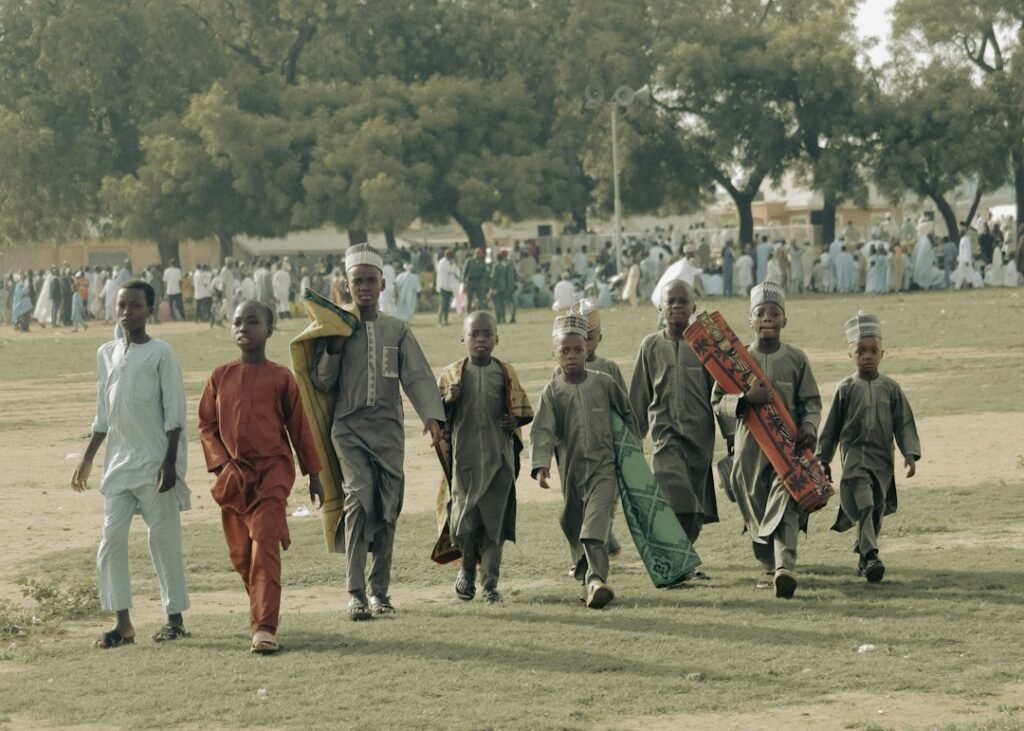
In this investigation
Societies need adulthood to be socially recognized because biological maturation is gradual while rights and responsibilities require a boundary. Puberty does not produce instant judgment, economic independence or civic competence, so communities create ceremonies, ages and tests that declare when a person may enter new roles.
Adulthood is therefore both biological and institutional. The body changes continuously; society decides when those changes count.
Puberty is not a complete definition of adulthood
Sexual maturation can begin years before a person is ready for marriage, work, military service or independent decision-making.
Modern law therefore separates puberty from legal adulthood.
Rites of passage create a visible boundary
Initiation ceremonies can mark a transition from child status to adult status through instruction, ordeal, dress, naming or public recognition.
The ritual makes a gradual developmental process socially legible.
Rights often arrive in bundles
Adult status may include property rights, voting, marriage, inheritance, religious participation or responsibility for wrongdoing.
Different societies distribute these rights at different ages.
Responsibility is socially assigned
A community must know who can make contracts, care for others or represent a household.
Formal age thresholds reduce ambiguity even though individual maturity varies.
Initiation can teach before it recognizes
Many rites include instruction about sexuality, morality, work or community history.
The ceremony therefore prepares participants for a role rather than simply announcing it.
Ordeal can make commitment visible
Some initiations require pain, fasting, seclusion or endurance. Costly participation signals seriousness and makes the transition memorable.
Such practices can also be coercive or dangerous and should not be romanticized.
Modern schooling creates new adulthood markers
Graduation, first employment and leaving home now compete with religious or kinship rites as signs of adulthood.
Economic change therefore alters the social calendar of growing up.
Legal adulthood is deliberately blunt
A fixed age such as 18 cannot capture every person’s maturity, but law needs clear rules that can be administered consistently.
This is a tradeoff between precision and fairness.
Emerging adulthood reflects delayed transitions
Psychologists use “emerging adulthood” to describe prolonged transitions in societies where education lasts longer and marriage or stable work occurs later.
This shows that adulthood is culturally structured, not purely biological.
Recognition affects self-concept
Being treated as an adult changes expectations, autonomy and identity. Public recognition can reinforce new behavior.
What survives scrutiny?
- Biological maturation is gradual, while social systems need clearer status boundaries.
- Rites of passage make adulthood public and memorable.
- Adult rights and responsibilities vary across cultures and institutions.
- Initiation may include education as well as recognition.
- Costly rites can strengthen commitment but may also harm or coerce.
- Modern education and employment have shifted adulthood markers in many societies.
The Tradivior Evidence Profile
Historical Authenticity — Strong. Adulthood rites and status thresholds are widely documented.
Original-Purpose Evidence — Strong. Recognition, instruction, responsibility and group membership are explicit.
Scientific Mechanism — Strong for social-recognition and identity mechanisms.
Experimental Evidence — Moderate to Strong. Developmental and social psychology support the effects of role expectations and public identity.
Cross-Cultural Evidence — Strong. Societies differ in form but nearly all regulate entry into adult roles.
Modern Relevance — Strong. Legal age, education and delayed independence remain major policy issues.
The Tradivior Conclusion
Societies recognize adulthood because communities cannot run on gradual biology alone. They need moments when rights, duties and expectations become publicly clear.
Rites of passage are cultural technologies for making that boundary visible. Modern law uses age thresholds for the same basic reason, even though no date can perfectly measure maturity.
Sources & further reading
- Van Gennep A. The Rites of Passage.
- Arnett JJ. Research on emerging adulthood.
- Developmental and anthropological literature on initiation and adult status.
Continue exploring
Why Do People Keep Ashes, Relics and Memorial Objects?
Hair, ashes, bones, clothing, photographs and relics allow the dead to remain materially present. Tradivior will examine why objects carry memory so powerfully and how continuing bonds differ from pathological…

Why Do Cultures Set Aside Days to Remember the Dead?
From Pitru Paksha and Qingming to Día de Muertos and All Souls’ Day, cultures repeatedly create calendar time for the dead. Tradivior will compare how recurring remembrance renews kinship, grief…

Why Do Cultures Preserve the Dead?
Mummification, embalming, freezing, smoking and desiccation reflect very different beliefs about bodies and afterlives. Tradivior will compare preservation traditions with the chemistry of decomposition and the practical limits of each…

Why Did Cremation Become Central to Hindu Death Ritual?
Cremation has deep roots in many Hindu traditions but varies by community, age, status and circumstance. Tradivior will investigate its historical logic, environmental consequences and modern changes without treating one…
Picked for your curiosity
Enable JavaScript to build a reading profile and see recommendations.