 tradivior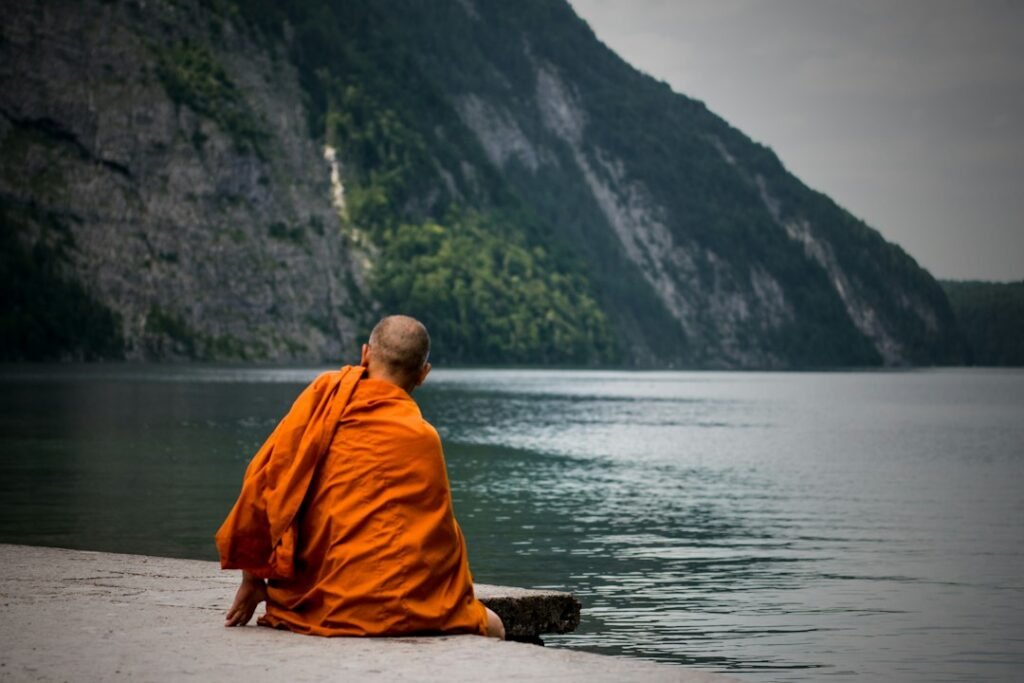
In this investigation
Human beings are intensely social animals, yet nearly every major contemplative tradition has also made room for leaving other people behind. Hermits enter deserts and forests. Monks withdraw to cells and caves. Yogis seek mountains. Writers walk alone. Pilgrims step away from ordinary routines. Modern people rent cabins, switch off phones or book silent retreats in the hope that distance from everyday life will make something easier to see.
The recurring pattern invites a seductive explanation: perhaps solitude automatically produces wisdom. History and psychology support a more careful answer. Voluntary retreat can reduce social demands, interrupt routine, create uninterrupted time and make internal experience more noticeable. But being alone can also intensify rumination, fear or loneliness. The difference often lies not in physical aloneness itself but in whether the solitude is chosen, structured, meaningful and connected to a wider life.
Solitude is not the same thing as loneliness
The most important modern distinction is also the easiest to lose. Solitude describes a condition of relative aloneness. Loneliness describes a painful perception that one’s social connection is insufficient. A person can be alone without feeling lonely, and can feel lonely in a crowded room.
This distinction matters historically because hermits and retreatants did not necessarily withdraw because they had failed socially. Their solitude was often intentional, rule-governed and embedded in a religious community that still gave the retreat meaning. A monk in a cell could be physically separate while remaining socially and symbolically connected to a monastery, teacher, lineage or imagined sacred community.
THE DISTINCTION
Chosen solitude can be restorative or meaningful. Unwanted isolation and chronic loneliness are different experiences with different psychological implications. Tradivior should not use evidence about one as though it automatically proves the other.
Religious solitude is historically deep but never culturally uniform
Christian, Buddhist, Hindu, Jain, Daoist and other traditions all contain histories of withdrawal, but their motives differ. Solitude can be used for prayer, repentance, meditation, scriptural study, austerity, non-attachment, preparation for teaching or escape from worldly status. Some traditions value permanent eremitic life; others treat retreat as temporary training before a return to community.
That variation is crucial. A modern wellness slogan such as “be alone to find yourself” would not accurately describe every hermit. Some ascetics withdrew precisely to weaken attachment to the ordinary social self rather than discover a more expressive version of it.
The Desert Fathers used withdrawal to remake religious life
Late-antique Christian monasticism offers one of the clearest historical examples. From the third and fourth centuries onward, ascetics in Egypt and surrounding regions withdrew into deserts, cells and loosely organized settlements. The point was not simply peace and quiet. Solitude could protect prayer, intensify ascetic discipline, reduce worldly distraction and create distance from ordinary status competition.
Historical work on the Desert Fathers also shows that “solitary” life was often less isolated than modern imagination suggests. Hermits received visitors, sought teachers, exchanged advice and sometimes lived near other ascetics. Their withdrawal therefore created a different social structure rather than eliminating society altogether.
Buddhist traditions repeatedly treated seclusion as a condition for meditation
Early Buddhist literature values seclusion as an environment in which craving, distraction and social entanglement can be observed more clearly. Later Buddhist traditions developed monasteries, forest traditions, hermitages and intensive retreat systems. Tibetan Buddhism, for example, developed long-term meditative retreats in caves, mountain environments and secluded cloisters.
But Buddhist solitude is not simply social avoidance. Classical monastic codes preserve communal duties, teachers, discipline and shared practice. Even a retreat undertaken alone can depend on food networks, patrons, monasteries and a lineage of instruction. The practitioner leaves ordinary interaction while remaining part of an institutional world.
Indian ascetic traditions also turned distance into discipline
South Asian religious history contains recurring images of the forest hermitage, mountain retreat, cave, wandering renunciant and solitary practitioner. Hindu asceticism, yoga traditions and renunciant lineages have used withdrawal in different ways: to pursue meditation, austerity, study, devotion, self-control or liberation from ordinary attachment.
Again, the historical meaning cannot be reduced to stress management. A practitioner may seek solitude because family, occupation, property and reputation are themselves understood as attachments. The withdrawal is therefore philosophical and ethical as much as psychological.
Why retreat changes experience even before any mystical claim is considered
Leaving ordinary social life changes several variables at once. There are fewer conversations, fewer expectations to perform a role, fewer interruptions, fewer status negotiations and often fewer consumer choices. Meals, sleep, work and attention may become more regular. Digital communication disappears in modern retreats. Silence may be added. The physical environment may become quieter and more natural.
This means that retreat has obvious psychological mechanisms without requiring supernatural assumptions. It simplifies the environment. Simplification can make sustained attention easier and automatic habits more visible. The same simplification can also expose thoughts and emotions that ordinary busyness keeps submerged.
Modern experiments show that solitude can lower emotional intensity
One of the strongest experimental findings comes from work by Thuy-vy Nguyen, Richard Ryan and Edward Deci. Across several studies, periods of solitude tended to reduce both high-arousal positive and high-arousal negative affect. In simple terms, being alone could lower emotional activation.
That does not mean solitude made everyone happier. Deactivation is not the same as pleasure. Excitement can fall along with anger or anxiety. The studies also found that choice mattered: when people actively chose solitude, the experience could support relaxation and reduced stress more effectively.
THE EVIDENCE
Short-term voluntary solitude can regulate arousal and may feel relaxing. That is a narrower and better-supported claim than saying isolation automatically improves mental health.
Autonomy appears to be one of the dividing lines
Research on motivation for solitude repeatedly finds that why someone is alone matters. Self-determined solitude—time alone chosen because a person values or wants it—has different associations from solitude driven by rejection, social anxiety, exclusion or a feeling of having no alternative.
A large scale-development study in adolescents and emerging adults found that non-self-determined solitude was associated with loneliness, social anxiety and depressive symptoms. Self-determined solitude showed more positive relationships with well-being, particularly among emerging adults.
A 2024 daily-diary study adds a useful refinement. Autonomy satisfaction during solitude was linked with more peaceful affect, while competence during solitude contributed to lower loneliness and a more satisfying day. The results suggest that time alone can contribute to well-being when it feels chosen and workable rather than imposed.
Historical retreat often engineered autonomy and meaning together
Traditional retreat systems often gave solitude three properties that modern psychology now treats as important: it was chosen, it had a purpose, and it had a structure. The hermit did not merely “have no one around.” The person had a prayer rule, meditation method, teacher, text, ritual schedule, ethical discipline or spiritual goal.
This helps explain why historical solitude should not be compared casually with involuntary social isolation. The physical condition may look similar from the outside while the subjective and institutional conditions are almost opposite.
Solitude can remove social performance
Human interaction requires continuous self-presentation. We explain ourselves, respond to expectations, manage impressions, follow conversational norms and monitor how other people react. Much of this is useful, but it occupies attention.
Temporary solitude suspends part of that performance. A person does not need to entertain, persuade, reassure, impress or react. That reduction may create mental space for reflection. It may also make identity feel less stable because the social mirrors through which people normally understand themselves are temporarily absent.
Why insight can appear when ordinary input falls away
Insight is often described as though the brain produces answers only when deliberately thinking harder. Creativity research complicates that picture. Problems can sometimes improve after an incubation period in which attention shifts away from the original task. Mind wandering has been proposed as one mechanism.
A well-known 2012 experiment found that an undemanding task that encouraged mind wandering improved later performance on previously encountered creative problems more than demanding activity, rest or no break. More recent studies, however, show that the relationship is context-dependent. Some find benefits for particular creative tasks or forms of mind wandering; others find weak or inconsistent effects.
Solitude can create conditions for incubation because interruption falls and spontaneous thought has more room. But “being alone makes you creative” is too strong. Solitude may help some forms of thinking in some people, particularly when it allows a problem to loosen rather than when it produces repetitive rumination.
Mind wandering is both a resource and a risk
Mind wandering can support planning, memory recombination and creative incubation, but it can also reduce performance on tasks that require sustained attention. The same cognitive freedom that lets ideas connect can let worry repeat.
This dual character helps explain why structured retreat traditions did not simply tell practitioners to sit alone and think whatever they liked. They added meditation objects, prayers, recitations, work, ethical rules and schedules. Structure directs the increased inward attention rather than assuming that every spontaneous thought is valuable.
Solitude may improve self-observation without guaranteeing self-knowledge
When external conversation decreases, internal commentary becomes easier to notice. Preferences, anxieties, fantasies and habitual narratives can become unusually visible. This can feel like insight because patterns that were previously hidden by constant stimulation become obvious.
But introspection is not infallible. People can misread their own motives, reinforce false beliefs or mistake emotional intensity for truth. Solitude provides access to mental content; it does not automatically verify that content.
The strongest historical traditions paired solitude with method
The recurring combination of seclusion and method may be more important than seclusion alone. Christian hermits used prayer and scriptural reflection. Buddhist retreatants used meditation instructions and monastic discipline. Yogic and ascetic systems prescribed bodily, ethical and attentional practices. Tibetan retreat traditions specified place, food, lineage, dangers and timing.
This suggests that traditional solitude functioned as a container. The contents—prayer, contemplation, austerity, study, meditation—determined what the container was for.
Solitude can clarify values by removing immediate social feedback
Choices made in front of other people are shaped by approval, fear of embarrassment, habit and group expectation. In solitude, those pressures temporarily weaken. A person may notice which goals remain compelling without an audience.
This is one plausible mechanism behind retreat narratives of “clarity.” It does not require the isolated person to discover an objective cosmic truth. The insight may simply be that some priorities were socially maintained while others feel personally endorsed.
Positive solitude changes across the lifespan
Studies asking people what good solitude means find that choice, enjoyment and meaningfulness are central themes. Research across age groups suggests that older adults often describe autonomy and peacefulness in solitude more positively than younger people, although individual differences remain large.
This makes sense developmentally. Solitude for an adolescent excluded by peers can feel very different from solitude for an older adult who has strong relationships and intentionally chooses an afternoon alone. The external condition is similar; the social meaning is not.
Chronic social isolation should not be romanticized as retreat
Modern health research consistently treats chronic loneliness and deficient social connection as concerns. A person who prefers solitude is not automatically protected from the consequences of having poor or unwanted social relationships. Recent research on the “preference for solitude paradox” found that socially isolated adults did not simply gain mental-health benefits because they said they preferred being alone.
This is especially important when ancient hermits are used to justify modern withdrawal. Most people living alone after bereavement, exclusion, disability, unemployment or social anxiety are not participating in a chosen contemplative institution. Calling their condition “spiritual solitude” can hide unmet needs.
Retreat can intensify distress as well as insight
Reducing stimulation does not guarantee calm. Without ordinary distractions, fear, grief, intrusive memories or obsessive thinking may become harder to avoid. Intensive meditation retreats can also produce difficult experiences for some participants.
The safest modern lesson is proportionality. A quiet walk, an hour without messages, a weekend retreat and months of isolation are not equivalent exposures. People with significant psychological distress may need support rather than more withdrawal.
Modern digital life changes what “solitude” means
A person can be physically alone while socially saturated by messaging, video, feeds and notifications. Conversely, someone can sit in a library or park among strangers and experience deep psychological solitude because no one is making interpersonal demands.
Historical hermitages removed more than conversation. They often removed commercial noise, rapid information flows and continuous social comparison. A modern retreat that keeps a smartphone active may reproduce only a small part of the older experience.
Solitude can reconnect people with society rather than reject it
One of the paradoxes of retreat is that withdrawal can serve a later return. Religious figures repeatedly retreat before teaching, leading, writing or re-entering communal life. Contemporary research also suggests that satisfying solitude and satisfying social connection are not opposites. A person can benefit from both.
The 2024 daily-diary evidence is particularly useful here: well-being was shaped by needs being met in both social and solitary contexts. Healthy solitude need not compete with relationship. It can complement it.
The recurring human strategy is controlled withdrawal
Across cultures, people repeatedly create boundaries around ordinary life: monasteries, hermitages, caves, forest retreats, pilgrimage routes, silent periods, sabbaths, artists’ residencies and modern digital breaks. The details differ, but the recurring strategy is recognizable. Temporarily reduce normal inputs and obligations so another mode of attention becomes possible.
That strategy can support insight because attention is finite. But its success depends on what replaces the removed stimulation. Solitude without purpose may become boredom. Solitude with rumination may become distress. Solitude with a meaningful practice may become reflection, prayer, creative incubation or rest.
What survives scrutiny?
- Voluntary solitude is historically well established in Christian, Buddhist, Hindu and other contemplative traditions.
- Traditional purposes include prayer, meditation, austerity, non-attachment, study and withdrawal from distraction—not a single universal wellness mechanism.
- Historical hermits were often supported by communities, lineages or institutions, so solitude did not always mean complete social disconnection.
- Modern psychology clearly distinguishes chosen solitude from loneliness and unwanted isolation.
- Experimental evidence suggests short-term solitude can reduce emotional arousal and can support relaxation when it is actively chosen.
- Self-determined solitude is associated with better outcomes than solitude driven by exclusion, anxiety or lack of choice.
- Solitude may create conditions for creative incubation and insight, but creativity findings are mixed and context-dependent.
- Solitude can increase self-observation without guaranteeing that introspection is accurate.
- Chronic loneliness and social isolation should not be romanticized as contemplative retreat.
- The strongest modern account treats useful solitude as chosen, bounded, meaningful and compatible with healthy social connection.
The Tradivior Evidence Profile
Historical Authenticity — Strong. Deliberate retreat and solitary practice are well documented across Christian monasticism, Buddhist traditions and South Asian ascetic systems.
Original-Purpose Evidence — Strong. Prayer, meditation, austerity, discipline, study, withdrawal from worldly distraction and spiritual transformation are explicitly documented motives, though their meanings differ across traditions.
Scientific Mechanism — Moderate. Reduced social demand, lower interruption, affective deactivation, autonomy and increased opportunity for mind wandering or reflection provide plausible psychological mechanisms.
Experimental Evidence — Moderate. Short-term voluntary solitude shows measurable effects on affect regulation and well-being under some conditions. Evidence for creativity and insight is suggestive but inconsistent and highly dependent on task and context.
Cross-Cultural Evidence — Strong. Structured withdrawal appears repeatedly across distinct religious and intellectual traditions, although permanent hermit life, temporary retreat and communal monastic seclusion should not be treated as identical.
Modern Relevance — Strong. Intentional solitude remains relevant in a high-interruption, digitally saturated environment, provided it is not confused with chronic unwanted isolation.
The Tradivior Conclusion
Partially Supported. Humans have repeatedly sought solitude because controlled withdrawal can reduce interruption, social performance and environmental demand while creating time for prayer, meditation, reflection and incubation. Modern evidence supports real psychological differences between chosen solitude and unwanted isolation, and shows that voluntary solitude can regulate arousal and contribute to well-being. But solitude does not automatically generate wisdom, creativity or mental health. Its effects depend strongly on choice, structure, duration, social context and what the person actually does while alone. The tradition survives scrutiny best as a technology for attention and intentional withdrawal—not as proof that isolation itself is inherently enlightening.
Continue investigating
- Why Do Traditions Use Silence as a Discipline?
- Why Do Humans Meditate?
- Why Do People Close Their Eyes During Prayer and Meditation?
Sources and further reading
- Nguyen T-vT, Ryan RM, Deci EL. “Solitude as an Approach to Affective Self-Regulation.” Personality and Social Psychology Bulletin. 2018;44(1):92–106. doi:10.1177/0146167217733073.
- Thomas V, Azmitia M. “Motivation matters: Development and validation of the Motivation for Solitude Scale—Short Form.” Journal of Adolescence. 2019. PMID: 30472399.
- “Need satisfaction in daily well-being: Both social and solitude contexts contribute to well-being.” British Journal of Social Psychology. 2024. PMID: 38801220.
- Costa RM. “Silence between words: Is solitude important for relatedness?” Progress in Brain Research. 2024;287:153–190. doi:10.1016/bs.pbr.2024.05.013.
- “The Definition and Categories of Positive Solitude: Older and Younger Adults’ Perspectives on Spending Time by Themselves.” 2020. PMID: 32938200.
- “What Time Alone Offers: Narratives of Solitude From Adolescence to Older Adulthood.” 2021. PMID: 34790144.
- Baird B, Smallwood J, Mrazek MD, et al. “Inspired by distraction: mind wandering facilitates creative incubation.” Psychological Science. 2012;23(10):1117–1122. PMID: 22941876.
- Yamaoka A, Yukawa S. “Does Mind Wandering During the Thought Incubation Period Improve Creativity and Worsen Mood?” Psychological Reports. 2020;123(5):1785–1800. PMID: 31856642.
- Research on the preference-for-solitude paradox and social isolation. Journal of Affective Disorders. 2024.
- Wortley J. An Introduction to the Desert Fathers. Cambridge University Press; 2019.
- Wijayaratna M. Buddhist Monastic Life: According to the Texts of the Theravāda Tradition. Cambridge University Press.
- DiValerio DM. Mountain Dharma: Meditative Retreat and the Tibetan Ascetic Self. Columbia University Press; 2025.
- Meinardus OFA. Monks and Monasteries of the Egyptian Desert. American University in Cairo Press.
Continue exploring

Why Do People Keep Ashes, Relics and Memorial Objects?
Hair, ashes, bones, clothing, photographs and relics allow the dead to remain materially present. Tradivior will examine why objects carry memory so powerfully and how continuing bonds differ from pathological…

Why Do Cultures Set Aside Days to Remember the Dead?
From Pitru Paksha and Qingming to Día de Muertos and All Souls’ Day, cultures repeatedly create calendar time for the dead. Tradivior will compare how recurring remembrance renews kinship, grief…
Why Do Cultures Preserve the Dead?
Mummification, embalming, freezing, smoking and desiccation reflect very different beliefs about bodies and afterlives. Tradivior will compare preservation traditions with the chemistry of decomposition and the practical limits of each…

Why Do People Change Names, Clothes or Homes After Marriage?
Marriage often transforms identity through surname changes, new dress, residence, kinship terms or household membership. Tradivior will investigate why marriage needs visible social consequences beyond the ceremony itself.
Picked for your curiosity
Enable JavaScript to build a reading profile and see recommendations.