 tradivior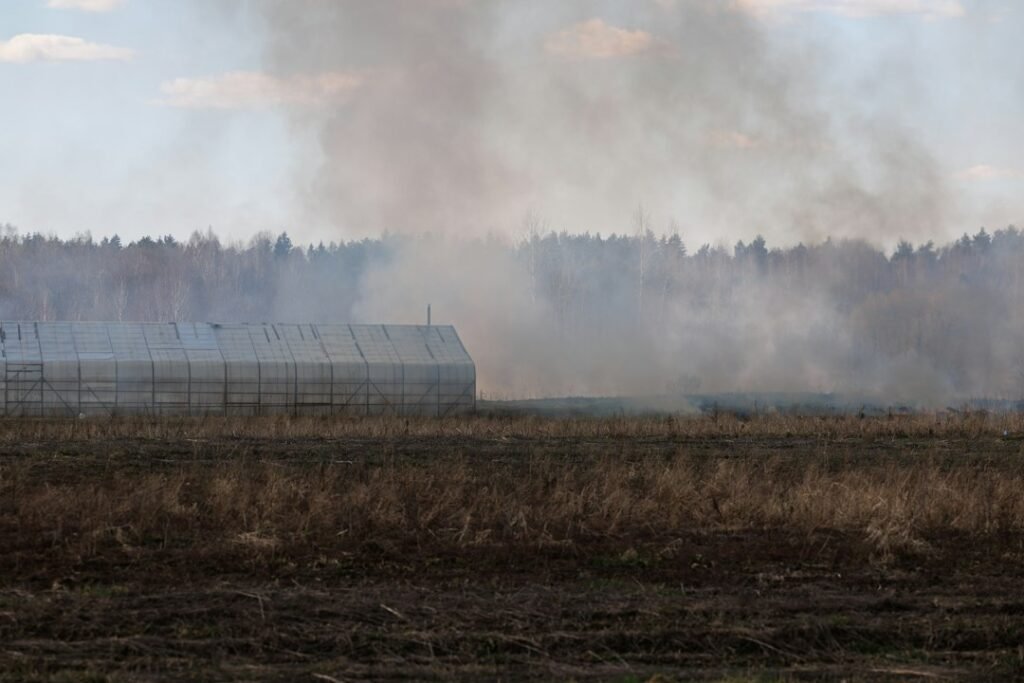
In this investigation
Fire is usually described as something landscapes must be protected from. In many Indigenous and local land-management traditions, that is only half the story. People deliberately set small, low-intensity fires to shape vegetation, improve access, encourage useful plants, create hunting areas, reduce dangerous fuel and maintain landscapes that had themselves developed under recurring fire.
Modern fire science has increasingly confirmed that some ecosystems do depend on particular fire regimes. But that finding can be romanticized too easily. Traditional burning was never one universal technique, and not every fire was environmentally beneficial. The ecological outcome depends on timing, frequency, intensity, weather, vegetation, landscape history and who is managing the burn.
The strongest conclusion is therefore conditional: cultural burning can function as sophisticated land stewardship when it is grounded in local knowledge and matched to fire-adapted ecosystems. Copying the idea without the place-specific knowledge can create new risks.
Fire-adapted landscapes are not fire-free landscapes
Many grasslands, savannas, shrublands and open forests evolved with recurring fire from lightning, human ignition or both. Some plants resprout after burning. Some seeds germinate more successfully after heat or smoke. Some habitats require periodic disturbance to remain open.
In such systems, complete fire exclusion can be as ecologically disruptive as excessive burning. The relevant question is not simply whether fire occurs, but what kind of fire regime occurs.
THE KEY IDEA
Ecology responds to fire regime: frequency, season, intensity, size and spatial pattern. “Fire is good” and “fire is bad” are both too crude.
Indigenous burning was often designed around multiple goals
Research from North America, Australia and elsewhere shows that cultural burning was rarely only about preventing wildfire. Communities used fire to improve foods, medicines, fibre plants, hunting access, travel routes and habitat mosaics. Burning could also carry spiritual, social and territorial meaning.
This matters because modern agencies often approach prescribed burning primarily as a fuel-reduction tool. Indigenous fire stewardship is usually broader: the fire is part of an ongoing relationship with plants, animals, season and community.
Small, repeated burns can fragment fuel continuity
A landscape covered continuously in dry vegetation can carry a large wildfire over long distances. Patchy low-intensity burning breaks that continuity.
Recent research on Indigenous fire stewardship shows that cultural burning often creates mosaics of recently burned, recovering and mature vegetation. Those mosaics can reduce the probability that every patch burns with the same severity at the same time.
Australia provides some of the strongest long-term evidence
Australia is one of the world’s most fire-prone continents, and Aboriginal communities have used fire for millennia. Palaeoecological work published in 2024 found evidence that tropical Australian fire regimes shifted at least 11,000 years ago toward more frequent, less intense burning, consistent with increasing human influence.
The finding does not mean every Australian landscape was deliberately engineered in the same way. Australia contains enormous ecological and cultural diversity. It does show that human burning has been part of long-term landscape history rather than a recent disturbance layered onto an untouched wilderness.
“Fire-stick farming” captured something real but can oversimplify Indigenous practice
The phrase “fire-stick farming” became influential in Australian archaeology and ecology because it highlighted purposeful Aboriginal burning. Yet many Indigenous practitioners and researchers now prefer terms such as cultural burning or Indigenous fire stewardship.
The newer language is useful because the practice is not simply farming by another name. Fire can be embedded in law, kinship, ceremony, hunting, food systems and obligations to Country.
Timing can matter more than the simple fact of burning
Early dry-season burns often behave differently from late dry-season fires. When vegetation retains more moisture and weather is milder, fires may move slowly and remain patchier. Later in the season, hotter, drier and windier conditions can produce more intense fires.
This seasonal distinction is central to many northern Australian fire programs and to other cultural-burning systems. A fire that is beneficial in one month can be damaging in another.
Cultural burning can improve useful plant resources
Reviews of Indigenous burning in the Pacific West of North America report that low-intensity fire can improve the quality or abundance of plants used for food, medicine and basketry. Burning can stimulate straight new shoots, suppress pests or reduce competing vegetation.
These are highly specific outcomes. A cultural burn may be designed around one species or one harvesting practice rather than biodiversity in the abstract.
Hunting landscapes can also be created through fire
Burning can produce fresh plant growth that attracts grazing animals. It can open visibility, clear travel routes and drive animals toward hunters.
Ethnographic and archaeological literature from Australia and other regions documents these uses. The ecological effect may be beneficial for some species and harmful for others, depending on scale and frequency.
Biodiversity benefits are real but not universal
Global reviews of Indigenous fire stewardship find many examples where burning supports habitat heterogeneity and biodiversity. But outcomes differ strongly among ecosystems and taxa.
Some species require long-unburned habitat. Others benefit from recent burns. Sustainable management therefore often depends on maintaining a mosaic rather than maximizing one fire age across the landscape.
THE EVIDENCE LIMIT
Traditional burning should not be translated into “more fire equals more biodiversity.” The relevant ecological unit is the fire regime, not fire alone.
Fire suppression changed many historical fire regimes
In parts of North America, twentieth-century fire suppression sharply reduced frequent low- and moderate-intensity burning. Forests accumulated more dead wood, dense undergrowth and small trees.
Research by the US Forest Service notes that this shift contributed to fuel accumulation and, in some ecosystems, to more severe modern wildfire behaviour. The history is not uniform everywhere, but the suppression legacy is ecologically important across many fire-adapted forests.
Colonization disrupted fire knowledge as well as fire frequency
Colonial governments often restricted Indigenous burning, removed communities from land and criminalized traditional management. That disruption changed both landscapes and the institutions through which fire knowledge was transmitted.
Modern cultural-burning revitalization therefore concerns sovereignty and knowledge restoration as much as technical fuel treatment.
Historical landscapes were often co-produced by people and fire
The idea of pristine wilderness can obscure long histories of human land management. In some regions, open forests, meadows and plant communities that European settlers encountered were partly maintained by Indigenous burning.
Removing people from those systems could therefore change vegetation structure rather than “restore nature” to a pre-human state.
Fire can reduce fuel while increasing another kind of risk
Every deliberate burn can escape. Smoke affects air quality. Repeated burning can damage sensitive vegetation, expose soil or increase erosion under some conditions.
Prescribed and cultural burning therefore require weather windows, trained crews, local knowledge and contingency planning. The fact that fire can be beneficial does not make it harmless.
Climate change alters the conditions under which old practices operate
Warmer temperatures, drought and longer fire seasons can make historical burning windows narrower or less predictable. Vegetation itself may also shift.
A practice that worked reliably under one climate cannot be assumed to produce the same result under a hotter, drier future. Traditional knowledge remains valuable, but it must interact with changing conditions rather than being frozen in the past.
Modern prescribed fire and cultural burning overlap but are not identical
Government prescribed burning usually operates through written objectives, permits, fuel targets and institutional risk management. Cultural burning can include these technical concerns while also pursuing food, medicine, ceremonial, habitat and cultural objectives.
Collaboration works best when cultural burning is not reduced to agency prescribed fire with Indigenous branding. Governance and knowledge authority matter.
Local knowledge can be empirical without being laboratory science
Fire practitioners learn through repeated observation: how flame behaves in particular winds, how grasses cure, which plants resprout, what insects return and how animals use recently burned patches.
This is empirical knowledge, even when it is transmitted orally and embedded in cultural language rather than formal scientific models.
But “traditional” should not become a guarantee of correctness
Traditional practices can be highly effective and still vary in quality. Knowledge can be lost, conditions can change, and social pressures can push burning outside historical patterns.
An evidence-led position therefore respects traditional ecological knowledge without treating it as infallible.
Brazilian Indigenous fire management shows similar multifunctionality
A 2026 systematic review of Indigenous fire management in Brazil found that documented practices were multifunctional: hunting, fruiting, vegetation management, cultural continuity and territorial governance could all be involved.
The review also emphasized that burns were often smaller, lower-severity and context dependent compared with accidental or uncontrolled fires. This reinforces a recurring global pattern: cultural fire is not simply setting the landscape alight; it is managing where, when and why fire occurs.
The ecological outcome depends on landscape context
A burn in an open savanna, a temperate oak woodland, a peatland and a dense tropical forest cannot be treated as the same intervention.
Fire-sensitive ecosystems may be damaged by repeated burning. Fire-dependent ecosystems may decline when fire is excluded. Management therefore has to begin with local ecology rather than ideological preference for or against burning.
Cultural burning can contribute to wildfire resilience without eliminating wildfire
Fuel reduction and patchiness can reduce severity in some contexts, but no cultural-burning program can guarantee that extreme wildfire will not occur under drought, heat and high winds.
The realistic goal is risk reduction and ecosystem resilience, not total control over fire.
Fire also carries cultural knowledge across generations
Burning days bring people onto Country, teach plant identification, transmit weather knowledge and connect younger members with elders. The act of burning can therefore reproduce culture as well as habitat.
When governments exclude communities from fire management, the loss is not only ecological. It can interrupt knowledge transmission itself.
Why the romantic version is tempting
Modern environmental debate sometimes swings between two stereotypes: Indigenous fire as primitive destruction or Indigenous fire as perfectly sustainable wisdom.
The evidence supports neither extreme. Cultural burning is best understood as a set of adaptive, place-based practices developed through long interaction with particular landscapes.
What survives scrutiny?
- Indigenous and local communities in several fire-prone regions deliberately used fire for hunting, food production, travel, craft plants, ceremony and landscape management.
- Many fire-adapted ecosystems respond to the pattern of burning rather than simply to the presence or absence of fire.
- Low-intensity, patchy burns can reduce fuel continuity and create habitat mosaics under suitable conditions.
- Australian evidence shows long-term human influence on fire regimes, including a shift toward more frequent, lower-intensity burning in some regions.
- North American cultural burning has documented benefits for some food, medicine and fibre plants.
- Fire suppression and Indigenous dispossession altered historical fire regimes in many regions.
- Biodiversity responses are context dependent; some species need recently burned habitat while others depend on long-unburned refuges.
- Climate change can make traditional burning windows more difficult to use safely.
- Prescribed fire and cultural burning overlap technically but differ in governance, goals and cultural meaning.
- The strongest evidence supports place-based fire stewardship, not a universal rule that traditional burning is always beneficial.
The Tradivior Evidence Profile
Historical Authenticity — Strong. Indigenous fire stewardship is well documented historically, ethnographically and archaeologically across Australia, North America, South America and other regions.
Original-Purpose Evidence — Strong. Hunting, food production, craft materials, access, ceremony and landscape stewardship are directly documented goals.
Scientific Mechanism — Strong. Fuel reduction, vegetation response, disturbance ecology and landscape patchiness provide clear mechanisms by which burning can alter wildfire behaviour and biodiversity.
Experimental Evidence — Moderate to Strong. Ecological studies support many effects of prescribed and cultural burning, but long-term outcomes vary strongly by ecosystem and fire regime.
Cross-Cultural Evidence — Strong. Deliberate landscape burning appears in multiple independent Indigenous and local traditions.
Modern Relevance — Strong. Cultural burning is increasingly relevant to wildfire resilience, ecological restoration, biodiversity conservation and Indigenous land governance.
The Tradivior Conclusion
Evidence Supported—with strong contextual limits. Some traditional landscapes did depend on repeated, knowledgeable burning. Modern fire ecology strongly supports the mechanisms by which well-timed, low-intensity fire can reduce fuel continuity, shape habitat mosaics and support particular species or resources. But cultural burning is not a universal recipe, and its success depends on place, season, weather, vegetation and governance. The tradition survives scrutiny most strongly as adaptive ecological management embedded in local knowledge—not as proof that every traditional fire was environmentally beneficial.
Continue investigating
- Why Did Fire Become Sacred Across Human Cultures?
- Why Were Sacred Groves Protected in India?
- Why Did Traditional Farmers Read Birds, Insects and Plants as Weather Signs?
Sources and further reading
- Long JW, Lake FK, Goode RW. “The importance of Indigenous cultural burning in forested regions of the Pacific West, USA.” Forest Ecology and Management. 2021;500:119597.
- Lake FK. “Indigenous fire stewardship: Federal/Tribal partnerships for wildland fire research and management.” Fire Management Today. 2021;79(1):30–39.
- Ryan KC, Knapp EE, Varner JM. “Prescribed fire in North American forests and woodlands: history, current practice, and challenges.” Frontiers in Ecology and the Environment. 2013;11:e15–e24.
- “Conservation of Earth’s biodiversity is embedded in Indigenous fire stewardship.” 2021. PMCID: PMC8364180.
- “Centering Indigenous Voices: The Role of Fire in the Boreal Forest of North America.” 2022. PMCID: PMC9537118.
- “Late Pleistocene emergence of an anthropogenic fire regime in Australia’s tropical savannahs.” Nature Geoscience. 2024;17:233–240.
- CSIRO. “Indigenous perspectives on biodiversity.” Chapter on Indigenous burning and practical biodiversity management.
- Russell-Smith J, Whitehead P, Cooke P, eds. Culture, Ecology and Economy of Fire Management in North Australian Savannas: Rekindling the Wurrk Tradition. CSIRO Publishing.
- “Bridging knowledges through fire: a systematic review of indigenous fire management practices in Brazil.” 2026. PMCID: PMC13192044.
Continue exploring
Why Is the Ganga Sacred?
The Ganga is river, goddess, pilgrimage route, purifier and national symbol. Tradivior will trace how these layers developed and evaluate modern claims about unusual self-purifying properties without confusing microbial findings…
Why Do People Keep Ashes, Relics and Memorial Objects?
Hair, ashes, bones, clothing, photographs and relics allow the dead to remain materially present. Tradivior will examine why objects carry memory so powerfully and how continuing bonds differ from pathological…
Why Do Cultures Set Aside Days to Remember the Dead?
From Pitru Paksha and Qingming to Día de Muertos and All Souls’ Day, cultures repeatedly create calendar time for the dead. Tradivior will compare how recurring remembrance renews kinship, grief…
Why Do Cultures Preserve the Dead?
Mummification, embalming, freezing, smoking and desiccation reflect very different beliefs about bodies and afterlives. Tradivior will compare preservation traditions with the chemistry of decomposition and the practical limits of each…
Picked for your curiosity
Enable JavaScript to build a reading profile and see recommendations.