 tradivior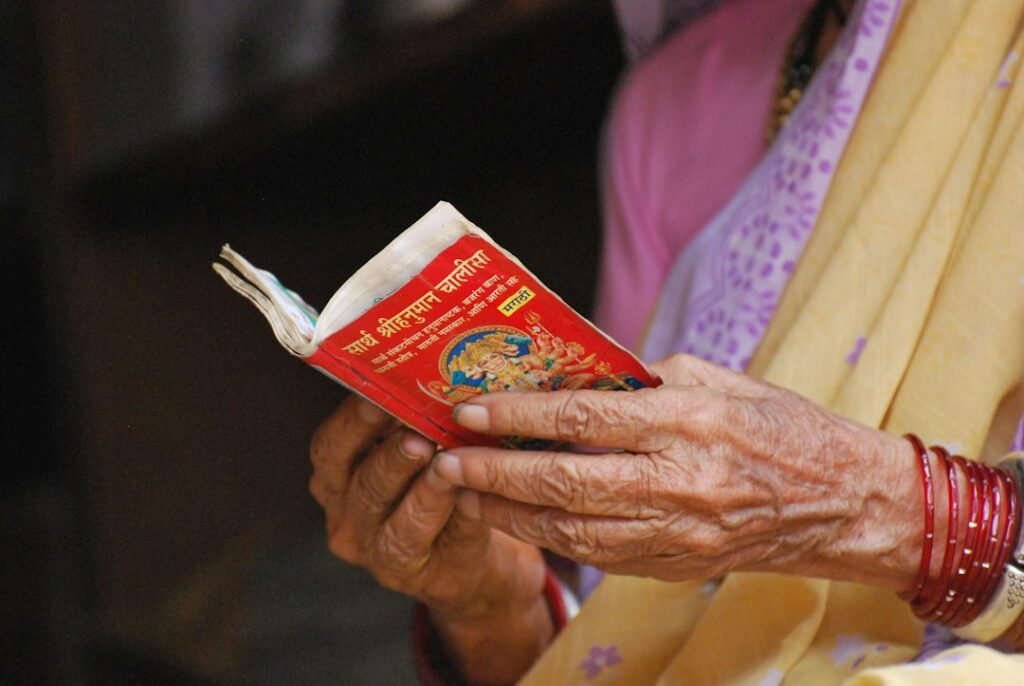
In this investigation
Traditional medical systems classified the body because healers needed stable categories for symptoms, diagnosis and treatment long before modern laboratory medicine. Ayurveda, Chinese medicine, Greco-Arabic traditions and other systems organized illness through concepts such as humors, doshas, qi, organs, channels, qualities and constitutions.
These systems are historically coherent, but their categories should not be automatically translated into modern anatomy or biochemistry.
Classification makes experience manageable
Patients present with complex mixtures of pain, fever, appetite change, fatigue, stool changes, mood and other symptoms.
A classification system helps a healer group recurring patterns and choose a response.
Premodern medicine lacked many modern measurements
Without microscopy, imaging, laboratory chemistry or germ theory, healers relied heavily on visible, audible, tactile and reported signs.
Systems therefore emphasized qualities that could be observed directly.
Ayurveda organizes health through doshas and other concepts
Classical Ayurvedic texts describe vata, pitta and kapha, alongside tissues, channels, digestion and other categories.
These are parts of a historical medical model, not literal equivalents of nerves, enzymes or hormones.
Chinese medicine developed another relational model
Traditional Chinese medicine uses concepts such as qi, yin-yang, five phases, zang-fu organs and channels.
Names such as “liver” or “heart” can carry functional meanings that do not map one-to-one onto modern organ anatomy.
Greek and Islamic medicine used humoral theory
Blood, phlegm, yellow bile and black bile were used to explain temperament and disease across Greek, Roman, Islamic and European medicine for centuries.
The system was influential but does not match modern physiology.
Why these systems persisted
They offered internally consistent explanations, training frameworks and treatment logic. They also accumulated practical observations about diet, symptoms, herbs and care.
A wrong global theory can still contain locally useful observations.
Pattern recognition is a real clinical skill
Modern clinicians also recognize symptom clusters, but modern diagnosis increasingly links patterns to measurable pathology.
The similarity is methodological, not proof that older categories secretly anticipated modern disease classification.
Some traditional categories may correlate with measurable traits
Researchers have tested whether constitutional classifications such as Ayurvedic prakriti correlate with genetics, metabolism or other biomarkers.
Results are exploratory and do not establish that the traditional categories are equivalent to validated biomedical phenotypes.
Translation can create false certainty
Calling vata “the nervous system” or qi “bioelectricity” sounds scientific but usually distorts both traditions.
A respectful comparison keeps the original category intact while testing specific measurable claims.
Traditional medicine is not one thing
Different regions, texts and practitioners disagree. Systems evolve, borrow and change.
Presenting “ancient medicine” as one unified timeless science erases this diversity.
Clinical evidence must be treatment-specific
A historical theory can be inaccurate while one herb or practice still works. Conversely, a coherent traditional explanation does not guarantee treatment efficacy.
Each intervention needs its own safety and effectiveness evidence.
WHO’s current approach is evidence-focused
WHO recognizes the cultural importance and widespread use of traditional medicine while emphasizing quality, safety, regulation and research.
This provides a useful middle path between dismissal and uncritical validation.
What survives scrutiny?
- Traditional medical systems developed sophisticated classification frameworks.
- Those frameworks helped organize observation and treatment before modern diagnostics.
- Historical categories should not be equated directly with modern organs, hormones or energy fields.
- Pattern recognition is clinically useful, but modern validation requires measurable outcomes.
- Individual treatments can be effective even if the traditional theory explaining them is not scientifically accurate.
- Research should evaluate specific claims rather than whole traditions as one block.
The Tradivior Evidence Profile
Historical Authenticity — Strong. Classical medical texts document detailed body-classification systems.
Original-Purpose Evidence — Strong. Diagnosis, prognosis and treatment selection are explicit.
Scientific Mechanism — Moderate for observational classification; Variable for correspondence to modern physiology.
Experimental Evidence — Variable by system and claim.
Cross-Cultural Evidence — Strong. Different civilizations independently developed classificatory medicine.
Modern Relevance — Strong. Traditional systems remain widely used and scientifically studied.
The Tradivior Conclusion
Traditional medicine classified the body because medicine cannot function without categories.
The historical systems deserve to be understood in their own terms, then tested claim by claim. Their value is neither proven nor disproven by forcing dosha, qi or humors into modern biomedical vocabulary.
Sources & further reading
- WHO Global Traditional Medicine Strategy and research guidance.
- Classical Ayurvedic, Chinese and Greco-Arabic medical histories.
- Modern research on traditional constitutional classification and diagnostic reproducibility.
Continue exploring

Partially Supported
Why Is the Ganga Sacred?
The Ganga is river, goddess, pilgrimage route, purifier and national symbol. Tradivior will trace how these layers developed and evaluate modern claims about unusual self-purifying properties without confusing microbial findings…
Evidence Supported
Why Do Cultures Set Aside Days to Remember the Dead?
From Pitru Paksha and Qingming to Día de Muertos and All Souls’ Day, cultures repeatedly create calendar time for the dead. Tradivior will compare how recurring remembrance renews kinship, grief…
Partially Supported
Why Do People Keep Ashes, Relics and Memorial Objects?
Hair, ashes, bones, clothing, photographs and relics allow the dead to remain materially present. Tradivior will examine why objects carry memory so powerfully and how continuing bonds differ from pathological…

Historically Practical
Why Did Cremation Become Central to Hindu Death Ritual?
Cremation has deep roots in many Hindu traditions but varies by community, age, status and circumstance. Tradivior will investigate its historical logic, environmental consequences and modern changes without treating one…
Picked for your curiosity
Enable JavaScript to build a reading profile and see recommendations.