 tradivior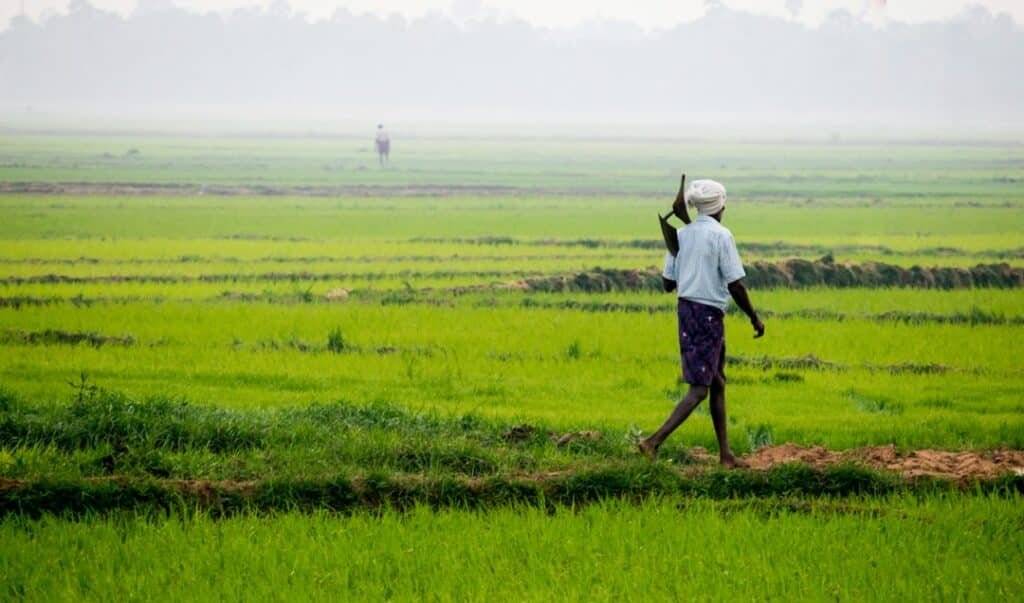
In this investigation
Long before satellite maps and Doppler radar, farmers still had to decide when to sow, harvest, move livestock and protect stored grain. Those decisions could not wait for perfect certainty. So farming communities watched the landscape itself: birds, insects, flowering trees, cloud shape, wind direction, humidity, animal movement and seasonal timing.
Some signs were genuinely informative because plants and animals respond to the same environmental changes that precede weather. Others were correlations remembered from experience. Still others belonged to astrology, omen traditions or local symbolism. The challenge is not to declare the entire system “ancient science” or dismiss it as folklore, but to test each cue on its own terms.
Traditional forecasting is best understood as accumulated local observation
Farmers repeatedly exposed to the same landscape can notice patterns invisible to visitors. The first flowering of a tree, the arrival of a migratory bird, the direction of a seasonal wind or the sudden appearance of insects may correlate with changes in temperature, moisture or rainfall.
When such observations are transmitted across generations, they become local forecasting rules.
THE CORE IDEA
Traditional weather signs are hypotheses encoded in culture. Some are good hypotheses. Some are not. Their value depends on mechanism, local climate and whether the relationship still holds.
Biological indicators are indirect weather sensors
Plants and animals do not predict weather consciously, but they respond to environmental conditions. Humidity, barometric pressure, temperature, soil moisture, photoperiod and wind can alter behaviour and growth.
Human observers can therefore use biological responses as indirect indicators of atmospheric change.
Insects can respond quickly to humidity and moisture
Ants, termites and other insects often change activity around humidity, soil moisture and rainfall. Sudden emergence, nest movement or changes in flight activity can therefore coincide with weather transitions.
The difficulty is specificity. An insect behaviour linked to humidity in one ecological zone may not predict the same event elsewhere.
Bird behaviour can reflect atmospheric conditions
Bird flight height, feeding patterns, migration and vocal activity can change with wind, humidity, insect availability and approaching storms.
Farmers in many regions use bird arrival or unusual calling as seasonal cues. Modern ethnographic studies in India, East Africa and West Africa continue to document these practices.
Low-flying birds may be responding to insects rather than “sensing rain” directly
One familiar rule says swallows or other insect-eating birds fly lower before rain. A plausible mechanism is indirect: atmospheric humidity and pressure affect insect flight, and birds follow their prey.
This is a useful example of how a traditional sign can be correct observationally even when the local explanation is incomplete.
Plant phenology can forecast seasons better than tomorrow’s weather
Flowering, leaf fall and fruiting respond to accumulated temperature, rainfall and day length. Farmers can therefore use plant cycles to judge whether a season is early, late, dry or wet.
These are often seasonal indicators rather than precise short-range forecasts. A tree blooming early may say something about recent environmental conditions and seasonal transition, not necessarily whether rain will fall at 4 p.m. tomorrow.
Migration can encode large-scale seasonal change
In Ladakh, research involving hundreds of households found that farmers used migration patterns of birds as traditional indicators for snowfall and winter conditions.
Migration timing is affected by broad climatic and ecological conditions, making it potentially useful as a seasonal marker.
Clouds and wind are more direct indicators than animals
Many “traditional” forecasts are actually practical meteorology: cloud type, wind direction, temperature, lightning, halos and humidity.
These signs can have clear atmospheric mechanisms. A change in prevailing wind may indicate an approaching monsoon flow. High cirrus cloud can precede certain weather systems. A halo around the moon can be produced by ice crystals in high cloud.
Local forecasting often mixes several indicators
Experienced forecasters rarely rely on one bird or one tree. Ethnographic studies show combinations of animal behaviour, clouds, wind, plants, stars and remembered seasonal patterns.
This matters scientifically because multiple weak indicators can become more useful when they agree.
East African farmers and pastoralists use mixed biological and meteorological cues
A major synthesis of indigenous forecasting in Ethiopia, Tanzania and Uganda found that farmers and pastoralists use combinations of meteorological, biological and astrological indicators to anticipate seasonal weather.
These forecasts influence crop choice, planting, livestock mobility and drought preparation.
THE EVIDENCE
Traditional forecasting is often operationally important even where formal meteorological services exist. The harder question is accuracy, which has been tested much less consistently than use.
Accuracy is often remembered differently from failure
Humans remember striking successes. A farmer who notices ants moving before heavy rain may preserve that story for years. Failed predictions are easier to forget.
This creates confirmation bias. Traditional signs need prospective testing—not only retrospective stories—to establish reliability.
A useful local cue does not become a universal rule
The same species behaves differently across climates, elevations and seasons. A plant that flowers before monsoon rain in one region may be responding to irrigation or temperature elsewhere.
Traditional ecological knowledge is strongest when treated as place-specific rather than exported as a global folk formula.
Some signs work because the organism is responding to the same variable humans care about
Frogs calling after moisture rises, termites emerging under suitable humidity or plants flowering after accumulated heat are all examples where biology links directly to environmental conditions.
In those cases, people are reading biological sensors already embedded in the ecosystem.
Other signs may work only because they correlate with season
A bird may arrive at roughly the same time as the rainy season without responding to tomorrow’s rainfall. The sign still helps with agricultural timing, but its mechanism is seasonal correlation rather than short-term prediction.
That difference matters when evaluating accuracy.
Astronomical and astrological signs belong to a different evidence category
Traditional systems often combine animal and plant cues with lunar phases, stars, almanacs or astrology.
A seasonal star rising can be useful because it is a reliable calendar marker. A claim that planetary configurations physically cause rainfall is different and requires separate evidence.
Calendars can be accurate without astrology being causal
A star’s heliacal rising occurs at a predictable point in the year. If monsoon onset historically clustered around that season, the star becomes a useful time marker.
The correlation does not mean the star causes the rain.
Indian agricultural traditions preserve a large catalogue of weather signs
Indian agrarian literature, almanacs and oral traditions record rainfall indicators involving clouds, wind, stars, animals and plants. Modern reviews of indigenous technical knowledge continue to document these practices.
The historical value of the record is clear. The scientific accuracy of each sign varies and must be tested independently.
Traditional forecasting matters most where official forecasts are too coarse
A national forecast can say a district has a high probability of rain. A farmer may still need to know whether one valley, grazing area or hillside is likely to receive it.
Local knowledge can add micro-scale information that broad models miss.
Modern meteorology has advantages traditional systems cannot match
Satellites, radar, weather stations and numerical models can observe systems far beyond the local horizon. They can track cyclones, pressure systems and upper-atmospheric circulation invisible to local observers.
Traditional indicators therefore should not be romanticized as substitutes for severe-weather warnings.
Local knowledge has advantages modern forecasting can also miss
Farmers observe one place continuously. They know local soils, slope, vegetation, drainage and wind channels.
That fine-grained knowledge can make forecasts more actionable even if the atmospheric prediction comes from a scientific model.
The strongest future model is integration rather than competition
Research increasingly recommends combining locally trusted indicators with modern climate services. Scientific forecasts add regional predictive power; local knowledge adds context and credibility.
The goal is not to declare one knowledge system superior in every situation but to identify which signals improve decisions.
Climate change can break traditional correlations
A cue remains useful only while the ecological relationship remains stable. Climate change shifts migration, flowering, insect emergence and rainfall timing.
Pastoralists in northern Kenya have reported that some traditional indicators became less reliable as drought frequency and severity changed.
Phenological mismatch is a real threat to old forecasting rules
If a tree responds primarily to temperature while rainfall timing changes independently, flowering may no longer predict rain as it once did.
This is one reason traditional knowledge must remain adaptive rather than frozen.
Knowledge holders constantly update rules in living traditions
Indigenous knowledge is sometimes described as ancient and static. In reality, farmers test, abandon and modify cues over time.
A living forecasting tradition is closer to an evolving local model than a fixed set of proverbs.
Oral transmission creates both resilience and vulnerability
Oral knowledge can preserve fine ecological detail without formal institutions. It can also disappear quickly when younger generations leave farming or language shifts.
Documentation is therefore valuable—but only if it preserves context, not merely a list of signs stripped from the landscape that gave them meaning.
Forecasting rules are also social institutions
Not everyone in a community has equal authority to interpret signs. Elders, specialist farmers, pastoralists or ritual experts may hold particular forecasting roles.
The forecast therefore carries social authority as well as environmental information.
A failed forecast can still persist if it serves another function
Some signs survive because they mark seasonal identity, ritual timing or cultural continuity even when predictive accuracy is weak.
This is another reason practical and symbolic functions must be separated.
What survives scrutiny?
- Farmers and pastoralists across many regions use biological, atmospheric and astronomical indicators to forecast weather and seasons.
- Bird movement, insect activity and plant phenology can reflect real environmental changes.
- Some traditional signs have plausible physical or ecological mechanisms.
- Many indicators are local and should not be generalized beyond the ecosystem in which they developed.
- Traditional forecasting often combines several signals rather than relying on one omen.
- Accuracy is much less systematically studied than cultural use and farmer trust.
- Astrological claims require separate evaluation from calendar-based astronomical cues.
- Modern meteorology can detect large-scale weather systems that local indicators cannot.
- Local ecological knowledge can add micro-scale context and improve how forecasts are interpreted and used.
- Climate change can weaken previously reliable biological indicators by altering migration, flowering and rainfall timing.
The Tradivior Evidence Profile
Historical Authenticity — Strong. Indigenous and local weather forecasting using plants, animals, clouds and stars is widely documented in agricultural and pastoral societies.
Original-Purpose Evidence — Strong. Planting, livestock movement, harvest planning and drought preparation are explicit practical purposes.
Scientific Mechanism — Moderate to Strong. Many biological indicators respond to humidity, temperature, soil moisture, wind or seasonal change, although mechanisms vary by sign.
Experimental Evidence — Limited to Moderate. Ethnographic evidence is extensive, but rigorous prospective accuracy testing remains uneven.
Cross-Cultural Evidence — Strong. Comparable forecasting systems occur across South Asia, Africa, Arctic and Indigenous communities elsewhere.
Modern Relevance — Strong. Local indicators remain useful when integrated with modern forecasting, especially for place-specific agricultural decisions.
The Tradivior Conclusion
Partially Supported. Traditional farmers were often reading real ecological signals. Plants, insects, birds, clouds and winds can respond to environmental variables associated with seasonal or short-term weather, making some local forecasting rules genuinely useful. But the evidence does not support treating every traditional sign as accurate, and many systems mix good environmental observation with weaker astrological or symbolic cues. The strongest modern approach is to test and integrate useful local indicators with meteorological forecasting rather than romanticize or discard the whole tradition.
Continue investigating
- Why Did the Monsoon Shape Calendars and Rituals in South Asia?
- Why Did Farmers Read the Pleiades and Other Stars?
- Why Did Indian Calendars Track Both Sun and Moon?
Sources and further reading
- Duttarganvi S, Sunkad G, Desai BK, Umesh MR, Rao S. “Weather prediction through indigenous knowledge and relevance in agriculture education: A review.” Journal of Farm Sciences. 2021/2022.
- “Indigenous knowledge for seasonal weather and climate forecasting across East Africa.” Climatic Change. 2019.
- “The use of indigenous climate forecasting methods by the pastoralists of Northern Kenya.” Pastoralism. 2016.
- “Weather prediction using traditional knowledge in cold arid high altitude region of Ladakh in India.” Indian Journal of Traditional Knowledge. 2023.
- Vaidya VB, Pandey V, Dhabale S. “Ancient science of weather forecasting in India with special reference to rainfall prediction.” Journal of Agrometeorology. 2023.
- 2026 field research on indigenous forecasting indicators among Sisaala farmers in northwestern Ghana.
- Recent reviews on integrating Indigenous and Western weather science and climate services.
Continue exploring

Why Is the Ganga Sacred?
The Ganga is river, goddess, pilgrimage route, purifier and national symbol. Tradivior will trace how these layers developed and evaluate modern claims about unusual self-purifying properties without confusing microbial findings…

Why Do People Keep Ashes, Relics and Memorial Objects?
Hair, ashes, bones, clothing, photographs and relics allow the dead to remain materially present. Tradivior will examine why objects carry memory so powerfully and how continuing bonds differ from pathological…

Why Do Cultures Set Aside Days to Remember the Dead?
From Pitru Paksha and Qingming to Día de Muertos and All Souls’ Day, cultures repeatedly create calendar time for the dead. Tradivior will compare how recurring remembrance renews kinship, grief…

Why Do Cultures Preserve the Dead?
Mummification, embalming, freezing, smoking and desiccation reflect very different beliefs about bodies and afterlives. Tradivior will compare preservation traditions with the chemistry of decomposition and the practical limits of each…
Picked for your curiosity
Enable JavaScript to build a reading profile and see recommendations.