 tradivior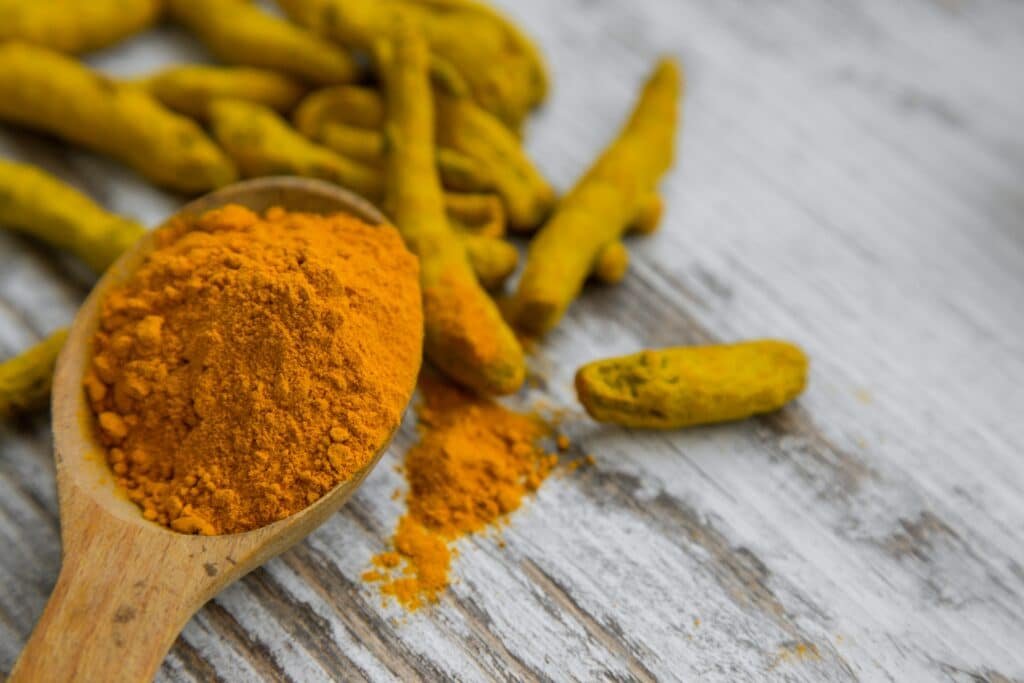
In this investigation
Turmeric occupies an unusual place in South Asian life because it crosses categories. It colours food, appears in Ayurvedic formulations, marks bodies and thresholds in ritual, accompanies weddings, and has become a global supplement marketed for inflammation and longevity.
That continuity makes turmeric a perfect case for Tradivior’s core question: when modern science finds biological activity in a traditional substance, how much of the modern explanation can legitimately be projected backward? Curcumin and related curcuminoids do have measurable biological effects. But ordinary culinary turmeric is not the same intervention as a concentrated, bioavailability-enhanced capsule.
Turmeric is a rhizome, not a molecule
The spice comes from the rhizome of Curcuma longa. It contains curcuminoids—including curcumin—as well as volatile oils, carbohydrates, proteins and many other compounds. Modern supplement research often isolates or standardizes curcuminoids, sometimes combining them with absorption enhancers.
This distinction is basic. Evidence for purified curcumin does not automatically describe a teaspoon of turmeric used in dal.
THE RECORD
Turmeric’s traditional significance is genuinely multi-domain: food, medicine, cosmetics and ritual. Modern curcumin pharmacology explains only one part of that history.
Why turmeric works so well as a food colour
Curcuminoids produce turmeric’s intense yellow-orange colour. They disperse through cooking fats and stain surfaces readily, allowing a small amount to visibly transform a dish.
Colour itself can become culturally meaningful. In South Asia, yellow and turmeric are associated in many contexts with auspiciousness, fertility, purification and transition. Those meanings cannot be reduced to pharmacology.
Ayurveda used turmeric medicinally
Classical and later Ayurvedic practice employs turmeric for multiple indications and formulations. This establishes historical medicinal intent more strongly than for traditions where a health purpose is merely inferred from modern science.
But historical use still does not prove clinical efficacy. Ancient indication, chemical plausibility and randomized human evidence are separate layers.
Curcumin interacts with many biological pathways
Laboratory studies show that curcumin can influence inflammatory signalling, oxidative pathways, transcription factors and enzymes. This broad molecular activity has generated thousands of papers.
Broad activity is not the same as broad clinical effectiveness. Many compounds affect cultured cells at concentrations difficult to achieve in human tissues after ordinary oral intake.
The bioavailability problem is central
Curcumin is poorly water-soluble and is rapidly metabolized and eliminated. Standard oral preparations often produce low circulating concentrations. This has led researchers and supplement companies to use piperine, lipid formulations, nanoparticles, phospholipid complexes and other delivery systems.
The need for engineered formulations itself warns against casual translation from high-dose supplement trials to ordinary cooking.
THE EVIDENCE
Curcumin has real biological activity and randomized trials report benefits for selected outcomes. Yet most clinical studies use standardized supplements, often at doses and formulations far removed from culinary turmeric.
What recent meta-analyses show
Meta-analyses of randomized trials report modest improvements in some glycaemic, lipid and inflammatory markers among people with metabolic disorders. A 2025 systematic review of metabolic-syndrome-related trials found reductions in fasting glucose, HbA1c, triglycerides, LDL cholesterol and inflammatory markers, with substantial heterogeneity across formulations and doses.
These findings are meaningful, but they concern nutraceutical use—not proof that culinary turmeric prevents disease in healthy populations.
Turmeric for osteoarthritis is promising but formulation-dependent
Several trials and meta-analyses report reductions in pain or symptoms among people with knee osteoarthritis using curcumin or turmeric extracts. The evidence is promising enough to warrant continued study, but products vary greatly in curcuminoid content, absorption technology and dose.
A food ingredient and a standardized therapeutic extract should therefore be described separately.
Black pepper really can change curcumin pharmacokinetics
Piperine, a compound in black pepper, can inhibit metabolic pathways and increase curcumin exposure. A 2023 human pharmacokinetic study found higher urinary curcumin excretion and longer apparent half-life when turmeric was consumed with black pepper than without.
This demonstrates a real interaction. It does not prove that Indian cooks historically paired turmeric and pepper specifically to engineer curcumin bioavailability. The culinary combination can predate the mechanistic explanation for many other reasons.
Piperine also changes drug metabolism
The mechanism that increases bioavailability can also alter metabolism of medicines. Concentrated piperine supplements are therefore not equivalent to adding ordinary black pepper to food, and people taking medications should be cautious about high-dose enhancer products.
Does cooking destroy curcumin?
Heat, pH, light and oxygen can degrade curcuminoids to varying degrees. Cooking may reduce some intact curcumin while also changing extractability and the food matrix. Exact retention depends on method.
This again makes supplement-to-curry extrapolation difficult.
The antimicrobial story is real but limited
Turmeric extracts and curcumin inhibit various microbes in laboratory studies. But culinary turmeric concentrations should not be relied on to preserve unsafe food or disinfect wounds.
Traditional topical uses therefore deserve separate safety and efficacy evaluation from food use.
Ritual turmeric is not failed medicine
Wedding haldi ceremonies, auspicious markings and ritual applications can carry symbolic meanings even if no clinical mechanism is demonstrated. Treating ritual as merely an ancient medical procedure can erase the very cultural functions that explain why it survives.
A substance can be simultaneously symbolic and pharmacologically active without one role explaining the other.
Safety changes with dose
Culinary turmeric is generally consumed in small amounts. Concentrated supplements can cause gastrointestinal symptoms and may interact with medications or affect gallbladder-related conditions in susceptible people. Product contamination and adulteration are additional supplement-quality concerns.
“Natural” does not erase pharmacology.
Food turmeric and curcumin capsules are not the same intervention
Turmeric powder contains curcuminoids alongside starch, fibre, volatile oils and many other plant compounds. A concentrated curcumin extract may deliver far more curcuminoid than a serving of food.
This distinction is essential when translating studies. A trial of a standardized high-bioavailability extract cannot prove that ordinary turmeric in dal or vegetables produces the same blood concentration or clinical effect.
Curcumin’s low oral bioavailability is a real pharmacological problem
Curcumin is poorly water soluble, rapidly metabolized and extensively conjugated after absorption. As a result, ordinary oral doses often produce low concentrations of free curcumin in blood.
This is why supplement manufacturers use phospholipid complexes, nanoparticles, micelles, oils or piperine to increase exposure. Those formulations are pharmacologically different from kitchen turmeric.
The osteoarthritis evidence is promising but formulation-dependent
Systematic reviews of randomized trials report improvements in pain and function with some Curcuma longa or curcumin preparations. A 2026 umbrella review found consistent efficacy signals across reviews but also substantial clinical and methodological heterogeneity.
The evidence therefore supports “promising adjunct for symptoms” more strongly than “proven replacement for standard treatment.” Different extracts, doses and bioavailability technologies should not be pooled conceptually into one turmeric effect.
Comparable average pain scores do not prove equivalence to NSAIDs
Some reviews report symptom improvements similar in magnitude to non-steroidal anti-inflammatory drugs. But many trials are small, short and not designed as rigorous equivalence studies.
A patient should not stop prescribed medication solely because a meta-analysis shows overlapping average scores. Comparative safety, dosing and individual disease severity still matter.
Piperine changes more than curcumin absorption
Black-pepper piperine can inhibit metabolic and transport pathways, increasing curcumin exposure. That famous interaction is often used to justify turmeric–pepper combinations.
The same mechanism means piperine can theoretically alter the handling of medicines. A bioavailability enhancer is not biologically neutral merely because it comes from a kitchen spice.
Turmeric’s colour is chemically mundane and culturally powerful
Curcuminoid pigments bind strongly to foods, cloth and skin, producing the intense yellow-orange colour that made turmeric useful far beyond flavour. Colour helps explain its roles in cooking, cosmetics and ceremony.
A compound can therefore become ritually important because of what people see, not because its pharmacology was known.
Haldi ceremonies should not be reduced to dermatology
Wedding turmeric rituals can symbolize auspiciousness, purification, beauty and transition. Turmeric paste may also alter the skin surface, but that practical effect is not enough to explain the full ceremony.
Scientific respect means keeping sacred and social meanings visible instead of retroactively turning every ritual into a medical protocol.
Laboratory anti-inflammatory effects are easier to demonstrate than clinical benefit
Curcumin can influence inflammatory signalling pathways in cultured cells and animal models. These studies are valuable for mechanism research.
But cell experiments frequently use concentrations that are difficult to achieve in human tissues after ordinary oral turmeric. Clinical outcomes require human trials, not pathway diagrams alone.
Antioxidant language can become misleading
Curcumin has antioxidant properties in experimental systems, but the body does not function as a beaker in which more antioxidant is always better. Reactive oxygen species also serve signalling roles, and human outcomes depend on dose and location.
“Antioxidant” should therefore describe chemistry, not function as a synonym for anti-ageing or disease prevention.
Cooking changes turmeric without making it useless
Heat can degrade some curcuminoids over time, while oil can improve dispersion of fat-soluble components. Real cooking therefore changes the chemical mixture rather than simply destroying it.
Whether those changes increase or decrease a specific clinical effect cannot be inferred from colour alone.
High-dose supplements create a different safety profile from food
Culinary turmeric is generally consumed in modest amounts. Concentrated extracts can cause gastrointestinal symptoms and may interact with medications or gallbladder conditions. Rare reports of liver injury have also been linked to turmeric or curcumin supplements, particularly enhanced-bioavailability products.
This is another reason not to equate traditional food use with modern supplement dosing.
Quality control matters because supplements are formulations, not spices
A capsule may contain purified curcumin, whole turmeric extract, piperine, phospholipids or proprietary delivery systems. Labels can obscure how different these products are from one another.
Clinical evidence should therefore be tied to the formulation actually tested rather than transferred to every bottle displaying a turmeric root.
Turmeric can remain valuable even when miracle claims are removed
It is a useful spice, preservative colourant, cultural symbol and source of pharmacologically interesting compounds. Some standardized extracts may help symptoms such as osteoarthritis pain.
None of that requires claiming that turmeric cures cancer, detoxifies the liver or proves that ancient ritual encoded modern molecular medicine.
The strongest conclusion is layered
Traditional turmeric use is historically authentic and culturally broad. Curcumin has plausible mechanisms and a growing clinical evidence base for selected outcomes. Bioavailability, formulation and dose create major limitations.
Turmeric is neither “just a spice” nor a universal medicine. Treating those layers separately gives a more accurate account than either dismissal or reverence.
Curcumin evidence is strongest for symptoms, not disease modification
Most osteoarthritis trials measure pain, stiffness and function over weeks or months. Improvement in those outcomes does not show that curcumin rebuilds cartilage, reverses structural arthritis or prevents joint replacement.
This distinction matters because symptom relief can be useful while leaving the underlying disease process largely unchanged.
Supplement purity can matter as much as turmeric biology
Concentrated botanical products can vary in curcuminoid content and may include undeclared ingredients or contaminants when manufacturing quality is poor. Clinical trials use defined products, while retail supplements may not always match them.
Evidence should therefore be tied to the formulation actually tested, and high-dose use deserves the same quality-control scrutiny applied to any other pharmacologically active supplement.
Food use remains the safest evidence anchor
Using turmeric in ordinary cooking exposes people to much smaller doses than most supplements and has a long history of culinary use. That does not make it therapeutic at meal-level doses, but it does make normal food use the least controversial form.
The food-versus-supplement distinction should stay explicit
Ordinary turmeric in food remains a low-dose culinary exposure. High-bioavailability curcumin products are closer to pharmacological interventions and should be judged by formulation-specific efficacy, interactions and adverse events.
That distinction is the most reliable way to preserve both the cultural value of turmeric and the scientific integrity of curcumin research.
The evidence is strongest when each turmeric claim is tied to the exact preparation, dose and outcome that was actually studied.
Supplement-related liver injury changes the safety conversation
Case series and pharmacovigilance reports have linked turmeric or curcumin supplements with rare liver injury, particularly in concentrated or enhanced-bioavailability products. The absolute risk appears low, but the signal is important because ordinary culinary turmeric has a much longer record of low-dose use.
This reinforces a recurring Tradivior principle: food history and supplement pharmacology are not interchangeable. A spice used safely in cooking can behave differently when purified, concentrated and formulated for higher absorption.
Drug interactions need more attention than wellness marketing usually gives them
Curcumin and piperine can affect enzymes, transporters and platelet-related pathways in experimental settings. That creates plausible interaction concerns with anticoagulants, antiplatelet drugs and medicines with narrow therapeutic windows.
The interaction risk from normal cooking amounts is very different from a high-dose capsule combining curcumin with a bioavailability enhancer. Dose and formulation determine which safety evidence applies.
Cancer claims should be judged by clinical endpoints, not cell-culture effects
Curcumin has been studied extensively in cancer cells and animal models, but these experiments do not establish that turmeric treats cancer in humans. Clinical oncology requires evidence for tumour response, progression, survival and safety alongside standard care.
It is reasonable to study curcumin as an adjunct. It is not reasonable to infer a cancer cure from pathway inhibition in a petri dish.
Turmeric’s strongest cultural claim is broader than medicine
Few plants occupy cooking, ritual, cosmetics and household medicine as simultaneously as turmeric. That cultural breadth helps explain why modern science is repeatedly asked to validate it.
The more accurate conclusion is plural: turmeric is a major cultural material, a useful spice and a source of pharmacologically interesting compounds, with selected clinical applications that remain formulation- and dose-dependent.
What survives scrutiny?
- Turmeric has deep culinary, medicinal and ritual roots in South Asia.
- Curcumin and related compounds have demonstrable biological activity.
- Oral curcumin has poor baseline bioavailability, prompting specialized formulations.
- Randomized trials and meta-analyses show benefits for selected metabolic and inflammatory outcomes, mainly using concentrated supplements.
- Black pepper’s piperine can increase curcumin exposure, but historical intent cannot be inferred from that interaction.
- Supplement evidence should not be projected directly onto ordinary dietary turmeric.
- Ritual roles have cultural meaning independent of pharmacology.
- Higher-dose supplements can produce side effects and interactions not relevant to normal culinary use.
The Tradivior Evidence Profile
Historical Authenticity — Strong. Turmeric is well documented in South Asian cooking, medicine and ritual.
Original-Purpose Evidence — Strong. Food colouring, flavour, traditional therapeutics and symbolism all have direct historical support.
Scientific Mechanism — Moderate. Curcuminoids affect multiple pathways, but poor bioavailability and dose differences complicate translation.
Experimental Evidence — Moderate. Human trials support some supplement-level effects, with substantial heterogeneity and formulation dependence.
Cross-Cultural Evidence — Moderate. Turmeric spread widely across Asian cuisines and global supplement markets but remains especially embedded in South Asian traditions.
Modern Relevance — Strong. It remains a valuable culinary spice and a legitimate research target, provided food use and pharmacological dosing are distinguished.
The Tradivior Conclusion
Partially Supported. Turmeric really is biologically active, and concentrated turmeric or curcumin preparations show measurable effects in some randomized trials. But the modern evidence primarily concerns standardized supplements rather than the small amounts used in ordinary cooking, and curcumin’s poor bioavailability makes simple historical claims especially risky. Turmeric was more than a kitchen spice because South Asian societies genuinely gave it culinary, medicinal and ritual roles—not because every one of those roles can now be explained by curcumin pharmacology.
Continue investigating
Sources & further reading
- Hewlings SJ, Kalman DS. “Curcumin: A Review of Its Effects on Human Health.” Foods. 2017;6(10):92.
- Askarpour M, et al. “Effects of curcumin/turmeric supplementation on glycemic indices in adults: a systematic review and dose-response meta-analysis.” 2023. PMID 37748368.
- Khajeh Pour S, et al. “Effect of pepper on curcumin bioavailability.” Food Science & Nutrition. 2023.
- Recent systematic review/meta-analysis: Clinical Potential of Curcuma longa as Nutraceutical/Dietary Supplement for Metabolic Syndrome. 2025. PMID 41517125.
Continue exploring

Partially Supported
Why Is the Ganga Sacred?
The Ganga is river, goddess, pilgrimage route, purifier and national symbol. Tradivior will trace how these layers developed and evaluate modern claims about unusual self-purifying properties without confusing microbial findings…

Evidence Supported
Why Do Cultures Set Aside Days to Remember the Dead?
From Pitru Paksha and Qingming to Día de Muertos and All Souls’ Day, cultures repeatedly create calendar time for the dead. Tradivior will compare how recurring remembrance renews kinship, grief…

Historically Practical
Why Did Cremation Become Central to Hindu Death Ritual?
Cremation has deep roots in many Hindu traditions but varies by community, age, status and circumstance. Tradivior will investigate its historical logic, environmental consequences and modern changes without treating one…

Primarily Symbolic/Cultural
Why Do Hindus Perform Shraddha for Ancestors?
Shraddha links the living to ancestors through offerings, memory and obligations after death. Tradivior will trace its textual and regional history and examine how ancestor ritual structures grief and lineage…
Picked for your curiosity
Enable JavaScript to build a reading profile and see recommendations.