 tradivior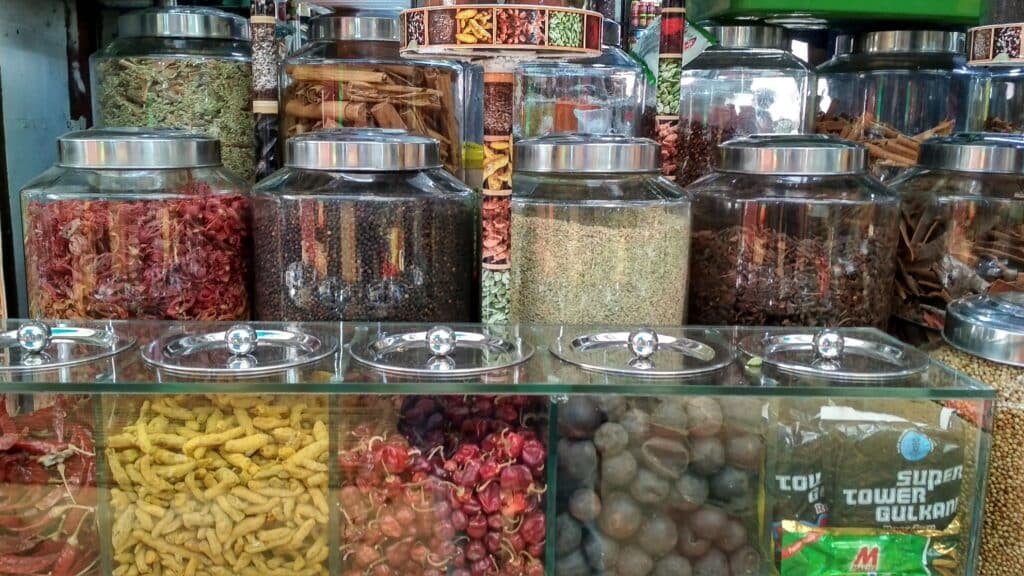
In this investigation
Indian food did not become “spicy” because one civilization discovered a single medicinal secret. It became richly spiced through geography, agriculture, trade, preservation, status, taste and medical traditions layered over centuries. Pepper, turmeric, ginger, cumin, coriander, mustard, cardamom, cinnamon, cloves, fenugreek and chillies do not share one chemical pathway or one historical origin.
Modern explanations often compress this complexity into a convenient story: India is hot, bacteria grow quickly, and spices were consciously added to kill pathogens. There is a serious scientific hypothesis behind part of that claim—many spice compounds are antimicrobial, and comparative recipe research found greater spice use in hotter climates. But this does not prove that antimicrobial preservation was the conscious historical reason Indian cuisines developed as they did.
India was a spice ecology before it was a spice market
The subcontinent and its neighbouring regions produced or exchanged a remarkable range of aromatic plants. Black pepper and cardamom became famous exports; turmeric and ginger were deeply embedded in South Asian food and medicine; cumin, coriander and other spices moved through long-distance trade networks.
Cuisine follows availability. Regions use what grows, what merchants bring, what households can afford and what religious or social rules permit. India’s spice culture therefore emerged from material food systems as well as taste.
THE RECORD
Spices in India were simultaneously food, medicine, trade goods, ritual materials and status markers. Any explanation that reduces them to one function misses the historical record.
Flavour is not a trivial explanation
The immediate reason people use spices is that they change how food tastes and smells. Roasting cumin, blooming mustard seeds in oil, grinding coriander or adding cardamom to sweets produces sensory effects people learn to value.
Evolutionary explanations sometimes treat palatability as merely the mechanism by which a hidden health benefit was selected. But cuisine can develop because people prefer flavours, because flavours signal identity and because recipes are inherited socially. Pleasure is itself a powerful driver of food tradition.
The antimicrobial hypothesis has real evidence
Jennifer Billing and Paul Sherman’s influential 1998 analysis examined thousands of meat recipes from traditional cookbooks across 36 countries. They found that hotter climates used more spices per recipe and tended to use spices with stronger antibacterial activity. Many spice plant compounds also inhibit bacteria or fungi in laboratory studies.
This supports the possibility that antimicrobial effects contributed to the cultural persistence of spice use, particularly before refrigeration.
But the antimicrobial story is not proof of historical intent
Correlation cannot tell us what cooks believed. A hot region can differ from a cool region in crop ecology, trade, food spoilage, culinary tradition and many other variables. Laboratory antimicrobial activity also does not mean the concentration used in a curry sterilizes food.
Spices may have provided a modest safety advantage without anyone understanding microbial mechanisms. Or antimicrobial properties may be one reason heavily spiced cuisines remained successful while flavour remained the conscious reason for use.
THE EVIDENCE
Many spices contain compounds with antimicrobial and antioxidant activity. Comparative culinary evidence supports a climate association. What is not established is that Indian spice systems were deliberately invented as microbial-control protocols or that ordinary culinary doses make unsafe food safe.
Oil changes what spices release
Indian cooking frequently heats whole or ground spices in oil or ghee. This affects aroma because many volatile flavour compounds are fat-soluble and are released or transformed by heat. Tempering therefore has a clear culinary chemistry.
Heat can also degrade some compounds or create new ones. The effect of a spice in food is not identical to the effect of a raw extract tested in a laboratory.
Spices can aid preservation—but they are hurdles, not substitutes for safety
A 2026 review of spices and essential oils in food preservation found strong antimicrobial and antioxidant potential across widely used spices. Modern food technology is actively exploring purified extracts and active packaging based on these compounds.
However, using a pinch of turmeric or chilli is not equivalent to applying a standardized antimicrobial dose. Safe preservation still depends on heat, acidity, water activity, refrigeration or other validated controls.
Digestive claims are plausible in parts but often overgeneralized
Ginger can affect nausea; chilli’s capsaicin activates TRPV1 receptors; black pepper’s piperine affects drug-metabolizing pathways; cumin, fennel and other spices have been studied for gastrointestinal effects. These are specific compounds with specific evidence.
It is scientifically weak to turn that into “Indian spices improve digestion” as a single claim. Different spices can irritate, soothe or have little effect depending on dose and person.
Chilli is not ancient to India
One of the clearest warnings against static tradition is chilli. Capsicum peppers originated in the Americas and spread across the Old World after the Columbian exchange. They became so deeply Indian that they can appear timeless, yet their widespread use is only a few centuries old.
Indian cuisine therefore proves that tradition evolves rapidly when a new ingredient fits existing flavour systems, agriculture and social preference.
Pepper occupied the older pungent niche
Before chillies, black pepper, long pepper, ginger and mustard could provide heat and pungency. Their historical importance shows that “spicy” Indian food predates Capsicum even though today’s heat profile changed dramatically after chilli adoption.
Spices were medicine as well as food
Ayurveda and other South Asian medical traditions classified many culinary spices as therapeutic substances. Turmeric, ginger, long pepper and others crossed the boundary between kitchen and pharmacy.
This does establish historical medicinal intent for some uses. It does not automatically validate every traditional indication or every modern supplement claim. Historical use and clinical efficacy are separate evidence categories.
Dose matters enormously
A culinary pinch may contain milligrams of a compound; a supplement trial may use hundreds or thousands of milligrams of concentrated extract. Animal and cell studies may use still higher exposures.
Therefore, finding that a purified compound influences inflammation in vitro cannot be used to claim that ordinary curry produces the same clinical effect.
Spice diversity may matter more than one “super spice”
Indian cooking often combines aromatics rather than relying on a single dominant flavour. This produces chemical and sensory complexity. Some compounds may interact, but synergy should be demonstrated rather than assumed.
From a culinary perspective, combinations allow balance: bitterness, pungency, sweetness, earthiness and aroma can be adjusted dish by dish.
Spices also carried prestige and economic power
Pepper, cardamom, cinnamon and cloves were valuable long-distance commodities. Control of spice trade helped motivate maritime exploration and imperial competition. Their role in food therefore cannot be separated from economics and politics.
A rare imported spice might signify wealth even if it contributed little to preservation.
Spices solve several culinary problems at once
A single spice can contribute aroma, pungency, colour, bitterness, sweetness or warmth. A mixture lets cooks balance those qualities across foods that would otherwise taste monotonous.
This sensory explanation should come first because it is the reason diners actually experience. A spice tradition does not need to have originated as medicine or food safety technology in order to become culturally central.
The antimicrobial hypothesis is plausible but not complete
Classic comparative research by Billing and Sherman found that meat recipes from warmer climates tended to use more spices and more strongly antimicrobial spices. That pattern is consistent with the idea that plant secondary compounds could reduce some microbial risk in unrefrigerated food.
But cookbook correlations cannot prove historical intent, and laboratory inhibition does not tell us how much protection a normal serving provides in a real kitchen. Spices are better understood as one hurdle among cooking, drying, salting, acidification and rapid consumption.
Not every antimicrobial compound survives cooking equally
Essential oils and other volatile compounds can evaporate or degrade with prolonged heating. Some spices release more aromatic material when toasted briefly, while others lose delicate compounds if cooked too long.
This is one reason Indian cuisines use multiple stages of spice addition—whole spices early, ground spices during cooking and fresh herbs or aromatics at the end.
Tempering is a chemical extraction step as well as a flavour technique
Heating mustard seeds, cumin, chillies or other spices in oil changes aroma compounds and transfers fat-soluble molecules into the cooking medium. The flavoured oil then disperses those molecules through the dish.
The same technique also creates Maillard and roasting notes when spices brown. Culinary practice therefore exploits chemistry even when cooks do not describe it in molecular terms.
Spices can make plant-heavy diets more enjoyable
Legumes, grains and vegetables form much of the historical calorie base in many Indian regions. Spices increase sensory variety without requiring large amounts of meat, sugar or expensive ingredients.
This may be an important cultural function: spice systems make repetitive staples taste different across meals and seasons.
Pungency is a sensation, not a flavour molecule
Capsaicin from chilli activates heat-sensitive TRPV1 receptors, creating a burning sensation without physically raising food temperature. Piperine from black pepper and gingerols from ginger act through related sensory pathways.
This sensory biology helps explain why people can learn to enjoy pungency. Repeated exposure changes tolerance and expectation, turning an initially aversive signal into part of a preferred cuisine.
Chilli transformed Indian cooking after the Columbian Exchange
Chilli peppers originated in the Americas and entered South Asia only after transoceanic exchange. Their rapid adoption shows that “traditional Indian spice” is a historical category that can absorb foreign plants quickly.
Before chilli, black pepper, long pepper, ginger, mustard and other pungent ingredients filled some of the same culinary roles. Tradition evolved rather than remaining botanically fixed.
Medicinal use and culinary use overlap without being identical
Ayurveda and other medical traditions use many kitchen spices therapeutically, often at doses or in preparations different from everyday cooking. A spice can therefore belong simultaneously to food and medicine while carrying different expectations in each setting.
Evidence from a concentrated extract should not be applied automatically to the much smaller dose in a meal, and culinary safety should not be assumed for high-dose supplements.
“Digestive spices” are not one pharmacological class
Ginger can affect nausea and gastric motility; peppermint can relax smooth muscle; cumin and fennel have distinct aromatic compounds; chilli can irritate some people while others tolerate it well. Grouping them all as “digestive” hides those differences.
The better scientific approach is ingredient-specific and outcome-specific rather than assuming that every spice improves digestion in the same direction.
Spice tolerance is learned and individual
People raised with highly spiced food often tolerate pungency that feels overwhelming to others. Gastrointestinal symptoms also vary: some people with reflux or functional bowel disorders find certain spices aggravating, while others do not.
There is no universal “healthy level of spice.” Cultural preference and individual tolerance matter.
The health value may come partly from what spices replace
Herbs and spices can make food satisfying with less salt, sugar or heavy sauce. That substitution effect can improve dietary quality even if the spice itself has no dramatic therapeutic action.
In this sense, flavour technology can influence health indirectly by making simpler foods more appealing.
Trade turned spices into global political commodities
Pepper, cardamom, cloves, cinnamon and other spices moved across the Indian Ocean and beyond for centuries. Their high value relative to weight made them ideal long-distance goods.
European competition for spice routes helped reshape global exploration, colonial expansion and maritime commerce. Indian spice traditions therefore belong to world history as much as kitchen history.
Adulteration is a modern and historical food-safety issue
Ground spices are vulnerable to adulteration because powders hide their botanical origin. Artificial colours, fillers or heavy-metal-containing pigments have occasionally been detected in poorly regulated products.
Buying from reliable suppliers matters more for safety than whether a spice is described as traditional or medicinal.
The strongest explanation is cumulative
Spices became central because they improve flavour, help preserve some foods, allow regional variation, fit plant-heavy cuisines, carry medicinal symbolism and travel well as valuable commodities. No single hypothesis explains all of that history.
The antimicrobial story is one credible layer. Treating it as the hidden scientific reason for India’s entire spice culture would be too simple.
The spice story is also a story of ecology, trade and adaptation
It is easy to explain India’s spice-rich cuisines as though a single ancient doctrine designed them. The historical record points to something more interesting. Different regions had access to different aromatic plants, traded them across long distances and incorporated newcomers when they proved useful or desirable. Black pepper from the Malabar region became one of the most recognisable commodities of Indian Ocean trade. Archaeological work at Roman-period Red Sea ports such as Berenike and Myos Hormos has recovered Indian black pepper in commercial and domestic contexts, showing that pepper was already valuable far beyond South Asia two thousand years ago.
That evidence strengthens the historical case for spices without proving a medical origin for their use. Pepper could be valuable because it was pungent, aromatic, portable, prestigious and commercially scarce. Culinary pleasure and trade value are sufficient explanations for much of its success. Medicinal uses existed as well, but those roles overlapped rather than reducing spice use to one hidden scientific purpose.
Indian cuisine is powerful evidence against the idea of a frozen tradition
Chilli is the clearest example. Capsicum originated in the Americas and reached South and East Asia through post-Columbian trade networks. Historical-archaeological work places Portuguese-mediated arrival in India in the sixteenth century. Yet chillies became so thoroughly integrated into regional cuisines that modern diners can mistake them for an immemorial Indian ingredient.
This transformation matters because it reveals how traditions actually survive. They are not museum specimens. A cuisine can preserve deep structures—tempering spices in fat, combining pungent and aromatic ingredients, balancing sourness and heat—while replacing or adding particular plants. Before chilli, black pepper, long pepper, ginger and mustard could provide pungency. After chilli arrived, cooks adopted a new ingredient into an existing culinary grammar. The continuity lies partly in technique and taste architecture, not merely in the age of every ingredient.
Antimicrobial activity is real, but culinary concentration changes the claim
Laboratory studies and modern food-preservation research show that many spice essential oils can inhibit bacteria, yeasts or moulds. A 2026 review covering ten major spices describes antimicrobial and antioxidant mechanisms that include membrane disruption and interference with microbial metabolism. This is genuine biological activity.
But laboratory potency does not mean every curry functions as a preservative system. Essential oils are often tested at controlled concentrations, and food matrices can reduce their activity. Strong enough concentrations may also make a product taste unacceptable. Traditional dishes use whole spices, powders, pastes and tempered aromatics in highly variable amounts. Salt, acidity, dehydration, fermentation, refrigeration and cooking temperature can matter more for safety. Spices are best understood as one possible hurdle within a larger food system—not as a substitute for safe storage or adequate cooking.
The old hot-climate hypothesis remains intriguing rather than settled
Billing and Sherman’s famous cross-cultural work proposed that hotter climates favoured greater use of spices with antimicrobial properties, especially in meat dishes. The hypothesis is attractive because spoilage pressure is genuinely higher under warm conditions and many spices genuinely inhibit microbes. Yet the historical connection remains difficult to prove. Climate also shapes agriculture, trade routes, food availability and preservation practices. Cookbook datasets reflect what was recorded, not every meal people actually ate.
Tradivior’s distinction is therefore essential: modern microbiology can show a plausible mechanism, and cross-cultural patterns can be suggestive, while historical evidence may still be insufficient to say that cooks selected spices because they understood foodborne microbes. Cultural selection can preserve useful practices without preserving an explicit scientific theory—and sometimes a practice may persist simply because people like the flavour.
Medicinal evidence must be separated from everyday culinary dose
Spices sit unusually close to the boundary between food and medicine. Ginger is a good example. A 2024 overview of systematic reviews found evidence that ginger can reduce some forms of nausea and vomiting, while also noting that the methodological quality of the underlying review literature was often low. This is stronger evidence than the vague claim that ginger is universally “good for digestion,” but it still does not mean that the amount of ginger in every meal produces a clinical effect.
The same caution applies across the spice cabinet. Curcumin, piperine, capsaicin, cinnamaldehyde, eugenol and other compounds can have measurable effects in cells, animals or controlled human studies. Yet extracts and supplements may deliver doses far above ordinary culinary intake. Historical medical systems also used preparations differently from everyday cooking. A substance can be both a food and a medicine without making every culinary use a therapeutic intervention.
Spice combinations are best understood first as sensory engineering
Indian cooks do not merely add “spice” as one category. They build layers. Whole cumin or mustard may be heated in fat; onions, ginger or garlic may form a base; ground spices may be cooked briefly to remove raw notes; fresh herbs or garam masala may be added late to preserve volatile aromas. Different steps change what dissolves in fat or water, what volatilises into the air and what reaches the tongue.
That sequence has a scientific explanation in flavour chemistry, but it should not be retrofitted into a claim that historical cooks possessed modern molecular theory. Repeated culinary experimentation is enough. Generations can discover that one order of addition smells better, another burns, and another gives a dull result. Practical knowledge can be highly sophisticated without being written in the language of contemporary chemistry.
What survives scrutiny?
- Spices have deep historical importance in Indian cuisine, medicine, ritual and trade.
- Many spice compounds have genuine antimicrobial and antioxidant activity.
- Comparative culinary research found greater spice use in hotter climates, supporting but not proving an antimicrobial-adaptation hypothesis.
- Culinary spice concentrations do not reliably sterilize unsafe food.
- Flavour, ecology, trade and cultural identity are sufficient major explanations for spice use.
- Specific spices have specific physiological effects; “spices are medicinal” is too broad.
- Supplement evidence should not be equated with ordinary culinary exposure.
- Chilli’s adoption after the Columbian exchange shows how rapidly “traditional” cuisine can evolve.
The Tradivior Evidence Profile
Historical Authenticity — Strong. Spices are deeply documented in Indian cuisine, trade and medicine.
Original-Purpose Evidence — Strong. Flavour, trade, preservation, medicine and ritual all contributed; no single original purpose explains the system.
Scientific Mechanism — Moderate. Numerous spices contain antimicrobial, antioxidant and bioactive compounds, but culinary dose and preparation strongly affect relevance.
Experimental Evidence — Moderate. Laboratory evidence is extensive and clinical evidence exists for selected spices and outcomes, but broad cuisine-level claims are not established.
Cross-Cultural Evidence — Strong. Spice use occurs globally and varies with ecology, trade and culinary history.
Modern Relevance — Strong. Spices remain valuable for flavour and may contribute bioactive compounds, but food-safety and medical claims should remain specific.
The Tradivior Conclusion
Partially Supported. Indian spices are far more than decorative flavouring: many contain compounds with antimicrobial and physiological activity, and hot-climate recipe patterns are compatible with a historical food-safety advantage. But India did not develop a single spice system as a coded antimicrobial or medicinal formula. Cuisine, agriculture, trade, preference, status and medical traditions all shaped the pattern. Modern science validates particular mechanisms for particular spices; it does not validate every curry as a therapeutic protocol.
Continue investigating
Sources & further reading
- Billing J, Sherman PW. “Antimicrobial Functions of Spices: Why Some Like it Hot.” Quarterly Review of Biology. 1998;73(1):3–49.
- Stabnikova O, Stabnikov V, Paredes-López O. “Spices and Essential Oils in Food Preservation: From Natural Additives to Active Packaging Systems.” Plant Foods for Human Nutrition. 2026;81:69.
- “Behind gold for pepper: The players and the game of Indo-Mediterranean trade.” Journal of Global History. 2023.
- “Everyday transactions in transit: Contextualizing coins in the ports of Berenike and Myos Hormos.” Journal of Roman Archaeology. 2026.
- “Genetic Diversity and Phylogenetic Relationships of Capsicum frutescens in the Asia–Pacific Region: The Pacific Dispersal Route.” International Journal of Historical Archaeology. 2024.
- Li Z, Wu J, Song J, Wen Y. “Ginger for treating nausea and vomiting: an overview of systematic reviews and meta-analyses.” International Journal of Food Sciences and Nutrition. 2024;75(2):122–133. doi:10.1080/09637486.2023.2284647.
- “Evolution of Indian cuisine: a socio-historical review.” Journal of Ethnic Foods. 2022.
- Achaya KT. Indian Food: A Historical Companion. Oxford University Press, 1994.
- Freedman P. Out of the East: Spices and the Medieval Imagination. Yale University Press.
Continue exploring

Partially Supported
Why Do Humans Repeat Rituals?
Rituals repeat because fixed sequences create predictability, memory, identity and coordination. Experiments suggest ritualized repetition can regulate anxiety and social connection, while mantra repetition shows small benefits for psychological distress;…
Primarily Symbolic/Cultural
Why Do Humans Make Offerings to the Sacred?
Offerings make relationships with gods, ancestors and sacred powers materially visible. Gifts can express reciprocity, devotion, gratitude, sacrifice and group commitment; costly-signalling models illuminate some public effects but cannot substitute…
Partially Supported
Why Do Festivals Bring Entire Communities Together?
Festivals concentrate shared time, symbols, music, food and synchronized action, making community membership unusually visible. Research links co-participation and synchrony with stronger social ties, but cohesion can be inward-facing and…
Primarily Symbolic/Cultural
Why Do Humans Hold Funerals?
Funerals transform death from a private loss into a publicly recognized social transition. Archaeology shows deep roots for mortuary ritual, while anthropology and grief research support roles in social support,…
Picked for your curiosity
Enable JavaScript to build a reading profile and see recommendations.