 tradivior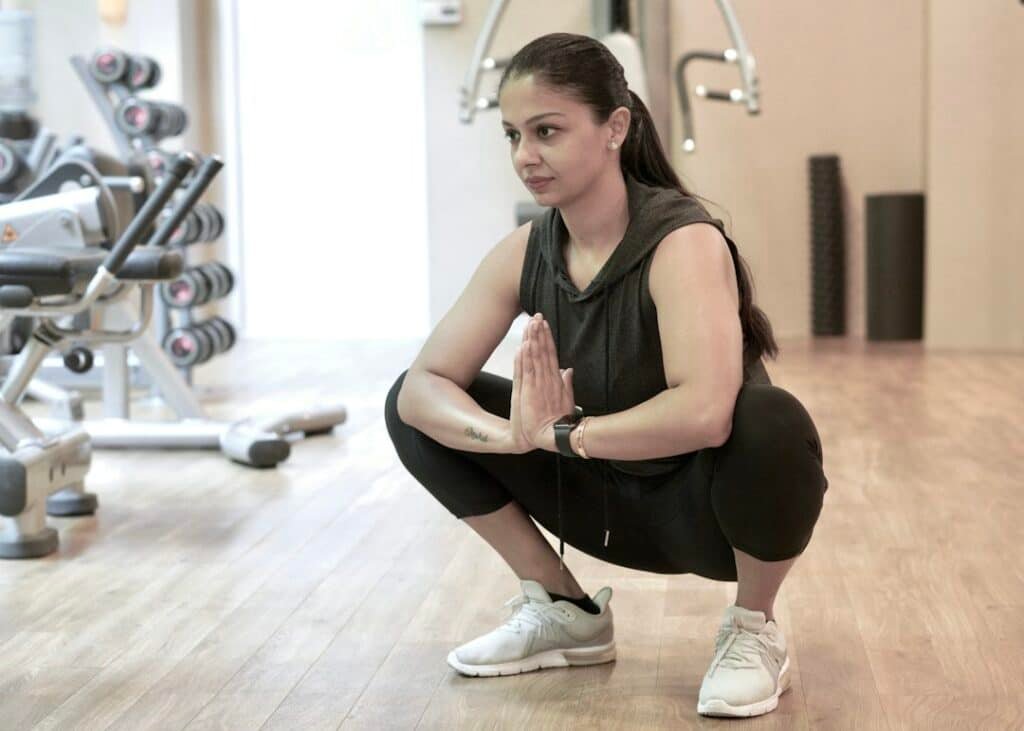
In this investigation
For much of human history, the deep squat was not an exercise. It was a way to wait, cook, work close to the ground, talk, rest and empty the bowels. Chairs and raised toilets changed the built environment faster than they changed the human body. Does the older posture offer advantages—or are modern claims romanticising it?
Before the chair became ordinary
Squatting is a fundamental human movement rather than the property of one civilization. In communities where work happens near the ground and furniture is sparse, a deep squat can function as a temporary seat, a working posture and a transition between standing and floor-level activity. High-flexion postures remain common in many Asian daily activities and occupations.
That history matters because modern discussions often reverse the question. Instead of asking why people squatted, we ask why anyone would do so when a chair is available. For most of history, however, the chair—and especially the raised flush toilet—was not the default technology around which movement had to be organized.
One posture, several jobs
A squat lowers the body’s centre of mass without requiring the buttocks to contact the ground. It brings the hands closer to a cooking fire, crop, tool, child or floor-level workspace while preserving the ability to stand again. But squatting is not effortless for every body. Deep flexion requires adequate motion at the hips, knees and ankles, plus balance and muscular control.
Modern biomechanics confirms that “the squat” is not one fixed movement. Stance width, foot angle, trunk inclination, tibial position and depth alter joint loading and muscular demand. That makes sweeping claims—either that deep squatting is inherently therapeutic or inherently damaging—scientifically weak.
The toilet question
The strongest modern health discussion concerns defecation. A 2025 scoping review synthesized 42 studies comparing squatting and sitting toilet postures. It found evidence suggesting that squatting may reduce straining and facilitate bowel evacuation. One proposed explanation is biomechanical: deeper hip flexion changes the anorectal configuration in ways that can make evacuation easier.
But the review did not declare a universal winner. The evidence was heterogeneous, long-term health effects remain insufficiently established, and raised sitting toilets can offer important ergonomic advantages for older adults and people with impaired mobility. A posture that makes evacuation easier for one person can create substantial joint or balance demands for another.
THE EVIDENCE
Squatting appears capable of reducing defecatory strain and improving evacuation mechanics, but current research does not justify claims that squat toilets universally prevent constipation, haemorrhoids or other chronic diseases.
What happens to the joints?
Deep squatting increases flexion demands at the hip, knee and ankle. A 2024 biomechanical review emphasizes that technique strongly affects where loads are distributed. Deep flexion can be inappropriate for some people, including those with particular hip pathology, while squat variations are also widely used in rehabilitation and strength training.
Research therefore resists the internet’s two favourite stories: “humans are designed to squat, so everyone should do it” and “deep squats destroy the knees.” A separate 2024 scoping review of resistance-trained populations found that the available literature does not support treating deep squatting itself as automatically harmful to healthy knee structures. Context, load, anatomy, training history and symptoms matter.
Why can some people rest in a squat while others cannot?
A habitual resting squat depends on mobility, body proportions, balance and familiarity. Someone who has used the position since childhood may remain comfortable near the ground for periods that feel strenuous to a person raised almost entirely with chairs. That difference does not prove that one population has a fundamentally different human anatomy; habitual movement helps preserve the ranges and control that habitual movement requires.
Prolonged squatting can nevertheless impose muscular and musculoskeletal demands. Experimental work comparing deep-squat postures has found changes in lower-limb muscle activity and balance depending on heel position and support. The ability to squat is not the same as the claim that indefinite squatting is an ideal resting posture for everyone.
The evolutionary claim needs restraint
It is reasonable to infer that ground-level postures predate widespread chair use. It is much harder to convert that observation into a medical prescription. Evolution does not guarantee that every ancestral behaviour optimizes modern health, and archaeological or ethnographic evidence of a posture does not establish a particular disease-prevention mechanism.
The better insight is simpler: human movement is adaptable. Built environments invite particular postures. When societies replace floor-level activity with chairs, desks and raised toilets, they change how often certain ranges of motion are used. That can matter without requiring a romantic story about a single “natural” posture.
Resting squat and exercise squat are not the same exposure
Modern fitness research often studies loaded squats performed for repetitions, while traditional daily life may involve an unloaded deep squat held for minutes during conversation, food preparation, childcare or field work. These postures share joint angles but place different demands on muscle, tendon and cardiovascular systems.
This distinction matters when translating evidence. A study showing that resistance squats strengthen the legs does not prove that resting in a deep squat produces the same training effect, and evidence about a brief toilet posture cannot establish the health consequences of hours of habitual floor-level work.
Mobility determines whether the posture feels restful
A comfortable deep squat usually requires substantial ankle dorsiflexion, hip flexion, knee flexion and balance. People who have used the posture since childhood often develop or retain the mobility needed to place the heels near the ground and relax without excessive muscular effort.
For an adult who rarely squats, limited ankle motion or hip stiffness can push the heels upward and shift more work into the quadriceps. The same geometric posture can therefore feel like rest to one person and exercise to another.
Built environments train bodies through repetition
Chairs, raised toilets, high kitchen counters and desks reduce the need to enter deep hip and knee flexion during ordinary life. Floor-level living repeatedly exposes joints to those ranges. Over years, environment and mobility can reinforce each other.
This does not mean chair users have evolved differently. It means habitual movement shapes capacity. When a society changes furniture quickly, adults may lose a posture their grandparents used daily simply because the opportunity to practice disappears.
The 2025 toilet-posture review supports a cautious bowel-mechanics claim
A recent scoping review synthesized forty-two studies comparing sitting and squatting toilet postures. The literature suggests that squatting may reduce straining and improve evacuation mechanics for some people, while seated toilets reduce joint stress and can be safer or more comfortable for older adults and people with mobility limitations.
The review also emphasized methodological limitations. Much of the evidence uses small samples, different devices and short-term outcomes. The strongest conclusion is ergonomic rather than miraculous: posture can change defecation mechanics, but one toilet design is not medically superior for every body.
Why the anorectal angle matters—but is not the whole story
During continence, the puborectalis muscle contributes to an angle between rectum and anal canal. Hip flexion and squatting can change pelvic geometry and may reduce the resistance required for evacuation. This gives the squatting-toilet hypothesis a plausible anatomical mechanism.
Constipation, however, has many causes: stool consistency, medications, slow transit, pelvic-floor dyssynergia, hydration, diet and neurological disease. Changing posture can help some people without being a universal cure.
A footstool recreates only part of a squat
Commercial toilet footstools elevate the knees and increase hip flexion while allowing the user to remain supported on a seated toilet. This can mimic some pelvic geometry of squatting without requiring full ankle and knee range.
That compromise can be useful for people interested in evacuation mechanics but unable or unwilling to use a floor-level toilet. It also illustrates how a traditional posture can inspire modern ergonomic design without demanding literal restoration of the original environment.
Knees tolerate deep flexion differently across individuals
Deep knee flexion increases contact forces within the joint, but force alone does not equal injury. Healthy joints can tolerate large loads when exposure is familiar and tissue capacity is adequate. Problems arise when pain, osteoarthritis, recent surgery or restricted mobility makes the posture difficult.
Clinical recommendations therefore need individual context. A person with painful knee arthritis should not be told to force a deep squat because it is “ancestral.” A handrail, raised seat or chair can be an evidence-based accessibility technology.
Ankles are often the hidden limiter
When the ankle cannot dorsiflex enough, the heels lift or the torso must lean forward to keep balance. This can make a deep squat unstable. Habitual floor cultures often include many daily movements that maintain ankle range without formal stretching.
Adults trying to regain the posture may therefore need gradual mobility work rather than simply spending longer in a painful squat.
Active resting may break up chair-bound sedentary time
Anthropological physiology research has drawn attention to “active resting” postures such as squatting and kneeling in populations that accumulate substantial sedentary time without using chairs. These postures can require more low-level muscular activity than chair sitting.
That is an interesting hypothesis for metabolic health, but direct long-term trials comparing habitual squatting with chair sitting are lacking. It would be premature to claim that a resting squat prevents cardiovascular disease or diabetes.
Floor-level work changes how often people stand up
Getting into and out of a squat or floor seat requires repeated transitions. Over a day, these movements can add small amounts of muscular work that disappear when everything is placed at chair height.
This may contribute to maintaining functional capacity, but it should be considered one element of total physical activity rather than a replacement for walking, carrying, lifting or exercise.
Balance and fall risk change with age
A young adult who squats comfortably may rise without using the hands. An older adult with weakness, neuropathy, vertigo or arthritis may be at greater risk of falling when lowering to or rising from the floor.
The traditional environment often included walls, rails, companions or lifelong practice that are absent when a modern person copies the posture in isolation. Safety depends on the whole setting.
The posture can be culturally ordinary without being biologically mandatory
Humans have enough joint range to squat, and children across cultures often do it easily. That does not imply adults must preserve a heels-down deep squat to be healthy. Bodies adapt to many successful movement repertoires.
The more useful evolutionary inference is that deep flexion is within normal human movement capacity, not that chairs violate human anatomy.
Sanitation technology matters as much as posture
Debates about squat versus seated toilets can distract from bigger determinants of health: safe sewage disposal, water supply, cleaning, handwashing and accessibility. A well-maintained seated toilet is far safer than an unsanitary squat facility, and vice versa.
Traditional posture and modern sanitation should therefore be evaluated on separate axes. One concerns biomechanics; the other concerns infectious disease and infrastructure.
A sensible modern use is optional mobility, not forced nostalgia
People who can comfortably squat may use the posture during gardening, play, exercise or toilet modification. People who cannot can train range gradually if they value it, or use furniture that supports their needs.
The evidence supports preserving movement variety and matching toilet ergonomics to the individual. It does not support shaming chair users or treating a full squat as a test of biological purity.
The ability to rise from low positions matters with ageing
Getting up from the floor draws on leg strength, balance and coordination that are important for independence. Habitual squatting is one way to keep using those capacities, but it is not the only way. Resistance exercise, stair climbing and repeated sit-to-stand practice can train similar functions with more controllable difficulty.
This distinction prevents a functional observation from becoming cultural prescription: preserving lower-body capacity matters more than reproducing one exact traditional posture.
Pregnancy and pelvic-floor claims need particular restraint
Squatting is often recommended in childbirth preparation because it changes pelvic dimensions and uses gravity. Yet labour positions are a separate question from habitual resting or toileting, and individual obstetric circumstances matter.
No general claim that daily squatting guarantees easier childbirth should be made from biomechanical plausibility alone.
Comfortable squatting is a capacity worth preserving, not a purity test
From a movement perspective, being able to access deep hip, knee and ankle flexion can be useful. It expands the range of positions available for work, play and daily tasks.
The scientifically defensible recommendation is therefore optional range and strength: retain or rebuild the capacity if it serves you, while using supportive furniture when pain, disability or safety makes that wiser.
Deep squatting is not a substitute for strength training
Holding body weight near the bottom of a squat can require low-level muscular activity, but it does not progressively overload muscles the way resistance training can. People interested in preserving strength with age should not assume that sitting in a squat alone provides the same stimulus as loaded exercise.
The traditional posture can contribute movement variety while modern strength training addresses a different physiological goal.
Toilet choice should include dignity and independence
Biomechanics are only one part of sanitation design. A toilet that requires assistance can reduce privacy and independence for an older or disabled person. Conversely, a person accustomed to squatting may find a seated toilet unfamiliar or less effective.
Good design therefore offers safe options rather than declaring one posture culturally or medically superior.
What survives scrutiny?
- Squatting is a fundamental human movement used historically and presently for many daily tasks.
- Its practical appeal is straightforward: it lowers the body toward ground-level work without requiring furniture.
- For defecation, evidence suggests potential reductions in strain and easier evacuation.
- Long-term disease-prevention claims remain much less certain.
- Deep squatting creates substantial hip, knee and ankle demands; suitability varies by mobility, pathology and balance.
- Deep squatting is not inherently destructive to healthy knees, but neither is it universally therapeutic.
- Habitual use can help explain why some populations remain more comfortable in the position.
The Tradivior Evidence Profile
Historical Authenticity — Strong. Squatting is a widespread human working, resting and toileting posture rather than a recently invented exercise.
Original-Purpose Evidence — Strong. Its practical functions—working near the ground, resting without furniture and toileting—require little speculative explanation.
Scientific Mechanism — Strong. Joint mechanics, muscular demand and changes relevant to bowel evacuation are measurable and biomechanically plausible.
Experimental Evidence — Moderate. Research supports several biomechanical and evacuation effects, while long-term clinical claims remain heterogeneous or uncertain.
Cross-Cultural Evidence — Strong. Squatting occurs across populations and is especially visible where floor-level activity and squat toilets remain common.
Modern Relevance — Moderate. Maintaining the ability to squat can be functionally useful, and squatting may help some people during defecation, but individual mobility and safety matter.
The Tradivior Conclusion
Historically Practical. Humans squatted because it solved ordinary problems before furniture and raised toilets became ubiquitous. Modern biomechanics explains why the posture can be useful and why it can also be demanding. Evidence is most persuasive for functional movement and potentially easier bowel evacuation—not for sweeping claims that the squat is a universal cure or that chairs alone caused modern disease.
Continue investigating
Sources & further reading
- Rahgoshay N et al. “Sitting vs. squatting: a scoping review of toilet postures and associated health outcomes.” BMC Public Health, 2025.
- Straub RK, Powers CM. “A Biomechanical Review of the Squat Exercise: Implications for Clinical Practice.” International Journal of Sports Physical Therapy, 2024.
- “Impact of the deep squat on articular knee joint structures, friend or enemy? A scoping review.” 2024.
- Studies of lower-limb muscle activity and balance during prolonged deep-squatting postures.
Continue exploring

Historically Practical
Why Did Humans Boil Food?
Boiling transformed human diets by making grains, pulses, roots, meat and water safer and softer in a single vessel. Heat kills most foodborne microbes and moist cooking improves digestibility, but…

Historically Practical
Why Did Pickling Become a Global Preservation Strategy?
Pickling became global because acidity is a powerful preservation tool. Fermented pickles create acid through lactic-acid bacteria; vinegar pickles add it directly. Both can be safe when properly controlled, but…

Historically Practical
Why Did Humans Dry Food in the Sun?
Sun drying preserved food by removing the water microbes need to grow. The mechanism is robust and ancient, but drying is not sterilization: contamination, mould, nutrient loss and poor storage…

Historically Practical
Why Did Humans Smoke Food?
Smoking preserved food by combining drying, heat and antimicrobial smoke compounds—and then survived because people came to value the flavour. Modern evidence also shows a trade-off: smoke can deposit carcinogenic…
Picked for your curiosity
Enable JavaScript to build a reading profile and see recommendations.